

[비즈한국] Bizhankook is serializing a strategic report prepared by Yonsei University's Business Innovation Track (BIT) over approximately 10 installments. We aim to provide insights into innovation through reports analyzing the problems of companies at a turning point from the perspective of Generation Z.
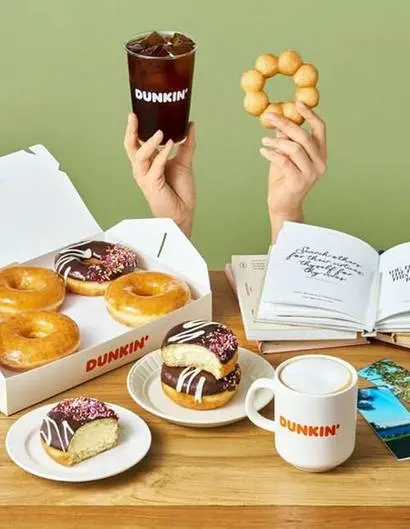
At one time, Dunkin' created the equation 'Donuts = Dunkin'. Dunkin' Donuts naturally permeated the familiar scene of people carrying a donut with their morning coffee, establishing itself as a brand of everyday life. Having entered the domestic market in 1994, Dunkin' Donuts enjoyed a monopoly in the donut market. As late as 2007, Dunkin' held an overwhelming market share of approximately 80% to 90% in the domestic donut market.
However, the market has changed significantly today. Premium donut brands such as 'Krispy Kreme', 'Knotted', and 'Old Ferry Donut' gained popularity through social media, redefining donuts not merely as snacks, but as a medium for emotional experiences. Limited edition merchandise, store designs, and photo-worthy spaces are enough to determine a brand's value. In contrast, Dunkin' has largely remained an image of a light snack brand. Although it changed its name from 'Dunkin' Donuts' to 'Dunkin' through a global rebranding in 2018, it failed to clearly imprint the reality of this change upon consumers.
This shift is not merely the result of a few brands creating a trend; it is because the very standards of consumption have fundamentally changed. Since the pandemic, domestic consumers no longer focus solely on 'cost-effectiveness' as they did before. Consumption patterns have shifted toward prioritizing 'psychological satisfaction'—the emotional gratification that includes mood, atmosphere, location, and the act of documenting the experience. As the standard of consumption shifts toward an 'experience-centered' approach, the 'quick and easy enjoyment' positioning that Dunkin' had long championed is becoming harder to maintain as a powerful driver.
The Rapid Growth of the Premium Dessert Market
Over the past few years, the domestic dessert market has gone beyond mere quantitative growth and entered a phase of qualitative sophistication. According to the Korea Agro-Fisheries & Food Trade Corp (aT), the domestic dessert dining market was valued at approximately 12.4 trillion KRW in 2022 and continues to grow at a high rate of over 10% annually.
However, this growth does not simply mean the market size is expanding. At its root lies a change in consumer perception and values—a move from 'cost-effectiveness' to 'psychological satisfaction.' Dessert is now consumed as a 'small daily reward' and a 'language of emotion.' People now select brands based on how special they feel, rather than just how cheap they are.
For the MZ generation, dessert consumption is no longer just food shopping; it has become a lifestyle element that expresses their personal tastes. Because they enjoy sharing on social media like Instagram, the visual appeal of the food and the interior of the store are just as important as the taste. They have begun to look at the total sum of the situation, atmosphere, and the ability to document the experience, rather than just which product tastes better.
Within this flow, specialized donut brands like Knotted and Old Ferry Donut have grown into 'brands that design experiences.' Knotted built a unique emotional image with its cute bear logo and minimalist color palette, while Old Ferry Donut used handmade premium donuts to shed the existing junk food image and redefine them as a symbol of 'small luxury.' They combined space, storytelling, and design to create brand experiences. Stores no longer function merely as places to sell products. They have become stages for experiencing a brand's worldview, and consumers are willing to pay for these sensory experiences. Consequently, the core of brand selection has shifted from where you buy to what moment you experience.

This experience-centered strategy is not limited to the donut industry. The tendency to seek differentiated sensory experiences is also observed throughout the café industry. Starbucks has established a cup of coffee as a premium culture through its Reserve stores. The explosive increase in large bakery cafés, which is one of the most prominent phenomena in the domestic F&B (food and beverage) market over the past few years, is directly linked to the tendencies of modern consumers who value 'experiential consumption.'
Through COVID-19, consumers came to prefer open spaces, comfort, and locations that offer psychological relaxation over crowded indoor settings; this shift in perception completely changed the criteria for choosing a café. Now, consumers place more significance on the emotional value and experiential elements a space provides than on the taste or price of the coffee. An atmosphere that can only be felt in a specific space, a sense of time flowing slowly, or a new experience that feels like an escape from daily life has become the new standard for consumption.
A key role in this flow is played by social media, especially the visual spread of Instagram. Users document and share the spaces they visit, creating a virtuous cycle where this content attracts new consumers. As a result, consumers have moved toward 'places they want to document and spaces they want to experience,' rather than just 'places to have a drink.' The charm of the space and the originality of the experience have become the core competitive advantages, enough to make people endure the trouble of visiting from far away.
Despite these changes, Dunkin' is still perceived as a brand that remains stuck in functional value. While the taste and price competitiveness of the products are still excellent, there is a lack of reasons for consumers to stay in the store and a lack of memorable devices. In a situation where the premiumization of the dessert market is progressing as a 'sophistication of sensibility,' Dunkin' is still remaining at the level of functional satisfaction.
This similar trend is confirmed in several surveys. A majority of the MZ generation responded that "brand experience is more important to purchase decisions than the product itself," and more than 7 out of 10 dining consumers answered that "they prefer emotionally satisfying experiences even if it takes more time." This is a sign that 'speed,' which was once the standard for purchase decisions, is shifting toward 'leisure and immersion.' Ultimately, Dunkin's brand strategy needs to be redefined from a focus on speed and efficiency to a focus on the depth of consumer experience.
Dunkin's Rebranding, But the Direction Was Mismatched
It was not that Dunkin' was unaware of these changes. Through its global rebranding in 2018, it boldly shortened its brand name from 'Dunkin' Donuts' to 'Dunkin'' and attempted a transition from a donut shop to a 'coffee-centered lifestyle brand.' However, the direction was subtly out of sync with the flow of the market. The global headquarters put forward a strategy to strengthen 'On-the-Go,' speed, and convenience. But consumers in the Korean market do not respond only to this speed-centered strategy. If general café models prioritize turnover and efficiency, premium cafés aim for spaces where customers can linger and savor their time. In reality, the consumption trend of the domestic MZ generation has shifted toward experiences where they take their time rather than buying and eating quickly.
Although Dunkin' showed a willingness to move away from being a donut brand in line with global trends, for Korean consumers, it remained a 'place for a light snack.' Rather than just a marketing failure, this was a limitation stemming from the absence of a brand experience. Store interiors were still focused on practical functions, and the menu composition could not significantly escape the existing donut-oriented framework. The name changed, but the emotional value provided by the brand remained the same. Ultimately, Dunkin' recognized the wave of change but could not fully internalize it. This is because its stores, menus, and communications were still centered on efficiency.
The Spread of Health and Ethical Consumption
Now, the market flow is evolving beyond 'premium' to 'meaningful consumption.' Keywords like low-sugar, vegan, and clean-label have become new standards in the dessert market. Consumers want delicious yet guilt-free desserts, and each brand is embarking on product innovation to meet this demand. Dunkin' also responded to the change by releasing products like 'low-sugar donuts,' but this response remained at the level of individual products. Failing to sublimate the health and ethics trend into a brand philosophy, it appeared to consumers as merely a one-off new product. Now, consumers look beyond low-calorie menus to the brand's attitude and values contained within them.
As purchases through delivery apps, convenience stores, and online malls have become routine, consumer brand loyalty is also weaker than before. Consumers move in pursuit of the quality of experience rather than the brand name. For example, even the act of lining up in front of a store like Knotted is considered an emotional event, where the 'waiting experience' itself is deemed meaningful. An increasing number of consumers find fun and satisfaction even in the process of waiting in line. The quick and convenient purchase that Dunkin' provides has become insufficient to satisfy these expectations.
Evolving into Dunkin' Wonders
Amidst these changes, Dunkin' needs to evolve beyond a brand that simply sells donuts into a brand that also provides experiences for consumers to linger and enjoy inside the store. A store should be reinterpreted not as a simple sales space, but as a point of contact that conveys the brand's philosophy and sensibility while building relationships with consumers. For example, if a DIY topping/decorating station is provided in one corner of the store, coffee pairings that match the donuts are suggested, and the production process is made visible through an open kitchen, consumers would gain the joy of participation, documentation, and sharing beyond just 'taste.' Increasing experience-oriented concept stores, where consumers can personally decorate donuts, enjoy them leisurely with coffee, and naturally experience the brand's philosophy inside the store, is a strategy well worth considering.
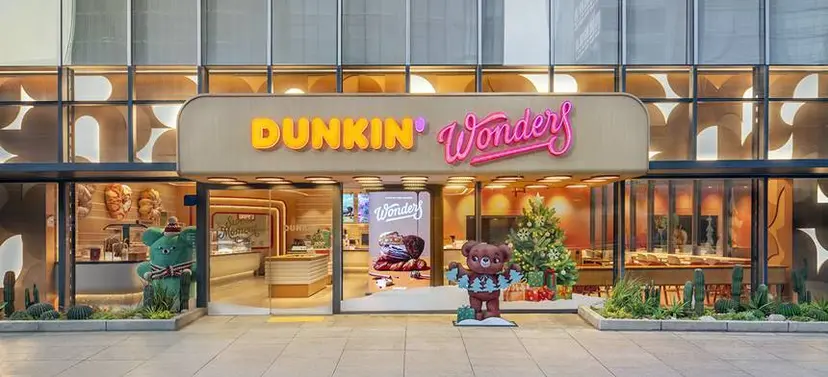
In fact, Dunkin' opened a 'Dunkin' Wonders' store in 2024, showing signs of change by introducing premium-concept interiors, open kitchens, and single-origin bean coffee. Now, these attempts must be expanded nationwide and evolved into experience-centered store models. On top of the basic value of taste, special experiences that consumers will remember must be layered on. What Dunkin' truly needs to leave with the consumer is not just the taste of the product, but the positive brand memory that blossoms in the moment of enjoying that taste.
The same pattern can easily be found in the coffee and dining industry. Starbucks' Reserve stores have evolved into 'places of sensibility' where customers stay and share experiences, not just places that sell coffee. Paul Bassett, as mentioned earlier, infuses emotional satisfaction into the daily coffee ritual through the concept of 'ritual coffee.' Other lifestyle industries such as music and bookstores are also proposing "leisure over speed" by combining merchandise, space, and experience to build fandoms and encourage repeat visits. Ultimately, Dunkin's transformation strategy is connected to the experience-centered consumption flow of Korean society as a whole, beyond the category of donuts.
Dunkin's advantage lies in the fact that it already possesses a vast amount of consumer data. For example, by analyzing the delivery app usage data of more than 2.7 million cumulative users, it could introduce customized services such as 'Today's Dunkin Pick,' which recommends menus that suit the day of the week, time, weather, and mood. This could serve as an opportunity to expand Dunkin's brand value to the next level. By building an image as a brand that makes suggestions tailored to the consumer's day, rather than just listing products, consumers will perceive Dunkin' as a 'brand that understands my taste' and 'a brand that keeps rhythm with my day.'
Redefining its relationship with Gen Z is also an important task. This generation shows such an active consumption attitude that it is even said they do not 'consume' brands, but 'participate' in them. Dunkin' must actively design participatory communication such as social media challenges, merchandise collaborations, and UGC (User Generated Content). Making consumers feel not just as customers who buy products, but as co-creators of the brand story—that is where Dunkin's new brand assets will be formed.
For Dunkin' to become a brand that gets chosen again, price competitiveness or the diversity of product types is not enough. Today's consumers do not simply buy a single product; they consume the entire experience provided by the brand. Dunkin' also needs to focus on 'what kind of experience it provides' rather than 'what it sells.' Making consumers remember Dunkin' as a 'brand to stay with' rather than a 'brand to buy from'—at that very point lies Dunkin's new competitiveness.
The essence of a brand ultimately starts with an excellent product, but the experience created through that product is what makes a brand remain in memory for a long time. When Dunkin' can deliver the joy and stories of the moment of enjoyment in addition to the taste of its donuts, it will be able to regain its presence once again in a fierce market.
![[Gen Z Insight] Hyundai Motor's 'Entry into F1': Holy Grail or Poisoned Chalice?](https://s.bizhankook.com/attachments_thumb/2026/05/96693_thumb.webp)
![[Gen Z Insights] The Great Upheaval in the Travel Industry: The Crisis and Opportunity Facing Mode Tour](https://s.bizhankook.com/attachments_thumb/2026/05/96719_thumb.webp)
![[Gen Z Insights] Hanwha Life's Strategy to Target the MZ Generation for the 'Future'](https://s.bizhankook.com/attachments_thumb/2026/05/96670_thumb.webp)
![[Gen Z Insights] Bugs, Overshadowed by Melon and YouTube Music: Why a Premium Strategy is Needed Now](https://s.bizhankook.com/attachments_thumb/2026/05/96756_thumb.webp)
![[Gen Z Insight] How Samsung SDI Can Survive in the Rapidly Changing Battery Market](https://s.bizhankook.com/attachments_thumb/2026/05/96791_thumb.webp)
![[Gen Z Insights] The Path Forward for Dunkin' in the Era of 'Experiential Consumption'](https://s.bizhankook.com/attachments_thumb/2026/05/96809_thumb.webp)