

[비즈한국] Biz Hankook is serializing a strategy report written by the Business Innovation Track (BIT) at Yonsei University. We aim to provide insights into innovation by analyzing the challenges of companies at turning points from the perspective of Generation Z.
Mode Tour080160 is a comprehensive package travel agency that centers its operations on domestic and international travel agency services and hotel accommodation services. Since its establishment in 1993, it has led the domestic travel industry for over 30 years, building a vast distribution network that includes approximately 5,000 offline agencies nationwide.
Its large-scale passenger transport capacity has served as a core asset, enabling strong bargaining power against airlines and hotels, and securing price competitiveness through economies of scale. Mode Tour has continuously launched new travel products that reflect airline route supply conditions and the latest travel trends. It has maintained its position as the industry's second-largest player, following Hana Tour039130, by meeting diverse consumer demands through luxury, premium, and theme-based products.

However, Mode Tour is currently at a major crossroads. Even though the annual number of outbound travelers has fully recovered since the pandemic, the company's performance has significantly fallen short. The gap with industry leader Hana Tour, which started with the same business model, is also widening.
This article analyzes the crises and opportunities facing Mode Tour in the rapidly changing travel industry and proposes a strategic direction for sustainable growth.
The Domestic Travel Industry: A New Growth Phase
The South Korean travel industry is shaking off the shock of the pandemic and recovering rapidly in both inbound and outbound sectors. The number of outbound travelers from Korea reached 28.69 million in 2024, a 99.9% recovery compared to 2019. The inbound market, which sees travelers entering Korea from abroad, is also bustling. In 2024, the number of inbound tourists reached 93.5% of 2019 levels. With the goal of attracting 30 million foreign tourists by 2027 to become a "tourism powerhouse visited by the world," the government is strategically emphasizing the expansion of inbound tourism. The domestic travel market is projected to reach approximately 19.69 trillion KRW by 2027.
In conclusion, the travel industry has moved beyond mere recovery and entered a new growth phase. If so, what is the background behind the market's rapid growth, and why is Mode Tour failing to fully capitalize on it?
From Supplier-Centric to Consumer-Centric
In the past, the travel industry was a market characterized by information asymmetry. Consumers found it difficult to access flight prices, accommodation options, and local tour information, while travel agencies monopolized this information and collected brokerage fees. Now, however, consumers can easily compare prices in real-time, check reviews, and book local tours directly using just a smartphone. Information is also accessible at any time through Google searches, YouTube travel vlogs, and Instagram influencers. The increase in information transparency has significantly weakened the traditional travel agency's role as an "information broker," shifting the industry structure to be consumer-centric.

The rapid rise of technology-based platform travel companies has also had a major impact. Global Online Travel Agencies (OTAs) aggregate flights, accommodations, and travel products in one place, offering consumers the freedom to choose according to their budget, taste, and schedule. Beyond simple booking brokerage, they provide services that encompass the entire "travel ecosystem," including trip preparation (travel planners), transportation (rental cars/car-sharing), tours/experiences (local activities), and travel reviews. This expansion is highly value-added, as it encourages consumers to stay on the platform for repeat transactions and provides opportunities for business expansion through the big data acquired.
The travel industry, once a labor-intensive, supplier-centric business, is now transforming into a data-driven, technology-centric, and consumer-centric information-intensive business. In fact, while the number of travel businesses is increasing, the number of employees is on a downward trend.
Consumers Have Changed
Consumers' attitudes toward travel have also shifted. In particular, the 2030 MZ generation has emerged as the new leaders of the travel industry. They are skilled at using digital resources and easily embrace new forms of travel. They document and share their unique travel experiences and information across various internet spaces, building their own travel values and tastes.
The characteristic of "value consumption," where they do not skimp on travel, is also distinct. Even amidst the "three highs" (high inflation, high interest rates, and high exchange rates), they are willing to invest in experiences they deem valuable, even if they are expensive. This travel tendency is called "Digging Moment." A combination of "digging" (delving deep) and "moment," it refers to the tendency to pursue understanding and growth of oneself by diving deep into one's own special experiences. For the MZ generation, travel is no longer a passive consumption but a means of content creation, social media verification, and self-discovery.
The 2030 generation shows a preference for overseas travel at roughly twice the rate of domestic travel. As a result of their desire to experience things without restraint, they have become the core growth engine of the outbound travel market.
As such, the change in the consumer-centric structure due to increased information accessibility and the expansion of key consumer groups and their needs have lowered barriers to entry, turned travel into a daily consumer good, and driven explosive growth in the travel industry.
Growth of the Inbound Market
Meanwhile, notable changes have also occurred in the inbound market based on the Korean Wave (Hallyu). Extending beyond K-pop, K-dramas, and K-beauty to include Korean food, traditional culture, and lifestyle, Korea has established itself as a "culture experience destination" rather than just a tourist site. According to the Korea Tourism Organization, 37.2% of foreign visitors to Korea in 2024 cited "Hallyu content" as their travel motivation, an increase of 12.5 percentage points compared to 2019.
The composition of inbound tourists has also diversified. Traditionally centered on China and Japan, the market is rapidly expanding into non-Greater China regions such as Europe, the United States, and Southeast Asia. As of the first quarter of 2024, visitors from Taiwan recovered to 108.8% compared to the same period in 2019, while U.S. visitors reached 119.3% and Singaporean visitors reached 163.3%. In particular, U.S. and Singaporean tourists have emerged as a new axis of Korean tourism, showing growth exceeding pre-COVID levels.
Market Grows, Performance Drops
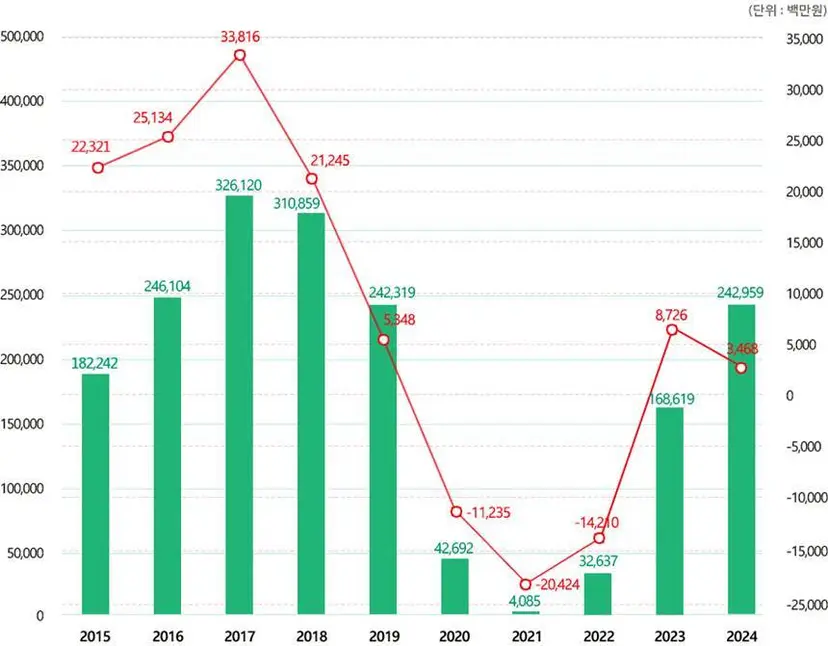
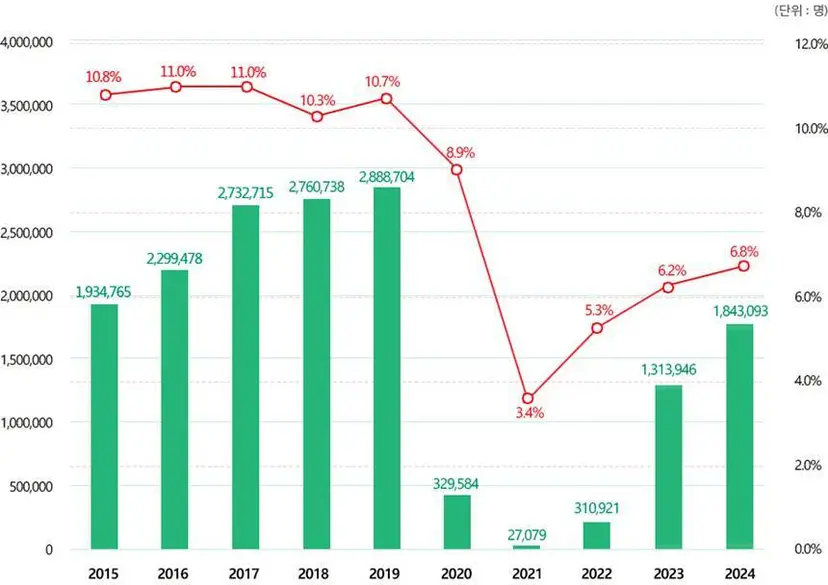
Amidst the rapid market recovery, Mode Tour is experiencing poor performance. Revenue and net profit have consistently declined from 2023 to 2025. As of the fourth quarter of 2024, the market share of package products, which are Mode Tour's main products and source of income, is only about 3.4%, down from the 4.5%–5% range before COVID-19. The gap with industry leader Hana Tour has also deepened. Comparing 2024 to the previous year, the difference in revenue widened to 56.7%, and the difference in operating profit to 118.8%.
Brand awareness and preference have also significantly dropped. Mode Tour rarely appears in surveys on major travel app usage rates or age-specific channels for searching accommodations and activities.
Intensified Competition and Technological Disadvantage
One reason for Mode Tour's struggles is that the explosive growth of OTAs has created a new competitive landscape different from traditional travel agencies. Based on developing technology and increasing data, OTAs precisely met the demands of consumers seeking personalized experiences and convenience. Looking at major travel app usage rates as of 2023, platform-based OTAs like "Yanolja" and "Airbnb" occupied the first through seventh spots.
Yanolja acquired global hotel IT companies and travel business units such as Interpark Tour, and strengthened alliances with Naver and partnerships with overseas OTAs. As a result, it leapfrogged into a global travel tech company providing cloud solutions to 1.33 million hotels and businesses in 206 countries. Its transaction volume exceeded 7 trillion KRW in the first quarter of 2025.
MyRealTrip started in a niche market directly connecting travelers with local guides for desired experiences, but has now evolved into a "travel super-app" that covers flights and accommodations. In particular, the 2030 generation accounts for 64.9% of total users, helping it emerge as the third-largest player in the industry in both brand image and performance.
Compared to these technology-based platforms, Mode Tour lags significantly in technological capability. Its direct-sales competitiveness based on digital and technology is low, with indirect sales through approximately 5,000 agencies nationwide still accounting for 56.6% of total revenue. While it is pursuing AI recommendation algorithms, integrated search systems, and ERP construction, it is not easy to overtake competitors that have already secured technological dominance.
Limits of Revenue Centered on 5060 Packages
Mode Tour's core revenue source remains commissions from traditional package travel arrangements. Its revenue structure is simple, with travel arrangement business accounting for about 80% to 90% of revenue. This single revenue structure weakens responsiveness to market changes and becomes a factor that increases profitability volatility.
Because the proportion of package products is high, the 5060 age group accounts for more than 55% of customers. Based on their economic stability, they actively participate in leisure, consumption, and social activities, have the longest overseas travel duration among all age groups, and have the highest package usage rate. They are a customer base that guarantees high margins as they value safety and quality and are willing to pay for premium packages.
However, the 5060 generation has long been the primary customer base for comprehensive travel agencies. In a travel market that is reorganizing into an industry structure centered on digital transformation and diverse consumer needs, a strategy targeting only them provides low incentives for product diversification or industry growth. To consider long-term growth in line with changes in the domestic travel industry, it is necessary to discover new customer segments.
How Hana Tour Turned It Around
Hana Tour, which started as the same comprehensive package travel agency, succeeded in digital transformation utilizing technology and product innovation targeting changing needs, unlike Mode Tour. Hana Tour is already operating its own app, an AI customer management system, and a direct-sales mall, and has successfully transitioned into a super-app that integrates the travel ecosystem.
The most notable achievement is the expansion of its customer base by differentiating its package products. Hana Tour put its "Hana Pack 2.0" at the forefront to increase unit prices and profitability while improving its cost structure through AI-based automation.

In particular, the "Mingling Tour," targeting the 2030 generation, quickly took hold, with the cumulative number of customers as of October 2025 increasing by 557% year-on-year. It gained popularity with "My Own Way" products that allow free combination of flights and hotels, and products combined with local tours, by segmenting product lines for individual customization. Recently, it declared its entry into the global sports tourism market by investing in the sports travel platform "Clue."
Mode Tour also launched "Concept Tours" aimed at the 2030 generation and achieved some results. The proportion of 2030 package reservations increased from 13% in 2019 to 20% in 2022, and among Mode Tour's package products, Concept Tours have the highest revenue conversion rate at 25%. However, compared to Hana Tour's Mingling Tour, which grew 557% year-on-year, the gap in growth speed and scale is large.
Mode Tour's Opportunities and Possibilities
To turn the atmosphere around, Mode Tour must overcome the limitations of a simple revenue structure and a limited customer base. Specifically, it should focus on the 2030 generation in the outbound market, expand its territory into the inbound market, and diversify its revenue sources.
There are areas where Mode Tour still holds competitiveness. First, its product planning capability and curation know-how, accumulated over 30 years, provide strong competitive advantages in safe route design, quality assurance, and local partner relationships. This holds the value of a "verified itinerary designed by humans" that technology cannot replace. Second is the accumulation of customer data. Data accumulated over years of serving millions of customers can be utilized for analyzing customer preferences, identifying demand by segment, and developing customized products.
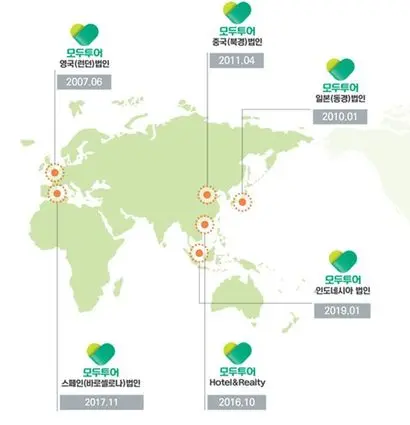
These strengths can be key assets in developing differentiated products for the 2030 generation in the outbound market and premium curation products for foreigners in the inbound market.
Targeting the 2030 Generation in the Outbound Market
The consumption patterns of the 2030 generation are largely divided into two. According to a 2025 survey by the Korea Tourism Organization, 53.5% show a value-consumption tendency, saying, "I will not spare the budget for the best travel experience," while 77.5% show a tendency that prioritizes cost-effectiveness, stating, "I plan to manage my budget thoroughly while enjoying the trip."
Then, should they aim for the larger segment prioritizing cost-effectiveness? The cost-conscious 2030 generation searches through multiple platforms to find cheaper and better options. They easily leave if a better option appears. In a situation where OTAs have already secured an advantage with AI and data, it is difficult for Mode Tour to win. It is also difficult to expect high margins.
However, if targeting the value-consumption 2030 generation, the pie itself may be smaller, but the profitability is high. They pursue special experiences and meaning, and if they think it is valuable, they are willing to purchase high-priced products. The fact that Mode Tour's NBA viewing tour sold out despite its high price of 6 million KRW proves this. A strategy of securing scale through community-type value consumption (companionship and content-focused among the same tastes) and adding experience premiums is strategically more efficient.

Taste-based small group companion programs are suitable for them. It involves operating themed group products—such as festival participation (Coachella, Oktoberfest), retreat/wellness (yoga retreat, meditation travel), and humanities tours (tours accompanying famous writers)—as small groups of 8–12 people where individuals can join.
The key is taste-based matching. Once people are gathered through a clear theme, they interact on social media before the trip, and a community naturally forms during the trip. After the trip, maintaining an online community and proposing the next travel product induces repeat purchases. It is a strategy to secure profitability by adding experience premiums to the 2030 generation, who have low unit prices, and to create community-based LTV (Life Time Value).
For the segment that does not prefer group travel but wants value consumption, hybrid modular packages can be provided. Components of package travel (flights, accommodations, tours, meals) are modularized so customers can assemble them as they wish, and AI suggests the optimal combination according to budget and preference. The core of this product is Mode Tour's verified supply network and quality assurance. It is about providing a safer yet more free travel experience than individual bookings through OTAs.
Targeting High-Margin Customers in the Inbound Market
Although the number of inbound visitors has increased, tourism revenue remains at about 86% of 2019 levels. While many people have come, the duration of their stay is short or the amount of spending has decreased, indicating a need for "qualitative growth" that increases the stay value (expenditure) per visitor. If Mode Tour provides this, it can escape the single market structure centered on outbound travel and transition to a two-way structure.
What is noteworthy is the consumption pattern of tourists from non-Greater China regions. Compared to tourists from China and Japan, they have a 1.5 times longer average stay and a higher proportion of high-value consumption such as cultural experiences, premium accommodations, and fine dining. In particular, U.S. and European tourists have an average per-capita expenditure 30% higher than the overall average.
Therefore, Mode Tour should focus on high-income tourists from non-Greater China regions with high spending ratios, and among them, those who want premium experiences that can only be experienced in Korea, rather than simple sightseeing. Mode Tour's capabilities in packaging and route planning are optimized for these needs. Key targets include high-spending experience-oriented tourists with clear themes such as K-pop fandom, traditional medicine/beauty/medical wellness, fine dining, and immersion in traditional culture, as well as family and couple travelers.

For them, premium curation products by theme must be developed. The key is to provide in-depth experiences and stories rather than simply listing tourist sites. It is not cost-effective for Mode Tour to market directly overseas. A strategy of entering curation products into platforms mainly used by inbound customers, such as Klook and KKday, is efficient. These platforms are already widely used among travelers in Asia and Southeast Asia. Mode Tour can raise awareness and accumulate reviews by registering them as "Mode Tour Official Products."
![[Gen Z Insights] HYBE Dreaming of Becoming an IP Giant: Why Their Blockchain Venture Failed](https://s.bizhankook.com/attachments_thumb/2026/05/96516_thumb.webp)
![[Gen Z Insight] The Paradox Faced by Beauty Platform 'Hwahae'](https://s.bizhankook.com/attachments_thumb/2026/05/96664_thumb.webp)
![[Gen Z Insight] Hyundai Motor's 'Entry into F1': Holy Grail or Poisoned Chalice?](https://s.bizhankook.com/attachments_thumb/2026/05/96693_thumb.webp)
![[Gen Z Insights] The Great Upheaval in the Travel Industry: The Crisis and Opportunity Facing Mode Tour](https://s.bizhankook.com/attachments_thumb/2026/05/96719_thumb.webp)
![[Gen Z Insights] Hanwha Life's Strategy to Target the MZ Generation for the 'Future'](https://s.bizhankook.com/attachments_thumb/2026/05/96670_thumb.webp)
![[Gen Z Insights] Bugs, Overshadowed by Melon and YouTube Music: Why a Premium Strategy is Needed Now](https://s.bizhankook.com/attachments_thumb/2026/05/96756_thumb.webp)