

[비즈한국] Bizhankook presents a strategy report series written by Yonsei University's Business Innovation Track (BIT) academic society. Through reports analyzing corporate issues at turning points from the perspective of Gen Z, we aim to provide insights into innovation.
The Establishment of Hyundai Motorsport
Hyundai Motorsport was established in 2012 for Hyundai Motor Company005380 to participate in global motorsports. The corporate headquarters is located in Alzenau, Germany. Hyundai Motor is primarily responsible for the design, testing, and production of racing cars used in motorsports. In particular, it plays a role in securing competitiveness by developing high-performance technology through data acquired during races and sharing this with mass-production vehicle development departments.
Since Korea does not have a long history in the automotive industry, interest in motorsports can be considered relatively low compared to international levels. However, the motorsports market, which began primarily in Europe, is already massive. The motorsports market size was approximately $9.5 billion (14 trillion KRW) in 2024, with a projected compound annual growth rate of 8.1% from 2025 to 2034.
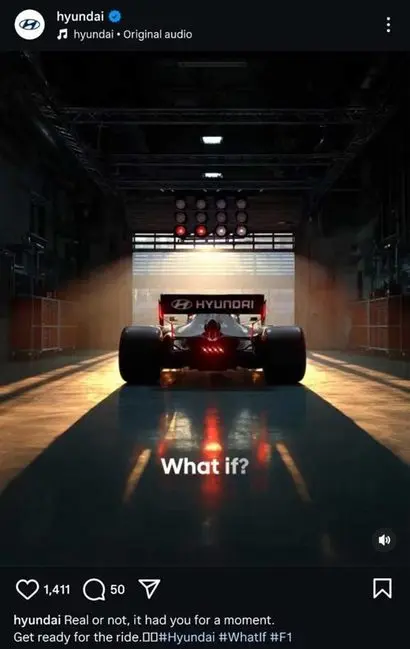
Motorsport revenue is basically diversified through team sponsorships and brand partnerships, broadcasting rights, ticket sales, IP licensing, competition prize money, and revenue from supplying parts to other teams. However, considering the size of Hyundai Motor's business, the motorsport operation seems aimed less at direct profit and more at enhancing brand value through international promotion and striving for technological development via various data.
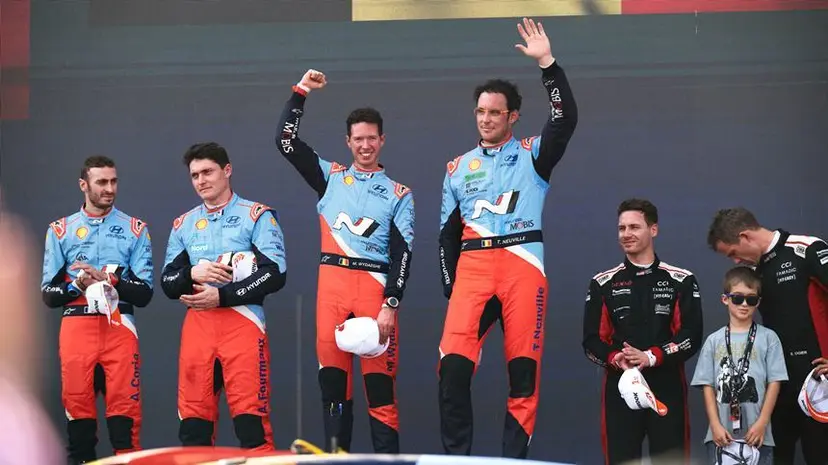
Hyundai Motorsport is actively engaged in various motorsport stages worldwide, proving its competitiveness beyond mere participation. Since its debut in the WRC (World Rally Championship) in 2014 with the 'i20', which runs on various road surfaces like gravel and asphalt for 3-4 days, it has consistently maintained top-tier results. It has won the Manufacturers' World Championship twice, and in the 2024 season, its driver Thierry Neuville became the Drivers' World Champion. Notably, in this year's Safari Rally, two Hyundai Motorsport drivers stood on the podium simultaneously, showcasing their competitiveness.
It is also making its presence felt in the WTCR (World Touring Car Cup). Hyundai began competing in this sprint race based on mass-production cars with the 'i30 N TCR' in 2018, and subsequently, teams and drivers competing with the 'Avante N TCR' achieved a double championship in the 2022 season. Even though it is an indirect participation structure where the company supplies vehicles to customer racing teams rather than operating the team directly, Hyundai's technical prowess has been proven on the circuit.
In addition, it has proven its capabilities in various competitions such as PURE ETCR (Electric Touring Car Racing) and the Nürburgring 24-hour endurance race, with its performance in the electric touring car series ETCR being particularly notable. Hyundai Motor unveiled the 'Veloster N ETCR' and held its first race at the Vallelunga Circuit in 2021. Notably, through its hydrogen brand HTWO, it showcased an eco-friendly energy solution that provides mobile hydrogen fuel cell power systems at the race site to fully charge two vehicles within one hour. It is fair to evaluate that the company possesses not only vehicle manufacturing technology but also technical capability regarding the energy sources that drive them.
As such, Hyundai Motor's motorsport activities encompass not only traditional internal combustion engine-based races but also technical competitiveness leading the electrification era. It is a case that demonstrates Hyundai Motor's strong will to lead the future race market technologically and strategically amidst the transition to sustainable mobility, going beyond simple brand promotion.
The Peak of Motorsport: The Growth of the F1 Market
F1 can be considered the pinnacle of motorsport. The F1 World Championship is the top-level formula racing series held across 24 countries worldwide. Unlike other competitions, it involves races with official production regulations (formula) rather than mass-produced cars, with Grands Prix held in each country. It is the largest motorsport market, with a cumulative viewership of approximately 1.6 billion in 2024.
This F1 market has recently shown rapid growth. F1 CEO Stefano Domenicali announced remarkable results during an earnings call for 2024. He reported that cumulative viewership increased by 9% year-over-year, and the number of subscribers to F1 TV, which broadcasts the races, increased by 15%. In particular, the number of social media followers has consistently increased, from 18.7 million in 2018 to 97 million in 2024, proving F1's rising popularity. Consequently, not only has there been an increase in broadcasting rights and licensing revenue, but sponsorship revenue also rose by 10% compared to the previous year through multi-year contracts with high-value partners like LVMH. Through this, approximately $14.4 billion in future revenue has been secured.
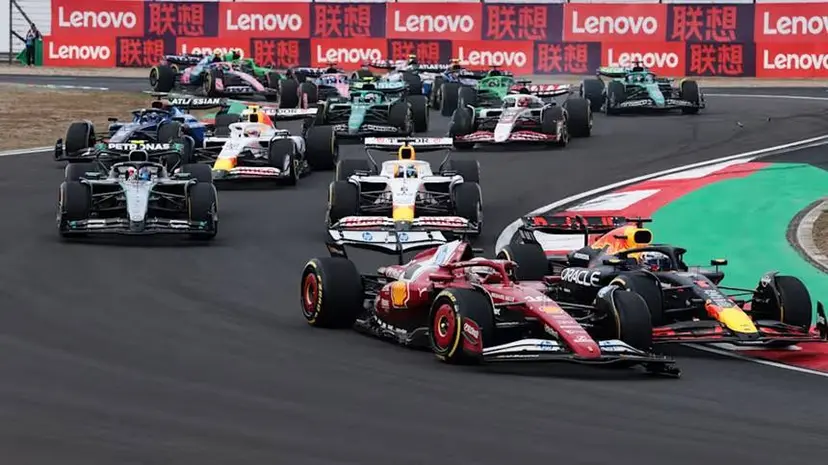
The impetus for this rapid growth can be traced to 2017, when Liberty Media fully acquired ownership of F1, leading to a change in management. The previous operator, CVC (City Venture Capital), failed to expand the F1 market beyond its European roots. To differentiate itself from other motorsports like NASCAR in the U.S., it tried to paint F1 with an image of 'premium motorsport,' strictly limiting exposure by banning social media uploads. However, this branding as an aristocratic sport inaccessible to the general public failed. By 2016, F1's TV viewership had decreased by 40% compared to 2008, and annual revenue was stagnant at around $1.5 billion.
Liberty Media's strategy is the exact opposite. It actively utilized social media to activate public exposure and launched an aggressive promotion targeting young consumers by producing the Netflix documentary 'F1: Drive to Survive' every season starting in 2019. In 2021, it introduced 'Sprint' races with significantly shortened race times to secure viewers. Weekend TV ratings with sprint races are on average 10% higher than weekends without them, and Friday race attendance increased by up to 30%. As a result, F1 revenue in 2024 exceeded $3.4 billion, more than double that of 2016.
This year, the 75th-anniversary film 'F1 The Movie' was a huge success, and further market expansion is expected. The film was directed by Joseph Kosinski, who produced 'Top Gun: Maverick,' and F1 driver Lewis Hamilton participated in its production. As an anniversary film, real F1 drivers and team principals made special appearances. As a result, it was a massive success, becoming the highest-grossing film in the career of the production company Apple and lead actor Brad Pitt. As the U.S. is now the only country with three Grands Prix, even greater market expansion is expected due to the success of this Hollywood film.
Success in Mass-Production Car Racing
Does Hyundai Motor need to enter the F1 market? Ultimately, it could be said yes. Hyundai Motor is aiming for a new market through a new brand image of 'premium.' The final stage where it can enhance the value of premium is ultimately F1.
The reason Hyundai Motor is targeting the premium market is clear. Since 2022, Hyundai Motor has solidified its position as the world's third-largest automaker by sales volume. In particular, in the first half of 2025, its operating profit surpassed that of the Volkswagen Group, which is second in global sales. In this situation, motorsports can become a new market where Hyundai can secure additional revenue and drive corporate growth.
In fact, Hyundai's luxury brand Genesis has declared its full-scale entry into endurance race-centered motorsports through its high-performance program 'Genesis Magma.' It created an in-house team called 'Genesis Magma Racing (GMR)' and, with its self-developed hypercar model 'GMR-001,' aims to participate in the World Endurance Championship (WEC) and the WeatherTech SportsCar Championship (WTSCC) in 2026. Last June, it competed in the 'LMP2 class' of the 24 Hours of Le Mans, at which time Genesis declared that it would secure the European premium market based on electric vehicles. The goal is to enter the market centered on the GV60 and GV70 electric vehicle models in France, Spain, Italy, and the Netherlands, in addition to the existing markets of Germany, the UK, and Switzerland.

Most premium brands like Ferrari, Mercedes, and McLaren have already entered F1. Especially with the expansion of the F1 market, Hyundai's competitors are entering the F1 market quickly. Cadillac (General Motors) will participate as the eleventh F1 team starting from the 2026 season after receiving technical and commercial evaluation from the FIA and F1. It plans to produce power units (engines) in-house by 2029. Audi has acquired the existing team 'Sauber' and will officially compete starting in 2026. Audi is also working hard on development to use its own power units. Toyota, which withdrew due to the 2008 economic crisis and poor results, will return as the title sponsor of the existing 'Haas' team starting in the 2026 season.
The entry into F1 by Audi, which is experiencing financial difficulties, and Cadillac, which falls short of Hyundai in both sales and operating profit, is very telling for Hyundai. In this situation, Hyundai could be seen not just as a company that has 'not' entered F1, but as one that 'could not' enter.
Strategy of Entering by Acquiring an Existing Team After Supplying Power Units
Then, is it realistically possible for Hyundai Motor to enter F1? It will not be easy. This is because it takes a tremendous amount of time and cost just to develop an F1 engine. However, it could be a challenge worth attempting. Unlike the past, when F1 insisted on pure internal combustion engine vehicles, it now uses hybrid V6 power units. Hyundai Motor has experience developing the hybrid V8 powertrain for the Genesis 'GMR-001' based on two inline 4-cylinder engines from its WRC vehicles.
While a powertrain refers to the combination of a regular car's engine, transmission, and drivetrain, and is a simple power transmission system, an F1 power unit basically includes a high-performance energy recovery system (a function that converts kinetic energy lost during deceleration into electrical energy for storage and reuse as a power source) in addition to a hybrid engine. For this reason, additional technical development suitable for F1 vehicles is required. However, the fact that it has accumulated data for many years in various motorsports such as PURE ETCR and has high electric vehicle technology can be an advantage.
As it is about to enter endurance racing, jumping into F1 immediately is realistically impossible. In the short term, it seems appropriate to focus on the Genesis brand's endurance racing participation to upgrade related technologies and secure stable technology for new powertrains, and then in the long term, develop and manufacture F1 power units to participate as a manufacturer. Participating as a power unit supplier, supplying engines to various teams, and securing test beds could lead to a virtuous cycle that lowers production costs and allows for more investment in technical development. Also, it is unimaginable for Hyundai to receive and use engines from Ferrari, Mercedes, or Red Bull.
This entry strategy is for a cautious approach. While great promotional effects and brand value enhancement can be expected if results are good, not everyone is successful. Considering the failure cases of Toyota, BMW, and Honda, one needs to enter even more cautiously because failure after investing huge costs can also damage the credibility of the technology. F1 operation costs an astronomical amount every year. Although a budget cap for team operations has been introduced, as of 2026, the cap per season is $215 million (approx. 315.1 billion KRW), excluding engine and driver salaries. Therefore, it seems better for Hyundai to choose a strategy of cautiously approaching the development of power units.
After that, when actually entering as the 'Hyundai Motors' team, the method of acquiring an existing team rather than a new team would be more suitable. Since it already takes many years to enter as a power unit supplier, and it takes about 5 years or so to enter as a new team, acquiring an existing team could shorten that period somewhat.
It takes a long time to enter as a new team because various stakeholders participate in the approval process. To enter as a new team, one must receive approval from the 'F1 Commission.' The commission includes the FIA, representatives of each F1 team, and F1 (Liberty Media). It is a structure where approval is granted only when all of them are satisfied, so the entry itself is quite difficult. Basically, there must be a positive impact on the operator, such as revenue and promotional effects when the team enters, and it must also be helpful to the remaining 11 F1 teams that share the revenue equally to get final approval.
Due to these complex procedures, it took 5 years for Cadillac's entry to be decided for next year. Therefore, I believe that for Hyundai, instead of entering as a new team, it is a realistic plan to acquire the infrastructure of an existing team and enter by changing the team name.
If Genesis succeeds in entering endurance racing, Hyundai Motor's entry into F1 might not be in the distant future. Of course, it would be a project that takes astronomical costs and a long time. However, Hyundai Motor needs a new market where it can grow further. The final market is the high-performance premium market, and the best stage to verify that potential is F1. Whether it is a Holy Grail or a poisoned chalice, only those who have challenged themselves to lift the cup will know.
![[Gen Z Insights] The Unbearable Lightness of Short-Form: 'TikTok Lite'](https://s.bizhankook.com/attachments_thumb/2026/05/96620_thumb.webp)
![[Gen Z Insights] HYBE Dreaming of Becoming an IP Giant: Why Their Blockchain Venture Failed](https://s.bizhankook.com/attachments_thumb/2026/05/96516_thumb.webp)
![[Gen Z Insight] The Paradox Faced by Beauty Platform 'Hwahae'](https://s.bizhankook.com/attachments_thumb/2026/05/96664_thumb.webp)
![[Gen Z Insight] Hyundai Motor's 'Entry into F1': Holy Grail or Poisoned Chalice?](https://s.bizhankook.com/attachments_thumb/2026/05/96693_thumb.webp)
![[Gen Z Insights] The Great Upheaval in the Travel Industry: The Crisis and Opportunity Facing Mode Tour](https://s.bizhankook.com/attachments_thumb/2026/05/96719_thumb.webp)
![[Gen Z Insights] Hanwha Life's Strategy to Target the MZ Generation for the 'Future'](https://s.bizhankook.com/attachments_thumb/2026/05/96670_thumb.webp)