

[비즈한국] It has been 10 years since the introduction of "social housing," a project where public institutions provide land and private companies manage operations. Although it began as an alternative to solve housing problems, critics point out that it is even more vulnerable to issues like jeonse fraud. While social housing appears to be operated by public entities such as the Seoul Metropolitan Government, Seoul Housing & Communities Corporation (SH), and Korea Land and Housing Corporation (LH), it is actually managed by private contractors. Because of this, when problems arise, both parties repeatedly shift the blame onto each other. Bizhankook examines the problems and systemic limitations of social housing as it reaches its 10th anniversary to seek solutions.

"Superb location, 250,000 won per month, fully furnished, studio apartment." In his search for a home last year, Kim Jun-ho (a pseudonym, in his 30s) finally found a property cheaper than the market rate. It was an "LH-specialized youth purchased rental housing" project, a form of "social housing" where LH purchases the building and delegates operation to a private entity.
Kim recalls that it was a "building that looked brand new" after LH purchased a hotel and completed remodeling. The social housing operator advertised that they provided fully furnished appliances and furniture, and even boasted a community room equipped with amenities like massage chairs and unmanned printers. They emphasized that since he was the first tenant, the bed, air conditioner, and everything else were "brand new."
Kim Jun-ho worked hard on his "personal statement" to qualify for the social housing. He carefully filled out evaluation items such as his thoughts on communal living, eco-friendliness, residential communities, and his motivation for applying. He even went through a tenant selection interview. In August 2024, he was lucky enough to be accepted and moved into the youth purchased rental housing.
However, Kim's nightmare began the moment he moved in. The air conditioner that the operator had promoted as "brand new" did not work properly, forcing him to endure sweltering heat. The elevator broke down once, and he was trapped inside. Contrary to the advertisements, the community room lacked the promised amenities like massage chairs. Despite being a remodeled building, it was riddled with defects in the flooring, wallpaper, and more.
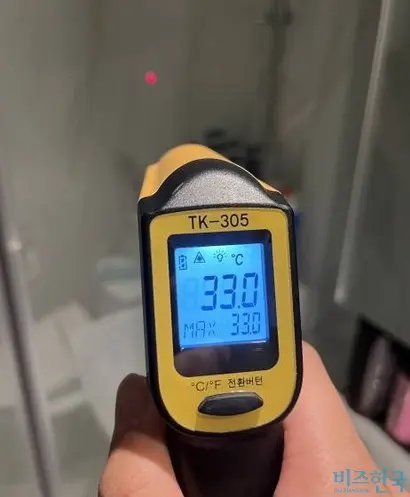
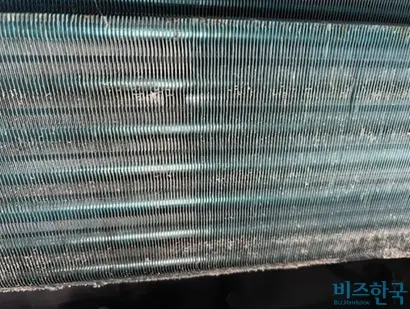
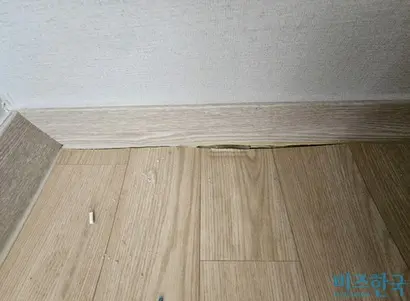
Having to spend nightmare-like days in the social housing, Kim filed numerous complaints with both LH and the operator, but both parties only evaded responsibility. "LH said that while the defects were their responsibility, the operator should take charge after management was delegated. This led to a prolonged blame game. Eventually, they said they would split the repair costs. It is still under repair, and the air conditioner has not been replaced."
Regarding the complaints shared by Kim and all other social housing tenants, LH stated they are "in the process of improvement." An LH official stated, "The air conditioner defect has been repaired. Other minor defects are being processed according to procedure." However, the air conditioner is still broken. Kim said he is "very afraid" of the coming summer.
Purchased rental housing is considered the most complete model of social housing. Unlike land-lease social housing, both the land and the building are owned by public institutions. Since only the operation is handled by private companies, there is no risk of "jeonse fraud." In particular, LH rents out youth purchased rental housing with deposits at 40–50% of the local market rate.
However, the youth who trusted LH and moved into these homes are suffering from "defects." Lee Sang-hyun (a pseudonym), who recently moved out of an LH youth purchased rental unit due to defects, expressed his frustration. "The house was full of mold; it was impossible to live in. When I reported the defects, LH blamed the operator, and the operator shifted the responsibility back to LH. It took over two years from reporting the defect to getting it processed."
Park Ji-min (a pseudonym), living in a purchased rental unit for newlyweds, also said, "The ceiling collapsed, but it took months to get it fixed. At first, they said repairs were impossible," expressing her disbelief.
Wall tiles crumbling, ceilings collapsing, and puddles forming from leaks. These are not horror stories; they are real incidents that happened in LH purchased rental housing.

Because of this, there is criticism that LH "only purchases defective buildings." During last year's National Assembly audit, it was revealed that 520,000 cases of defect repairs occurred in LH purchased rental units over the three years from 2021 to 2023. At the time, Democratic Party Representative Lee Chun-suk criticized, "In the 2022–2024 tenders for outsourced management of purchased rental units, two companies swept up 80% of the total contract value, and former LH officials are employed there." At the time, LH President Lee Han-jun explained, "We will create an improvement plan for vendor selection criteria and methods and rectify it immediately," but defects in LH purchased rental housing remain an ongoing issue.
One operator of LH purchased rental housing confessed, "Even if LH is responsible, the operator is firmly the 'subordinate,' so to win the contract, we have no choice but to shoulder the responsibility for the defects as well."
![[Crisis in Social Housing] Moved in Trusting the Seoul City Name, Only to Fall Victim to a 'Jeonse Fraud'](https://s.bizhankook.com/attachments_thumb/2026/05/93924_thumb.webp)
![[Social Housing in Crisis] Unstable Support Based on 'Mayor's' Preference Makes Consistent Operations Difficult](https://s.bizhankook.com/attachments_thumb/2026/05/94046_thumb.webp)
![[Crisis in Social Housing] Youth who trusted LH lived in homes with collapsing ceilings and rampant mold](https://s.bizhankook.com/attachments_thumb/2026/05/94039_thumb.webp)
![[Crisis in Social Housing] The Last Line of Defense for Tenants, 'Guarantee Insurance': Why Can't Social Housing Join?](https://s.bizhankook.com/attachments_thumb/2026/05/94177_thumb.webp)
![[Social Housing in Crisis] We Imported the European Success Model, but Why Isn’t It Working in Korea?](https://s.bizhankook.com/attachments_thumb/2026/05/94522_thumb.webp)
![[Crisis of Social Housing] Presidential Election Held on 'Day for the Homeless,' Yet Housing Policy Remains 'Missing'](https://s.bizhankook.com/attachments_thumb/2026/05/94619_thumb.webp)