

[비즈한국] It has already been 10 years since the introduction of the "social housing" business model, in which public institutions provide land and private enterprises manage operations. While it began as an alternative to solve residential problems, critics point out that it is actually more vulnerable to risks such as jeonse (lump-sum deposit) fraud. Although social housing appears to be operated by public agencies like the Seoul Metropolitan Government, the Seoul Housing & Communities Corporation (SH), or the Korea Land and Housing Corporation (LH), it is in fact managed by private contractors. This leads to a recurring situation where parties shift responsibility to one another when problems arise. BizHankook aims to examine the problems and institutional limitations of social housing as it reaches its 10th anniversary and explore potential solutions.
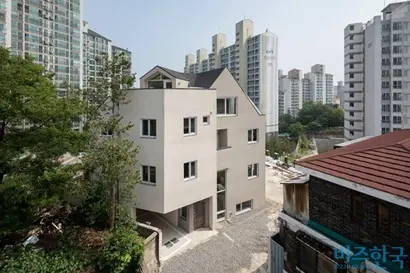
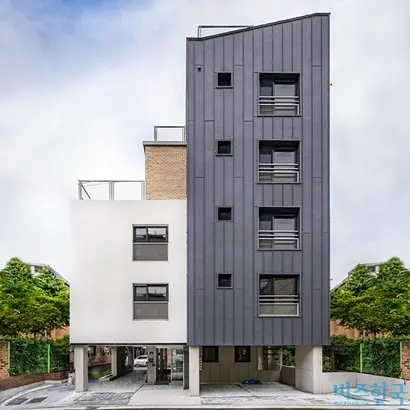
After getting off the bus and climbing a steep hill, I spotted a sophisticated, European-style villa tucked away among older houses. It featured a clean design and pleasant interior space. This was one of Seoul’s "social housing" units. Inside, it looked perfect. However, the moment I stepped outside, the story changed. This is because most social housing units are either too far from a subway station, located on a hill, or tucked away in remote areas.
When asked if social housing is cheaper than the market rate, a real estate agent near a social housing site in Gwanak-gu, Seoul, replied: "You mean the one way up at the top? Being cheap is just the market rate for that location."
Social housing operators are forced to choose relatively inexpensive locations because they cannot afford high land rents. Most construction costs also depend on loans. Resident A, who lives in a social housing unit in Seongbuk-gu, said, "The monthly rent is low and the house is in good condition, but most are in remote places. Some aren't even marked on online maps. The house I live in now has a low deposit, but there were also social housing units that required deposits in the hundreds of millions of won."
From unexpected jeonse fraud risks to neglected locations, why has social housing in Seoul fallen into this crisis? Social housing operator B explained the situation when social housing was first introduced in Korea: "In Europe, most people live in social housing. The system has settled in successfully. On the other hand, in Korea, you have to work your whole life to get a living space. In Europe, people live in safe spaces without worrying about housing. The European model was brought in with the intention that Korea should follow this path."
In fact, as of 2024, Seoul's PIR (Price-to-Income Ratio) index is 24.9, the highest among OECD countries. This means it takes about 25 years of saving one's entire income, without spending a penny, to purchase a home.
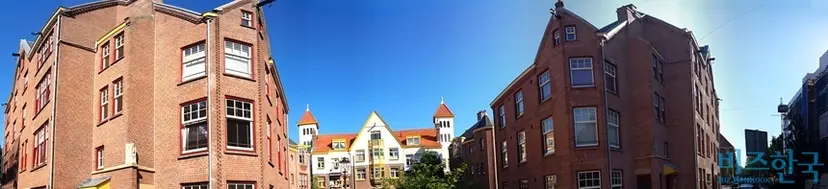
The proportion of social housing in Europe differs significantly from that of Korea. In countries like the Netherlands, Denmark, and Austria, social rental housing accounts for more than 20% of total housing. According to OECD statistics, as of 2022, the social housing ratio was 34.1% in the Netherlands, 23.6% in Austria, 21.3% in Denmark, and 16.4% in the UK. Korea’s rate is 8.9%, which is higher than the average of 7.1%, but lower than major European countries.
In European countries with such high ratios of social housing, people look for social housing before general housing when searching for a home. This is not only because of the artistic buildings and low prices, but also because it is difficult to distinguish social housing from general housing.
In Europe, too, private entities such as housing associations operate social housing, and the government provides support. According to data published by the National Assembly Library last year, the Netherlands supplies social housing not only to low-income groups but also to the middle class, and it is difficult to distinguish its exterior, quality, and area from private rental housing. In Austria, social housing built by famous architects has become city landmarks. Social housing accounts for a whopping 44% of housing in the capital, Vienna. In Denmark, 60% of the population has lived in social housing. Every citizen over the age of 15 is eligible for social housing, regardless of income. While the average area of social housing in Korea is 45.9㎡, the average area in the UK reaches 67㎡.
At a forum held at the National Assembly last August titled "Paradigm Shift in Housing Supply for National Residential Stability: Focusing on Social Housing Revitalization," experts pointed out the need for a Social Housing Act that references European cases. They argued that legal establishment and support are necessary for the stable operation of social housing. Although 6,582 units of social housing, including land-lease, remodeling, and specialized types, have been supplied in Korea between 2015 and 2024, government-level support measures are hard to find.
An official from a social housing operating company, C, lamented, "The social housing business is a partnership between the public and private sectors, but as it stands, if a problem arises, the public side has a structure that allows them to evade responsibility. There have been cases where move-ins were delayed due to administrative reasons by public institutions, leading to worsening profits and financial distress for the operating company, yet the public institutions took no responsibility." They added that even the budget for social housing loan support is being cut.
Choi Gyeong-ho, a social housing expert and former director of the Housing Neutrality Research Institute, explained, "In Europe, the third sector, such as cooperatives, emerged as the main agent for solving housing problems starting from the urbanization period in the 19th century. In contrast, in Korea, such structures were severed during the Japanese colonial period and the industrialization process, and housing supply became the domain of the public and the market."
The biggest difference between Korea and Europe is the "jeonse system." Choi said, "For social housing to compete with jeonse, both deposits and monthly rents must be lowered simultaneously. To do this, the government needs to support land costs or financial costs to reduce the burden on suppliers."
Choi further pointed out that if the current jeonse-centered financial structure is not changed, the structure of jeonse fraud is bound to repeat. He argued that the practice of borrowing initial construction costs from banks and recovering them through jeonse deposits is the root cause of jeonse fraud. To solve this, a system is needed where operators can secure funds without relying on jeonse deposits by introducing long-term, low-interest supplier financing.
Land-lease social housing is in the same vein. Choi suggested, "To solve the issue of returning jeonse deposits, all land-lease social housing should be converted to monthly rent moving forward, or the structure should be reorganized so that the public sector establishes a REIT to take responsibility for deposit returns."
![[Social Housing in Crisis] Unstable Support Based on 'Mayor's' Preference Makes Consistent Operations Difficult](https://s.bizhankook.com/attachments_thumb/2026/05/94046_thumb.webp)
![[Crisis in Social Housing] Youth who trusted LH lived in homes with collapsing ceilings and rampant mold](https://s.bizhankook.com/attachments_thumb/2026/05/94039_thumb.webp)
![[Crisis in Social Housing] The Last Line of Defense for Tenants, 'Guarantee Insurance': Why Can't Social Housing Join?](https://s.bizhankook.com/attachments_thumb/2026/05/94177_thumb.webp)
![[Social Housing in Crisis] We Imported the European Success Model, but Why Isn’t It Working in Korea?](https://s.bizhankook.com/attachments_thumb/2026/05/94522_thumb.webp)
![[Crisis of Social Housing] Presidential Election Held on 'Day for the Homeless,' Yet Housing Policy Remains 'Missing'](https://s.bizhankook.com/attachments_thumb/2026/05/94619_thumb.webp)
![[Crisis in Social Housing] Ministry of the Interior and Safety’s Ruling Contradicts Seoul City’s Stance… Relief for Victims Remains Difficult](https://s.bizhankook.com/attachments_thumb/2026/05/94858_thumb.webp)