

[비즈한국] It has been 10 years since the introduction of "Social Housing," a project where public institutions provide land and private enterprises manage the buildings. Although it began as an alternative to solve housing issues, critics point out that it has become even more vulnerable to damages like Jeonse fraud. While social housing appears to be operated by public entities such as the Seoul Metropolitan Government, Seoul Housing & Communities Corporation (SH), and Korea Land and Housing Corporation (LH), private operators are actually in charge of management under contract. This leads to a recurring situation where they shift responsibility to each other when problems arise. Bizhankook intends to examine the issues and institutional limitations of social housing as it reaches its 10th anniversary and seek potential solutions.
"I ended up with a 50 million won debt in my early 30s." Kim Ji-hoon (pseudonym), who lives in Seoul, is recently considering filing for individual rehabilitation. This is because he moved into a "social housing" unit operated by the Seoul Metropolitan Government but failed to get his 49.7 million won security deposit back.
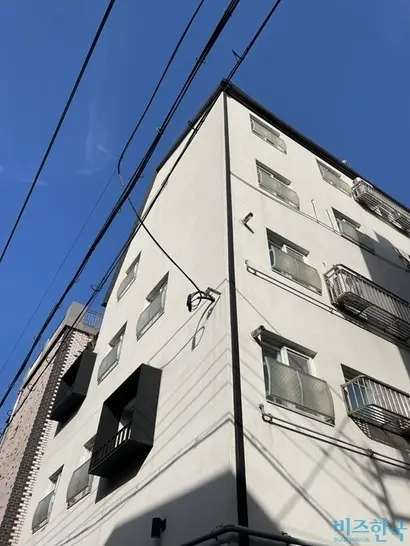
Four years ago, Kim could not have even imagined such a situation. "Security deposit of 69.7 million won, monthly rent of 130,000 won." Kim moved into the social housing unit in September 2020. It was cheaper than the market rate, and the condition of the house was good. Since it was operated by the Seoul Metropolitan Government, he had no worries about failing to get his deposit back. The move-in announcement even stated that the location was "subject to mandatory rental deposit guarantee insurance."
The unit Kim moved into was a "social housing" property managed by the Seoul Metropolitan Government, where a social enterprise built the structure and SH held the land ownership. Social housing is a project where public institutions and private companies cooperate to provide affordable rental housing. The Seoul Metropolitan Government promoted social housing as rental housing supplied in cooperation with the private sector. The Korea Housing & Urban Guarantee Corporation (HUG) and SH also recruit tenants directly. The social housing operator that Kim moved into was Company B, a well-known firm known to have cooperated with the Seoul Metropolitan Government for a long time.
Kim lived happily in this social housing for three years. He extended his lease once and notified Company B of his intent to move out in January of last year. The rental contract ended in April. However, the problem started there. Out of the 69.7 million won deposit, Kim only received 20 million won back. He contacted Company B but could not get a proper explanation.
Kim said, "I tried to file a claim for the 'Jeonse deposit guarantee insurance' as instructed at the time of the contract, but I couldn't. Contrary to the contents of the announcement, this social housing was not actually enrolled in the 'rental deposit guarantee insurance'." To be precise, the social housing he lived in was a building that could not be enrolled in such insurance.
Kim repeatedly requested the return of the deposit from Company B and notified the Seoul Metropolitan Government and SH of the situation. Company B submitted a deposit repayment plan to SH. However, more than a year has passed, and Kim has not received the remainder of his deposit. He requested that SH, the landowner, purchase the building, but SH replied that it was impossible. The Seoul Metropolitan Government also said there was no way they could help. Ultimately, Kim registered his right to the lease on the building and filed for a compulsory auction with the court. He also applied for an attachment on Company B's bank accounts. However, since Company B has already defaulted on more than 200 million won in national taxes and health insurance premiums, it remains uncertain whether he will recover his deposit.
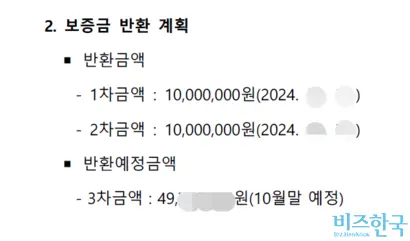
What worries Kim is the threat of becoming a "credit delinquent." He had taken out a 45 million won loan from a bank at the time of moving in to pay the deposit, and because he did not get the deposit back from Company B, he cannot repay the loan. Last month, he also filed for recognition as a Jeonse fraud victim with the Ministry of Land, Infrastructure and Transport, but it is still unknown whether he will be recognized as a victim.
Kim expressed his frustration, saying, "I've done everything I could, but feeling that there is no solution is truly overwhelming. I was diligently building my credit at a young age, and suddenly having to apply for rehabilitation feels extremely heavy."
The Seoul Metropolitan Government is also aware of Kim's situation. However, they state that there are no measures they can take. A Seoul city official explained, "We are doing our best to find a way. However, since the landowner and building owner are different in land-lease social housing, it is difficult to sign up for rental deposit insurance. HUG also has not prepared guarantee insurance for damage recovery. Tenants demand that SH win the bid for the building to secure their deposits, but that is not possible. It would constitute a breach of trust in the line of duty, violating the Local Public Enterprises Act. There would be a way to provide relief if it were determined to be a Jeonse fraud, but if the intent of the rental business operator cannot be proven, it is not easy to be recognized as a victim."
Company B operates other social housing units in Seoul besides the building where Kim lived, meaning additional victims could emerge. Social housing, which is supposed to protect vulnerable groups, is instead driving tenants into a crisis. This is why critics point out that urgent countermeasures are needed.
Kim urged for action, stating, "Not long ago, Company B lied to another tenant that there had never been a deposit repayment accident. They have even been recruiting tenants for the housing until recently. There is a possibility that victims will continue to emerge in the future."
![[Crisis in Social Housing] Moved in Trusting the Seoul City Name, Only to Fall Victim to a 'Jeonse Fraud'](https://s.bizhankook.com/attachments_thumb/2026/05/93924_thumb.webp)
![[Social Housing in Crisis] Unstable Support Based on 'Mayor's' Preference Makes Consistent Operations Difficult](https://s.bizhankook.com/attachments_thumb/2026/05/94046_thumb.webp)
![[Crisis in Social Housing] Youth who trusted LH lived in homes with collapsing ceilings and rampant mold](https://s.bizhankook.com/attachments_thumb/2026/05/94039_thumb.webp)
![[Crisis in Social Housing] The Last Line of Defense for Tenants, 'Guarantee Insurance': Why Can't Social Housing Join?](https://s.bizhankook.com/attachments_thumb/2026/05/94177_thumb.webp)
![[Social Housing in Crisis] We Imported the European Success Model, but Why Isn’t It Working in Korea?](https://s.bizhankook.com/attachments_thumb/2026/05/94522_thumb.webp)
![[Crisis of Social Housing] Presidential Election Held on 'Day for the Homeless,' Yet Housing Policy Remains 'Missing'](https://s.bizhankook.com/attachments_thumb/2026/05/94619_thumb.webp)