

[비즈한국] K-Pop has become South Korea's premier export. However, behind the glamour, the shadows are deep. K-Pop idols, the symbols of the industry, are scouted at a young age and undergo grueling trainee periods. In this process, labor and human rights are often neglected. What becomes of the countless trainees who never even make it to debut? Through the ‘K-Pop: Idols in Wonderland’ series, BizHankook aims to highlight the issues that have been overlooked during K-Pop’s growth and examine potential alternatives from various angles. We believe that when those who create K-Pop are healthier, those who enjoy K-Pop can also be happier.
HYBE352820's HYBE America is often cited as a ‘loss-making’ business. Despite HYBE investing 1 trillion won, it has yet to produce significant results. The ambitious project unveiled by HYBE America is the local girl group Katseye. Last year, HYBE formed the group through the audition program <The Debut: Dream Academy> and debuted them on June 28. A local industry insider, identified as A, said, "There is talk circulating that HYBE poured an enormous amount of money into producing Katseye and went all-in, even rebuilding their entire promotional lineup."
As HYBE’s first local girl group, it is no exaggeration to say that the future of exporting the ‘idol training system’ depends on Katseye’s success. How are local industry insiders in Los Angeles (LA) evaluating the current situation?

Local Management: “K-Pop is Profitable”
JYP Entertainment collaborated with the American record label Republic Records, while HYBE partnered with Geffen Records to create local girl groups. Why do American record labels collaborate with Korean entertainment companies? An anonymous local agency insider, B, who represents Korean artists in LA, says, “K-Pop is profitable. American record labels know this well.”
He says that American record labels recognize the advantages of the K-Pop training system and its fandom. “American record labels do not have a training system,” B explained. “They discover talented people by chance and debut them. If someone has enough talent, they just play the role of guiding them by saying, ‘We will help you.’ They don’t teach them how to act or sing.”
Artists discovered this way create their own musical styles. “American artists don’t like being molded. They focus on creating their own music. This leads to problems. When management asks them to dance for an album launch or upload something to TikTok, the artists say, ‘I don’t want to do that.’ They have pride in these areas, which is why many artists are currently in conflict with their management.”
In contrast, Korea’s K-Pop is different. K-Pop has a massive ‘fandom’ that actively consumes albums. “The Korean fandom is incredibly large, and fans tend to consume the output even if it isn’t great. Western artists’ fans won’t force streaming or try to make a Billboard number one if the song isn't good. Conversely, K-Pop fans place pre-orders for everything before the song is even released.”
B says this is why K-Pop can make money, unlike Western artists. “This structure generates enormous revenue from K-Pop fandoms. As a result, Western artists are increasingly following this marketing. Buying photocards and merchandise is becoming Gen Z culture. There are even Western artists now making light sticks and bracelets.”
The revenue distribution model is also bound to be different between Korean entertainment companies that develop artists and American management firms that focus only on marketing. B says that American labels have found ways to pay artists less. “American artists inevitably command higher pay. In the U.S., even if people don’t buy albums, they often purchase songs, and artists earn money through tours or brand advertisements. This revenue isn't structured to go to management. Management or agents only take a commission, usually about 10–15% of the artist's earnings. The artist is at the center and receives the money directly. Agents only get paid when they find work for the artist.”
In Korea, where artists are subordinate to their agencies, the profit structure is the complete opposite. “In Korea, artists work as employees of the management company, and the company takes the money first before distributing a portion to the members. It is a structure where they receive significantly less money than if they were working alone.”
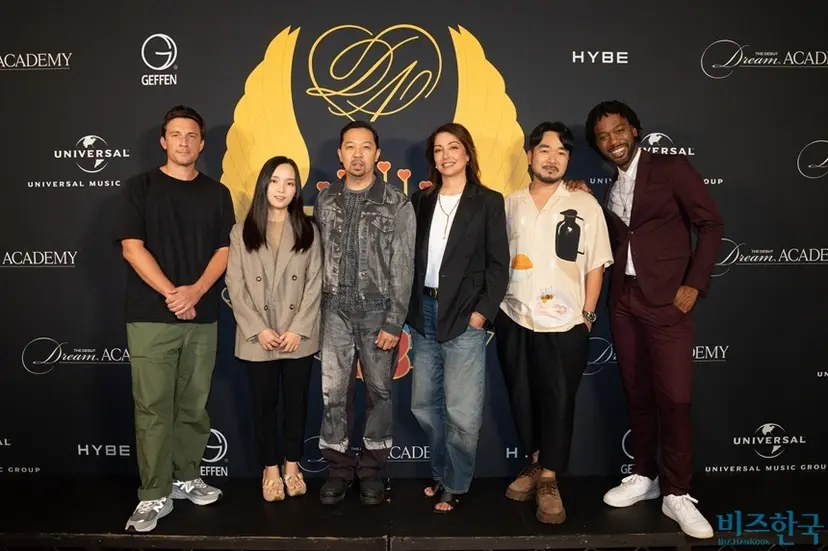
Can Americans Endure ‘Korean-Style Training’?
B says the task for global girl groups like Katseye is to ‘detach from K-Pop.’ “Americans tend to lump all Asians into the same category. They put everything under the K-Pop umbrella and try to stifle its development. It is difficult to grow further while staying in the K-Pop category. That is also the reason why BTS did not win a Grammy. It actually becomes a barrier. This is why Katseye must not become just a Western version of K-Pop. Of course, there are concerns. I think Westerners have a stronger tendency than Easterners to seek their own identity rather than acting in a group. In that sense, I worry about the future of such groups.”
What does he think of K-Pop idols? He is negative about children working in the industry. “Watching idols who start at such a young age is clearly uncomfortable. Many minors debut around the age of 14, and their fans are mostly older men. It’s really strange. They are doing brand promotion activities at a time when they should be learning how to incorporate their life experiences and emotions into writing songs.”
However, he says American criticism of the idol training system is excessive. “The West criticizes the idol training system as ‘slavery,’ but in reality, they make athletes do the same thing. I’m not sure how these two are fundamentally different. It’s just that they haven’t applied this system to musicians. In the U.S., if you aren’t born a good singer, there is no way to become a star. In this respect, one could ask, ‘What is wrong with being professionally trained and built?’ I think the Korean system is actually good in that it provides opportunities to learn. However, I think education is needed so that idols can write their own songs, learn history, and find their own style.”

On the other hand, Heather Cox, an American documentary filmmaker who enjoys K-Pop idols and is interested in Korean culture, says the K-Pop training system would be difficult to implement in the U.S. “If they are Korean-Americans, that might be different, but Americans are not prepared to handle the physical demands. Americans are used to resisting authority, and I don’t think they have the patience to endure that kind of training, even if the money is guaranteed,” she says.
Cox says Korea overlooks issues related to physical and mental health too much. “I went to see KCON LA last year, and the idols were much thinner and smaller than I expected. They were also so young that I was worried about their nutrition. K-Pop idols train for 16 hours a day or go on severe diets.”
She is also critical of the culture of debuting at a young age. “Children under 18 wear revealing clothes, and the public views them as sexual objects. K-Pop also features sexual lyrics at a young age, and many Americans would feel uncomfortable with this. The Korean system is somewhat coercive, and since Americans are more likely to speak out about such issues, I don’t think it would work here,” she said.
An Academic’s View on the Future of K-Pop Localization
Professor Lee Hye-jin is a Korean scholar at the University of Southern California (USC), where she established the first formal ‘K-POP’ course in the U.S. Professor Lee says the American music industry no longer engages in ‘new artist development.’ “The current U.S. market trends toward signing people who are already famous on social media rather than discovering new artists and creating songs. But Korea does all of this. From the perspective of American record labels, they have spent less money while getting an artist who is already discovered and equipped with a fandom. Because of this, American labels perceive K-Pop as a way to make money.”
Is there a possibility that American labels will run idol training systems independently? “If it becomes fully established as a system and know-how is gained, they could do it independently. However, in the current situation, there is no need to invest in research and hire people. They are taking the easy route by partnering with companies (Korean entertainment firms) where everything is already in place. It is a lower-risk path.”
Professor Lee cites race as one of the reasons Korean entertainment companies are gathering in LA. “Due to the nature of LA, there are many Korean-Americans, Asian-Americans, and Hispanics, and they have a lot of interest in K-Pop. They also tend to project themselves onto K-Pop stars. The racial aspect is definitely something that cannot be ignored,” she says.
Professor Lee points out, “Whites and Europeans who are not Korean or Asian wouldn’t think they could become K-Pop idols. There is definitely a racial aspect to it. Local girl groups like VCHA and Katseye have emerged, but they are still experimental. It is difficult to say that the ‘Korean-style trainee’ system has been applied. It’s still in an awkward state. Especially in Europe and the U.S., the autonomy and creativity of artists are valued. There will likely be doubts about whether a trained and processed person can be considered an ‘artist.’ Therefore, this system cannot be fully applied.”
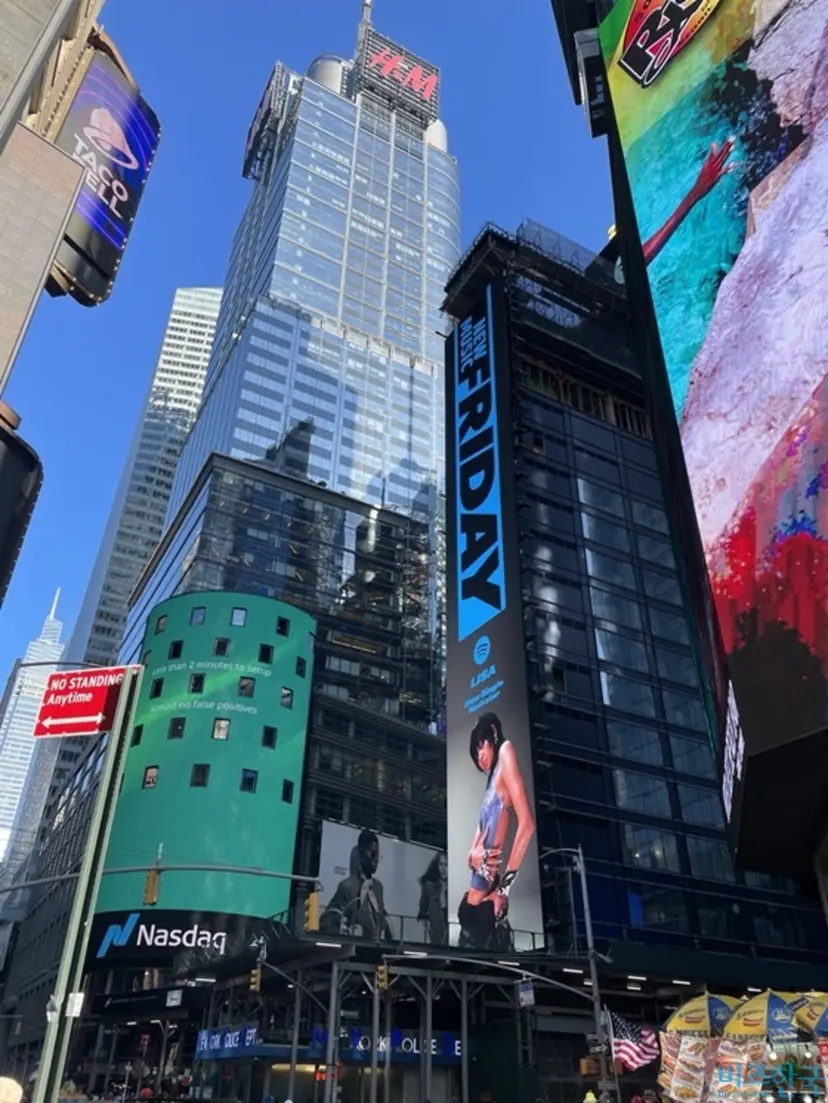
What are the challenges for establishing the K-Pop training system in the U.S.? Professor Lee mentions legal issues and the limitations of the business model. “It would be difficult to create a trainee system legally in the U.S. I suspect they are currently signing them as artists without using the term ‘trainee.’ The U.S. is particularly strict regarding matters involving minors.”
While K-Pop is clearly popular in the U.S., it is questionable whether it is ‘mainstream.’ “It is true that general awareness of Korea has increased. The term K-Pop is no longer unfamiliar, and there is no need to explain what it is anymore. However, the concept of ‘mainstream’ is disappearing in the U.S. as well. In the past, if a song hit number 1 on Melon, the whole country knew it, but that is no longer the case. The same applies to the U.S. K-Pop is definitely popular among U.S. Gen Z, but there are more (American) members of the public who know Psy’s 'Gangnam Style' than BTS songs. The demographic that consumes it is limited, to the point where students themselves say, ‘I’m at an age where I’ve graduated from K-Pop.’”
There are also new problems that arise when K-Pop fandoms are no longer based in Korea. Korea has strict ‘moral standards’ for idols, but the U.S. has ‘demands for political correctness.’ “K-Pop fans in the U.S. consider themselves particularly progressive. Unlike the older generation, they are Americans who like K-Pop, an Asian culture. There is also an inherent racist perspective in the U.S. that sees speaking openly about liking K-Pop as similar to ‘coming out.’ As a result, the fans are more progressive and demand progressive voices from K-Pop idols.”
She says the success of global girl groups from Korean entertainment companies remains an unknown. “In HYBE’s case, they don’t call Katseye a K-Pop group. They call them a global girl group. The core is using the K-Pop system to create a global girl group. The goal is to remove the ‘K.’ It’s hard to jump to conclusions about how things will play out yet. Because there is nothing as difficult as predicting popular culture. I assume those involved are currently agonizing over how to market them successfully.”
※ The next installment will feature an article on the status of K-Pop expansion in Northern Europe.
※ This project was supported by the Press Promotion Fund, created with government advertising fees.
![[K-Pop: Idols in Wonderland] Suggesting the "Trainee" Path to American Teenagers: "What About School?"](https://s.bizhankook.com/attachments_thumb/2026/05/92221_thumb.webp)
![[K-Pop: Idols in Wonderland] Why couldn't a blue-eyed New Yorker become a K-Pop idol?](https://s.bizhankook.com/attachments_thumb/2026/05/92287_thumb.webp)
![[K-Pop: Idols in Wonderland] "Exporting the Korean Training System to the U.S.?" Why an LA Producer Shakes His Head](https://s.bizhankook.com/attachments_thumb/2026/05/92306_thumb.webp)
![[K-Pop: Idols in Wonderland] Tracing the Roots of BTS’s Missed Grammy to K-Pop](https://s.bizhankook.com/attachments_thumb/2026/05/92365_thumb.webp)
![[K-Pop: Idols in Wonderland] Nordic fans: "We love K-Pop, but we don't want to become idols"](https://s.bizhankook.com/attachments_thumb/2026/05/92402_thumb.webp)
![[K-Pop: Idols in Wonderland] Why Swedish composers from the 'Land of ABBA' are creating K-Pop](https://s.bizhankook.com/attachments_thumb/2026/05/92416_thumb.webp)