

[비즈한국] K-Pop has become South Korea's top export. However, deep shadows lie behind the glitz. K-Pop's icons, the idols, are scouted at an early age and undergo grueling training periods. In this process, labor and human rights are frequently ignored. What happens to the countless trainees who never even make it to debut? Through the 'K-Pop: Idols in Wonderland' series, BizHankook intends to point out the problems that have been overlooked while K-Pop has grown, and to examine alternatives from various angles. We believe that only when those who create K-Pop become healthier can those who enjoy it become happier.
The Nordic region, once considered a barren land for the Korean Wave, has recently seen a surging fever for K-Pop. Last year, the first Korean Cultural Center in the Nordic region was established in Sweden, making the heat palpable. How great is the influence of K-Pop in Northern Europe? On June 8 (local time), BizHankook visited the K-Pop Nordic Festival held in Stockholm, Sweden, to experience the fervor on the ground.
The K-Pop Craze Blowing in Northern Europe

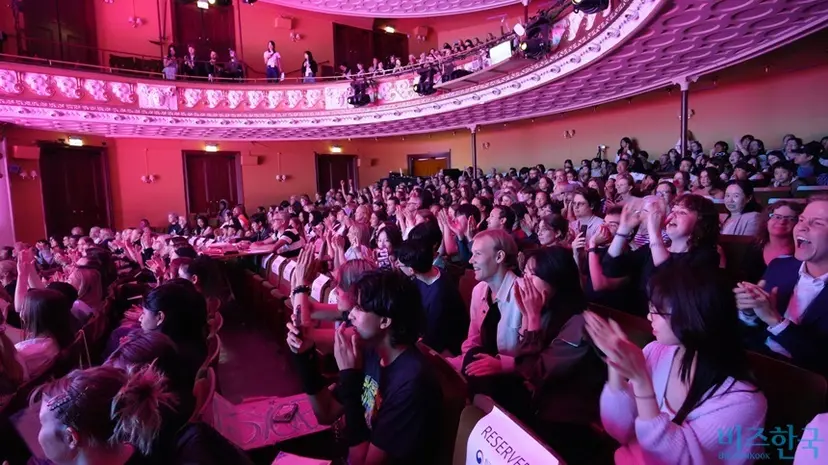
At 10:00 AM, a long line formed in front of the Oscar Theatre in Sweden. Although a light drizzle dampened their hair, those in line seemed not to care, chatting in excited voices. These were the participants for the K-Pop Nordic Festival.
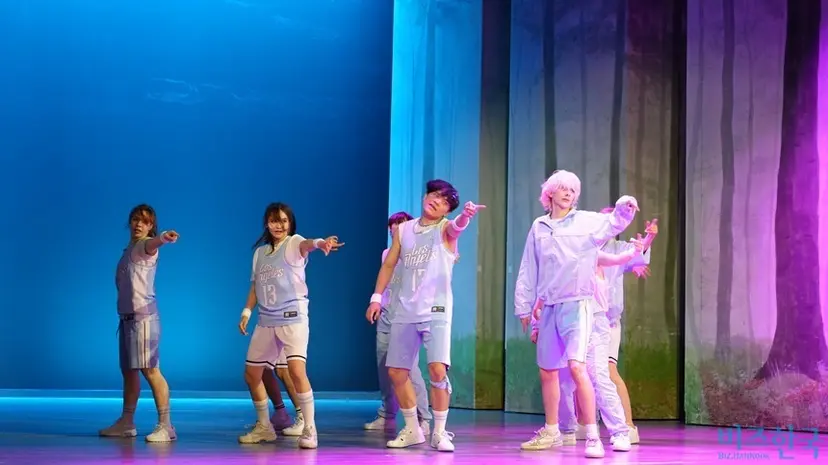
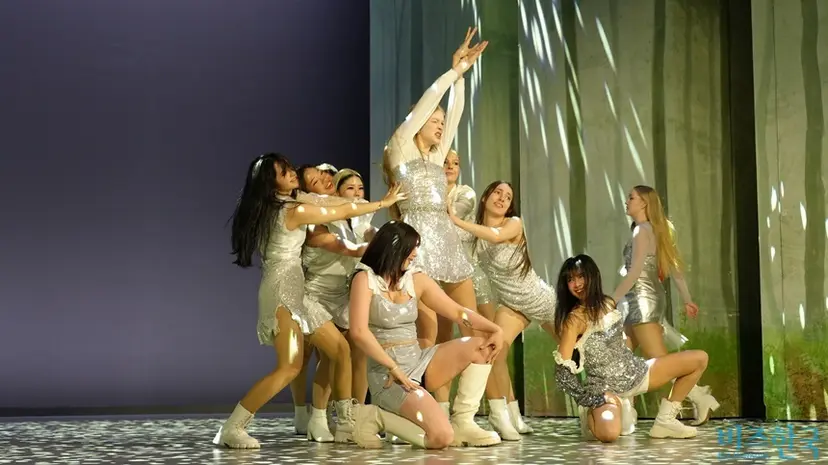
The K-Pop Nordic Festival, now in its second year, is a 'competition' showcasing K-Pop dance and singing, and while still a 'newcomer,' it is gaining enthusiastic popularity. A total of 19 teams from across Northern Europe participated, totaling 150 people. Their nationalities ranged from Sweden to Norway, Finland, and Denmark, and they were diverse in race, occupation, and age.
They were passionate enough to cover their own airfare and accommodation to take part in this event. It is said they poured themselves into practice for about half a year for this single day of the K-Pop festival. The song selections were also diverse, ranging from TWS's 'Plot Twist' to 2NE1's 'Fire.' A 'large-scale' dance team consisting of 17 members also competed. There were many spectators who came to watch the performances, filling all 940 seats from the first to the third floor.
Why are they so enthusiastic about K-Pop in Northern Europe—a region over 10 hours away by plane from Korea, home to pop music legends like ABBA and Max Martin, and where a 'rock culture' is rooted in the base?
Lee Kyung-jae, director of the Korean Cultural Center in Sweden, who hosted the first K-Pop festival in Northern Europe, stated that the reaction to K-Pop in the region is extraordinary. Director Lee said, "K-Pop spread a bit later in Northern Europe than in other European countries. But now, when we hold an event, a truly large number of people participate. Even walking down the street, I get questions about K-Pop. At last year's event, the friends who enjoy K-Pop met up and were truly happy. The K-Pop festival also plays a networking role (for such people)."
A Danish documentary team was also on-site that day. Director Josefine Exner, who was covering the Danish CODE9 Dance Crew team, said, "I have been filming the documentary for four years. It is scheduled to be aired on DR (the Danish Broadcasting Corporation). K-Pop is becoming mainstream in Denmark as well. The Danish media is focusing on the diversity of people who consume K-Pop. The gender and age ranges are very diverse. It is estimated that about 20% of young people in Denmark are interested in K-Pop."
A 92-year-old named Amanu, who came to watch his grandson's performance, said, "I am so happy that my grandson got to perform at such a historic theater. I listened to a K-Pop song for the first time today, and the stage was truly great."
The members of the Korean girl group Primrose, who performed as promotional ambassadors for the event, also remarked, "The scale is much larger than we thought, and the response is great."
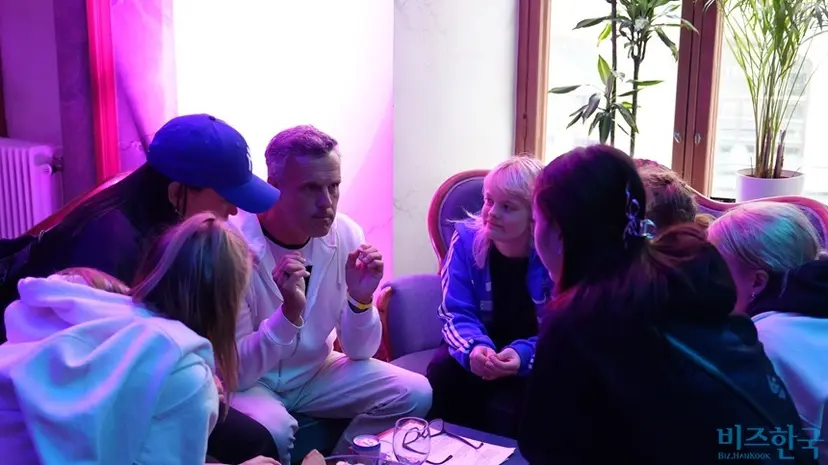
The competition, which started with rehearsals in the morning, ended around 6:00 PM. From 7:00 PM, an after-party was held where participants listened to feedback from the judges and built friendships. Although they might have been exhausted, the 150 participants were brimming with energy throughout.
The level of performance was also high. Most participants took part in the K-Pop festival as a 'hobby,' but the performances were serious and polished. Jay Kim, a choreographer and judge at the festival, commented, "It was the best K-Pop contest I've seen so far. It's rare for people from so many different countries to come together like this. The performances by the participating students were all excellent."

"Idols are overworked"
Why did some 150 Nordic youths participate in the Nordic Festival? They all have one thing in common: they love K-Pop. They all have at least one favorite K-Pop idol. The idol most mentioned by the teams participating that day was 'ATEEZ.' They unanimously praised 'performance' as K-Pop's greatest appeal.
Alexandra Olstad of the team PSYQE said, "We are all K-Pop fans. We love dance, and we enjoy dancing and communicating with other people. We are happy to be able to dance with K-Pop fans." Ella Karlberg of the team Luc1d, who participated again this year following last year, said, "I participated in the K-Pop Nordic Festival last year as well. All our members love K-Pop and dancing."
The Swedish team OMNIA, which took first place that day, shared their feelings: "We practiced for several months. For the first time, we created the choreography ourselves. We are a dance team formed in 2020. Everyone likes K-Pop. After today's event, we are planning to visit Korea together."

There were also cases where teams were composed of high school friends or coworkers living in the same area. Their career aspirations and jobs were diverse. Occasionally, there were participants who said they wanted to become 'professional dancers.'
However, there was not a single person among them who hoped to become a 'K-Pop idol.' When asked 'why' they did not aspire to be idols, they all shook their heads and replied, "HARD WORKING."
The CODE9 Dance Crew team replied, "There are friends who want to become professional dancers, but no one wants to become an idol. It's because becoming an idol is such a difficult job. Idols have to train from a very young age."
Alexander Okinyi Wuod-Maggero Nefzi of the team PSYQE pointed out, "The idea and the system (of K-Pop idols) are good, but they are overworked." It remains a question mark whether the fervor of Northern Europe for K-Pop will lead to an aspiration to 'become an idol.'
※ The next installment will feature an article on why Swedish composers are enthusiastic about K-Pop.
※ This planning series was supported by the Korea Press Foundation with funds from government advertising fees.
![[K-Pop: Idols in Wonderland] Why couldn't a blue-eyed New Yorker become a K-Pop idol?](https://s.bizhankook.com/attachments_thumb/2026/05/92287_thumb.webp)
![[K-Pop: Idols in Wonderland] "Exporting the Korean Training System to the U.S.?" Why an LA Producer Shakes His Head](https://s.bizhankook.com/attachments_thumb/2026/05/92306_thumb.webp)
![[K-Pop: Idols in Wonderland] Tracing the Roots of BTS’s Missed Grammy to K-Pop](https://s.bizhankook.com/attachments_thumb/2026/05/92365_thumb.webp)
![[K-Pop: Idols in Wonderland] Nordic fans: "We love K-Pop, but we don't want to become idols"](https://s.bizhankook.com/attachments_thumb/2026/05/92402_thumb.webp)
![[K-Pop: Idols in Wonderland] Why Swedish composers from the 'Land of ABBA' are creating K-Pop](https://s.bizhankook.com/attachments_thumb/2026/05/92416_thumb.webp)
![[K-Pop: Idols in Wonderland] Asking 'What is Better K-Pop' at Sweden's 'Heavy Metal Mecca' Rock Festival](https://s.bizhankook.com/attachments_thumb/2026/05/92427_thumb.webp)