

[비즈한국] K-Pop has become South Korea's top export. However, there are deep shadows behind the glitz. Idols, the symbols of K-Pop, are scouted at an early age and undergo grueling training periods. In that process, labor and human rights are frequently ignored. What happens to the countless trainees who never even make their debut? Through the 'K-Pop: Idols in Wonderland' series, Bizhankook intends to address the problems that have been ignored while K-Pop grew and examine alternatives from various angles. We believe that when those who create K-Pop become healthier, those who enjoy K-Pop can also become happier.
'All-foreign' K-Pop idols. While the modifier has become familiar now, just a few years ago, it was difficult to find a group where all members were foreigners. As K-Pop idols gained global popularity, the identity of 'K-Pop' also became a major issue. In particular, as large entertainment agencies create 'localized idols' overseas, the question of what 'K-Pop' is follows like a tag.
There is a group that asked this question more than 10 years ago. It is the story of the 'New Yorker' boy group, EXP EDITION.

K-Pop - Korean = ?
“What is ‘K-Pop’?”. Even when asking prominent entertainment industry insiders, an easy answer does not come. That is how difficult it is to define K-Pop. This is because it is not categorized as a 'musical' genre like 'Latin Pop' or 'Hip-hop'. Moreover, as multinational groups have become common, it has become difficult to define 'K-Pop' solely by nationality or race anymore.
CEO Kim Bo-ra, who was studying fine arts at Columbia University Graduate School in New York, threw the 'first question' at the K-Pop industry. “I was an H.O.T. fan in high school. After that, I had no interest at all. Then I went to the US to study, and foreign people were talking about Korean culture more than Koreans. A Japanese friend I met here said she liked 2NE1. People here started learning about Korea through ‘K-Pop’.”
As a 'Korean woman' majoring in sociology and art, what kind of work could she create in the US? “At the time, the work I could pursue with the identity of being Korean was definitely ‘K-Pop’. In a situation where Korea’s pop culture had become K-Pop, my question was, ‘What is truly Korean?’. Naturally, I also began to ponder the identity of K-Pop.”
There was also a ‘positive function’ that K-Pop casts on American society. “American society places particular importance on traditional masculinity. But as K-Pop idols gained popularity, I thought it changed the image of Asian men positively. They went from being objects of ridicule to being attractive beings. How can this be explained sociologically? And I also had questions about how it could be approached artistically.”
If you remove 'Koreans' from K-Pop, what is left? CEO Kim decided to create a 'boy group' in New York. In the summer of 2014, she recruited idol members with the goal of a graduation exhibition.
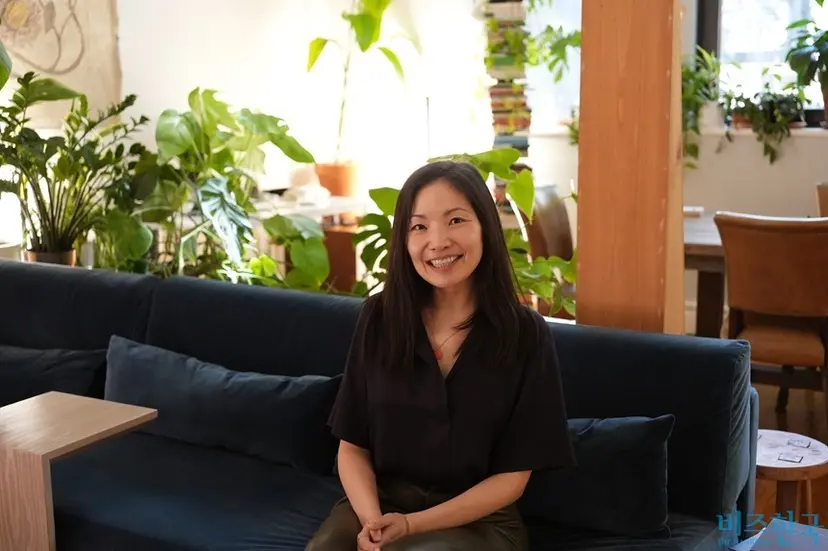
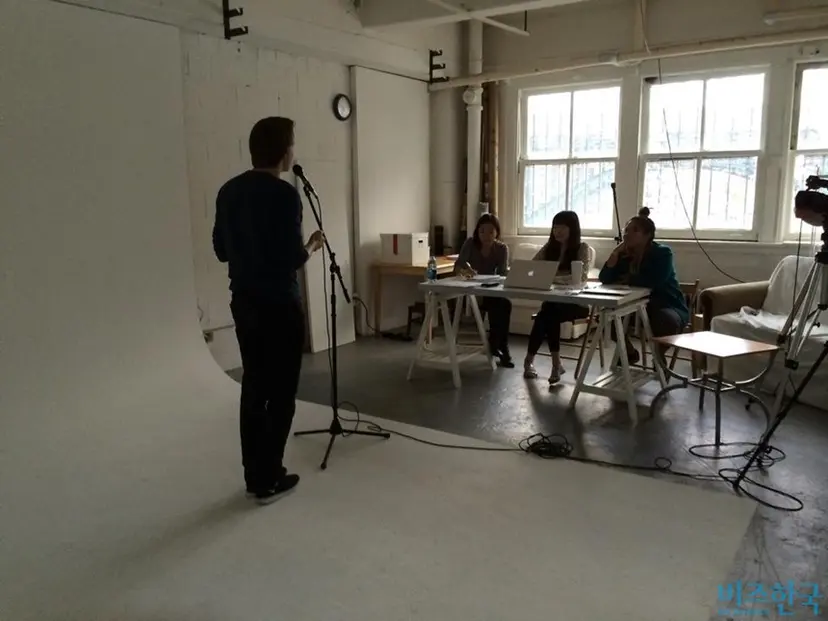
The ‘New Yorkers’ who dreamed of the Broadway stage showed explosive interest in CEO Kim Bo-ra’s ‘I’m Making A Boy Band’ project. The audition competition rate was a whopping 150 to 1. “Initially, I planned to film an experimental documentary project. I said I would film the process of you all becoming a K-Pop boy band.”
That is how the first all-foreign boy group 'EXP EDITION' was born. They were, quite literally, an experimental group.
The 6 'New Yorker' members gathered like this practiced K-Pop songs and dances in New York. CEO Kim recruited her graduate school friends to shoot album photos, make stage costumes, and compose songs. When deciding on the concept and creating the music, everyone gathered and put their heads together. They were also invited to art galleries and museums in New York to perform. “At first, I asked my friends around me to help build it up. If money was short, I would sell my digital camera to cover it. I carried out the project while selling things I owned bit by bit.”
Learned ‘Aegyo’ to become a K-Pop idol
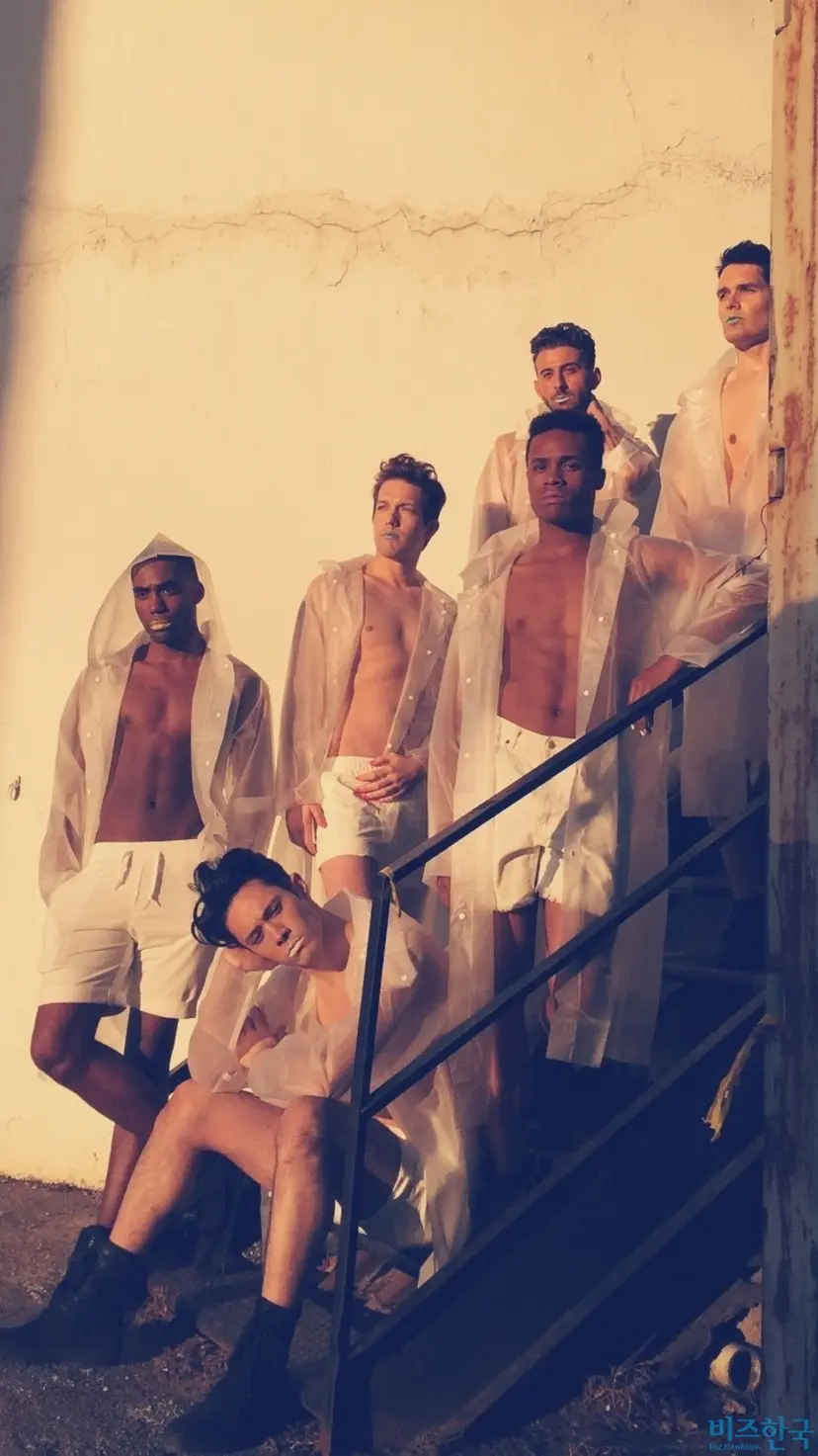
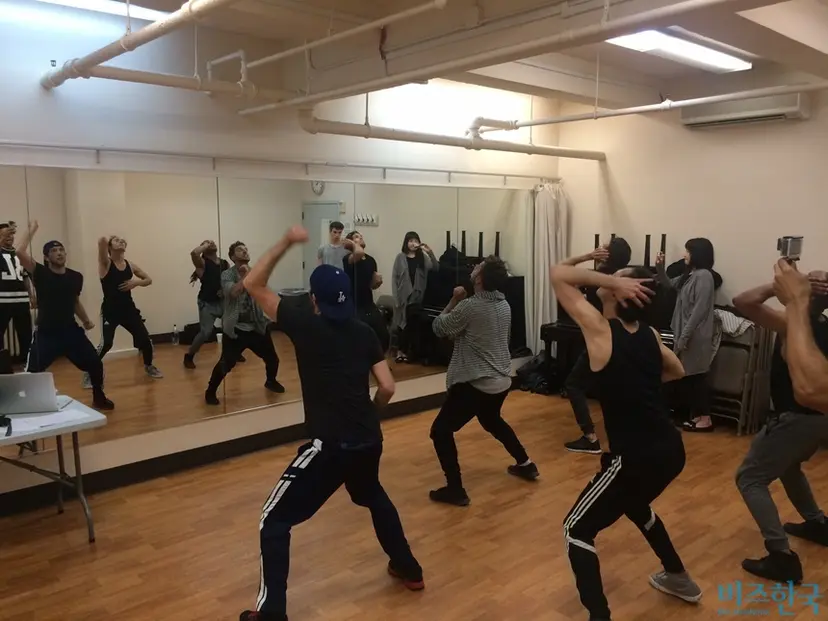
The most important thing was to make members who had never even been to Korea into 'K-Pop idols'. It wasn't enough to simply sing in Korean and dance in a group. CEO Kim Bo-ra taught them Korean culture. “I taught Korean classes myself, and introduced entertainment programs and Korean culture. We gathered and even had ‘aegyo classes’. I taught the concept of aegyo from scratch. Everyone was a friend who liked singing and dancing, but not everyone was a K-Pop fan. So, we also had ‘cultural classes’ where we studied and tried to emulate K-Pop. The members also participated enthusiastically in the project.”
The sight of men wearing makeup and dressing up prettily was also a shock to the ‘New Yorkers’. The same was true for Sime Kosta (an EXP EDITION member) who was born and raised in Croatia. Sime recalls: “I sang at the local church when I was young, and even appeared on local festivals and national TV programs to perform. While attending an arts high school, I learned opera and piano. Music has always played a big part in my life. I went to a US university to become a singer, and my dream later became a ‘Broadway’ musical actor.”
However, becoming a musical actor wasn't easy, so he changed his direction. “At the time, since my status was a foreigner, I couldn’t join the labor union, and because of this, auditioning for musicals wasn't easy. While earning living expenses by serving at a restaurant, I learned about the EXP EDITION audition and applied. I didn't know much about what K-Pop was, but I liked singing.”

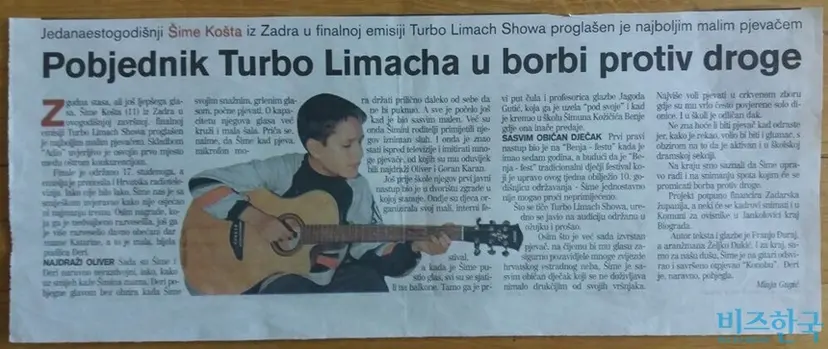
Becoming a K-Pop idol was also by no means easy. “Everything we experienced was a huge challenge. It was a culture we were encountering for the first time, as we grew up within Western concepts of masculinity. There were things we had to learn from scratch. At first, it was confusing, but I tried to accept it. K-Pop itself was a shock. I still can't forget the shock I felt when I first saw ‘BIGBANG’ perform. The performance was like a musical, and the flow of the stage was like a play. I became increasingly captivated by K-Pop, which shows a completed stage.”
The members were ‘sincere’ about the project, but American society was critical. CEO Kim Bo-ra described the situation at the time: “We faced problems we hadn't expected at all. The US is very sensitive to ‘cultural appropriation’ (a cultural group using the traditional culture of another group without permission). A debate arose over the fact that they were doing K-Pop despite not being Korean. It even became an issue online. It was very serious.”
Experience in Korea was a ‘trauma’
In the US, EXP EDITION was at the ‘center of controversy’ just for its existence. However, it couldn't end with just ‘controversy’. In the spring of 2015, EXP EDITION released a track in line with CEO Kim Bo-ra’s graduation exhibition date. And finally, in 2016, they came to ‘Korea’.
“The next logical step was obviously to go to Korea. Excluding two members who expressed that they couldn't go to Korea, the rest of the members came to Korea. We collected a small amount of money through crowdfunding and looked for investors. We received a small investment through acquaintances and established a company called IMMABB (I’m Making A Boy Band).”
The members who came to Korea lived in a dormitory and practiced as a group just like any other K-Pop idol. CEO Kim Bo-ra recruited a Korean language teacher, dance trainer, and manager herself.
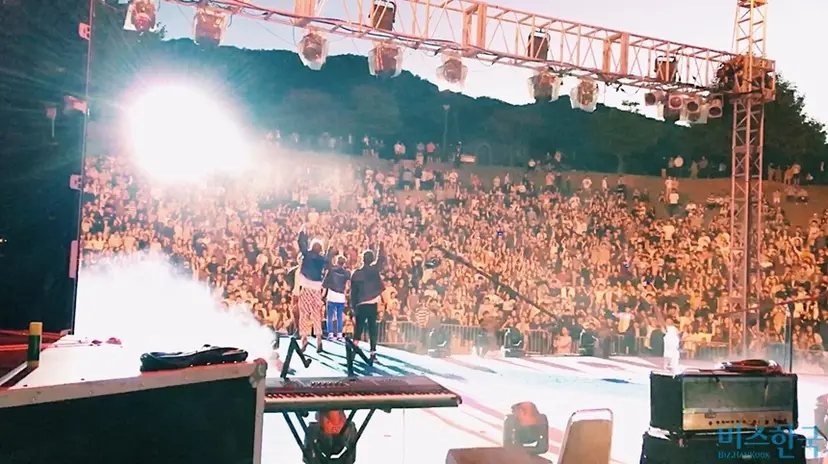
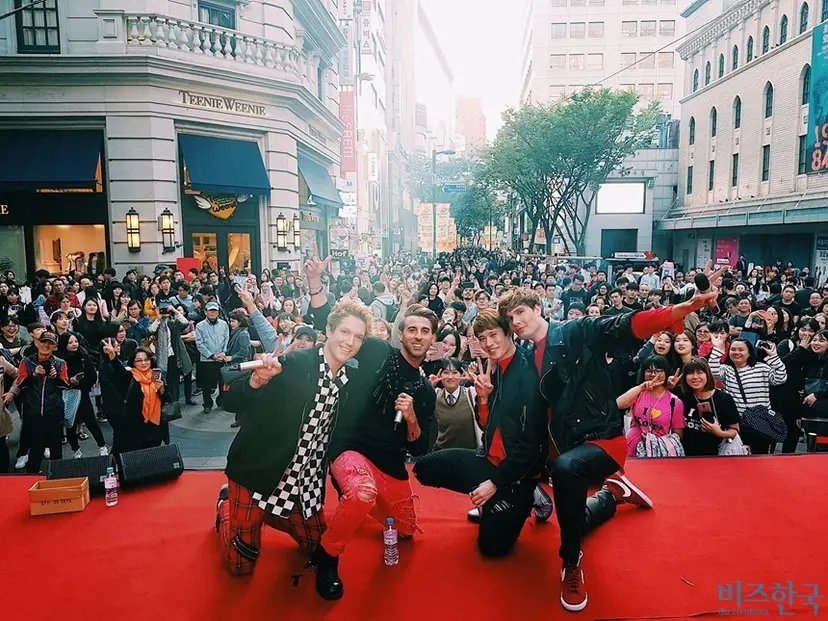
Unlike in the US, EXP EDITION received a great response in Korea. The freshness of being all-foreign, and white members at that, worked. In 2017, they won the LBMA Global K-POP Rookie Award and the International K-Star Awards Excellence Award in the Overseas Artist category. In the same year, they were also appointed as special honorary ambassadors for the Seoul Hanji Culture Festival and the 8th Incheon Airport bbb-day campaign.
Didn't they have any complaints about their ‘agency’ like other idols? Sime Kosta says: “We didn't have a chance to have deep conversations with other K-Pop idols, but I could tell that our relationship wasn't like the one between them and their agency. We didn't make money from this activity, and my family couldn't understand that at all, but I was fine with it. Money wasn't that important at the time. My relationship with Bo-ra was like friends, and when I lived in Korea, food and housing were all provided. I also got an allowance. I regularly went to Costco with Bo-ra’s mother to buy food.”
Those who were ‘riding high’ in Korea suddenly disappeared after the pandemic. CEO Kim says the suspension of EXP EDITION’s activities was a natural step. “I wasn't a person who was trying to start a business. I had no intention of making the entertainment business my career. I was doing art in the US and came to Korea, and it became a business; actually, it was too hard. It was difficult to understand the unreasonable demands of broadcasting stations or the strange culture of the industry. There were also cost issues. We did concerts and events, but everything was in the red. All the members were homesick. The stress from the pressure to ‘succeed’ was also really great.”
The K-Pop that CEO Kim Bo-ra experienced was ‘sacrifice’. “Everyone in the K-Pop industry worked with passion. No one had a personal life. They gave up everything and worked hard to create a piece of work. I think the industry was built on the sacrifices of those people. I think that’s why K-Pop was able to succeed. When we finished our activities and returned to the US, I felt like everyone had experienced great trauma. Now that a few years have passed, one might evaluate it a bit differently, but it was really hard at the time.”
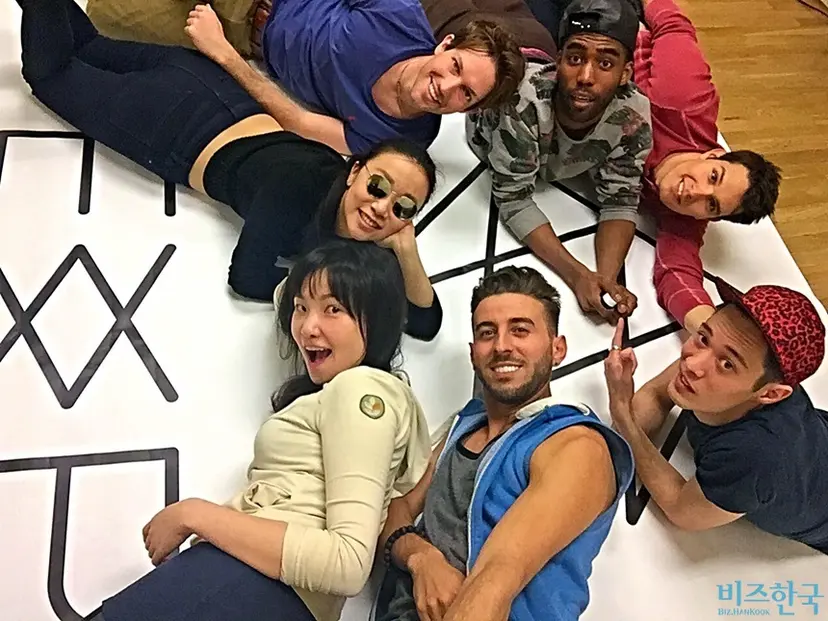
How does Sime Kosta, who grew up in Croatia and studied in the US, recall his K-Pop idol life? “When I was in Korea, we used rented practice rooms, and trainees from other companies used that place too. They were female trainees, and their weights were recorded on the whiteboard. Seeing that, I thought this would not be accepted in the US. Korea was a very systematic, structured, and rigid atmosphere. It was also a ‘culture shock’ that every group lined up to thank the PD after the music broadcast ended. I also wondered if there would be any chance to raise one's voice when they didn't agree with the people leading them.”
Sime, who returned to the US, became an actor performing in musicals in Arizona. He is also doing real estate brokerage. Sime says EXP EDITION was a ‘meaningful’ attempt. “When I first returned to New York, I considered myself a failure, but now I am very proud. I didn't know what K-Pop was then, but now many people are crazy about K-Pop. We led the conversation of ‘What is K-Pop?’, and I think someone will continue this conversation. I think when large Korean entertainment companies bring the K-Pop training system to the US, they will use our experience as a resource.”
※ The next installment will continue with an article on K-Pop idols seen through the eyes of an American producer.
※ This project was supported by the Korea Press Foundation with funds raised from government advertising fees.
![[K-Pop: Idols in Wonderland] What a U.S. Trainee Experienced in the Korean Training System…](https://s.bizhankook.com/attachments_thumb/2026/05/92180_thumb.webp)
![[K-Pop: Idols in Wonderland] The Reality of 'Idol Academies', the Practice Required to Become a Trainee](https://s.bizhankook.com/attachments_thumb/2026/05/92216_thumb.webp)
![[K-Pop: Idols in Wonderland] Suggesting the "Trainee" Path to American Teenagers: "What About School?"](https://s.bizhankook.com/attachments_thumb/2026/05/92221_thumb.webp)
![[K-Pop: Idols in Wonderland] Why couldn't a blue-eyed New Yorker become a K-Pop idol?](https://s.bizhankook.com/attachments_thumb/2026/05/92287_thumb.webp)
![[K-Pop: Idols in Wonderland] "Exporting the Korean Training System to the U.S.?" Why an LA Producer Shakes His Head](https://s.bizhankook.com/attachments_thumb/2026/05/92306_thumb.webp)
![[K-Pop: Idols in Wonderland] Tracing the Roots of BTS’s Missed Grammy to K-Pop](https://s.bizhankook.com/attachments_thumb/2026/05/92365_thumb.webp)