

[비즈한국] K-Pop has become South Korea's top export. However, there is a deep shadow behind the glamour. Idols, the icons of K-Pop, are scouted at a young age and undergo grueling training periods. In this process, labor rights and human rights are often ignored. What happens to the countless trainees who never even make it to debut? Through the 'K-Pop: Idols in Wonderland' series, BizHankook aims to highlight the problems that have been ignored while K-Pop has grown and explore alternatives from multiple angles. We believe that those who make K-Pop must be healthy in order for those who enjoy K-Pop to be happier.
Not many people know that Sweden, a powerhouse of pop music, has played a significant role in the growth of the K-Pop industry. Some of the most recognizable K-Pop hits are the works of Swedish composers. Fifty Fifty's song 'Cupid' and NewJeans' debut track 'Attention' were also composed by Swedish songwriters.
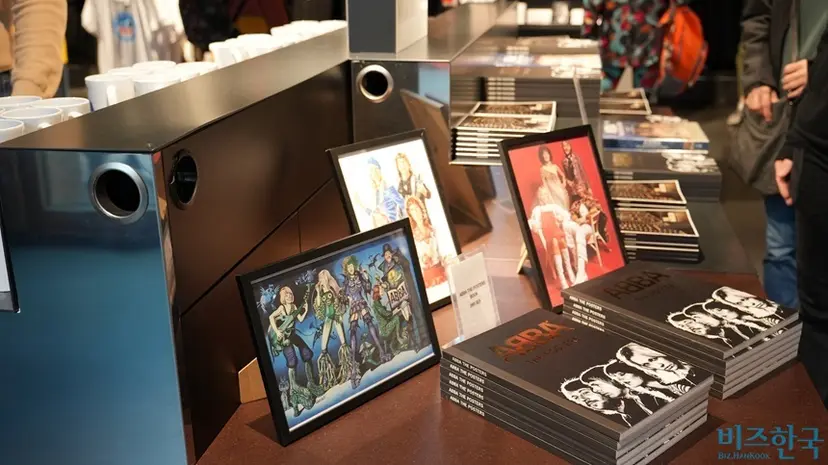
Lee Jun-sang, CEO of Chili Music Korea, says, "Instead of a simple idol system, there is a need to nurture idols by allowing them to develop their own musicality through alternative systems, such as teaching songwriting. One must look at Sweden's music education system. Sweden is not a country that raises idols. However, since BTS's 'Dynamite' reached number one on the Billboard charts, the lineup of domestic music copyright holders has been rapidly filling up with Swedes. Since 'ABBA' in the 1970s, Sweden has made English a common language in schools and has enabled students to learn in various fields within public education nationwide."
How did Swedish composers become connected with K-Pop? Why are they so enthusiastic about composing for K-Pop? We listened to stories from Swedish composers and record label officials.
Learning composition at music school
Swedish composer Louise Frick Sveen has composed numerous K-Pop songs. Notable examples include BTS Jungkook's 'Stay Alive', fromis_9's 'DM', and Red Velvet - Irene & Seulgi's 'Naughty'.
Louise started composing when she was in high school. At first, she studied composition on her own. Later, the path she chose was a 'vocational school.' She enrolled in Musikmakarna, a famous music school in Sweden. Louise says she was able to learn composition thanks to Sweden's unique school system. "This music school encourages students to learn through mistakes. The curriculum consists of 8 months of study and 6 months of internship, focusing more on practice than theory. Thanks to this experience, I was able to jump into the actual music industry."
Sweden's relatively flexible career path curriculum also helped. "In Sweden, you receive basic education until 9th grade, and in grades 10–12 (upper secondary education), you can choose majors such as economics, social science, music, or dance. Even if you choose a major at this time, you can choose a different field in university. It's okay to set your career path early, but there is no problem even if you suddenly major in music after turning twenty. There is no concept of a 'typical' profession, and it is difficult to rank professions."
Famous artists from Sweden have expanded the Swedish music market as a whole. Louise says she was able to get many opportunities thanks to stars like Max Martin, Shellback, and ABBA. "I think the reputation of Swedish composers has risen thanks to them, making it relatively easier to enter the market. As a result, I believe the number of people who want to major in music in Sweden has increased."
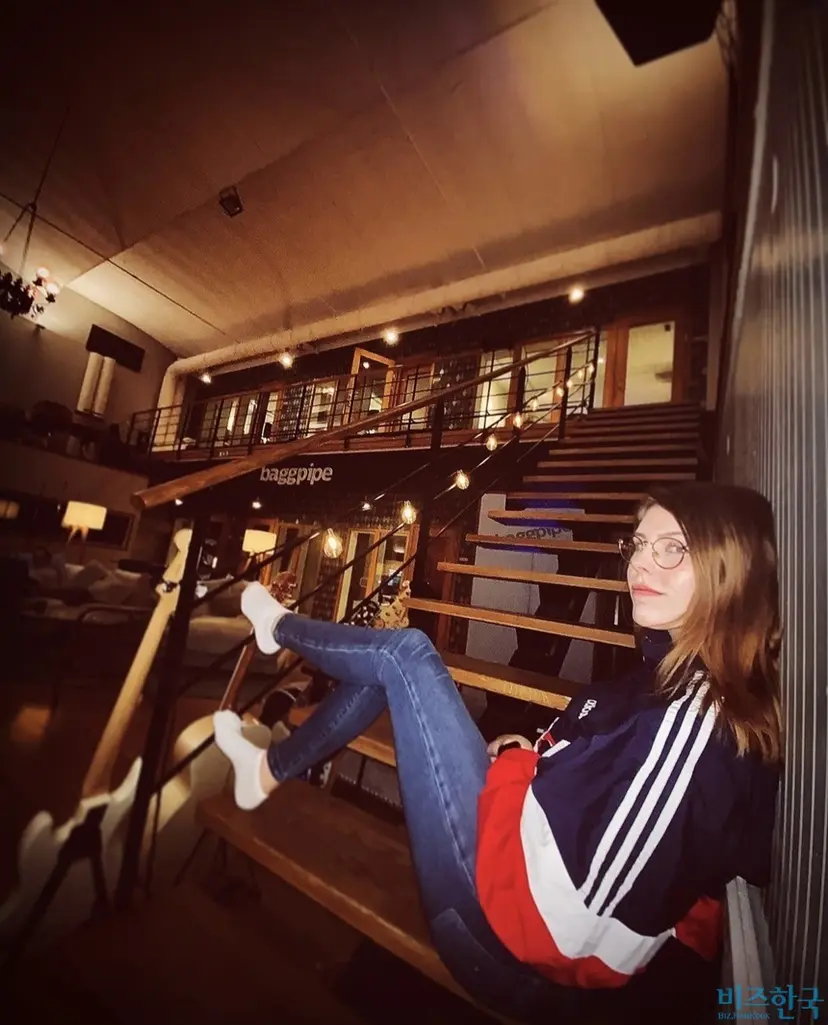
What is the reason why Louise, who followed the 'elite' course for composers, composes K-Pop? She cited the various genres within K-Pop as a strength. She explains that K-Pop is difficult to define by existing music genres. So, while Louise mainly prefers pop, R&B, or city pop styles, she can also try experimental genres when composing K-Pop. Another unique point is that she creates melodies that suit the group members when making a song.
She also mentions that many Swedish composers now prefer to compose K-Pop. "When I first composed K-Pop, it was popular mainly in Korea, Japan, and China, but things are different now. Nowadays, Korean culture in general, not just music, but dance and fashion, is trending in Sweden. Many composers are targeting the K-Pop market."
Louise explains that the Swedish music industry is not much different from Korea's. "There is no major difference in how music is made. I think the biggest difference between the music industries of the two countries is the 'trainee system.' Other than that, I think the two industries are quite similar."
Why do they like K-Pop? "Thanks to high album sales"
Cosmos Music, a major Swedish record label to which Louise belongs, has also been focusing on K-Pop composition recently. Cosmos Music nurtures not only singers but also composers and producers. A composer from Cosmos participated in making NewJeans' 'Attention.' At the Cosmos Music headquarters in Stockholm, Sweden, studios have been built for their composers. Currently, 16 composers and producers are affiliated with Cosmos Music.
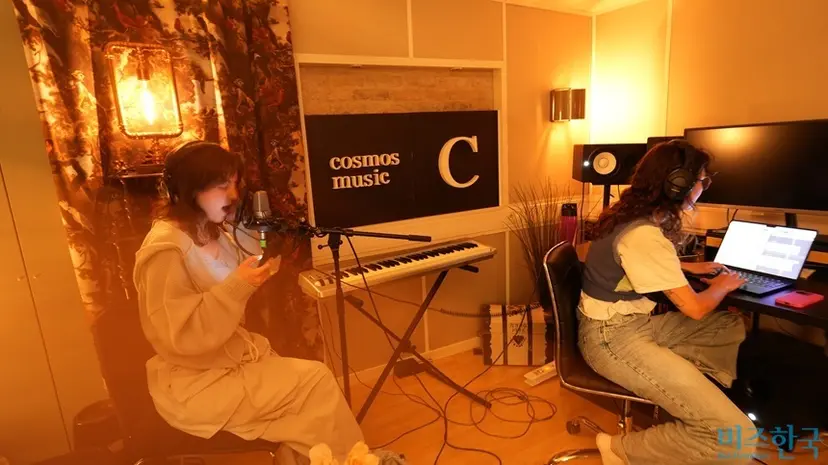
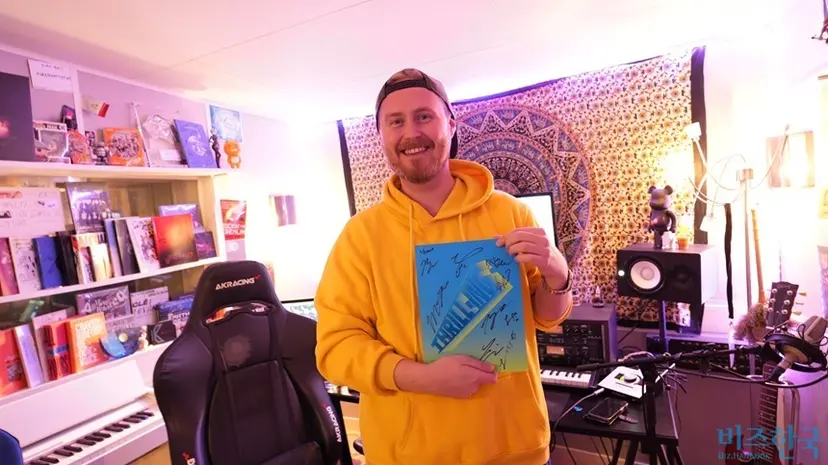
Peo Nylén, Creative Director at Cosmos Music, says they collaborate a lot with Korean agencies. According to him, Cosmos Music composers started participating in K-Pop in earnest, beginning with Girls' Generation's 'Holiday.' To date, they have composed a whopping 250 K-Pop songs.
Peo explained that in Sweden, it is common to enter the music market through vocational schools. "The reason Swedish composers are popular in other markets can be explained by the 'Max Martin (Swedish composer) phenomenon.' There are many other reasons as well. First, Sweden has vocational schools, so composers can be nurtured from a young age."
The growth of the music market is also influenced by the Swedish 'language' and 'climate.' "The weather in Sweden is very cold. I think it's a better environment for composing in a room. Also, the Swedish language has a melody, and people in the East are interested in this melody."
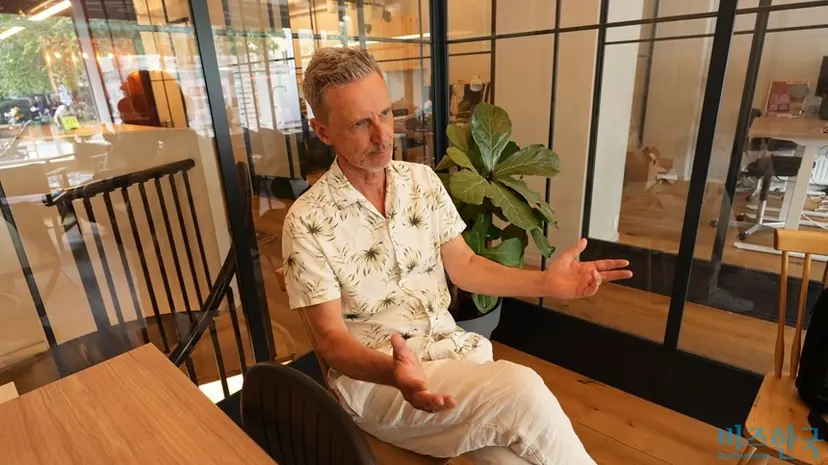
The recent preference for K-Pop among Swedish composers is not just because of the Korean Wave. Peo cited the ability to compose in free genres and the high profits from album sales as strengths of K-Pop. Unlike other countries' music markets where genres are set, K-Pop can incorporate various genres. "The song 'Smart' by Le Sserafim, which a Cosmos Music composer recently participated in, is also an African-style song. There is a developmental aspect in K-Pop where various music can be fused and become more global."
Revenue is also important. K-Pop idols have high album sales. If albums sell well, the composer's revenue increases accordingly. "The revenue from streaming is not much. Also, most music sites don't clearly state the number of streams. On the other hand, K-Pop idols have clear album sales figures, and they sell a lot. That brings a lot of revenue to the composers."
However, unlike working with artists in other countries, when composing K-Pop, there is no direct contact with the idols. Collaboration usually takes place in the form of Korean entertainment companies requesting the style of song they want or Swedish composers proposing songs they have already created to the agencies. Peo said he has almost never met a Korean artist to work with.
Goal is to make good music… No interest in producing idols

Ninos Hanna, CEO and composer of 09 Music, began participating in K-Pop composition in earnest in 2018. He has been active since being invited to an SM songwriting camp. Recently, he participated in SHINee Key's 'Gasoline' and NCT Dream's 'UNKNOWN.'
Unlike other composers, Ninos is not from a vocational school. He changed his career path after playing soccer until age 16 and sustaining an injury. He did not study music professionally. He started composing in earnest at the age of 21. Ninos says there is a limit to composition learned through study. "(Composers who majored in music) sometimes find it hard to stray from what they were taught. Because music comes from within me, I had no difficulty in composing."
Like Peo, Ninos also cited the freedom to write songs as a strength of K-Pop. "K-Pop is more attractive to composers because you can create songs freely without boundaries. In the case of the US, since successful music already exists, the format is set. From a composer's perspective, it can be boring. In K-Pop, composers can freely create various genres. There are more interesting elements. Also, while albums don't sell well in the US or other foreign countries, K-Pop sells a lot of albums, so the revenue is higher."
Ninos predicts that the K-Pop market will expand further. "K-Pop puts extraordinary time and care into music. The music videos are incredible, and they even produce albums with care. K-Pop is getting bigger. I think it will grow even more in the US market."
Most Swedish composers have agencies. Ninos was part of a Swedish record label early in his career, but later left to start the record label 09 Music. The number of affiliated composers and producers is also increasing. Does he have any plans to produce 'idols' like Korean composers? Ninos shook his head firmly. "I have never thought about producing idols. The idol industry is outside my interests. My role is to make music. I also know how hard it is for an artist to succeed. My goal is for my label to be successful musically. I want to show that you can succeed by working honestly."
Toward the end of the interview, Ninos showed a picture of his son and said, "Going to Korea to participate in songwriting camps is always fun, but it is my only obstacle. It's a shame that the more work I have, the less time I get to spend with my son."
※ The next installment will feature an article on alternatives to the idol training system explored through Swedish rock culture.
※ This project was supported by the Press Promotion Fund, which was created by government advertising fees.
![[K-Pop: Idols in Wonderland] "Exporting the Korean Training System to the U.S.?" Why an LA Producer Shakes His Head](https://s.bizhankook.com/attachments_thumb/2026/05/92306_thumb.webp)
![[K-Pop: Idols in Wonderland] Tracing the Roots of BTS’s Missed Grammy to K-Pop](https://s.bizhankook.com/attachments_thumb/2026/05/92365_thumb.webp)
![[K-Pop: Idols in Wonderland] Nordic fans: "We love K-Pop, but we don't want to become idols"](https://s.bizhankook.com/attachments_thumb/2026/05/92402_thumb.webp)
![[K-Pop: Idols in Wonderland] Why Swedish composers from the 'Land of ABBA' are creating K-Pop](https://s.bizhankook.com/attachments_thumb/2026/05/92416_thumb.webp)
![[K-Pop: Idols in Wonderland] Asking 'What is Better K-Pop' at Sweden's 'Heavy Metal Mecca' Rock Festival](https://s.bizhankook.com/attachments_thumb/2026/05/92427_thumb.webp)
![[K-Pop: Idols in Wonderland] The Secret Behind Japan’s Endless Stream of Talented Bands Lies in Schools](https://s.bizhankook.com/attachments_thumb/2026/05/92450_thumb.webp)