

[비즈한국] K-Pop has become South Korea's greatest export. However, deep shadows linger behind the glamour. Idols, the symbols of K-Pop, are scouted at a young age and undergo grueling training periods. In this process, labor rights and human rights are frequently ignored. What happens to the countless trainees who never even make it to debut? Through the series "K-Pop: Idols in Wonderland," Bizhankook intends to address the problems that have been overlooked during K-Pop’s growth and examine potential alternatives from various perspectives. We believe that only when those who create K-Pop are healthy can those who enjoy K-Pop be truly happy.
“The concept of an idol training system does not exist in Europe or the United States. There may be various problems in managing an idol system entirely the way it is done in Korea. This is because sensitivities toward human rights are different. For example, in places like California, USA, the educational rights of adolescents are guaranteed very strictly. If done exactly the same as in Korea, it could lead to problematic situations and even legal disputes,” evaluated Kim Heon-sik, a pop culture critic, regarding the export of the K-Pop idol training system.
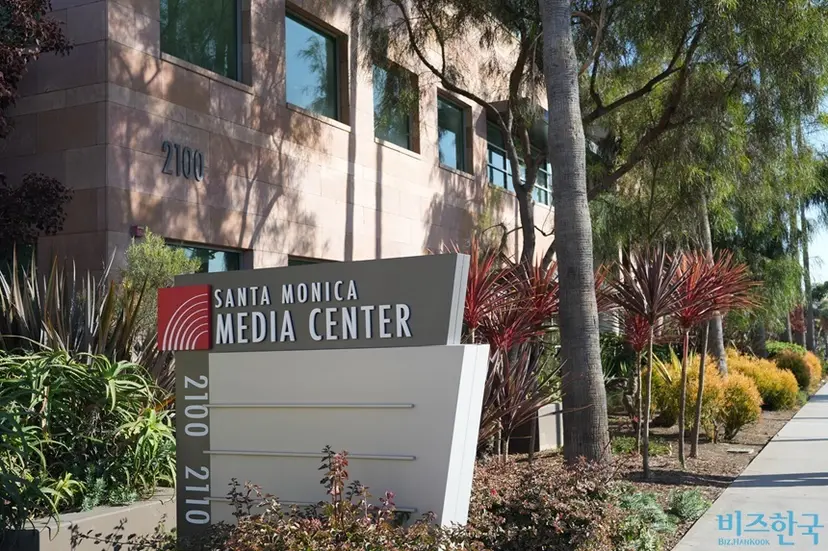
Lee Sang-hoon, CEO of Gene Entertainment, who founded an entertainment company in Germany, says that while there is clearly a K-Pop consumer base in Europe, he questions whether they would want to become "idols." “For Koreans abroad, the globalization of K-Pop is very beneficial. The demand is definitely there. However, I have doubts about exporting the training system itself. Europe is very autonomous. It’s a culture where you must put in your own effort to achieve results, so if an external system is too coercive, resistance is inevitable.”
How is it being evaluated on the ground? As K-Pop gains popularity in the U.S., has the number of Americans wanting to become K-Pop idols also increased? We met with MJ Choi, CEO of I LOVE DANCE, the largest K-Pop dance studio in New York.
K-Pop Popularity, Felt Personally Since 2012
CEO Choi first came to New York, USA, in 1997—some 27 years ago. As an international student, Choi started working as a dance instructor on the side. The motivation was to ensure no one else would have to go through the difficulties she experienced while learning dance late in life.
The dance class, which started as a social club, grew slowly from 5 students to 7, then 10. Three years later, there were so many students that there was hardly enough room. The academy, which started small in Queens, New York, opened branches in Manhattan and New Jersey. Now, it has become New York’s largest K-Pop dance studio with about 1,000 students and 15 instructors.
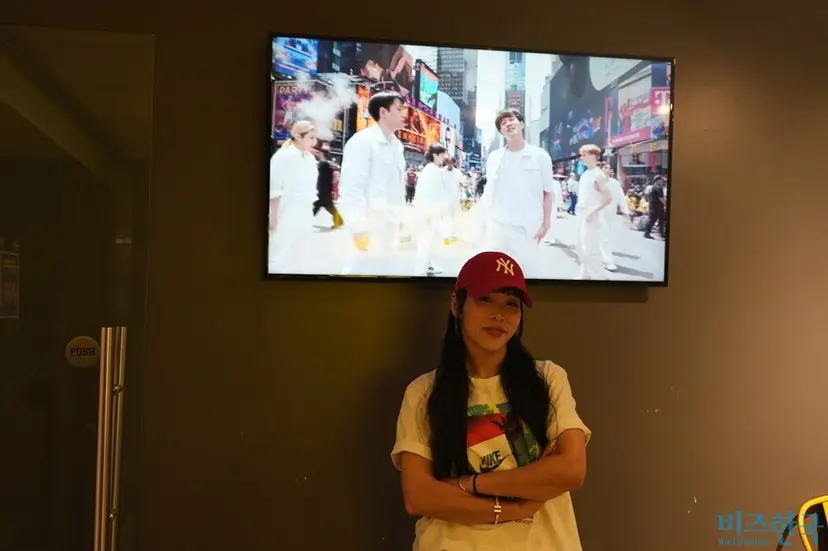
Choi did not teach "K-Pop" from the beginning. In 2006, when she first started as a dance instructor, she didn't even know the term K-Pop. “Around 2007, as Wonder Girls' ‘Tell Me’ became a national dance craze, international students from Korea asked me to teach them ‘broadcast dance’ as well. That was when I studied K-Pop for the first time to teach it.”
The demand for broadcast dance from "Americans" emerged starting in 2009. Americans interested in Korean culture or who liked K-Pop idols began seeking out I LOVE DANCE. “By 2010, more than half of the students were foreigners. Actually, K-Pop wasn't even that popular back then. Then, when ‘Gangnam Style’ was released in 2012, I felt the popularity of K-Pop firsthand.”
Among the students, there are fans of K-Pop idols, but many are also interested in "Korean culture" in general. “There are many foreigners who eat Korean food, use Korean cosmetics, watch Korean movies and programs, and learn the Korean language at language schools. The overall interest in Korean culture has grown significantly.”
The age range of the students is also diverse, evenly distributed from teens to those in their 30s. Occasionally, even the parents of the students take classes. Some who came as students to I LOVE DANCE have even become instructors. “The teacher sitting at the desk next to me right now was one of my early students.”
Choi created her own system to train instructors. “As the size grew, it was difficult for me to do it alone. I conducted training for students who had taken classes for a long time. Quite a few people became teachers that way.”

As Americans' interest in Korean culture grows, requests for performances are pouring in. The I LOVE DANCE team, consisting of students and instructors, performs all over the United States. There are many moments when she feels a sense of fulfillment as a Korean. “I once performed at a private school where there were almost no Asians. Among the entire student body, there were only 15 Asians, and only about 7 of them were Korean. The principal told me that because teachers with the same skin color came and danced K-Pop, the children felt a great sense of pride in the fact that they were Korean.”
Can Americans Accept a System Where You Do as the Agency Dictates?
Among those who come to I LOVE DANCE, there is no one uninterested in K-Pop. “People here seem to view K-Pop idols as a ‘comprehensive gift set.’ Just like when you open a gift and find hardtack, candy, and various other snacks, there are various things people like about K-Pop. You like this member for this reason, that member for that reason, you like the rap, the performance... it's that kind of feeling.”
As K-Pop-loving Americans flocked to I LOVE DANCE, Korean entertainment companies also took an interest. “Agencies contact me and ask for recommendations, and sometimes students apply for auditions themselves and pass. There are even a few who have debuted. However, considering the total percentage of students, there aren't that many who wish to become idols. Most are learning it as a hobby.”
Compared to the popularity of K-Pop, finding "trainee candidates" was not easy. Choi says that out of the 1,000 current students, only about 20 want to become idols. “We all know how K-Pop training works. Asians are used to entering such systems, but the U.S. is completely different. Americans decide for themselves and take classes or do volunteer work from middle and high school.”
Choi says it is questionable whether the K-Pop training system will be applicable in the U.S. “Because American kids didn't grow up in a system where they just follow what others do, if you do exactly what was done in Korea here, the kids will get exhausted, and they will ask questions like, ‘Is this really what I wanted?’”
That is Choi's actual experience. “I once suggested the trainee path to a talented American student, but as soon as she heard it, she asked, ‘What about school?’ The child’s parents asked the same question. She was a student who was truly excellent at dancing, but I couldn't push it further.”
Becoming a trainee requires many sacrifices. Choi says she doesn’t know if Americans can adapt well to such a Korean-style system. “Unlike U.S. labels that support singers who have their own musical color, Korea selects promising kids and gives them a color. I think there is a high possibility that Americans would bounce out if placed in this system. That is why I think even if they introduce the system, they will likely modify it in a direction that fits the American temperament.”
※ The next installment will feature an article on the K-Pop idol experiences of New Yorkers.
※ This project was supported by the Korea Press Foundation with funds from government advertising fees.
![[K-Pop: Idols in Wonderland] "16 is old": Why trainee time runs backward](https://s.bizhankook.com/attachments_thumb/2026/05/92151_thumb.webp)
![[K-Pop: Idols in Wonderland] What a U.S. Trainee Experienced in the Korean Training System…](https://s.bizhankook.com/attachments_thumb/2026/05/92180_thumb.webp)
![[K-Pop: Idols in Wonderland] The Reality of 'Idol Academies', the Practice Required to Become a Trainee](https://s.bizhankook.com/attachments_thumb/2026/05/92216_thumb.webp)
![[K-Pop: Idols in Wonderland] Suggesting the "Trainee" Path to American Teenagers: "What About School?"](https://s.bizhankook.com/attachments_thumb/2026/05/92221_thumb.webp)
![[K-Pop: Idols in Wonderland] Why couldn't a blue-eyed New Yorker become a K-Pop idol?](https://s.bizhankook.com/attachments_thumb/2026/05/92287_thumb.webp)
![[K-Pop: Idols in Wonderland] "Exporting the Korean Training System to the U.S.?" Why an LA Producer Shakes His Head](https://s.bizhankook.com/attachments_thumb/2026/05/92306_thumb.webp)