

[비즈한국] K-Pop has become South Korea's greatest export. However, deep shadows lie behind the glamour. Idols, the symbols of K-Pop, are scouted at an early age and endure grueling training periods. In the process, labor and human rights are often ignored. What happens to the countless trainees who never make it to debut? Through the series ‘K-Pop: Idols in Wonderland,’ Bizhankook intends to address the problems overlooked while K-Pop has been growing and examine alternatives from various angles. We believe that when those who create K-Pop become healthier, those who enjoy K-Pop can also become happier.
“The life of a K-Pop star is a little different from other artists. It’s more close to an Olympic gymnast.” This was said by JYP Entertainment CEO Park Jin-young while conducting auditions in the United States. Perhaps he was conscious of American public criticism regarding the K-Pop system. He compared K-Pop idols to “Olympic gymnasts,” representing elite athletics. He meant that idols are “different” from typical singers.
K-Pop has already succeeded in the U.S. When BTS releases an album, it hits No. 1 on the Billboard charts. Groups like BLACKPINK, ATEEZ, and Stray Kids also climb up and down Billboard and Spotify as if they were “domestic charts.” Now, agencies are moving beyond exporting idols to exporting the “K-Pop training system.” Having conquered Asia, major domestic entertainment companies have set their sights on the “U.S.” JYP experimentally produced the girl group VCHA, while HYBE352820 produced the girl group KATSEYE.

“For a long time, I wanted to nurture talent from various countries based on K-Pop methodology and create a global group with a K-Pop style together with them.” This was a statement made by HYBE Chairman Bang Si-hyuk at a press conference last August regarding the local U.S. girl group project ‘The Debut: Dream Academy.’ Mitra Darab, the project head, also stated, “(The project’s training program) is not different (from the traditional K-Pop idol system). The T&D (Training & Development) system is one of the core methodologies of K-Pop, and I wanted to bring it to the U.S. and incorporate it.”
Exporting idols and exporting the “system” that creates idols are different matters. It is uncertain whether the same system used in Korea can be established in the U.S., especially where criticism that the K-Pop training system is “harsh” is prevalent. Can HYBE create trainees and produce idols in the U.S. as they wish? How will Americans accept the K-Pop training system?
‘Ten-year-olds’ losing weight eating low-calorie jelly
Lauren, born in 2005, was born and raised in the U.S. Her parents are Korean immigrants, but she did not learn Korean separately. She can understand some of it when she hears it, but she cannot speak it well.
“My mom always played K-Pop while I was growing up. I probably started getting interested in earnest around the first year of middle school. It was when BTS was gaining popularity. Since I was young, I’ve liked theater, singing, and dancing.”
She also struggled with her identity. “I am a Korean-American, but honestly, I think of myself as American. I don’t speak Korean well, and because I attended American schools, I learned a lot of American morals and values. However, thanks to my mom, I felt a little different from other American friends.”
Living in New Jersey, “Broadway” was right in front of Lauren, but she couldn’t dream of becoming a musical actor. “Most of the people active on Broadway or in New York are white. But seeing Korean people doing the work I love on stage made me think I wanted to try it, too.”
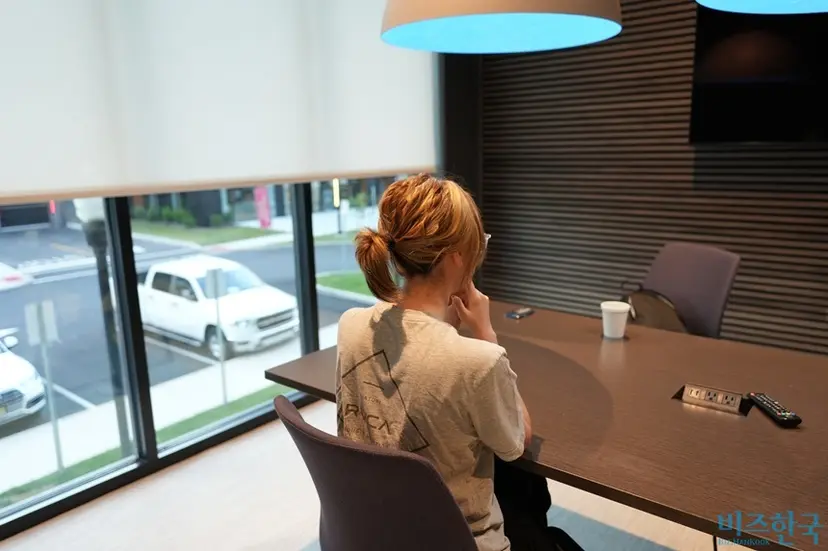
In 2018, when she was in her third year of middle school, Lauren decided to go to Korea. It was to become a “K-Pop idol.” “Because I am not white, I thought I would have more opportunities if I went to Korea. And I wanted to experience Korea’s training culture and idol culture for myself.”
Lauren stayed in Korea for one year and attended an academy specializing in idol training. Her parents paid $20,000 (approximately 26.7 million won) in tuition. Lauren recalls the atmosphere at the academy at the time like this.
“There was a sense of pressure overall. The pressure regarding weight or appearance was especially severe. They said kids would skip meals or not drink water to lose weight. There was a scale at the entrance to the audition hall, and they would ask for weight and height at auditions, too. I was born in 2005, but there were many born in 2010. Those were about ten-year-olds at the time. I even saw such young children dieting by eating 50kcal jelly.”
“In the U.S., people react sensitively to plastic surgery, but it was shocking that in Korea, plastic surgery was taken for granted. You can’t change your appearance, but in Korea, that wasn’t the case. Fortunately, because I was considered a ‘foreigner’ who couldn’t speak Korean, I was relatively freer from that pressure than my other Korean friends.”
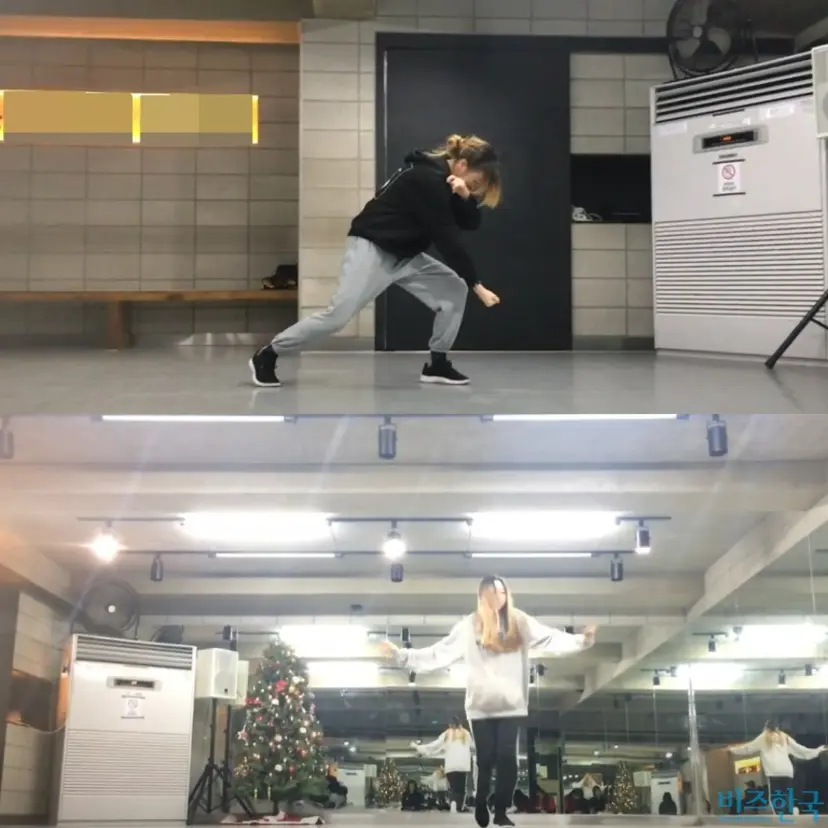
Lauren practiced dance and vocals every day. 15-year-old Lauren and her 10-11-year-old academy friends stayed in the practice room even after lessons ended. An atmosphere was created where one could only become an idol if they stayed in the practice room to train for a long time. The time she got home was 11 p.m. Lauren’s mother, who came to Korea with her, ate a late dinner with Lauren every day. “To keep my mom from worrying, we ate dinner together, and I secretly skipped lunch. Even though I had a thin physique, the pressure to diet was constant. It was also mentally stressful.”
Will the Korean-style pressure system be accepted in the U.S.?
The part Lauren found hardest to understand was the obsession with a “young age.” “I didn’t understand why they start at such a young age. Perhaps it’s to create a more ideal physique, or perhaps it’s because young children are easier to manipulate. The younger you were, the more advantageous it was, and I felt I was too old. I never received that kind of pressure in the U.S. In school, I wasn't pressured to fit into a specific standard or stereotype. In Korea, I felt that pressure strongly.”
After one year, Lauren gave up her dream of being an “idol” and returned to the U.S. She studied again and was accepted into the Rutgers University School of Pharmacy in New Jersey. Lauren says that becoming a “K-Pop idol” is harder than going to college. That’s because becoming an idol was an area unrelated to effort. “I think the process of becoming a K-Pop trainee is much harder than studying. In school, if you study, you get results, but variables like appearance or age that are valued in K-Pop are hard for me to change. The time pressure is also great, and the opportunities to debut are limited.”
Lauren does not regret her experience in Korea. However, she worried about the young children. “Many friends dropped out of school because of practice, or even if they stayed in school, they didn’t pay attention to education and focused only on practice and auditions. There is no way to cope when you don’t become an idol. Since they didn’t get a proper education, it’s difficult to find other jobs. I think safety nets are needed so children don’t completely waste their lives.”
When asked if the K-Pop training system could be introduced in the U.S., Lauren replied: “Even though I braced myself that life (in Korea) would be hard, it was more difficult than I thought. It wasn't just the physical difficulty, but the mental pressure was truly severe. In Korea, there were many cases where the importance of mental health was not recognized. However, Americans are highly aware of mental health, and they respond immediately to these issues. I am actually curious about how Americans will react if the system is exported to the U.S.”
※ The next installment will continue with an article on the reality of idol trainee academies.
※ This project was supported by the Korea Press Foundation’s media promotion fund, which was raised from government advertising fees.
![[K-Pop: Idols in Wonderland] What has changed since the 'TVXQ Incident'?](https://s.bizhankook.com/attachments_thumb/2026/05/92051_thumb.webp)
![[K-Pop: Idols in Wonderland] The Truth Behind the 'Opaque Settlement' That Even Lee Seung-gi Suffered From](https://s.bizhankook.com/attachments_thumb/2026/05/92121_thumb.webp)
![[K-Pop: Idols in Wonderland] "16 is old": Why trainee time runs backward](https://s.bizhankook.com/attachments_thumb/2026/05/92151_thumb.webp)
![[K-Pop: Idols in Wonderland] What a U.S. Trainee Experienced in the Korean Training System…](https://s.bizhankook.com/attachments_thumb/2026/05/92180_thumb.webp)
![[K-Pop: Idols in Wonderland] The Reality of 'Idol Academies', the Practice Required to Become a Trainee](https://s.bizhankook.com/attachments_thumb/2026/05/92216_thumb.webp)
![[K-Pop: Idols in Wonderland] Suggesting the "Trainee" Path to American Teenagers: "What About School?"](https://s.bizhankook.com/attachments_thumb/2026/05/92221_thumb.webp)