

[비즈한국] K-pop has become South Korea's premier export. However, there are deep shadows behind the glamour. Idols, the symbols of K-pop, are scouted at a young age and endure grueling trainee periods. In the process, labor rights and human rights are often ignored. What happens to the countless trainees who never even make it to debut? Through the 'K-Pop: Idols in Wonderland' series, Bizhankook aims to highlight the problems that have been overlooked while K-pop has grown and examine potential alternatives from various angles. We believe that when those who create K-pop are healthier, the people who enjoy K-pop can also be happier.
BoA, the "Star of Asia" who debuted at 13, caused a massive sensation in South Korea. The sight of a young child undergoing systematic training to master not only dance and vocals but also the Japanese language presented a new "formula for success" to the music industry.
Twenty-four years later, young idols are no longer a surprise. This is because the debut age of idols is getting younger and younger. The average debut age of the girl group BABYMONSTER, which debuted last year under YG Entertainment122870, was 16.8 years, and the youngest member, Chiquita, was 14. The girl group UNIS, which debuted last March through an SBS survival audition, had an average age of 15.8. The youngest member, Lim Seowon, is only 13, born in 2011.
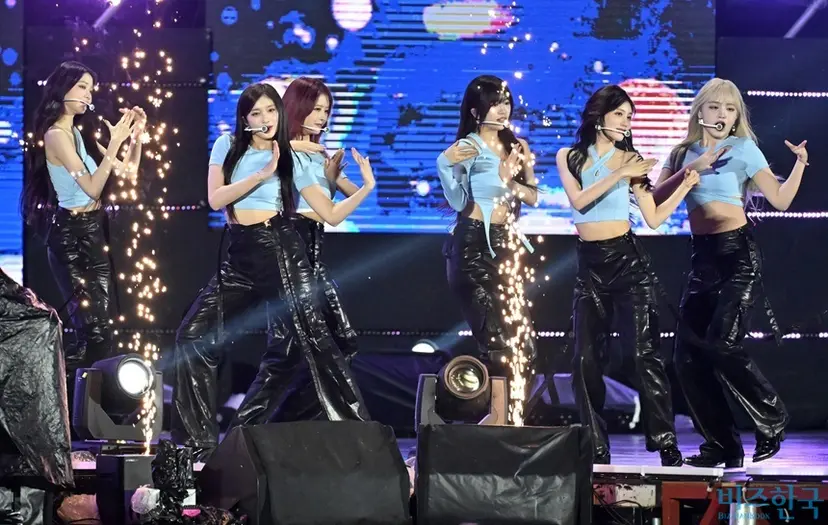
The girl group NewJeans also debuted as an "all-minor" group with an average age of 17.6. As the debut age drops, trainees inevitably become even younger. The trend is now to recruit mostly elementary school students, with some saying that "middle school is the absolute limit."
Why are idols getting younger? Is it okay to have an increasing number of minor idols who haven't even finished middle school? Most of all, are there any measures to protect them?
Younger idols, better sales?
"Elementary schoolers" for trainees, "middle schoolers" for debuts—this is the recent flow of K-pop. An industry insider said, "Unlike actors, the idol industry prefers young ages. Recently, the age at which trainees are recruited is getting even lower. You can usually consider them to be around elementary school age."
Lee Jun-sang, CEO of Chili Music Korea, who has been in the industry for over 30 years, pointed out, "These days, debut groups start from 12 and decisions are finalized by 16. If you're over 16, you're considered 'old.' Companies lose interest in high schoolers who haven't debuted. (So) a cautious approach is necessary when considering human resources."
In fact, according to the 2023 Status Report on the Pop Culture and Arts Industry released by the Korea Creative Content Agency, there are even trainees "under 9 years old." Why do agencies prefer young children?
An official at an idol training center in Gangnam says it is because of the "foreign language" skills required of idols. The official explained, "These days, agencies prefer trainees with fluent foreign language skills. Since foreign languages are learned faster when young, the parents of trainees are already teaching them through private education."
There is also talk that the public simply likes younger idols better. An official from the rookie development team of an entertainment agency confessed, "Because the public prefers young women, the age of girl groups is bound to get lower. Agencies are also desperate to secure the youngest possible candidates because, quite frankly, they believe they have higher market value at a young age."
No protection for minor idols
Agencies recruit elementary and middle school students as trainees, and these kids often skip school or drop out to become idols. Person A, who attended an idol training academy, said, "Usually, they drop out of school, or even if they attend, they don't study and only focus on practice."
The problem is that there are no measures to protect these minor children once they are selected. Under current law, the minimum age for adolescent labor is 13. Specifically, 13 to 14-year-olds require an employment authorization certificate issued by the Minister of Employment and Labor. However, idols are an "exception." This is because they are not considered laborers. In other words, there is no "minimum age" limit for idols and trainees.
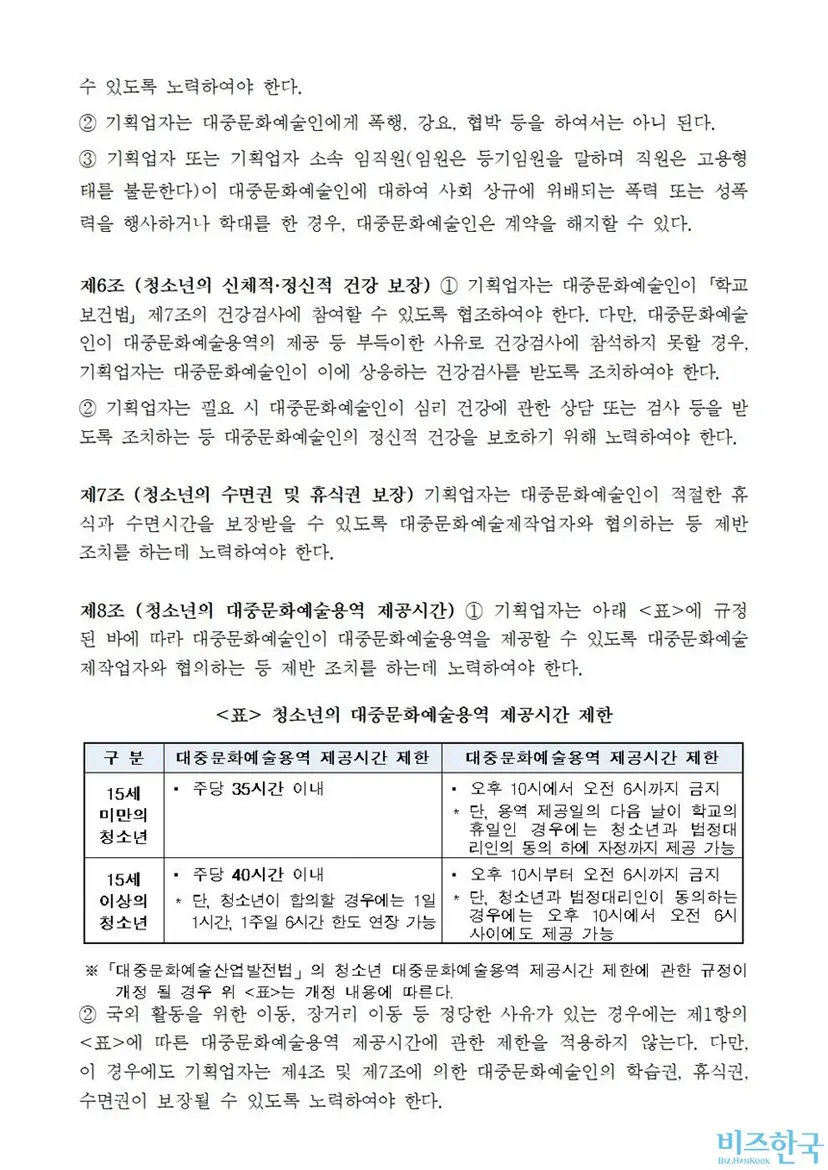
According to the standard annex agreement for adolescent pop culture artists (trainees) notified by the Ministry of Culture, Sports and Tourism, the hours for providing pop culture and arts services are limited to 35 hours per week for those under 15 and 40 hours for those 15 and older. However, these regulations are easily neutralized with the consent of a legal representative.
The definition of "services" is also unclear. It is up to the agency to decide whether to count only broadcast appearances and performance times as services, or to include training hours as well. Contents regarding the guarantee of physical and mental health, sleep, and rest for minor idols all remain at the level of "recommendations."
An official from the Ministry of Culture, Sports and Tourism (MCST) explained, "In terms of legal precedent, entertainers are not recognized as laborers. While we do make recommendations to ensure that study rights and sleep rights are met for minors (in accordance with labor laws), it is difficult to apply them (compulsorily) because they are not categorized as laborers under the Labor Standards Act. For idols and trainees, the criteria for services are ambiguous. During the last National Assembly session, there were discussions on shortening service hours and defining the scope of services through enforcement decrees, but they were not revised due to opposition from the field. The MCST does interpret training hours required by agencies, rather than voluntary practice, as service hours."
As a result, it is difficult to grasp how many children are trainees, or whether their rights to health and education are being protected.
According to the School Health Act, students in elementary, middle, and high schools must undergo "health check-ups." Idols and trainees are no exception. However, the Ministry of Education does not track individuals who fail to participate in these check-ups. The same applies to the status of trainees. The MCST conducts a survey once every two years, but it only knows the status of companies that respond, out of all registered entertainment companies in Korea.
Under the Pop Culture and Arts Industry Development Act, agencies are required to provide sex education and prevention training for sexual violence, prostitution, and harassment conducted by specialized institutions for trainees and idols, but it is impossible to know if this is actually being done.
This was also revealed in the 'Study on Improvement Plans for Enhancing the Utilization of Standard Contracts in the Pop Culture and Arts Industry' released by the Korea Creative Content Agency in 2020. According to this report, 52.6% of pop artists responded that they had not experienced any education related to sexual harassment or sexual violence, while only 24.5% of agencies responded that they did not provide such education. Furthermore, 67.6% of pop artists responded that they were not receiving character education or mental health support from their agencies, whereas only 35.6% of agencies stated they did not provide such support.
The aforementioned MCST official stated, "In the case of artists, there is no separate registration system. We cannot produce exact statistics, but we do conduct status surveys every two years. We grasp the situation through surveys, but we do not conduct field inspections."
※ The next installment will feature an article on how Americans survive as K-pop trainees.
<We are waiting for tips from those involved>
Bizhankook plans to report intensively on stories about K-pop and idols.
If you have personally experienced trainee or idol life, or are working in the K-pop industry, please send us your tips. allhyeon@bizhankook.com
※ This project was supported by the Korea Press Foundation's Media Promotion Fund, which is funded by government advertising commissions.
![[K-Pop: Idols in Wonderland] 'One Day, Idols Disappeared': Their Survival Story](https://s.bizhankook.com/attachments_thumb/2026/05/92034_thumb.webp)
![[K-Pop: Idols in Wonderland] What has changed since the 'TVXQ Incident'?](https://s.bizhankook.com/attachments_thumb/2026/05/92051_thumb.webp)
![[K-Pop: Idols in Wonderland] The Truth Behind the 'Opaque Settlement' That Even Lee Seung-gi Suffered From](https://s.bizhankook.com/attachments_thumb/2026/05/92121_thumb.webp)
![[K-Pop: Idols in Wonderland] "16 is old": Why trainee time runs backward](https://s.bizhankook.com/attachments_thumb/2026/05/92151_thumb.webp)
![[K-Pop: Idols in Wonderland] What a U.S. Trainee Experienced in the Korean Training System…](https://s.bizhankook.com/attachments_thumb/2026/05/92180_thumb.webp)
![[K-Pop: Idols in Wonderland] The Reality of 'Idol Academies', the Practice Required to Become a Trainee](https://s.bizhankook.com/attachments_thumb/2026/05/92216_thumb.webp)