

[Bizhankook] While alternative test methods such as organoids are gaining attention amidst the move to reduce animal testing in drug development, the limitation remains that they cannot yet sufficiently replicate the immune responses and toxicity occurring throughout the entire human body. Therefore, the industry believes that it is premature for organoids to completely replace animal testing and that they should be used as a means to supplement existing tests.
In this context, utilizing "humanized mice"—which incorporate a partial human immune system—to reduce testing on primates such as monkeys is emerging as a realistic alternative. Alternative testing does not solely mean the complete exclusion of animals. The explanation is that reducing the use of high-order animals and transitioning to animal models with relatively lower ethical burdens is also a direction toward reducing animal testing.
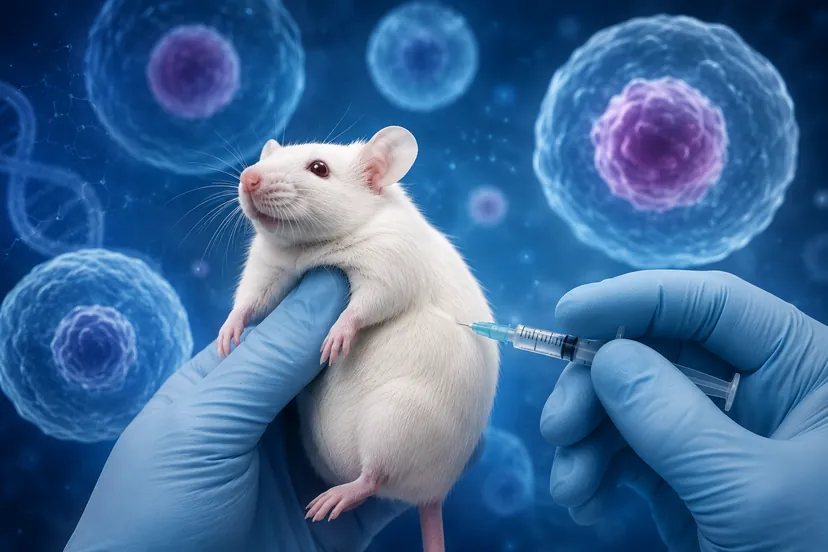
“Difficult to Predict Systemic Immune Responses with Organoids Alone”
Domestic non-clinical testing experts point out that organoids have an inherent limitation as an *in vitro* model. Kang Young-mo, CEO of Preclina, while agreeing that alternative testing is the direction to pursue in the long term, assessed that it is practically difficult to completely replace animal testing at the current level of technology.
He stated, "While organoids allow for toxicity and efficacy evaluation at the level of specific tissues or cells, they have limitations in reproducing systemic immune responses, which occur through the interaction of various immune cells, including T cells and B cells, across multiple organs." He added, "If we enter clinical trials without fully undergoing the safety verification process that animal testing provides, there is a risk that patients will eventually have to bear the burden of unexpected, serious side effects."
Choi Mi-young, CEO of CNSR, also explained, "Organoids have limited pharmacokinetic (PK/PD) evaluation, and issues regarding cell maturity and quality variation between culture batches remain challenges to be solved. At this point, they are closer to a role that supplements existing non-clinical data rather than being core proof documentation."
In fact, while the FDA is pushing policies to expand the use of alternative test methods such as organoids, it maintains the position that this is not a concept of uniformly replacing existing animal testing, but rather applying it in stages, starting with monoclonal antibody-based biopharmaceuticals where scientific validity has been verified.
Humanized Mice… A Realistic Alternative to Reduce Primate Testing
As such, the technology the industry is focusing on as a way to compensate for the limitations of alternative testing is the "humanized mouse." Because humanized mice, transplanted with human immune cells, can relatively simulate human immune responses, they are considered capable of predicting human-specific toxicity—such as cytokine release syndrome (CRS) that can occur in immuno-oncology drugs or cell and gene therapies—at a higher level than regular lab mice.
In particular, as the demand for the development of antibody drugs designed specifically for humans has recently increased, the utility value of humanized mice is also growing.
According to the U.S. National Academies of Sciences, Engineering, and Medicine (NASEM), many biopharmaceuticals, such as monoclonal antibodies, bispecific antibodies, and ADCs, do not exhibit pharmacological action in rodents, making toxicity testing using primates essential in many cases. Furthermore, as the development of antibody-based new drugs, including ADCs, is surging—led by China—demand for primates is also skyrocketing. Recent analyses suggest that, coupled with the recovery of R&D investments by Chinese biotech firms, the price of lab monkeys has risen by up to 10 times compared to pre-COVID-19 levels.

CEO Kang stated, "The meaning of reducing animal testing includes not only using no animals at all but also reducing the burden on experimental animals by substituting primates like monkeys with mice. Humanized mice are not a technology that unconditionally replaces primate testing, but a realistic alternative to minimize the necessary primate tests."
Preclina has developed models for humanized pulmonary fibrosis (BILF) and inflammatory bowel disease (IBD), and the company explained that it is currently the only firm in the world to have commercialized a humanized mouse evaluation platform for autoimmune and allergic diseases. Based on this technical prowess, the company was the first Asian firm to win 'Best CRO' at the 2025 Global PharmaTech Awards and is expanding into the global market by establishing bases in Europe and the U.S.
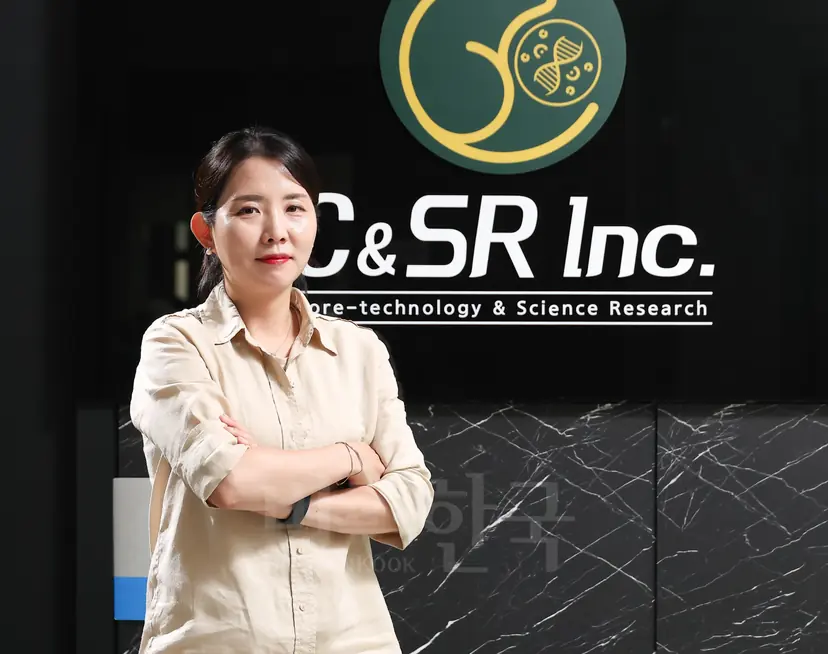
CNSR is also building a standardization (QC) system to reduce the quality variance of humanized mice. Based on technology that consistently implements human leukocyte antigens (HLA), the company is developing a platform that can observe the interaction between cancer cells and human immune cells *in vivo*.
This technology has also been applied to the study of expanding the indications for Apitoxin, a natural-derived osteoarthritis treatment from Apimed, to include multiple sclerosis. Apimed has confirmed the therapeutic effect in non-clinical interim analyses using humanized mice and expects to utilize the data as bridging data for future Phase 3 clinical trials in the U.S.
“Need to Invest in Verification Infrastructure, Not Just New Drug Support”
The industry points out that although domestic non-clinical evaluation technology is securing global competitiveness, government support is heavily skewed toward new drug development itself.
With the recent push for the U.S. Biosecure Act, the move to reduce reliance on Chinese CROs is spreading, raising expectations that global non-clinical demand could shift to South Korea. However, there is a relative lack of investment in the verification infrastructure and standardization systems required to absorb this demand.
CEO Kang said, "The government should not just support the development of alternative technologies, but also build a 'validation hub' to verify how accurately organoid or humanized mouse technologies developed in Korea reflect actual living environments."
CEO Choi also proposed, "For products where primate testing is limited, we need a regulatory sandbox that recognizes a hybrid non-clinical package combining humanized mouse and organoid data. We must establish more concrete criteria for primate test exemptions and quality guidelines for data that has undergone scientific verification."
The true value of alternative testing methods lies not in the blind phasing-out of experimental animals, but in ensuring the safety of new drugs for human use. Can the humanized mouse, which overcomes the physical limitations of organoids and provides a downward substitution for high-cost primate experiments, serve as an alternative? For domestic companies’ competitive non-clinical capabilities to translate into actual order achievements and market leadership amidst global tectonic shifts, the introduction of a flexible regulatory sandbox is urgent.
![[Bio Without Lab Rats] ① “Put an End to Deadly Animal Testing”: A Global Call for Regulation](https://s.bizhankook.com/attachments_webp_no_wm/2026/07/134605_no_wm_8b8b918c.webp)
![[Bio Without Lab Rats] ② CROs Are ‘Evolving’ in the Face of the Animal Testing Reduction Crisis](https://s.bizhankook.com/attachments_webp_no_wm/2026/07/134645_no_wm_29ccb274.webp)
![[Bio Without Lab Rats] ③ Lush Korea CEO Mi-ryung Woo: "Animal-Alternative Testing, a More Beneficial Choice for Humans"](https://s.bizhankook.com/attachments_webp_no_wm/2026/07/134702_no_wm_a30ea7c4.webp)
![[Bio Without Lab Mice] ④ ‘Humanized Mouse’ Technology to Overcome the Limitations of Organoids](https://s.bizhankook.com/attachments_webp_no_wm/2026/07/134850_no_wm_fca1c2cc.webp)
![[Bio Without Lab Rats] ⑤ Cell Culture, Organoids, Organ-on-a-Chip… Three Alternatives to Replace Animal Testing](https://s.bizhankook.com/attachments_webp_no_wm/2026/07/134925_no_wm_f80aeda8.webp)