

[Bizhankook] Lush, the British cosmetic brand, has been the most aggressive in the industry in upholding the principle of excluding animal testing. Their 'non-animal philosophy' is famous for being strictly enforced not just for finished products, but from the raw material procurement stage. Their supply chain management standards, which require annual renewal of anti-animal testing declarations from all suppliers worldwide, are among the most stringent in the industry.
In fact, during negotiations with domestic and international partners, contracts have occasionally fallen through because they failed to meet the criteria for excluding animal testing or raw materials. The industry believes that Lush's uncompromising adherence to these principles proves their sincerity, serving as a key driver in attracting a powerful fandom of consumers who value ethical consumption.
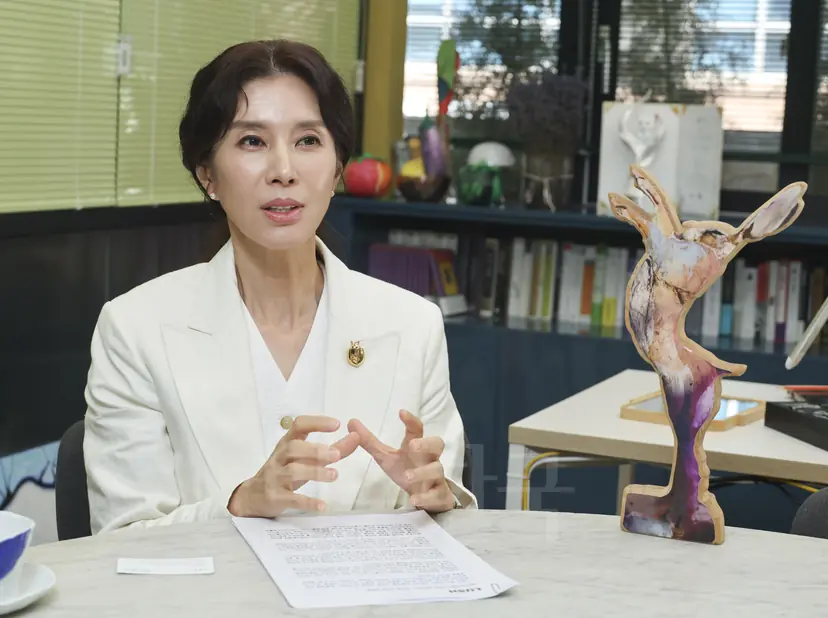
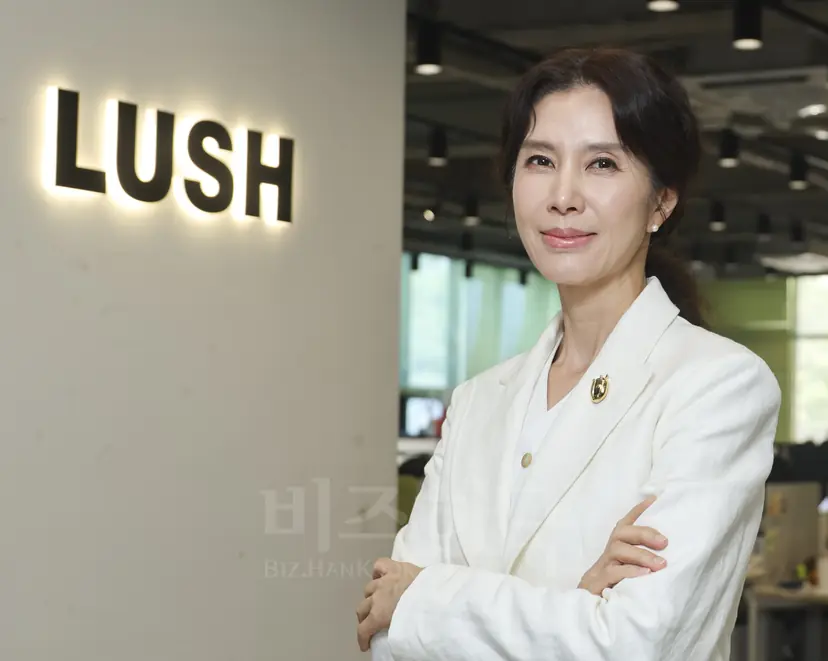
Lush Korea CEO Mi-ryung Woo stated, "These were painful decisions from the perspective of short-term business profits, but I have never compromised on this principle even once." She added, "In the process of constantly persuading people why we conduct these campaigns, even if a contract doesn't go through, we have had the amazing experience of seeing even the working-level staff become true fans of Lush."
Lush builds a robust organizational culture where employees share the experience of creating social change firsthand rather than through rote education, earning a high score of 4.2 out of 5 in internal surveys on pride in the brand.
Lush Korea also contributed to the total phase-out of animal testing in the domestic cosmetics market. Starting in 2012, they conducted a three-year signature campaign in stores nationwide and at external events to urge the passage of a law banning cosmetic animal testing, and led public opinion by hosting an anti-animal testing expo starting in 2013. As a result, they led the passage of an amendment to the Cosmetics Act in 2015 that fundamentally prohibits the distribution and sale of cosmetics developed through animal testing. This law went into effect in 2017.
This experience served as a foundation for Lush Korea, together with Humane World for Animals Korea, to collect approximately 66,000 citizen signatures from 2021 to 2023 and submit them to the National Assembly, helping to enact the Animal-Alternative Testing Act for areas including pharmaceuticals, biotechnology, and medical devices.
As an extension of this, the '14th World Congress on Alternatives and Animal Use in the Life Sciences (WC14)' will be held in August 2027 at COEX in Seoul, co-organized by Lush Korea, the Korea Biotechnology Industry Organization (KoBIA), and the Ministry of Food and Drug Safety. As the world's most authoritative international academic conference in the fields of life science and alternative testing, it is expected to be a significant turning point for discussing future research and policies on animal-alternative testing, marking its first return to Asia in 20 years since Japan in 2007. CEO Woo emphasized, "I hope that this event, held in Asia for the first time in 20 years, will set a milestone for excellent domestic alternative testing technologies to lead global standards beyond Asia."
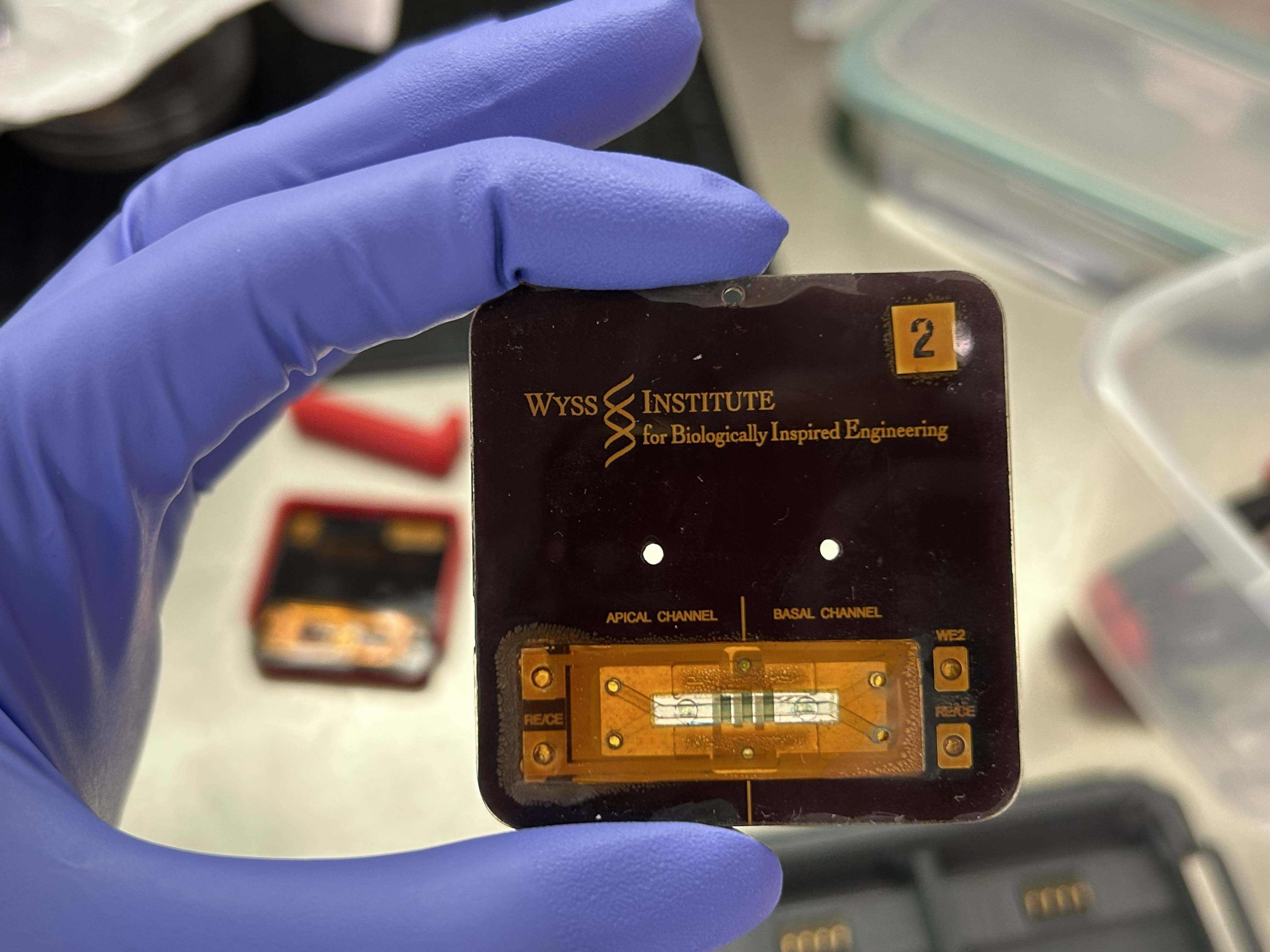
Physiological phenomena absent in mice... The Lush Prize unearths 'Organ-on-a-Chip' alternatives
Lush did not just stop at criticizing and raising issues with animal testing but took the initiative to build an ecosystem to discover practical alternatives. A representative example is the 'Lush Prize,' co-hosted with the British non-profit organization 'Ethical Consumer Research Association.' Launched in 2012, it supports scientists and activists working on animal-alternative testing around the world.
At the '2026 Lush Prize' held in London, UK, this May, Dr. Jore Izadifar's team at the Wyss Institute at Harvard University received an award. Dr. Izadifar's team is developing human cervix and vagina-on-a-chip devices to be used for women's health research.
Until now, there were limits to accurately modeling the complex physiological characteristics of the human body for women's health research based on mouse models, which do not experience menstruation or menopause. This has proven that animal-alternative testing methods could actually be a game-changer for treating women's diseases.
"Do not blindly trust conventional animal testing... Regulations must become flexible like in the US and Europe"
As these innovative alternatives emerge, CEO Woo suggested that the conservative pharmaceutical and biotech industry should view them with a more open perspective. She argued that since animal-alternative testing is an inevitable trend of the era, failing to respond to it could lead to difficulties in securing market competitiveness. She cited the flexible regulatory environments of the US and the European Union (EU) as systems Korea must urgently benchmark.
She pointed out, "An open attitude from regulatory authorities that flexibly recognizes and accepts New Approach Methodologies (NAMs) as official safety assessment data, as is done in the US and the EU, is essential. No matter how excellent cutting-edge technology is developed, if there is no regulatory sandbox and a flexible legal system to quickly evaluate and utilize it within the institutional framework, the technology is bound to become obsolete."
She continued, "There are clear species differences between humans and animals, and we must break the stereotype that animal testing, which has been practiced for a long time, is the most reliable standard. Just as Kodak film collapsed in the digital age, if you do not change your business or ecosystem, you will eventually not be able to survive, so you must prepare thoroughly."
She emphasized, "On the contrary, animal-alternative testing will accelerate the shift toward human-centric science that derives the most accurate and predictive results for humans by combining human cells with cutting-edge engineering technology."
Contemplating the introduction of 'Ethical AI'... Connecting mobile apps and stores to create a popular social agenda
CEO Woo also revealed Lush's firm philosophy regarding the use of AI (Artificial Intelligence), a hot topic in the beauty and pharmaceutical industries. It is a strategy of embracing technological progress while utilizing it within ethical boundaries.
CEO Woo stated, "While we raise voices of caution against the monopoly of Big Tech that indiscriminately wastes resources or infringes on the rights of creators, we are deeply contemplating the construction of an 'AI the Lush Way' infrastructure that assists human expertise and minimizes environmental impact," adding, "Computer simulation and data-based AI alternative testing technology are also key areas we are focusing on."
Going forward, Lush Korea plans to broaden the paradigm of its campaigns so that animal-alternative testing methods do not remain an academic discussion among a few experts but become a heated social agenda that the public can feel in their daily lives. CEO Woo expressed her ambition, saying, "Beyond further solidifying our partnerships with industry and research institutions, we will present large-scale participatory projects that citizens can enjoy and naturally join in their daily lives, using our newly upgraded Lush Korea mobile app and offline stores nationwide as platforms."
Moving away from the long-standing practice of animal testing is no longer just a regulation or cost issue from a corporate perspective. Lush's case proves that in the face of the massive tidal wave of reducing animal testing, proactively shifting to human-centric cutting-edge science is a certain investment to secure a future market fandom. It is time for the K-bio ecosystem, which is passing through a technical and institutional transition, to deeply reflect once again on Lush's persistent activism.
![[Bio Without Lab Rats] ① “Put an End to Deadly Animal Testing”: A Global Call for Regulation](https://s.bizhankook.com/attachments_webp_no_wm/2026/07/134605_no_wm_8b8b918c.webp)
![[Bio Without Lab Rats] ② CROs Are ‘Evolving’ in the Face of the Animal Testing Reduction Crisis](https://s.bizhankook.com/attachments_webp_no_wm/2026/07/134645_no_wm_29ccb274.webp)
![[Bio Without Lab Rats] ③ Lush Korea CEO Mi-ryung Woo: "Animal-Alternative Testing, a More Beneficial Choice for Humans"](https://s.bizhankook.com/attachments_webp_no_wm/2026/07/134702_no_wm_a30ea7c4.webp)
![[Bio Without Lab Mice] ④ ‘Humanized Mouse’ Technology to Overcome the Limitations of Organoids](https://s.bizhankook.com/attachments_webp_no_wm/2026/07/134850_no_wm_fca1c2cc.webp)
![[Bio Without Lab Rats] ⑤ Cell Culture, Organoids, Organ-on-a-Chip… Three Alternatives to Replace Animal Testing](https://s.bizhankook.com/attachments_webp_no_wm/2026/07/134925_no_wm_f80aeda8.webp)