

[비즈한국] To address the ethical issues in drug development and the limitations of conventional animal testing, New Approach Methodologies (NAMs) are being introduced into the industrial field. Techniques such as cell culture, organoids (organ analogs), and organ-on-a-chip are being utilized in various ways to reduce or replace the use of animal subjects.
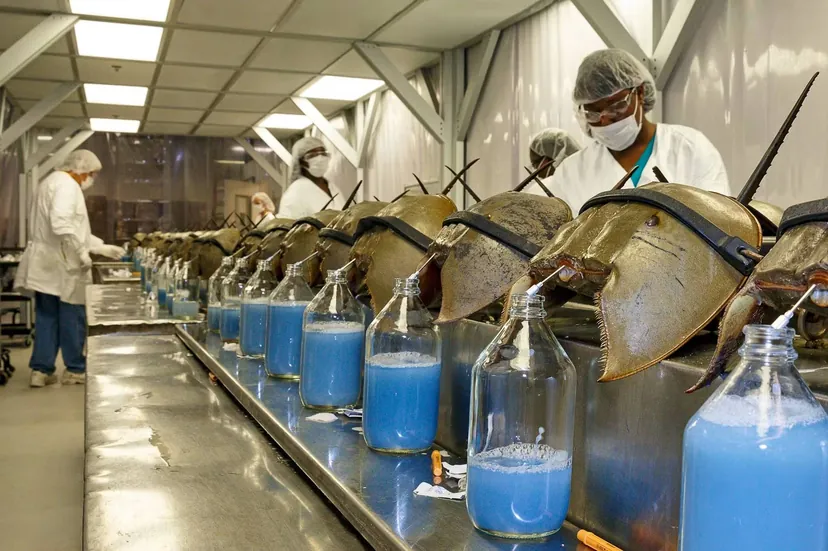
'Cell Culture' Technology Replacing Horseshoe Crab Blood
Alternative technologies are being actively developed to protect the horseshoe crab, a marine creature whose importance for conservation has grown due to a declining population. Amebocytes extracted from horseshoe crab blood are essential for verifying "endotoxin contamination," which can cause fatal fevers or shock during the production of vaccines, implantable medical devices, and botulinum toxin products.
In particular, the COVID-19 pandemic caused a surge in demand for vaccines, and as the bio, beauty, and medical device industries have grown, hundreds of thousands of horseshoe crabs are captured annually for biomedical blood collection. However, ecological impacts have been reported, such as the death of some individuals or reduced reproductive capabilities following the blood collection process.
As the population has plummeted due to over-harvesting, the International Union for Conservation of Nature (IUCN) has designated some horseshoe crabs as endangered species. Consequently, the use of alternative testing methods to replace horseshoe crabs is expanding, centered in the European Union. Notably, in New York State, USA, legislation has been passed to phase out commercial harvest quotas starting this year, with a total ban on the capture of horseshoe crabs for commercial and biomedical purposes beginning in 2029.
Internationally, companies like bioMérieux in France and Lonza in Switzerland have commercialized rFC/rCR-based endotoxin testing methods utilizing recombinant gene technology. While it has the advantage of producing test materials without sacrificing horseshoe crabs, there is a limitation in that additional verification data for non-standard endotoxins is required for industrial application. Recombinant protein-based endotoxin tests use only a mixture of artificially synthesized factors, making differences in reactivity and testing methods compared to traditional horseshoe crab blood-based tests inevitable.
This acts as a burden for pharmaceutical and biotech companies to adopt. It is known that the cost burden is higher compared to existing testing methods because standard operating procedures (SOPs) for quality control (QC) processes must be newly designed. This is why usage in actual practice remains low, even though they are listed as alternative testing methods in various countries' pharmacopoeias (official books of medicine standards).
In Korea, CellWeVerse is developing endotoxin test materials based on cell culture technology.
CellWeVerse has developed a technology that proliferates the amebocyte immune cells of horseshoe crabs—which are known to be very difficult to culture—by more than 1,000 times in 24 days. Cho Gun-sik, CEO of CellWeVerse, explained, "We can produce enough endotoxin test material for about 1,000 tests from the blood collected from just one horseshoe crab." The company also developed a proprietary cryopreservation agent with a survival rate of over 95% to keep the sensitive amebocyte cells stored for long periods. Through this, they stated that the core factors required for endotoxin testing are stably maintained even after long-term culture.
CEO Cho said, "Because we directly culture the core immune cells within the horseshoe crab blood and supply the same material, we can maintain the detection capabilities of the existing method," adding, "Internal tests using our self-cultured materials showed that sensitivity is equal to or even superior to products from top global companies like Charles River or Lonza." He emphasized, "We are currently undergoing full-scale verification procedures at the National Institute of Toxicological Research to have these results officially recognized and to meet regulatory standards."
Daewoong, SillaJen, Kangstem Biotech… Speeding up R&D with 'Organoid' Technology
Organoids are 3D cell models that replicate the structures and functions of human organs by culturing human stem cells in three dimensions. Unlike existing flat 2D cell culture methods, they feature a 3D structure that allows for the reproduction of human physiological characteristics and cell-to-cell interactions.
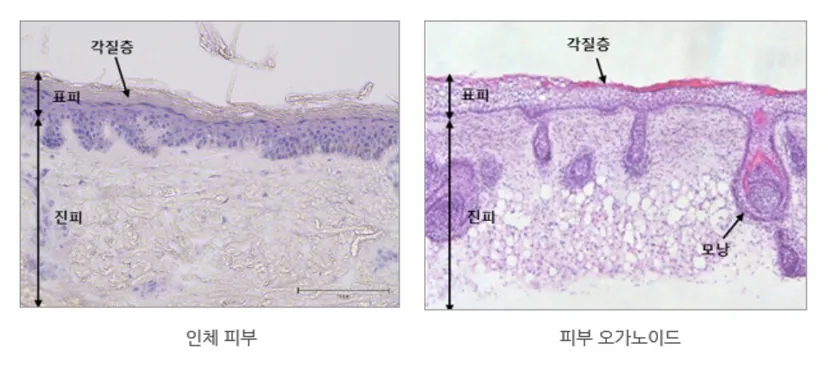
Although there are still limitations in perfectly implementing systemic immune responses or complex blood flow networks, they are considered a strong alternative that can reduce the inter-species differences that occur in animal testing.
In particular, because they can predict drug efficacy and toxicity at the human organ level before administering drug candidates to animals, they are expected to contribute significantly to reducing the number of laboratory animals used in the initial screening process.
Daewoong Pharmaceutical is also pushing to internalize organoid technology. On the 28th, they received technology transfer for liver organoids for toxicity evaluation from the National Institute of Food and Drug Safety Evaluation under the Ministry of Food and Drug Safety. Daewoong Pharmaceutical plans to enhance R&D efficiency by using organoids that replicate human liver tissue and bile excretion structures to more precisely pre-evaluate the liver toxicity of drug candidates in the preclinical stage.
A Daewoong Pharmaceutical official explained, "While it is difficult to disclose specific figures such as sensitivity and specificity, this technology can verify not only simple cell survival rates but also major liver functions and damage indicators such as albumin secretion ability, AST (aspartate aminotransferase), and ALT (alanine aminotransferase) from multiple angles, showing predictive power close to the actual human environment."
The company also aims to expand the scope of organoid usage. Although they have secured toxicity evaluation technology, they plan to expand the application area to include efficacy and drug effect evaluation of drug candidates by incorporating various disease modeling organoid technologies. The Daewoong Pharmaceutical official said, "We also plan to actively consider open innovation measures, such as introducing excellent external platform technologies with global competitiveness."
SillaJen utilized an organoid model last October during the process of receiving approval for an Investigational New Drug (IND) amendment for its anticancer drug candidate 'BAL0891' from the U.S. Food and Drug Administration (FDA). The company submitted only organoid-based preclinical research data instead of animal testing data to prove the clinical validity of the combination therapy. The industry considers this a rare case of receiving FDA IND amendment approval based solely on organoid-based data.
Kangstem Biotech has established skin organoid models and is applying them to efficacy evaluation and screening of cosmetics and skin disease treatments. According to the company, while existing artificial skin has structural limitations lacking blood vessels or an immune system—making it difficult to predict drug reaction results—Kangstem Biotech’s stem cell-based organoid model includes both blood vessels and an immune system, allowing it to implement and visualize reactions that appear in normal skin, such as atopy or wrinkles.
Eoh Hae-gwan, Executive Director of Business Development at Kangstem Biotech, stated, "Our goal is technology export to global pharmaceutical companies," adding, "We have currently signed contracts with one global pharmaceutical company and two domestic pharmaceutical and biotech companies and are conducting CRO work."
'Organ-on-a-Chip' Replicating the Human Organ Environment
Organ-on-a-chip is a next-generation animal alternative testing method that implements human organ structures and functions on a chip based on microfluidic technology. It is gaining attention because it can analyze drug reactions based on human cells, potentially increasing the accuracy of initial candidate selection and toxicity evaluation.
While organoids focus on using stem cells to create 3D structures similar to organs, organ-on-a-chip is characterized by implementing blood-like flows, mechanical stimulation, and drug movement environments to more precisely reproduce actual human reactions.
In the global market, companies like Emulate and CN Bio are commercializing organ-on-a-chip platforms and expanding joint research with pharmaceutical companies. Emulate has developed a microfluidic-based platform that controls liquids with microscopic tubes the thickness of a human hair to replicate human organ structures and functions, providing models for various organs such as the liver, intestines, and lungs. CN Bio is also utilizing its PhysioMimix platform for liver toxicity evaluation and drug metabolism research.
The development of organ-on-a-chip technology is also underway in Korea. T&R Biofab is conducting research related to tissue replication and organ-on-a-chip based on 3D bioprinting technology, and BioSolvX is pursuing the development of biomimetic platforms that simulate human organ environments.
However, organ-on-a-chip still faces challenges in standardization and ensuring regulatory acceptance. Common standards for comparing test results must be established because the organ structures, cell compositions, and fluid environments implemented differ by company and research institution. Furthermore, to be applied to the large-scale candidate screening of pharmaceutical companies, platform standardization, the establishment of mass production systems, and cost competitiveness are also required.
![[Bio Without Lab Rats] ① “Put an End to Deadly Animal Testing”: A Global Call for Regulation](https://s.bizhankook.com/attachments_webp_no_wm/2026/07/134605_no_wm_8b8b918c.webp)
![[Bio Without Lab Rats] ② CROs Are ‘Evolving’ in the Face of the Animal Testing Reduction Crisis](https://s.bizhankook.com/attachments_webp_no_wm/2026/07/134645_no_wm_29ccb274.webp)
![[Bio Without Lab Rats] ③ Lush Korea CEO Mi-ryung Woo: "Animal-Alternative Testing, a More Beneficial Choice for Humans"](https://s.bizhankook.com/attachments_webp_no_wm/2026/07/134702_no_wm_a30ea7c4.webp)
![[Bio Without Lab Mice] ④ ‘Humanized Mouse’ Technology to Overcome the Limitations of Organoids](https://s.bizhankook.com/attachments_webp_no_wm/2026/07/134850_no_wm_fca1c2cc.webp)