

[BizHankook] As global regulatory authorities accelerate the reduction of animal testing in the pharmaceutical development process, many predicted that non-clinical contract research organizations (CROs), which have grown based on animal testing, would face a direct hit. The concern was that a decline in animal testing would inevitably lead to a contraction of the non-clinical market itself.
However, the actual movements of companies at the forefront of the ecosystem are somewhat different from expectations. They are not viewing the reduction of animal testing as the "end of their business," but rather as a "catalyst to change their business structure." They are refining areas where animal testing remains necessary while actively absorbing fields where alternative test methods are possible. It is a strategy to utilize the change itself as a new business opportunity rather than fighting against regulatory shifts.
Kolmar Biotech: Expanding into Cosmetics and Health Supplements, Specializing in 'ADC Non-Clinical'
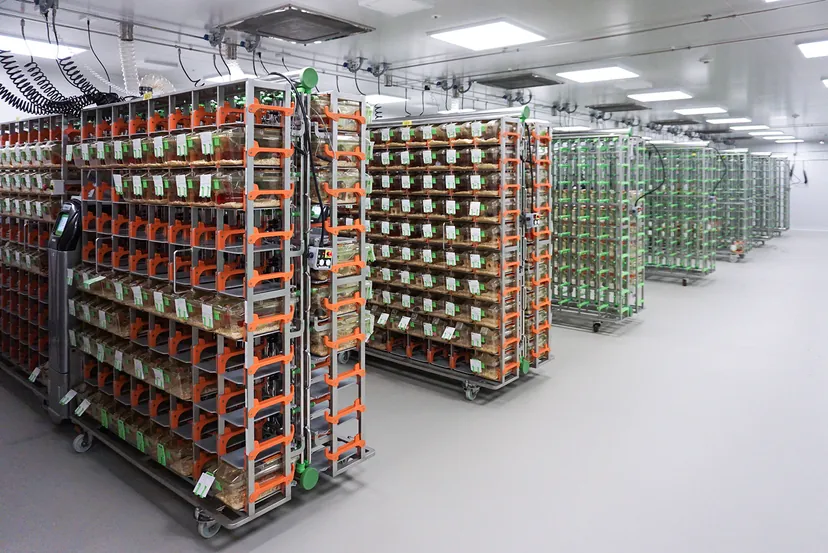
Woozoo Bio, which previously centered on pharmaceutical animal testing, was recently acquired by Kolmar Holdings, renamed Kolmar Biotech, and has embarked on a large-scale structural improvement. At an extraordinary general meeting of shareholders on the 8th, it also revised its business objectives, which were previously centered on pharmaceuticals.
The newly added businesses include research, development, manufacturing, and sales of cosmetic ingredients, research and development of food ingredients and health functional food materials, and veterinary pharmaceuticals, feed, and health functional products, including those for pets. This is interpreted as a strategy to diversify the revenue structure by broadening the business portfolio in line with the trend of reducing animal testing.
The company is not completely stepping away from the non-clinical business. It has chosen a strategy of concentrating its capabilities on fields where it is currently difficult to fully replace animal testing with alternative test methods.
Representative fields include ADC (Antibody-Drug Conjugates) and PDX (Patient-Derived Xenograft models), which are the most notable modalities in the bio industry recently. As they are highly difficult to develop, non-clinical expertise is becoming even more critical.
To this end, the company has recruited Executive Director Kang Jong-soo, who led ADC development at IntoCell, to establish an ADC-specialized non-clinical strategy. While expanding cooperation with external ADME (Absorption, Distribution, Metabolism, and Excretion) specialized companies, the firm is also building a cooperative network with overseas companies, such as the global Japanese CRO SNBL, to strengthen its expertise.
Conversely, in the cosmetics field, where animal testing is already effectively banned, the company is actively introducing alternative test methods. In cooperation with Next & Bio, an organoid-specialized affiliate within the group, it is jointly developing a 3D organoid-based evaluation platform. The goal is to build a system that verifies the efficacy and toxicity of new cosmetic ingredients and health functional food materials without using animals.
Ultimately, Kolmar Biotech is reorganizing its non-clinical business toward selecting the most suitable technology for each field rather than choosing between "continuing animal testing" or "switching to alternative tests."
A Kolmar Biotech official stated, "Based on the bio infrastructure we have accumulated, we will expand our business scope beyond pharmaceuticals to include cosmetics and healthcare, and we will continue to discover specialized products and services to strengthen our competitiveness."
HLB BioStep: Opening a 'Hybrid Platform' Combining Animals with Advanced Technology

HLB BioStep has a similar direction but a slightly different approach. While maintaining its existing efficacy evaluation capabilities based on animal models, it is accelerating the construction of a "hybrid platform" that actively integrates non-animal testing methods (NAMs) such as AI, organoids, and organ-on-a-chip.
An open strategy of partnering with external specialized companies rather than developing all technologies in-house is also a key feature. In the organ-on-a-chip field, the company is cooperating with the Dutch company Kymer, and in the AI-based prediction field, it is collaborating with VasGen Bio to build a service that combines in silico analysis with non-clinical verification.
What the company focuses on is not just the ability to perform tests. It believes that future competitiveness will depend on how much non-clinical data can be accumulated and interpreted to be utilized in early decision-making for new drug development. Accordingly, it is accelerating the establishment of a global standard data platform that can turn NAMs-based toxicity and efficacy data into assets and be used for international guidelines.
Recently, an alternative testing center was also put into full operation. By connecting 3D tumor spheroids, intestinal permeability (Caco-2), and blood-brain barrier (BBB) evaluation models to actual customer services, the company is expanding its human-predictive in vitro models. Combined with the GLP-based toxicity testing capabilities of HLB Biocord, which was acquired in 2024, it is also broadening the utility of its existing non-clinical services.
Baek Sung-jin, CEO of HLB BioStep, stated, "We will evolve into a validation CRO that goes beyond simple test execution to jointly design non-clinical strategies from the pre-IND (Investigational New Drug) stage."
Ultimately, what regulations are changing is not the survival of animal testing, but the role of CROs. If they were "companies that perform tests on behalf of others" in the past, their competitiveness in the future will stem from evolving into partners that appropriately combine animal testing and alternative methods and even suggest new drug development strategies based on accumulated data. The reduction of animal testing has become an inflection point that forces traditional CROs to redefine themselves rather than pushing them out.
- CRO (Contract Research Organization)
- A specialized company that tests and analyzes the efficacy and toxicity of new drugs on behalf of pharmaceutical and bio companies. In this article, it mainly refers to non-clinical CROs that handle the stage prior to human clinical trials.
- NAMs (Non-Animal Methods)
- Test methods that utilize human cells, organoids, organ-on-a-chip, or computer predictions to reduce or replace the use of animals.
- Organoid
- A model that reproduces parts of the structure and function of actual organs by culturing human cells in three dimensions. Often referred to as "mini-organs."
- ADC (Antibody-Drug Conjugate)
- A therapeutic agent that combines a powerful drug with an antibody that targets cancer cells. It is a field that requires specialized non-clinical testing capabilities because development and verification are difficult.
![[Bio Without Lab Rats] ① “Put an End to Deadly Animal Testing”: A Global Call for Regulation](https://s.bizhankook.com/attachments_webp_no_wm/2026/07/134605_no_wm_8b8b918c.webp)
![[Bio Without Lab Rats] ③ Lush Korea CEO Mi-ryung Woo: "Animal-Alternative Testing, a More Beneficial Choice for Humans"](https://s.bizhankook.com/attachments_webp_no_wm/2026/07/134702_no_wm_a30ea7c4.webp)
![[Bio Without Lab Mice] ④ ‘Humanized Mouse’ Technology to Overcome the Limitations of Organoids](https://s.bizhankook.com/attachments_webp_no_wm/2026/07/134850_no_wm_fca1c2cc.webp)
![[Bio Without Lab Rats] ⑤ Cell Culture, Organoids, Organ-on-a-Chip… Three Alternatives to Replace Animal Testing](https://s.bizhankook.com/attachments_webp_no_wm/2026/07/134925_no_wm_f80aeda8.webp)