

[비즈한국] K-Pop has become South Korea's top export. However, behind the glamour, the shadows are deep. Idols, the symbols of K-Pop, are scouted at a young age and go through grueling trainee periods. In that process, labor rights and human rights are often ignored. What happens to the countless trainees who never even make it to debut? Through the ‘K-Pop: Idols in Wonderland’ series, BizHankook aims to address the problems that have been ignored while K-Pop grew and examine alternatives from multiple angles. We believe that when those who create K-Pop become healthier, those who enjoy K-Pop can become happier too.
When a specific industry grows rapidly, a debate over ‘priorities’ always emerges. One is fostering, and the other is regulation. Those in the field demand fostering policies, saying, "You must row when the tide comes in," while those watching from the sidelines point out that appropriate regulations are needed for issues easily overlooked during the growth process. In fact, the two are not very different. This is because regulation is also a fostering measure for long-term growth.
The same applies to the K-Pop industry, which is expanding worldwide. Academics point out that for the qualitative growth of the Korean entertainment industry, institutional mechanisms are needed that strengthen the rights of idols and trainees, such as improving the problems of current standard contracts and opaque settlement structures. On the other hand, those in the entertainment industry argue that relaxing various regulations on the K-Pop industry and building a support system are the most urgent priorities.
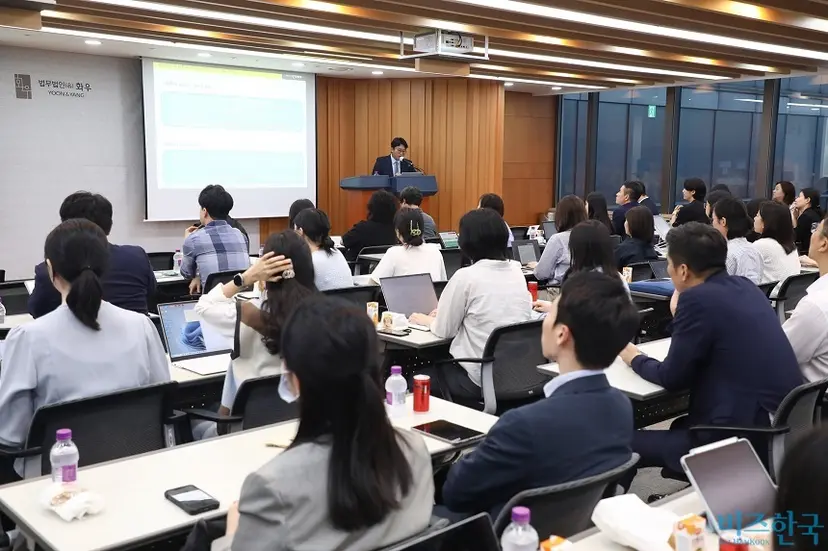
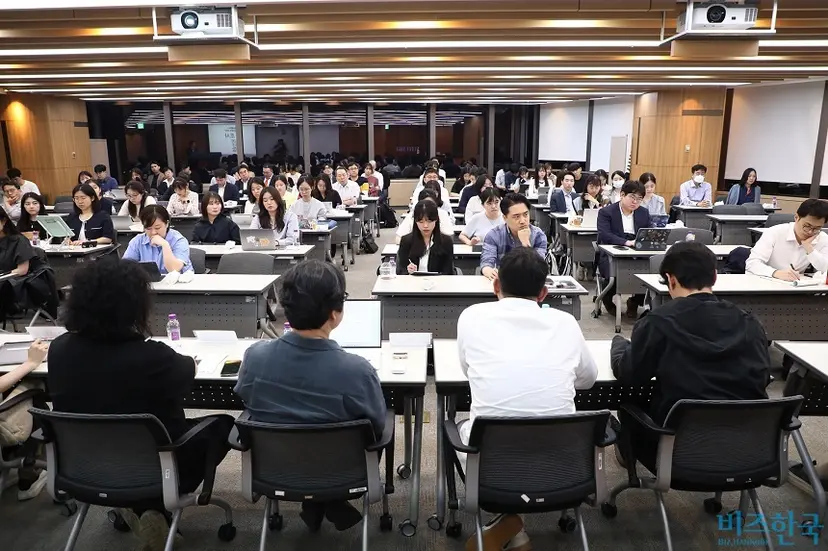
The ‘Academic Seminar on Legal and Policy Issues in the Music Industry,’ hosted by the Korea Entertainment Law Society and sponsored by BizHankook, was held on May 22 at the Hwawoo Law Firm training center in Gangnam-gu, Seoul.
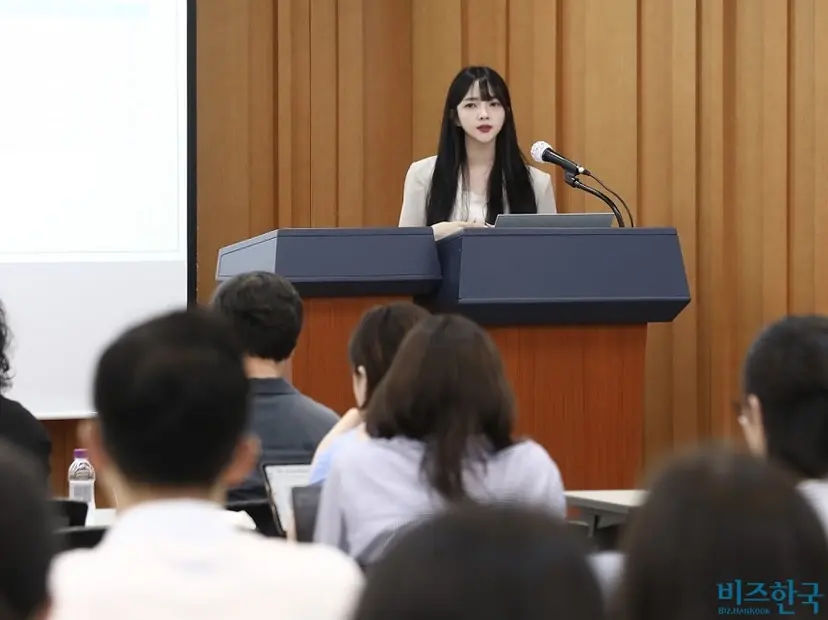
This seminar was prepared to analyze the current state of the Korean popular music industry and discuss related legal issues. Oh Ji-heon, an attorney at Law Firm One, presented on the ‘Legal Issues of Music Copyright Fees,’ and Heo Yu-jeong, a doctoral researcher in Culture and Arts Management at Chung-Ang University, presented on ‘Analysis of the K-Pop Star System – Looking Back at the HYBE352820-ADOR Situation.’
In her presentation, researcher Heo Yu-jeong pointed out that the Korean entertainment industry views artists as ‘property.’ She observed that due to a system where agencies and management are combined, companies are deeply involved in every process, including artist discovery, training, promotion, and management.
At the same time, she emphasized the need to improve the current ‘standard contract.’ Researcher Heo argued, “An unconditional 7-year contract period that does not consider individual companies or various circumstances is a heavy burden on artists. In particular, for idols who debut in their adolescence, personal growth and freedom can be restricted, which can also have a negative impact on creative activities.”
Criticisms regarding trainee contracts and opaque settlement structures were also raised. Although there is a system for agencies to notify trainees of the accounting details of expenses used for them twice a year, it is not being properly implemented. Researcher Heo emphasized, “As a result of interviewing about 50 trainees over about two years since 2022, not a single trainee had received the expense details.”
In particular, she pointed out the need for a legal mechanism to regulate ‘subsidiary agreements’ that neutralize standard contracts. In reality, standard contracts are merely advisory guidelines with no enforcement power, leading to questions about their effectiveness.
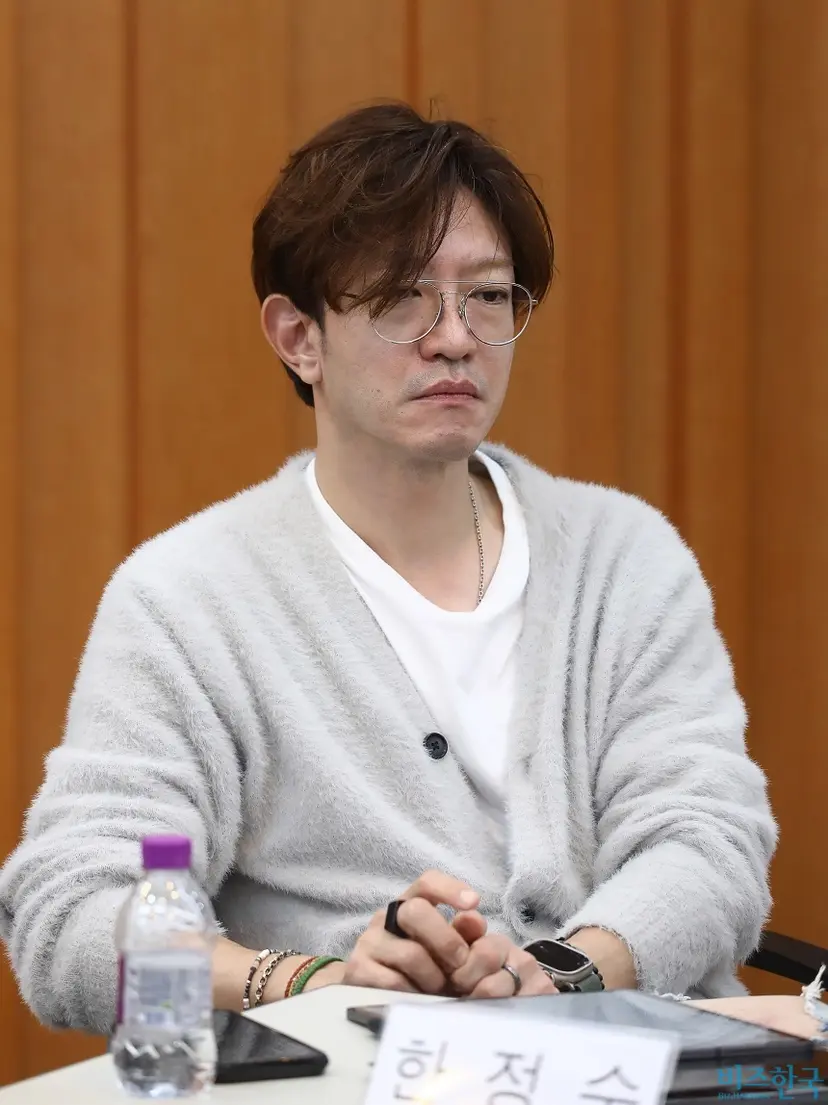
The subsequent discussion involved panelists working in various fields of the music industry, including Na Ui-yeon, a manager at Pado Entertainment; Shin Dae-chul, CEO of Bareun Music; Han Jung-soo, Head of the Music Division at Mystic Story; Lee Dong-yeon, a professor at Korea National University of Arts; Kim Jong-woo, head of the IP Strategy Office at Musicow; and Noh Hye-ran, a former member of Brave Girls.
Entertainment industry workers argued that the standard contract period is a minimum safety device. Han Jung-soo, Head of the Music Division at Mystic Story, emphasized, “If a trainee or celebrity leaves as soon as the contract ends, that's it. Since the debt remains solely with the company, the standard contract must be kept to prepare for risks.”
He further pointed out that deregulation is urgent for industrial development. Representative Han Jung-soo said, “K-Pop’s status has risen, but there are actually too many regulations. A lot of labor costs are consumed in raising one team, so the company carries a huge cost burden. It is time for the government to deeply consider plans to revitalize the industry, such as R&D investment, rather than regulation.”
The panelists also voiced different opinions regarding the requirements for establishing an entertainment agency.
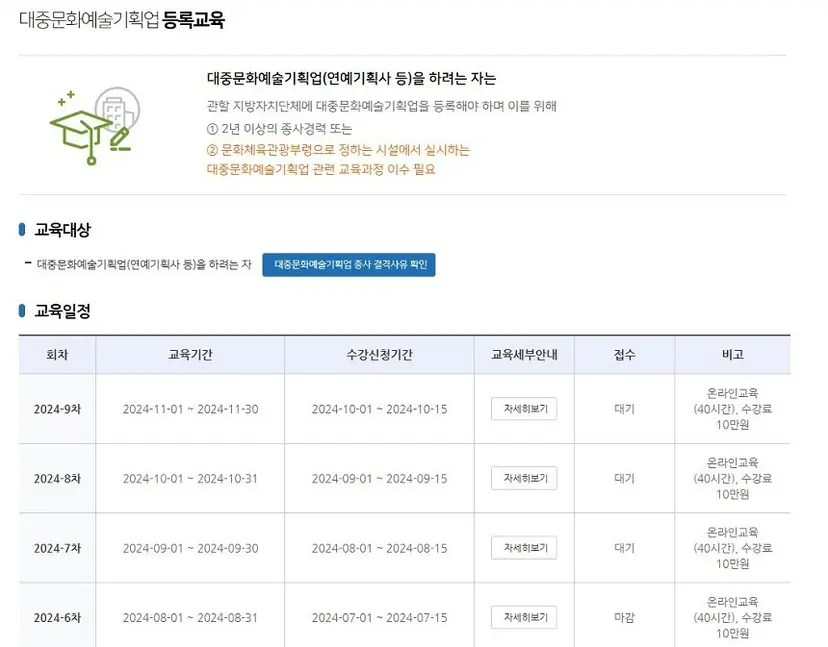
Researcher Heo Yu-jeong argued that the registration requirements for entertainment agencies are lax. She stated, “Even if you only worked as a related manager, stylist, or part-timer at a company registered in the popular culture and arts planning business, it is recognized as career experience that allows you to train, guide, or counsel popular culture artists, regardless of the job type. If you substitute it with an online test, you can register even more easily. Anyone can set up an entertainment agency by completing 40 hours of training and paying 100,000 won.” She added, “We must improve the practice of companies that have sprung up while ignoring the expertise of agencies or management, leading to inhumane treatment or irresponsible management of young trainees, turning them into scapegoats.”
Entertainment industry workers argued the exact opposite, saying that establishing an agency is difficult. Manager Na Ui-yeon explained, “Only those with ‘experience’ who have worked in the industry for more than 2 years can establish an agency. Alternatively, they must take a government-certified training course and pass an exam,” explaining that it is actually difficult to establish a rogue agency. In fact, to register for the popular culture and arts planning business (entertainment agency), documents proving 2 years of related work experience are required according to Article 26 of the Popular Culture and Arts Industry Development Act and Article 6 of the Enforcement Decree of the same Act. Alternatively, one must complete a certain training course at a facility prescribed by the Ordinance of the Ministry of Culture, Sports and Tourism.
Criticism of the trainee nurturing system also continued. Shin Dae-chul, CEO of Bareun Music, raised his voice, comparing idol trainees to North Korean ‘dancers.’ He pointed out, “K-Pop’s idol training system was hard to find anywhere else in the world, but I found something similar after watching a recent broadcast. That is the North Korean dancer. Both are created through grueling practice and training by the state (agency) from a young age without even getting paid. Even the synchronized choreography and flashy dancing are exactly the same. It is an irrational system that makes no sense in modern society.”
Professor Lee Dong-yeon of the Korea National University of Arts said that entertainment agencies should come up with self-rescue measures to create autonomous regulations so that the idol training system can be improved in a healthy way.
A proposal for improving the environment for artists was also made. Noh Hye-ran, a former member of Brave Girls, said, “Most idols became trainees to achieve their dreams. In most cases, they do not know much about systems or education. I wish entertainment officials would create a healthy environment that serves as a foundation for us to work.”
※ The next installment will feature an interview with writer Bang Min-soo, a former member of Teen Top.
<We await reports from stakeholders>
BizHankook plans to focus its reporting on stories about K-Pop and idols.
We welcome reports from those who have experienced trainee or idol life firsthand or are working in the K-Pop industry. allhyeon@bizhankook.com
※ This planning project was supported by the Korea Press Foundation's Press Promotion Fund, which was created from government advertising fees.
![[K-Pop: Idols in Wonderland] 10 Years as an Idol: Diets and Gastritis Were My Daily Routine](https://s.bizhankook.com/attachments_thumb/2026/05/91798_thumb.webp)
![[K-Pop: Idols in Wonderland] Why 'Danbalmuri' Member Yoojung Turned to 'Education'](https://s.bizhankook.com/attachments_thumb/2026/05/91811_thumb.webp)
![[K-Pop: Idols in Wonderland] Is a Binary Choice Between Nurturing and Regulation the Only Answer?](https://s.bizhankook.com/attachments_thumb/2026/05/91900_thumb.webp)
![[K-Pop: Idols in Wonderland] "Idols need a labor union too": A candid statement from Teen Top's C.A.P (Bang Min-soo)](https://s.bizhankook.com/attachments_thumb/2026/05/91907_thumb.webp)
![[K-Pop: Idols in Wonderland] "15-Year Slave Contract: They Said I Couldn't Consult a Lawyer"](https://s.bizhankook.com/attachments_thumb/2026/05/91969_thumb.webp)
![[K-Pop: Idols in Wonderland] Are Trainees Workers or Students?](https://s.bizhankook.com/attachments_thumb/2026/05/92017_thumb.webp)