

[비즈한국] K-Pop has become South Korea’s top export product. However, there is a deep shadow behind the glamour. The symbols of K-Pop, the idols, are scouted at a young age and go through a grueling training period. In this process, labor rights and human rights are frequently ignored. What happens to the countless trainees who never even make it to debut? Through the ‘K-Pop: Idols in Wonderland’ series, Bizhankook aims to highlight the problems that have been ignored while K-Pop has been growing and to examine alternatives from various angles. We believe that when those who create K-Pop become healthier, those who enjoy K-Pop can also become happier.

“Eight out of 10 female trainees don’t get their periods,” says an official from an entertainment company’s new artist development team. A life of waking up at 5 a.m. and returning home at 2 a.m. The entertainment kingdom is overflowing with ‘children’ who drink only water for a week to go on a diet.
“Most don’t have periods. Because they don't eat and only exercise during their prime growth years. There is no system here to diet ‘healthily.’ They are told to achieve the goal unconditionally. If they don’t get their periods, the children are actually happy about it. Because it’s convenient. Young girls who don’t go to school don’t think anything of the fact that they don’t have periods. Sex education isn’t provided here, after all,” the official relayed.
“If my weight came out even slightly higher than the previous day, I couldn’t go home. I had to stand in punishment in front of the staff until I hit my target weight. As this life repeated, I was in a state where I had to be hospitalized even if I ate just a little. I lived with enteritis,” recalled Ga-eun (pseudonym), who was a trainee for 7 years.
There are countless children whose bodies and minds are hurting, but there is no one to care for them. This is because this kingdom is neither a school nor a company. Entertainment agencies are not schools, so they have no duty of care. Trainees, whose status as laborers is not recognized, do not have an ‘employment’ relationship with the company either. They provide training and issue punishments, but there is no obligation to follow labor laws. I met with Noh Hye-ran, a former member of the girl group Brave Girls, to hear a glimpse of idol and trainee life.
Three months of bleeding... an emergency room visit once a week
Hye-ran liked hip-hop. It was a time when the concept of an ‘idol’ hadn’t even taken root. Watching ‘BoA,’ she grew the dream of becoming a performance singer who dances and sings.
She was lucky. She didn’t have to audition many times to ‘pass.’ It was a company known in the industry for having relatively good treatment. She was even the envy of trainees at other companies.
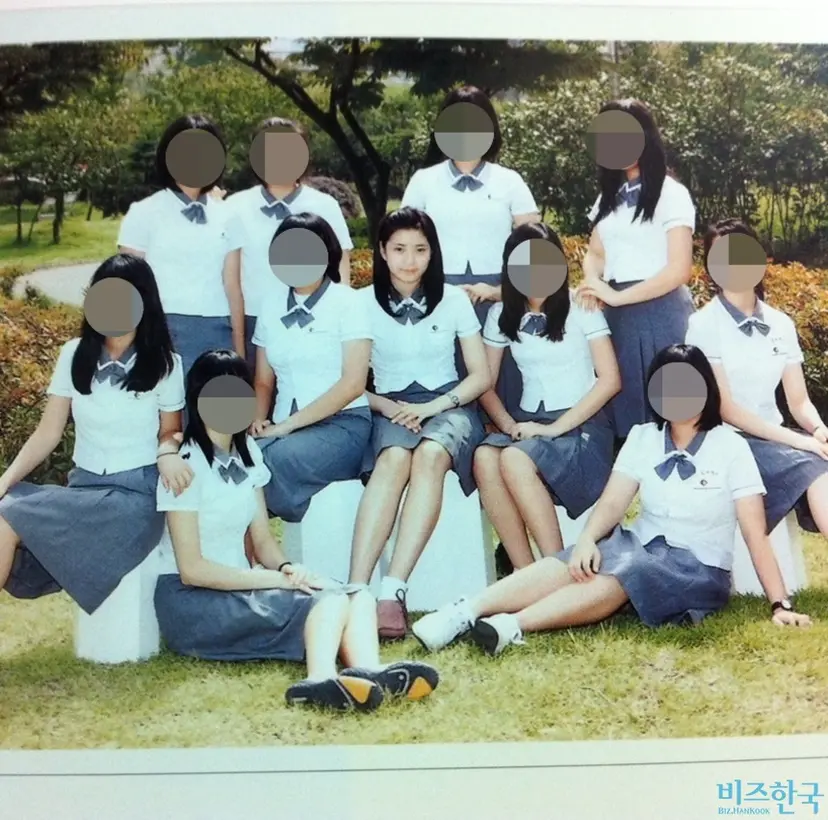
15 years old. After school, she practiced until dawn every day. It was common to pull all-nighters and then go to school. That was the daily routine for trainee Hye-ran. To increase her practice time, she moved into a ‘goshiwon’ (small cubicle room) near the company. She nurtured her dreams in a tiny, musty room. “Practice time was also dream time. It was the most fun time, running toward seeing an unknown world.”
She spent three and a half years like that. At 19, the chance to ‘debut’ finally arrived. The 170cm-tall Hye-ran was under pressure about her weight every day. Even baby fat was not tolerated in front of the camera. ‘Dieting’ took precedence over talent. Schedules were also brutal. During busy periods, there were schedules from 7 a.m. to 5 a.m. the next day. There was only 2 hours of time to sleep.

She measured her weight, went on diets, and exercised 8 hours a day. There were times when she didn’t even drink water for 10 days, let alone eat food. She would hold a mouthful of water without swallowing it, then spit it out, and hold another, then spit it out. That was how she endured.
Eventually, her body broke down. Her gastritis became severe, and she was rushed to the emergency room once a week. Even when standing still, she would break into a cold sweat. After debuting, she didn’t have proper periods. There were times when the bleeding continued for three whole months.
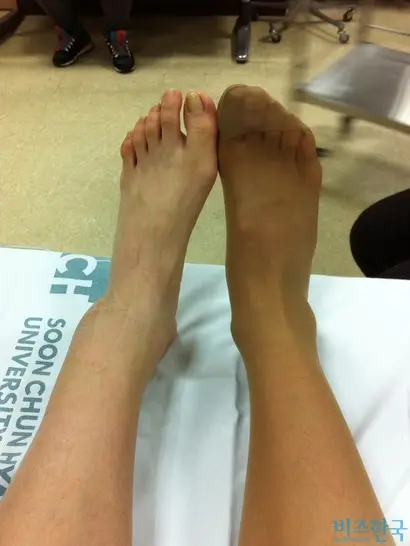
Even when her body was sick, the diet continued.
“The industry itself has that kind of atmosphere. ‘You look a bit bloated, so try to build some volume to look slimmer’—remarks like these are routine. If you get enteritis, they say, ‘Good, that means you’ll lose weight.’ There are diet pills that are popular here. If you take them, all the moisture leaves your body. But you take them anyway. I even took them voluntarily for several months. Because I had to hit the weight target at all costs. I even had a friend who got epilepsy after taking these.”

Even eating a little bit caused inflammation in her throat. She couldn’t even swallow a spoonful of porridge. To make matters worse, she injured her ankle ligament. Still, she had to stand on stage for events. Because she kept wearing high heels and dancing while injured, her ankle couldn’t hold up.
“No matter how good your relationship with others was, if you live this life, relationships fall apart. You can’t eat because you have to diet, you can’t go outside. You can’t even sing the songs you want to. Think about teenagers and those in their early 20s stuck in one space for 24 hours without mobile phones. They came to do what they love, but it’s too far to actually do what they love.”
Leap to Solo Artist… What Was Different?
After 7 years of suffering, her contract ended, and Hye-ran left the group. She earned money for the first time in her life. From being a manager at a chicken restaurant to branding and sales at a department store. For the first time in her life, Hye-ran met people who did ‘other work.’ “At first, it was so much fun. But I kept thinking about (singing). Maybe it’s because I was a case where I wanted to keep going but had to quit.”
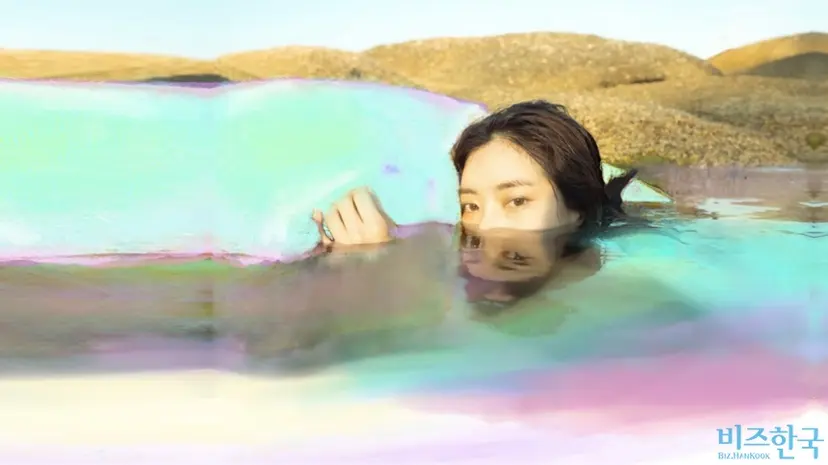
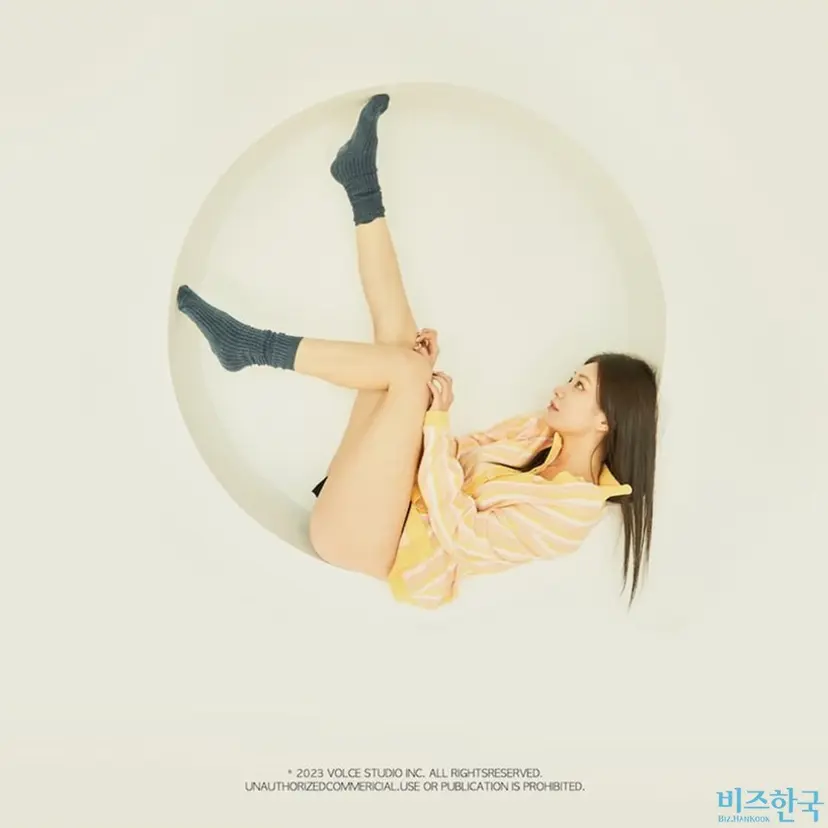
Before I knew it, I started looking for work closest to being a singer. From directing to assistant music video directing. Eventually, Hye-ran decided to produce her own album. She wanted to show that you can do ‘music’ even without an agency and without being an idol. From renting the recording studio to styling, everything was paid for ‘out-of-pocket’.
“To myself who is afraid to dream
To you who dreams with courage
I hope you can take one more step forward”
Hye-ran put the words she wanted to say to those who dream the same dream as her into the album. “I really want to succeed with this project. I wanted to say, ‘The moment you let go of your dream, the dream is over, but if you don’t let go, the dream is not over.’”
She became an idol because she wanted to do music, but the previous Hye-ran couldn’t do the music she wanted. The same went for dancing. Hye-ran’s opinion wasn’t needed. “They say you’re an artist, but I only did what I was told. It wasn’t a situation where opinions could be reflected. Now, I decide on both the dance and the song. I feel a sense of mental freedom in being able to choose and live my own life now. The gastritis I used to have every day has also gotten much better recently.”
“I just wanted to continue doing music, but it took three years just to produce the album. I participated in every single process, and I feel so much. This is a high-risk business that requires the help of many people and a lot of money. Without such people, idols could not have been created. On the other hand, I also thought that maybe they achieved results because it was so closed off and under such pressure.”
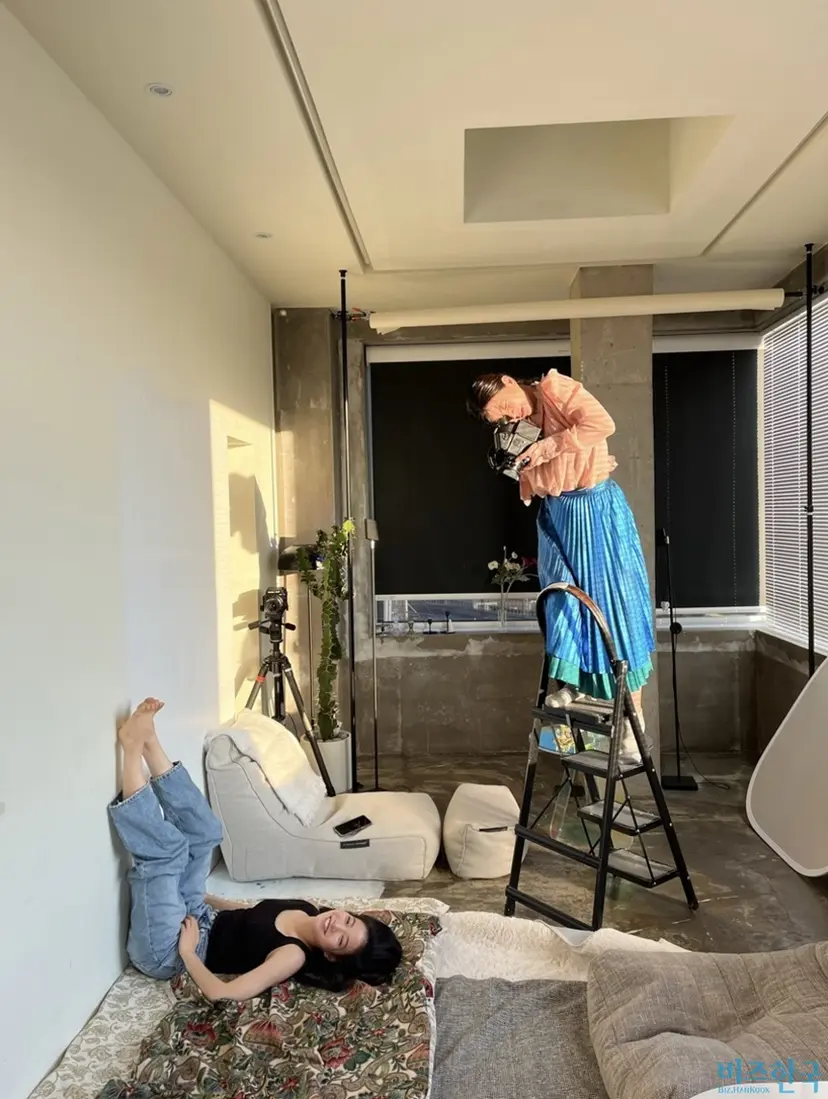
However, she does not think the current system should remain as it is. Hye-ran says the idol training system needs to be formalized. “The problems I experienced weren’t just limited to my company. If anything, our agency was considered to have good treatment and a good reputation in the industry. The problem is that there is no official system itself. Even at large agencies, there were cases where they would charge a 10 million won fine or issue punishments if trainees didn’t return to the dormitory. When I was living the idol life, I could only think, ‘I want to do this work,’ so I blocked out all negative stories. Even if people around me raised issues, I personally blocked the thoughts at the source. Because I had to do this work.”
She hopes that the problems she felt are solved and a better system is established, so that more people can create and enjoy music healthily and happily. “Still, what’s hopeful is that public perception has changed a lot, and there are many people in the industry trying to lead it in a good direction. I am grateful that there seem to be people working in the field who understand the hearts of artists and try to resolve things in a good direction. I hope the culture we enjoy comes from mental freedom and creativity, not from the festering culture of idols.”
※ The next installment will feature an interview with Hur Yu-jeong, former member of Dal Shabet and CEO of Sowooju Company.
<We await tips from those involved>
Bizhankook plans to focus on reporting stories about K-Pop and idols.
If you have personally experienced trainee or idol life, or are an insider working in the K-Pop industry, please send us a tip. allhyeon@bizhankook.com
※ This project was supported by the Korea Press Foundation, funded by government advertising commissions.
![[K-Pop: Idols in Wonderland] 10 Years as an Idol: Diets and Gastritis Were My Daily Routine](https://s.bizhankook.com/attachments_thumb/2026/05/91798_thumb.webp)
![[K-Pop: Idols in Wonderland] Why 'Danbalmuri' Member Yoojung Turned to 'Education'](https://s.bizhankook.com/attachments_thumb/2026/05/91811_thumb.webp)
![[K-Pop: Idols in Wonderland] Is a Binary Choice Between Nurturing and Regulation the Only Answer?](https://s.bizhankook.com/attachments_thumb/2026/05/91900_thumb.webp)
![[K-Pop: Idols in Wonderland] "Idols need a labor union too": A candid statement from Teen Top's C.A.P (Bang Min-soo)](https://s.bizhankook.com/attachments_thumb/2026/05/91907_thumb.webp)
![[K-Pop: Idols in Wonderland] "15-Year Slave Contract: They Said I Couldn't Consult a Lawyer"](https://s.bizhankook.com/attachments_thumb/2026/05/91969_thumb.webp)
![[K-Pop: Idols in Wonderland] Are Trainees Workers or Students?](https://s.bizhankook.com/attachments_thumb/2026/05/92017_thumb.webp)