

[비즈한국] K-Pop has become South Korea's top export product. However, deep shadows loom behind the glamour. The idols who symbolize K-Pop are scouted at a young age and go through grueling trainee periods. In this process, labor rights and human rights are often ignored. What happens to the countless trainees who never even get to debut? Through the 'K-Pop: Idols in Wonderland' series, Bizhankook aims to address the issues overlooked while K-Pop has been growing and examine alternatives from various perspectives. We believe that when those who create K-Pop become healthier, those who enjoy K-Pop can become happier as well.
Every worker is protected by law under labor rights. In other words, if one is not defined as a worker under labor law, they cannot be protected. The definition of an employee—or worker—in South Korea's representative labor law, the 'Labor Standards Act,' refers to a person who provides labor to a business or workplace for the purpose of earning wages, 'regardless of the type of occupation.'
Can idol trainees truly be defined as workers? For starters, while they do not receive monthly wages, they are entitled to a settlement of earnings generated after their debut. While it is difficult to see them as providing labor in the immediate sense, they are in a process of receiving education and training under a contract that stipulates they will provide labor later.
There have been recent attempts to define and provide support for the ambiguous legal status of idol trainees. This refers to the ordinance created last year to protect the rights and interests of 'youth cultural artists.' Of course, there are limitations in that it is an ordinance, which is a subordinate system of law. However, it is significant in that our society has institutionally defined idol trainees and attempted to support them for the first time.
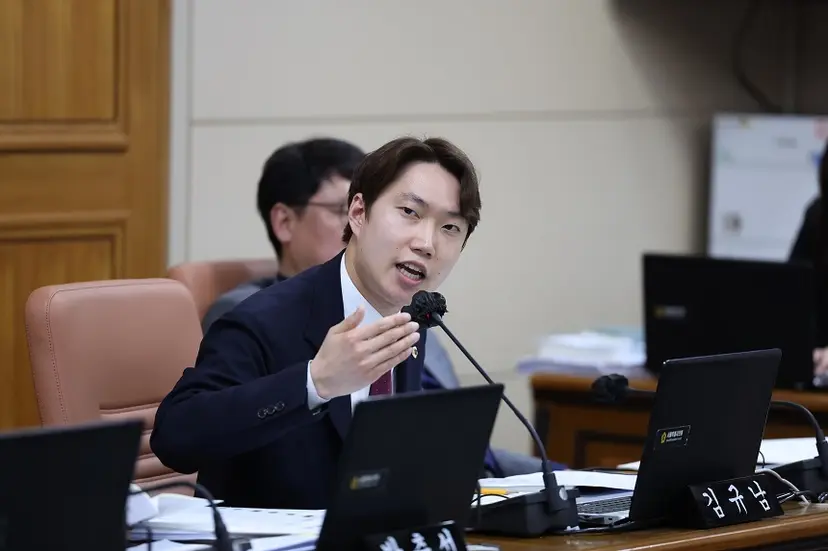
Seoul City Implements First Support Program for Youth Cultural Artists
Seoul Metropolitan Council member Kim Gyu-nam initiated the 'Ordinance on the Protection and Support of Rights and Interests of Youth Cultural Artists in Seoul' last year, the first of its kind in the nation. The ordinance was finalized and took effect at the plenary session of the Seoul Metropolitan Council in December of the same year.
Councilmember Kim, who was elected as the youngest district council member in the Seoul Metropolitan Council during the 8th local elections, began to question the current idol training system and the status of trainees while serving on the Seoul City Council's 'Culture, Sports and Tourism Committee.' With the enactment of the ordinance, a budget was also allocated to provide practical help to trainees.
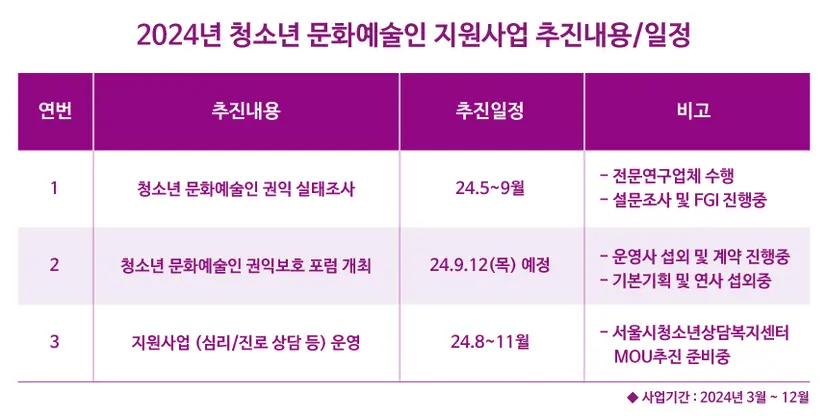
The allocated budget of 100 million won will be used for the 2024 youth cultural artist support project. The Seoul Youth Counseling and Welfare Center will operate psychological and career counseling for youth cultural artists. In addition to 1-on-1 counseling with professional counselors, they have also decided to link work and cooperate with the Korea Research Institute for Vocational Education and Training (KRIVET).
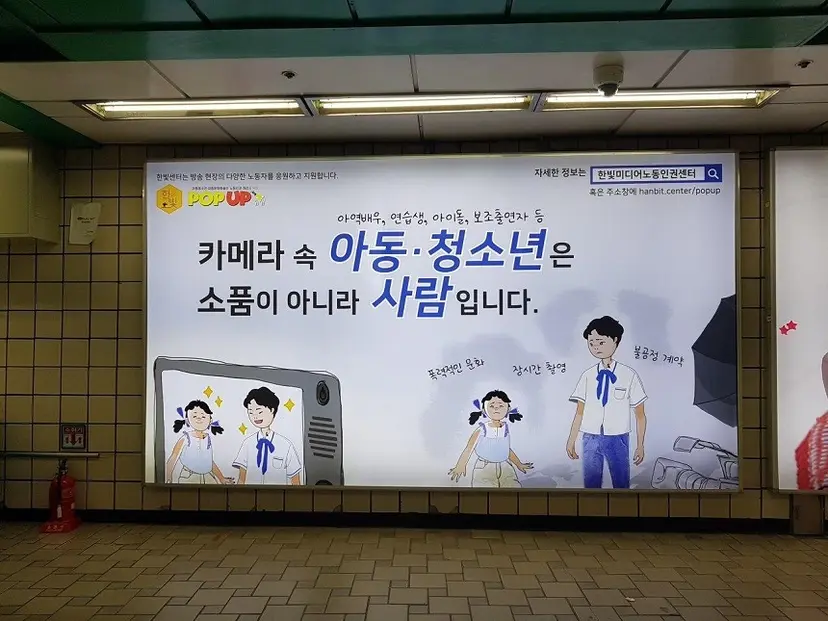
Civic groups such as the Hanbit Media Labor Human Rights Center generally reacted positively to the enactment of the ordinance protecting the rights of youth cultural artists such as idol trainees. However, some have expressed the opinion that it is difficult to expect sufficient effects as it is currently at the level of allocating additional counseling costs and operating expenses to the existing youth counseling system.
Of course, there are clear limitations to protecting idol trainees with such ordinances alone. Policy support based on ordinances is usually carried out in cooperation with local governments, and it is often one-off. Regarding this, Councilmember Kim explained that support for idol trainees would be sustainable through the 'Seoul City Youth Cultural Artist Rights Protection and Support Committee.'
Fundamentally, Councilmember Kim emphasizes the need for an 'Idol Trainee Registration System.' He explained that he tried to include a trainee registration system in this ordinance but gave up due to the lack of accurate data. There are no specific official statistics currently available on how many idol trainees there are in our country or what their nationalities are.
Councilmember Kim also plans to hold a Youth Cultural Artist Rights Protection Forum in September based on the allocated budget. At the forum, research findings on the status of rights will be presented, and lectures by legal and psychological experts, as well as counseling booths, will be operated. Career counseling through mentoring programs with seniors in the arts industry will also be conducted.
Amendment Addressing Protection of Youth Cultural Artists ‘Automatically Discarded’ Due to Opposition from Entertainment Groups
There were efforts to create laws to protect the rights of youth cultural artists, but they have stalled. An amendment to the 'Popular Culture and Arts Industry Development Act,' which included more detailed restrictions on their service hours and the appointment of a youth human rights protection officer, was proposed to the National Assembly last year but failed to be submitted to the plenary session and was automatically discarded.
Looking at the amendment proposed by Rep. Yoo Jeong-ju of the Democratic Party of Korea in May 2022, it specifically defines prohibited acts such as infringement of the right to learn and mental or physical harm. It also established a youth human rights protection officer to manage the safety and health of child and youth popular culture and arts artists. It also included provisions to specifically regulate the time limits for providing popular culture and arts services by age.
The most notable part of this amendment is the content related to 'settlement.' Under existing law, accounting records or settlement data had to be submitted only when requested by the artist. However, the amendment included a clause that data must be provided to the artist mandatorily at least once a year, even without a request.
However, discussions did not proceed properly as five organizations, including the Korea Entertainment Producers Association, the Korea Management Federation, the Recording Industry Association of Korea, the Korea Music Label Industry Association, and the Korea Music Content Association, opposed it, claiming that the amendment could hinder the growth of the K-Pop industry. Kim Young-min, Director of the Hanbit Media Labor Human Rights Center, expressed regret that although the Culture, Sports and Tourism Committee discussed and passed it with a degree of expertise during the legislative process, the amendment was eventually discarded as the opposition from entertainment groups and the legislative review by the Legislation and Judiciary Committee dragged on for 8 months. However, it is known that some members of the Culture, Sports and Tourism Committee of the 22nd National Assembly are preparing to re-propose the amendment by succeeding and further developing it.
The labor sector speaks with one voice that the amendment should be passed quickly in this National Assembly to protect youth cultural artists and improve the transparency of settlements. Director Kim emphasized, "Regardless of whether they debut or not, as children and adolescents, they have the right to grow physically, emotionally, and socially through learning, leisure, and sufficient rest appropriate to their age," adding, "Institutional mechanisms to protect them are urgently needed for our popular culture to develop sustainably."
※ The next installment will feature an interview with Cloris member Heo Mi-jin.
Bizhankook plans to focus on reporting stories about K-Pop and idols.
We welcome tips from those who have experienced trainee or idol life firsthand or are working in the K-Pop industry. allhyeon@bizhankook.com
※ This project was supported by the Press Promotion Fund, which was created using government advertising fees.
![[K-Pop: Idols in Wonderland] Is a Binary Choice Between Nurturing and Regulation the Only Answer?](https://s.bizhankook.com/attachments_thumb/2026/05/91900_thumb.webp)
![[K-Pop: Idols in Wonderland] "Idols need a labor union too": A candid statement from Teen Top's C.A.P (Bang Min-soo)](https://s.bizhankook.com/attachments_thumb/2026/05/91907_thumb.webp)
![[K-Pop: Idols in Wonderland] "15-Year Slave Contract: They Said I Couldn't Consult a Lawyer"](https://s.bizhankook.com/attachments_thumb/2026/05/91969_thumb.webp)
![[K-Pop: Idols in Wonderland] Are Trainees Workers or Students?](https://s.bizhankook.com/attachments_thumb/2026/05/92017_thumb.webp)
![[K-Pop: Idols in Wonderland] 'One Day, Idols Disappeared': Their Survival Story](https://s.bizhankook.com/attachments_thumb/2026/05/92034_thumb.webp)
![[K-Pop: Idols in Wonderland] What has changed since the 'TVXQ Incident'?](https://s.bizhankook.com/attachments_thumb/2026/05/92051_thumb.webp)