

[비즈한국] K-pop has become South Korea's greatest export. However, there are deep shadows behind the glamour. The idols who symbolize K-pop are scouted at an early age and go through grueling training periods. In that process, labor rights and human rights are often ignored. What happens to the countless trainees who never even make it to their debut? Through the 'K-Pop: Idols in Wonderland' series, Bizhankook aims to highlight the issues that have been overlooked during the growth of K-pop and explore alternatives from various perspectives. We believe that when those who create K-pop become healthier, those who enjoy K-pop can also become happier.

“Back then, my bone age was 80. It was hard to accept that as the result of working and training so hard for my dream of becoming an idol. If someone had told me that those methods were wrong, I would have gone outside that dark practice room and taken at least a small walk.”
Yoojung, a former member of the girl group 'Danbalmuri,' was shocked when she saw her medical check-up results. That was the moment she decided she had to provide education for trainees. Later, while working in an idol rookie development team, she asked the company for a 30-minute 'walk' after lunch for the physical and mental health of the trainees. However, the reply she got was, "In that time, make them practice dancing more in the practice room."
The company treated the idols as 'products' but was ignorant about the children's health management. They did not care about the mental or physical health of the underage trainees. Their only interests were slim bodies, fair skin, and talent. The places where the growing trainees spent most of their time were cave-like vocal rooms, barely a few square feet in size with no sunlight, and choreography rooms equipped with CCTVs where dance practice continued endlessly.
Yoojung reflected on that time, saying, "That was the most demoralizing moment while I was on the idol rookie development team. There was absolutely no systematic training course to manage underage trainees healthily."
Trainee systems vary by company size… Professional knowledge unnecessary under the representative's roar
Yoojung, who majored in clarinet during high school, fell for the charms of K-pop and started preparing to become an idol. After taking lessons for about a year while traveling between Seoul and her hometown, she passed an audition and became a trainee. The start was not smooth. The company, which had promised a singing debut, only taught her acting. "Because there was no system, these things were more common than you'd think. Since I had signed a contract, I had no choice but to do as the company said."
Nevertheless, she did not give up her dream of becoming an idol and, after moving between several companies, she was lucky enough to move to a large entertainment agency. It was then that she realized that trainee systems vary wildly depending on the size of the company. Large agencies had quite a few staff members managing trainees. They resided at the company to check schedules closely, and dedicated health trainers managed diets and body alignment. However, it was rare for anyone to have received professional training or certifications tailored to underage trainees.

After finishing her short idol career, Yoojung had her first medical check-up. "Since I had been practicing dance and singing in a basement without any sunlight during my adolescence, I was extremely deficient in Vitamin D. The doctor said it was osteoporosis equivalent to that of a grandmother... I was truly shocked."
Based on her experience until her debut as an idol, she worked in a rookie development team at an agency to help trainees living fierce lives. However, she felt the limitations there as well. To take care of the emotional and physical health of the trainees, she went to college and obtained a level 2 secondary school teacher's license. She also double-majored in child studies. But it was no use. "Even when I told them that because every trainee has a different constitution and physique, they need a diet suited to their individual situation rather than just starving, the company remained indifferent. I even bought them hula hoops or jump ropes with my own money because there was no reaction when I asked them to buy them."
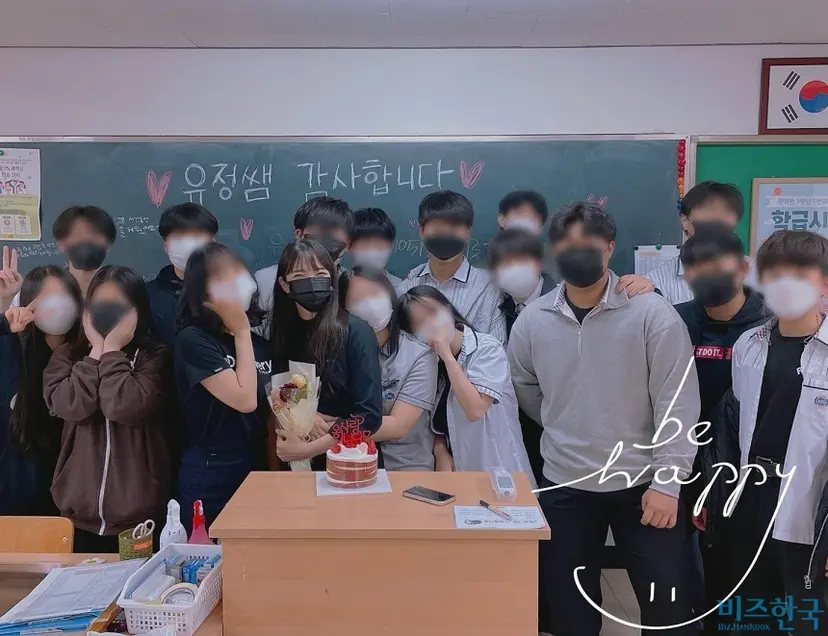
All trainees were equal in front of the 'scale.' The agency representative would fly into a rage if the weight exceeded the standard by even 0.1kg and scold the managing staff severely. "One day, they told me to go to the kids' dorm and search through things. They said that since they weren't eating at the company but weren't losing weight, they must be eating something at the dorm. They told me to go and record a video to send, saying they were worried about legal issues if they went themselves."
Another staff member recommended a drink known to help with bowel movements to a trainee who was desperate because they couldn't lose weight. The trainee, feeling guilty about missing their target weight and haunted by the representative's roar, started starving while drinking it. Their weight temporarily dropped as they lost water, but it soon bounced back, and the vicious cycle of drinking diet beverages repeated itself. Yoojung's efforts to help them lose weight healthily through diet and exercise went to waste.
One day, a trainee who was dancing while starving collapsed. Yoojung tried to call 119 to take them to the hospital, but the officials on the scene just left the trainee there, saying they would get better if they just laid down. Fortunately, the trainee regained consciousness. Yoojung was terrified by the company's lax response. "I told acquaintances who run agencies about this, and it turned out to be a very common occurrence. Most of them laughed it off, saying some trainees feign illness. It was terrifying that such things were frequent due to the lack of a system, and that they considered it normal."

Emotional and psychological stability is needed, but psychological counselors are 'non-existent'
The reason agencies lack systems is because of a lack of capital and human resources. Agencies invest huge amounts of money to nurture children from the time they are scouted as trainees until they debut as idols. Since the weight given to dance, appearance, and singing is absolute, investment in personnel responsible for training and counseling trainees is relatively poor. Finding experienced people who have worked in that field for a long time is also not easy. The impact falls squarely on the trainees. "The smaller the agency, the more free time trainees are given. That is absolutely not a good thing. Because they have to stay at the company according to their contracts, they end up spending their time practicing alone without vocal or dance lessons."
'Psychological counseling' was a luxury for adolescent trainees who needed emotional and psychological stability. Jiyoon (pseudonym), who started her trainee life in high school, was under immense stress from taking tests every week. Anxiety caused by the pressure of competition washed over her. However, there was no one at the company where she spent most of her day to talk to about this. There were counselors supported by the government, but they were ineffective.
She couldn't appeal to anyone, fearing she would be branded a dropout the moment she said the words 'I am stressed.' "There are many friends who have panic disorder because of the constant competition and the stress of preparing for it. I wanted to talk to someone, but I was too scared of being seen as strange, so I was busy hiding it."
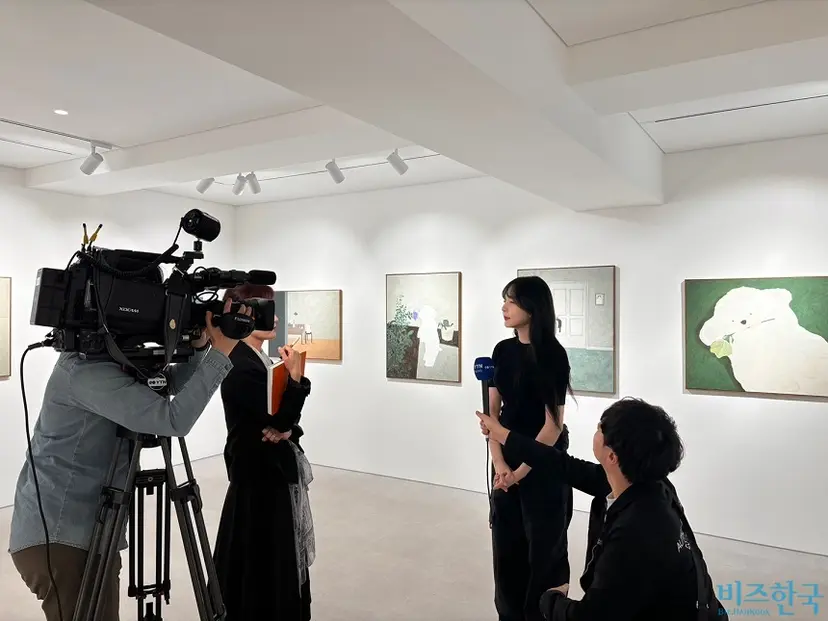
The common problem pointed out by those who have experienced trainee life at agencies is the fact that there is no recognized idol training system. Because of this, unreasonable orders or directives are rampant.
Yoojung says that agencies should be policy-mandated to receive training on how to manage trainees. "I did my best from an educator's perspective to raise the trainees in a mentally and physically healthy way, but nothing changed just because I alone changed." This is because they have to live healthy lives even 'after being an idol.'
She also emphasized the importance of regular medical check-ups. "Trainees are always in a labor state, but unlike general office workers, they lack a practical safety net like the four major social insurance plans. As such, it should be institutionalized so that regular health check-ups are mandatory."
Finally, Yoojung urged that trainees themselves should be equipped with the knowledge to protect their health. "I am now living a different life as a cultural planner and a researcher studying idols. Trainees and famous idols who came to my exhibition were all fascinated. If you are not healthy, there is no second life. As a researcher, I want to contribute to the establishment of a healthy idol training system and let trainees know that life continues after their idol career."
※ The next installment will feature an on-site report from the Korea Entertainment Law Society.
<We are waiting for tips from those involved>
Bizhankook plans to report intensively on stories about K-pop and idols.
Anyone who has directly experienced trainee or idol life, or is currently involved in the K-pop industry, please send your tips. allhyeon@bizhankook.com
※ This project was supported by the Press Promotion Fund created through government advertising fees.
![[K-Pop: Idols in Wonderland] 10 Years as an Idol: Diets and Gastritis Were My Daily Routine](https://s.bizhankook.com/attachments_thumb/2026/05/91798_thumb.webp)
![[K-Pop: Idols in Wonderland] Why 'Danbalmuri' Member Yoojung Turned to 'Education'](https://s.bizhankook.com/attachments_thumb/2026/05/91811_thumb.webp)
![[K-Pop: Idols in Wonderland] Is a Binary Choice Between Nurturing and Regulation the Only Answer?](https://s.bizhankook.com/attachments_thumb/2026/05/91900_thumb.webp)
![[K-Pop: Idols in Wonderland] "Idols need a labor union too": A candid statement from Teen Top's C.A.P (Bang Min-soo)](https://s.bizhankook.com/attachments_thumb/2026/05/91907_thumb.webp)
![[K-Pop: Idols in Wonderland] "15-Year Slave Contract: They Said I Couldn't Consult a Lawyer"](https://s.bizhankook.com/attachments_thumb/2026/05/91969_thumb.webp)
![[K-Pop: Idols in Wonderland] Are Trainees Workers or Students?](https://s.bizhankook.com/attachments_thumb/2026/05/92017_thumb.webp)