

[비즈한국] “The doctor told me I would go blind and to prepare myself. It felt like being cut off from the world, just like receiving a cancer diagnosis. But I couldn't just wait under the persimmon tree for the fruit to fall. I believed that even for the sake of future generations, patients themselves must plant the seeds for drug development.”
Choi Jung-nam, representative of the Retina Korea and chairman of Singularity Biotech, who suffers from Retinitis Pigmentosa (RP), introduces himself as both a "patient and a new drug developer." Starting as a patient living in fear of blindness without a cure, he now leads a company dedicated to developing treatments.
Chairman Choi did not jump into drug development solely for his own treatment. It stems from his belief that the foundation for research and development must be established now so that patients with ultra-rare diseases—for whom there are currently no treatments—can be cured one day.
Singularity Biotech, which he founded in September 2023, has as its core pipeline a universal cell therapy that secures retinal progenitor cells from retinal organoids using stem cells and applies them to hereditary retinal diseases. Recently, the company confirmed the potential for retinal structure, photoreceptor cell preservation, and visual function improvement in animal models, and has also entered the development of a GMP production process.
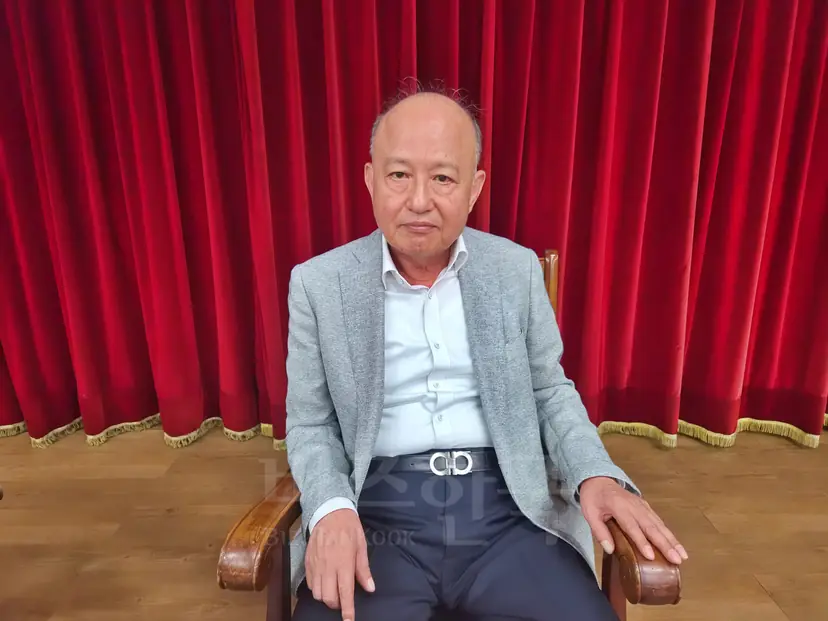
“Prepare for blindness”: From patient to drug developer
It was about 20 years ago that Chairman Choi first noticed vision problems. While playing golf, he suddenly couldn't see the ball, and while driving at night, he experienced symptoms where the light from street lamps seemed to spread.
The local clinic he first visited told him he was 'fine.' However, as the discomfort persisted, he visited Samsung Medical Center and, after a detailed examination, was diagnosed with Retinitis Pigmentosa (RP).
RP is a disease in which photoreceptors in the retina gradually lose function due to genetic causes. As the disease progresses, the visual field narrows, vision declines, and it can eventually lead to blindness.
Chairman Choi stated that after hearing from the medical staff at the time that he should "prepare for blindness," he had to rethink the entire direction of his life.
Since then, while observing the activities of patient groups both domestically and internationally, he came to believe that patients must be able to participate directly in the drug development process. His belief was that patient organizations should go beyond simply sharing information and helping each other; they should serve as a link between researchers, pharmaceutical/biotech companies, and the government.
He particularly noted that in overseas cases, there are instances where patients and their families raise research funds and support research institutions or drug development, thereby participating in the research ecosystem.
Chairman Choi said, "We must move away from the idea that treatment research is something only for doctors and researchers; patients and their families should also participate directly in drug development," adding, "If we don't plant the seeds now, future generations will suffer the same pain."
“Many want to pick the fruit, but no one wants to plant the seeds”
Chairman Choi dove directly into drug development. He built a research foundation based on the research network and patient data he cultivated over 20 years of interacting with domestic and international researchers, and established Singularity Biotech in September 2023.
In particular, the patient cohort secured by Singularity Biotech is an important foundation for drug development. Singularity Biotech is building a hereditary retinal disease cohort of 2,000 people in total, including 600 from Samsung Medical Center.
Based on this data, the company creates retinal organoids that replicate diseases by causative gene and uses them for new drug development.
Chairman Choi used the expression 'seeds' to describe his reason for building patient data and research infrastructure himself.
He said, "If there is fruit to be harvested, the government and companies are all interested in evaluating it, but there are not many places willing to invest in the most difficult and dangerous process: planting seeds in the field and making them sprout," adding, "The initial stage of new drug development is the most dangerous but most important, and this is when the government and patient groups must take responsibility and act on their own."
344 genetic mutations… Aiming for universal cell therapy
One of the greatest challenges in treating hereditary retinal diseases is the extreme diversity of causative genes.
According to Singularity Biotech, more than 344 causative genes related to hereditary retinal diseases have been discovered to date. Conversely, the only gene therapy for hereditary retinal diseases is 'Luxturna,' which targets RPE65 mutations and was approved by the US Food and Drug Administration (FDA) in December 2017. Luxturna targets specific patients with RPE65 mutations. The industry sees the high treatment cost—around 650 million KRW for both eyes—and limited indications as unmet needs for Luxturna.
Chairman Choi focused on the fact that it is difficult to keep up with hundreds of genetic causes by using a method that identifies a specific genetic mutation and corrects only that mutation.
Singularity Biotech's core pipeline is to develop a universal cell therapy that can be applied regardless of the patient's genetic mutation by isolating and culturing retinal progenitor cells from retinal organoids. The company is establishing a process that ranges from retinal organoid production to retinal progenitor cell isolation and culture.
Confirmed possibility of visual function improvement in animal studies… Expanding to eye diseases with exosome and drug delivery technology
Singularity Biotech is verifying the potential of retinal progenitor cell therapy in animal models.
According to the research results presented by the company, when retinal progenitor cells were injected into the vitreous body and structural changes in the retina were observed, the retinal layers, especially the outer nuclear layer (ONL), showed a pattern of preservation. Signals for rhodopsin and PNA, which represent photoreceptors, also increased after treatment.
In electroretinography (ERG) tests, the treatment group showed improvements related to retinal function. In the Optokinetic Response (OMR) test, the company confirmed the potential for improvement in behavioral indicators that can assess vision recovery. The company's data suggests that optokinetic responsiveness increased by more than 80% in specific retinal disease animal models.
Singularity Biotech is also developing therapies using exosomes derived from retinal organoids. Exosomes are substances involved in cell-to-cell signaling, and the company is focusing on their potential for inhibiting inflammation and regenerating tissue.
In an actual animal model of corneal injury, they also conducted preclinical research confirming wound recovery through exosome eye drops. As they expect effects in corneal cell proliferation and the inhibition of inflammation-related cytokines, they are paying attention to the potential for expansion beyond hereditary retinal diseases to eye diseases in general.
Furthermore, they are developing a drug delivery platform based on positively charged hyaluronic acid. The company is proposing a technology that binds positively charged hyaluronic acid to negatively charged exosomes to increase cell adhesion and residence time at target sites. They plan to pursue future expansions into eye drops for dry eye syndrome, veterinary eye treatments, and functional cosmetics.
“We must provide hope based on science, not exaggerated hope”
Nevertheless, what Chairman Choi is most wary of is instilling excessive expectations in patients.
For patients without treatments, news of new technologies or clinical trials can be hope in itself. However, for a candidate substance to become an actual drug, it must clear numerous hurdles, including preclinical and clinical trials, and safety and efficacy verification.
Chairman Choi explains this as the difference between 'Hype' and 'Hope.' He said, "What patients need is not exaggerated hope, but real hope based on scientific facts," adding, "It's easy to say a treatment is coming out soon, but the actual development process is not that simple."
He, too, keeps in mind the possibility that he may not personally receive the benefits of the treatment being developed by Singularity Biotech. Chairman Choi confided, "Even if I pass away without receiving the benefits, I want to create a foundation for future generations so that they can be free from the fear of blindness."
Reality is not easy. New drug development requires significant cost and time, and because rare diseases have few patients and a limited market, they are often neglected from the initial investment stage.
Chairman Choi lamented, "Three or four years ago, there were many opportunities to receive investment if you showed the technical feasibility, but now it is too difficult to get investment at the early stage."
Despite these difficulties, his family's support is a great source of strength that keeps him from leaving the research field. Chairman Choi, who has emphasized the value of sharing and volunteering to his children from an early age, shared that his family supports his anti-blindness activities and drug development. His daughter, singer and actress Choi Soo-young of 'Girls' Generation,' also supports her father's activities.
"There are times when it's physically difficult as I reach my 70s," Chairman Choi said with a smile, "but I can continue because my family supports me and there are people who share my will."
It is not yet known when the seeds Chairman Choi planted will bear fruit. The treatment being developed by Singularity Biotech is also still in the preclinical stage, so there are many hurdles to overcome before actual treatment benefits reach patients.
However, he considers it his role to create an ecosystem where patients themselves can be the subjects of research and development until a cure is found. Ensuring that the next generation of patients does not have to wait for a cure in the same position—that is the reason Chairman Choi does not leave the research field, even in his 70s.
![[Ultra-Rare Disease Report] ① “Just because I’m an adult…” The cruel reality for patients with hypophosphatasia](https://s.bizhankook.com/attachments_thumb/2026/05/97846_thumb.webp)
![[Ultra-Rare Disease Report] ② Drugs are 'Pie in the Sky'... Patients Suffer as Care is Delayed by Economic Criteria](https://s.bizhankook.com/attachments_thumb/2026/05/97942_thumb.webp)
![[Ultra-Rare Disease Report] ③ "Do we really have to pay billions for these drugs?" The cold 'logic' that wounds patients twice](https://s.bizhankook.com/attachments_thumb/2026/05/97991_thumb.webp)
![[Ultra-Rare Disease Report] ④ ‘The illness is there, but I can’t prove it’: The final barrier blocking PFIC patients](https://s.bizhankook.com/attachments_webp_no_wm/2026/08/135079_no_wm_9cc07564.webp)
![[Ultra-Rare Disease Report] ⑤ “Even if I can’t see, it’s for the next generation”: Why a patient diagnosed with blindness is creating his own cure](https://s.bizhankook.com/attachments_webp_no_wm/2026/09/135657_no_wm_8c2e80e7.webp)