

[비즈한국] Among rare diseases, those with an exceptionally small number of patients are classified as 'ultra-rare diseases.' In South Korea, this typically refers to conditions with a prevalent population of 200 or fewer, or those that do not even have a disease classification code. Having few patients means that diagnostic experience, treatment data, and social interest are all insufficient. As a result, it takes a long time to identify the disease, and even after receiving a difficult diagnosis, treatments and support systems often fail to keep up, leading to a cycle where patients and their families bear the full burden of suffering. Bizhankook examines the reality of ultra-rare disease patients hidden behind these numbers and the gaps in the medical safety net.

Hundreds of millions of won in health insurance funds are poured in to save the life of a single rare disease patient. While this is something patients and their guardians have desperately awaited, the public's gaze on it is not always warm. On one side, people tap their calculators under a cold perspective, asking, "Isn't too much tax money being wasted for a small minority?" or "With that money, we could save thousands of patients with minor illnesses." While understanding the health authorities' struggle to maintain the stability of health insurance finances, there lies a heartless reality where the value of a patient's life must be weighed against cost-effectiveness.
This conflict has become more blatantly visible recently. The Free Medical Care Movement Headquarters, in which over 40 organizations including the Korean Federation of Medical Organizations, People's Solidarity for Participatory Democracy, the Federation of Korean Trade Unions, and the Korean Confederation of Trade Unions participate, held a press conference in front of the fountain at the Cheong Wa Dae Sarangchae on the 24th, putting a brake on the government's policy of rapid registration for rare disease treatments.
The Free Medical Care Movement Headquarters argued, "Rapid registration uses the desperate situation of patients as a logical shield; it is not protecting patients but exploiting them." They raised their voices, stating, "If the roughly 50 rare disease treatments, which cost hundreds of millions of won on average, receive benefit coverage through rapid registration, it could cost trillions of won, thereby threatening the health insurance fund.">
Rare disease patients and their families, whose lives are already burdened enough by fighting against disease, cannot help but collapse under such scrutiny. The more they appeal for treatment support, the more they fall into a sense of shame, as if they are thieves squandering other people's tax money. In the end, what wounds them twice is not the 'disease' of their rare condition, but the heartless standard of our society that judges the value of life through the lens of economic efficiency.
“You want me to take another multi-million won test…” The 'Golden Time' blocked by a data cliff
The government announced the 2nd Comprehensive Plan for Rare Disease Management in 2022, vowing to expand regional base centers and strengthen the medical cooperation system. However, the tangible effect felt on the ground is not yet significant. The most painful point is that an integrated, real-time clinical treatment registry (patient data network) at the government level is not functioning properly.
While simple medical records or imaging data (MRI/CT) can be checked to some extent through inter-hospital exchange systems, the reality is that NGS (Next-Generation Sequencing) raw data—which is the key evidence for administering new drugs—remains in a blind spot for sharing.
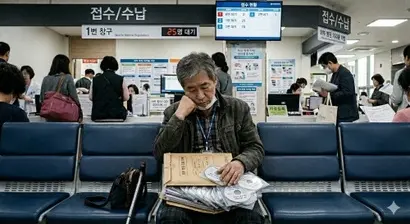
Without dedicated infrastructure to send and receive large-capacity data amounting to tens of gigabytes (GB) in real-time, patients who receive a diagnosis at local hospitals and transfer to large hospitals in Seoul often have to redo expensive tests costing 1 to 2 million won from scratch. Considering the time it takes to get results, there is concern that for rare disease patients whose conditions progress rapidly, this treatment vacuum could lead to irreversible neurological and organ damage. A rare disease patient, 'A', confessed, "The lack of compatibility in test data between hospitals means I have to take new tests, and the high cost is a huge burden."
Patients looking only at global pharma; where is the support from domestic companies?
Ironically, it is the global pharmaceutical companies holding ultra-high-priced drugs that fill the void where national infrastructure fails.
Global pharmaceutical companies are keeping patients alive by operating Patient Assistance Programs (PAP) or Expanded Access Programs (EAP) for those in blind spots—either before health insurance coverage is applied or after failing the evaluation process. Before its oral spinal muscular atrophy (SMA) treatment 'Evrysdi' received insurance coverage, Roche Korea provided the drug for free to about 80 domestic patients through an EAP. AstraZeneca Korea also operates a PAP that refunds part of the drug costs to alleviate the burden for adult patients who cannot receive insurance benefits for the neurofibromatosis treatment 'Koselugo'.
In contrast, the patient support systems of domestic pharmaceutical companies are at a pathetic level. Although the number of companies venturing into new drug development for rare diseases has recently increased, critics point out that they focus only on drug approval and commercial viability, remaining stingy in building social safety nets to save domestic patients at the crossroads of life and death outside the institutional framework.
Ultimately, South Korean rare disease patients are clinging to the goodwill of global pharmaceutical companies, not the state, to survive. A guardian of a rare disease patient, 'B', stated, "I can't help but feel disappointed in domestic pharmaceutical companies that are stingy with price reductions for generics," adding, "However, I hope to see continuous development of innovative treatments domestically, like the recent progress EnCell456040 has made in developing a treatment for Charcot-Marie-Tooth (CMT) disease.">

'Drug delivery' across an 800km round trip by train… The cooler bag born of red tape
For rare disease patients, both visiting hospitals and obtaining medication are giant mountains to climb. Many innovative new drugs are biopharmaceuticals that require strict cold storage (cold chain) at 2–8 degrees Celsius. A guardian of a rare disease patient, 'C', said, "After visiting the hospital, I have to put the medicine in a medical cooler bag (ice box) myself," adding, "The most the hospital does is add an extra ice pack."
In February 2020, when the COVID-19 pandemic began, the government raised the infectious disease alert to the 'serious' level and temporarily allowed full-scale drug delivery. As the crisis level was lowered in June 2023, this temporary measure ended, and drug delivery was once again strictly prohibited.
Because of this, severe rare disease patients who must rely on wheelchairs, or their guardians, must strap on medical cooler bags every month or every other week to visit the hospital. For patients or guardians living in provinces, this means traveling hundreds of kilometers round-trip just for a short consultation and a month's supply of medicine. 'C' lamented, "Among the guardians of patients I know, some use up all their annual leave for the year just to visit the hospital.">
With the amendment of the Medical Service Act last November, non-face-to-face consultations and drug delivery will be allowed within a limited scope, such as for rare disease patients and type 1 diabetes patients, starting at the end of this year. For these patients and their families, this represents a chance at normalcy that is like rain after a long drought.
However, there are concerns that rare disease patients may not feel the actual benefits, as the specifics are to be determined by the Ministry of Health and Welfare's ordinances. It is known that the Ministry is considering limiting drug delivery areas to 'same city/province delivery' or 'short-distance delivery' because the Korean Pharmaceutical Association is strongly opposing drug delivery, citing potential misuse and safety issues.
If this happens, it will make little difference for provincial patients receiving treatment in Seoul or the metropolitan area. While these restrictions are justified by the goal of preventing spoilage during delivery and protecting regional pharmacies from collapse, is it really safe for patients or guardians to manually pack drugs into cooler bags and travel for several hours over hundreds of kilometers? In the end, a system that translates the value of life into numbers and remains trapped in administrative convenience is what continues to drive rare disease patients to KTX train platforms today.
![[Ultra-Rare Disease Report] ① “Just because I’m an adult…” The cruel reality for patients with hypophosphatasia](https://s.bizhankook.com/attachments_thumb/2026/05/97846_thumb.webp)
![[Ultra-Rare Disease Report] ② Drugs are 'Pie in the Sky'... Patients Suffer as Care is Delayed by Economic Criteria](https://s.bizhankook.com/attachments_thumb/2026/05/97942_thumb.webp)
![[Ultra-Rare Disease Report] ③ "Do we really have to pay billions for these drugs?" The cold 'logic' that wounds patients twice](https://s.bizhankook.com/attachments_thumb/2026/05/97991_thumb.webp)
![[Ultra-Rare Disease Report] ④ ‘The illness is there, but I can’t prove it’: The final barrier blocking PFIC patients](https://s.bizhankook.com/attachments_webp_no_wm/2026/08/135079_no_wm_9cc07564.webp)
![[Ultra-Rare Disease Report] ⑤ “Even if I can’t see, it’s for the next generation”: Why a patient diagnosed with blindness is creating his own cure](https://s.bizhankook.com/attachments_webp_no_wm/2026/09/135657_no_wm_8c2e80e7.webp)