

[비즈한국] Among rare diseases, those with an exceptionally small number of patients are classified as ‘ultra-rare diseases.’ In Korea, this generally refers to conditions with 200 or fewer patients or those lacking even a medical classification code. A small patient population means a lack of diagnostic experience, treatment data, and social interest. As a result, it takes a long time to find a diagnosis, and even when one is finally reached, the lack of accessible treatments and institutional support often forces patients and their families to bear the full burden of suffering. Bizhankook explores the reality of patients with ultra-rare diseases hidden behind the numbers and the gaps in the medical system.
Even when hit with pain that feels like their bones are melting away, adult patients with hypophosphatasia have only painkillers to rely on. Treatments that could slow the progression of the disease and preserve their quality of life are already available in Korea. They are, however, merely ‘pie in the sky.’ This is because adult patients are blocked by the high threshold of health insurance coverage. Hypophosphatasia, which is estimated to affect about 50 people in Korea, is an ultra-rare disease with a very small patient population.
While the name may be unfamiliar, the suffering caused by hypophosphatasia is profound. It is a genetic metabolic disorder caused by a lack of the ALP (alkaline phosphatase) enzyme due to gene mutations, occurring at a rate of roughly 1 in 1 million. Without this enzyme, bones and teeth fail to harden properly, leading to recurring fractures even from minor impacts, and muscles gradually weaken. Patients may experience mobility issues, and as symptoms worsen, many become wheelchair-dependent. It is not merely a disease of weak bones, but a condition that dismantles one’s entire daily life. This disease perfectly encapsulates the typical difficulties of ultra-rare diseases, where a small patient base leads to insufficient social interest and medical expertise.

Insurance coverage criteria are hard for adults to meet; annual drug costs reach 800 million won
Fortunately, there is a treatment for hypophosphatasia. The enzyme replacement therapy injection ‘Strensiq’ is effectively the only lifeline for patients. If diagnosed during childhood and treatment begins early enough to meet national health insurance reimbursement criteria, patients can qualify for the rare disease special case and the individual burden limit system, significantly reducing out-of-pocket costs. Despite the high price of the drug, patient costs are kept within the range of 1 million to 8 million won.
The problem lies with adult patients who cannot clear these insurance hurdles. The Health Insurance Review and Assessment Service (HIRA) requires the following for Strensiq coverage: ALP levels lower than age and gender standards, PLP levels exceeding the normal range, characteristic skeletal symptoms of hypophosphatasia confirmed via X-rays before the start of treatment, and initiation of treatment before the age of 19. Critics point out that these criteria, while open to pediatric patients, are effectively closed to adults.
In reality, many patients with hypophosphatasia do not notice the disease until adulthood. Because symptoms can mimic osteoporosis, rheumatism, or neuromuscular disorders, they are easily misdiagnosed. Consequently, it is common for patients to wander through the medical system for decades before learning the name of their disease in their 40s or 50s. Patients diagnosed this late are ineligible for insurance coverage even if the drug exists, leaving them to pay the full cost out of pocket.
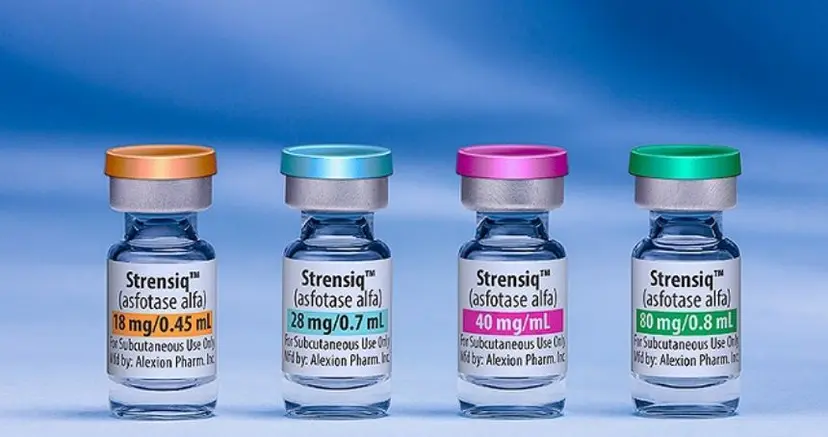
The cost is far beyond what an individual can bear. According to HIRA, the maximum reimbursement price for Strensiq is 5,379,760 won per vial for the 80mg/0.8mL high-dose version. Administering this three times a week brings the annual cost to over 800 million won. Even the cheapest 12mg/0.3mL version costs 806,964 won per vial, totaling about 126 million won annually. This is why many adult patients give up on treatment and get by with physical therapy or painkillers.
Kim Hyun-ju, head of the Korea Hypophosphatasia Patient Association, stated, “While reimbursement is available for adolescents, it is non-reimbursable for adults, and treatment is only permitted upon meeting specific criteria, leaving them without sufficient access. There are many cases where patients are disqualified from coverage because their symptoms don't show up on X-rays, even though they clearly have skeletal issues due to genetic mutations.” For these patients, the reality of having to prove their illness to earn a chance at treatment is as much of a barrier as the pain of the disease itself.
The medical community also views the current reimbursement criteria as excessively rigid. Lee Yu-mi, a professor of endocrinology at Severance Hospital, pointed out, “The government considers economic efficiency in the name of health insurance sustainability, but it fails to properly account for the social costs and the decline in quality of life for adult patients who are deprived of treatment opportunities.” This means that while immediate financial expenditures are calculated, the long-term pain, care burdens, and loss of labor productivity faced by patients who miss out on treatment remain outside the system. Especially for ultra-rare diseases where patient numbers are small and clinical data is difficult to accumulate, such an approach centered on economic efficiency inevitably narrows treatment opportunities for patients.
Abroad, there are movements to expand treatment accessibility for adult patients. In the U.S., if symptoms of hypophosphatasia are confirmed to have appeared before age 18 (and under 17 in the U.K.), patients are included in Strensiq coverage regardless of whether they are currently in treatment. Japan goes even further by having no age limit, allowing adult hypophosphatasia patients to receive public insurance benefits. This is a drastically different approach from South Korea, which excludes adult patients from the reimbursement system.
Missing the window for treatment due to late diagnosis
A problem as significant as the coverage barrier is the late diagnosis. Because hypophosphatasia is so rare and its symptoms resemble osteoporosis, rheumatism, and other neuromuscular conditions, it is difficult to recognize. As a result, patients often spend decades without an accurate diagnosis while their physical condition continues to deteriorate. Even if a treatment exists, a delayed diagnosis means missing the window for effective treatment.
Diagnosis usually begins with identifying ‘warning signs’ at dental, orthopedic, or pediatric clinics. If baby teeth are lost too early in infancy or if unexplained fractures occur repeatedly, the disease should be suspected. Subsequently, blood tests are used to check for low ALP levels, and X-rays are used to examine characteristic skeletal damage, such as lack of bone mineralization or growth plate deformities. Finally, confirmation is reached if ALPL gene mutations are identified. However, in actual clinical settings, this process often does not unfold by the book due to a lack of awareness regarding rare diseases. For ultra-rare diseases, there is a high possibility that medical staff may never see a patient in their lifetime, which makes a more robust early detection system essential.
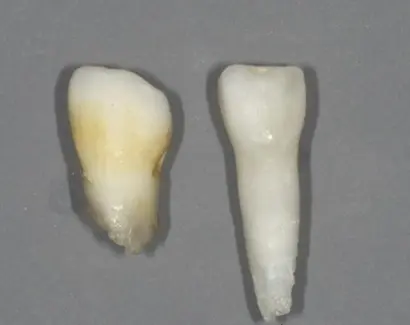
The medical community emphasizes that early detection in dental settings is particularly important. If primary teeth are lost before the age of 4 without any gum disease or trauma, hypophosphatasia should be strongly suspected. The key is that when a tooth is lost, the root is not normally absorbed but remains attached. This is because the phenomenon is not simply a tooth falling out early, but rather the tooth being shed due to issues with the bones and tissues that support it.
Kang Jeong-min, a professor of pediatric dentistry at Yonsei University Dental Hospital, explained, “People might overlook the loss of baby teeth as something that happens anyway, but the fact that the tooth comes out with the root attached means there is a problem with the surrounding tissue. It should be seen as a dislocation from the bone.” She added, “The problem does not end when the permanent teeth erupt; even while eating soft foods, teeth may wobble or fall out, and speech problems or malocclusion can occur. In the long term, it can affect digestive function and overall growth.”
With this in mind, starting this January, the infant oral checkup questionnaire now includes a question about whether baby teeth have been lost prematurely. An early detection program has also been established to allow dentists to refer cases to university hospitals or internal medicine departments based on their assessment. While this is a meaningful first step toward fixing the diagnostic system, critics point out that without awareness in the field, the system may lack effectiveness.
A desperate need for a channel to reflect patient voices
The issue of hypophosphatasia is not limited to a single disease. The structure in which patients are blocked from using available treatments due to reimbursement criteria, delayed diagnosis and treatment systems due to rarity, and the insufficient reflection of patient voices in policy is a recurring pattern across Korea’s rare disease policy. In particular, ultra-rare diseases are more easily pushed down the priority list because there are so few patients. The state essentially acts as if these patients are ‘invisible.’
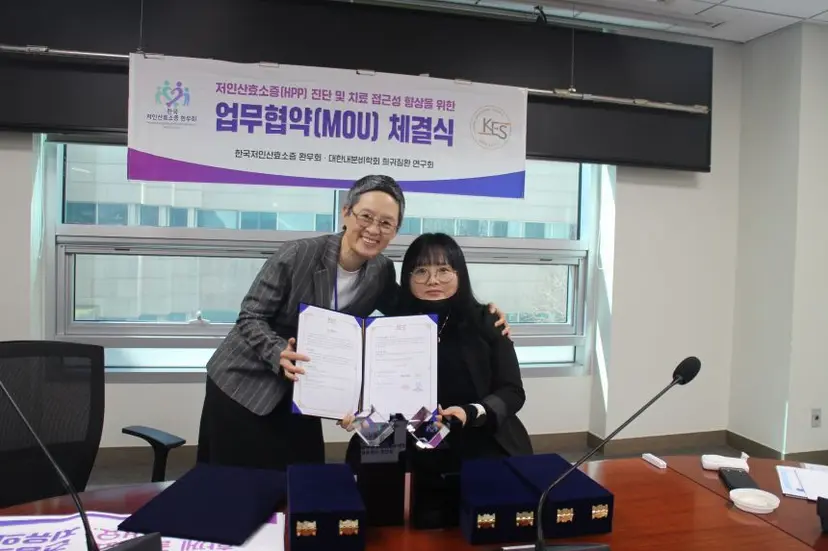
The Korean Endocrine Society, recognizing that this reality can no longer be ignored, signed an MOU with the Korea Hypophosphatasia Patient Association on the 7th to jointly promote the improvement of diagnosis and treatment environments and to raise awareness. This collaboration between the society and the patient group was formed out of a shared consensus that there is a need for a pathway to bring the desperate voices of patients into the institutional fold.
Professor Lee Yu-mi, chair of the Rare Disease Research Committee of the Korean Endocrine Society, stated, “There are over 7,000 rare diseases, and there aren’t many patient groups as active as this one. We need a channel in Korea where the voices of patients can be better reflected.” Jung Yoon-seok, president of the Korean Endocrine Society and professor of endocrinology and metabolism at Ajou University Hospital, also noted, “While South Korea has leaped forward as an advanced nation, sufficient medical support is limited for some rare diseases. I hope the National Assembly pays attention so that awareness can be raised and medical accessibility can be gradually improved.”
The standard of a policy for ultra-rare diseases ultimately reflects the values of a society, not the number of patients. Whether to ignore them because there are few, or for the state to take responsibility even for the suffering of the minority, is the true benchmark of a medically advanced nation. What adult patients with hypophosphatasia are demanding is not a special privilege. It is the most basic right to be treated when they are sick. If the reality where patients have access to medicine but are unable to receive it is ignored, the achievements of K-medicine will remain incomplete.”
![[Ultra-Rare Disease Report] ① “Just because I’m an adult…” The cruel reality for patients with hypophosphatasia](https://s.bizhankook.com/attachments_thumb/2026/05/97846_thumb.webp)
![[Ultra-Rare Disease Report] ② Drugs are 'Pie in the Sky'... Patients Suffer as Care is Delayed by Economic Criteria](https://s.bizhankook.com/attachments_thumb/2026/05/97942_thumb.webp)
![[Ultra-Rare Disease Report] ③ "Do we really have to pay billions for these drugs?" The cold 'logic' that wounds patients twice](https://s.bizhankook.com/attachments_thumb/2026/05/97991_thumb.webp)
![[Ultra-Rare Disease Report] ④ ‘The illness is there, but I can’t prove it’: The final barrier blocking PFIC patients](https://s.bizhankook.com/attachments_webp_no_wm/2026/08/135079_no_wm_9cc07564.webp)
![[Ultra-Rare Disease Report] ⑤ “Even if I can’t see, it’s for the next generation”: Why a patient diagnosed with blindness is creating his own cure](https://s.bizhankook.com/attachments_webp_no_wm/2026/09/135657_no_wm_8c2e80e7.webp)