

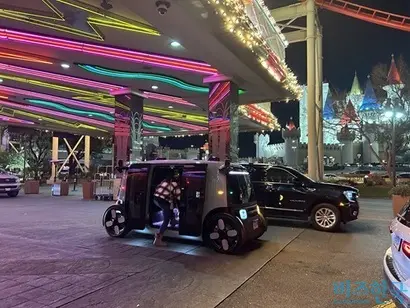
[비즈한국] On the evening of the 2nd (local time), three days before the opening of the world's largest IT and home appliance exhibition 'CES 2026', the night in Las Vegas, the 'city that never sleeps', was hotter than ever. In the middle of the Strip, filled with crowds looking to enjoy casinos and shows under dazzling neon signs, a strange-looking vehicle appeared. Resembling a giant toaster or a futuristic shuttle, this vehicle is an unmanned robotaxi introduced by Amazon's autonomous driving subsidiary, 'Zoox'.
I experienced the future mobility proposed by the 'driverless car' by personally calling a Zoox, which is currently operating on a limited trial basis in Las Vegas, and riding it for about 2.5 miles (4km).
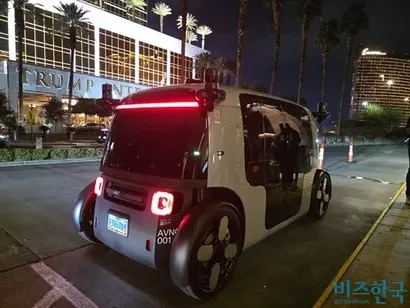
The 'Future' Met After a 52-Minute Wait
Zoox can be boarded for free through its dedicated app of the same name. However, users cannot freely specify arrival and departure points, as it operates by traveling between designated hubs within Las Vegas. As of the 2nd, there are six main hubs: △Resort World, △Area15, △Fashion Show Mall, △Topgolf, △Excalibur Hotel, and △Luxor. These hubs are located north and south, slightly off the main center of the Strip. This appears to be a strategic choice to avoid extreme traffic congestion during pickup and drop-off while still allowing for promotion to the public by moving along the Strip in a straight line.
The usage method is similar to ride-hailing services like Uber or Lyft, but there are limitations from the calling stage. You cannot even initiate a request if you are more than a 15-minute walk from a pickup point. When I tried calling from near Excalibur, it was assigned to the New York-New York Hotel pickup zone, which is about 10 minutes away. At 7:55 PM on Friday, as soon as the request was successful, a wait time of '45 minutes+' appeared on the screen.
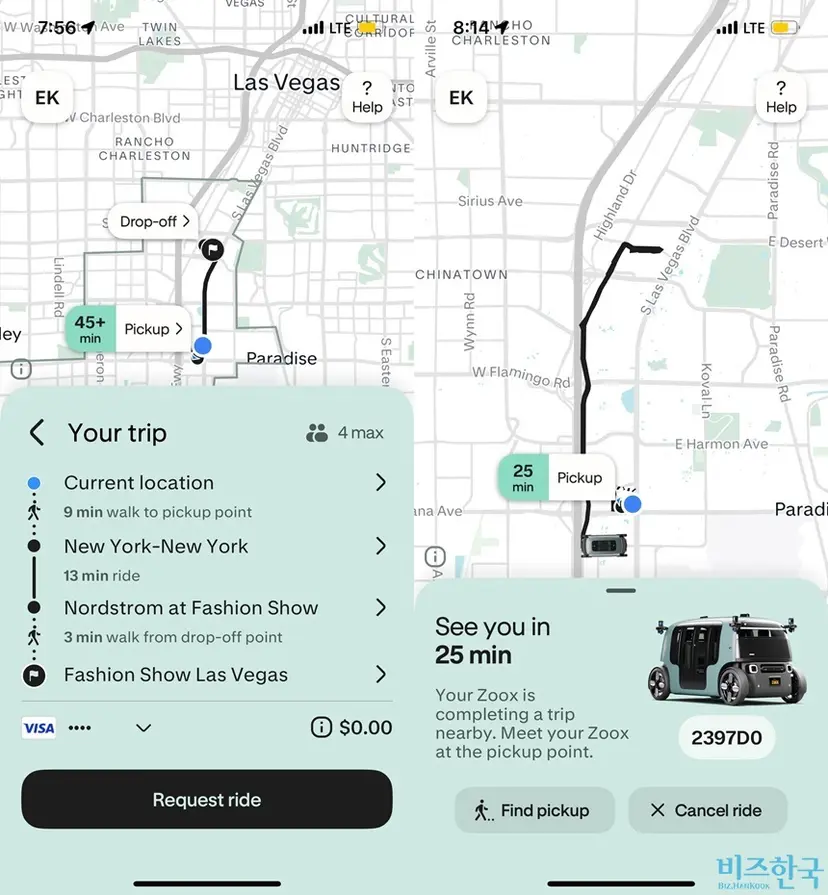
While waiting for the assigned vehicle, I could see the high local interest in Zoox. Heads turned every time the uniquely shaped vehicle stopped and passengers got on and off. At 8:47 PM, the vehicle I was waiting for finally arrived. The actual wait time was 52 minutes, longer than the guidance provided.
An Interior That Transcends the Concept of a 'Car' to Become a Passenger Space
When the vehicle arrived, an 'Open' button appeared in the Zoox app on my smartphone. Touching it caused the sliding doors to open on both sides. The interior, with 4-person bench seats facing each other, completely shattered the stereotype of a 'car'. It felt more like a 'new concept mobility device' than an automobile.
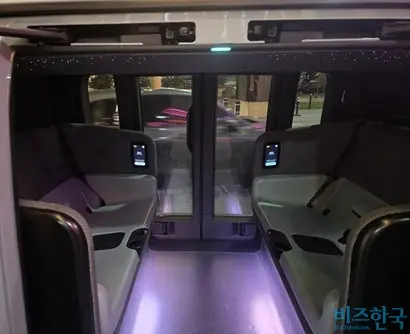
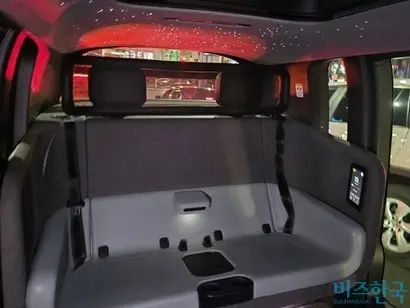
Unlike 'Waymo', which modifies existing SUV models like Jaguars, Zoox is a Purpose-Built Vehicle (PBV) created from the design stage with the premise of being a 'driverless car'. It has a symmetrical 'decalcomanie' structure with no front or back, and traces of driver-oriented devices like a driver's seat, pedals, steering wheel, or navigation screens were nowhere to be found.
Touchscreen panels for driving information and vehicle control were installed on the wall by the window next to each seat. Immediately after boarding, when I pressed the door close button, a voice announcement said, "The vehicle will not depart until all passengers have fastened their seatbelts." Through the display, it was possible to check the remaining travel time, select a playlist, and adjust the indoor temperature and fan speed.
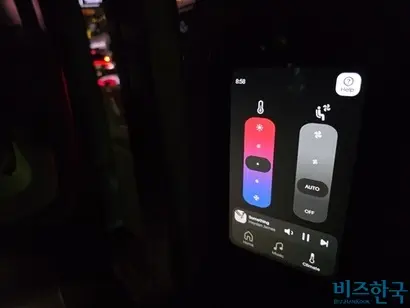
Stable Driving Receives a Passing Grade, but Response in Congested Pickup Zones Is Slow
Starting at 8:51 PM, the ride in the Zoox was calm throughout. It was quiet, with no sound from turn signals. It executed an unprotected left turn to enter the destination shopping mall from the busy Strip road just as smoothly as a skilled driver.
However, there was room for improvement in route selection and responding to traffic. Unlike Uber or Lyft, which take detours to avoid congestion, Zoox insisted on using the central Strip road with many traffic lights. Because of this, although the initial estimated arrival time was 13 minutes, I didn't finish the trip until 9:21 PM. It took 34 minutes to travel 4km.
CES 2026 Amazon unmanned taxi ZOOX experience video. Video = Reporter Kang Eun-kyung
The response was delayed in complex environments where taxis and crowds were mixed, such as pickup and drop-off zones. It tended to stop more conservatively than general vehicles when it perceived pedestrians crossing the street among stopped cars. Observing other passengers getting on and off from behind, I also caught a phenomenon where the turn signals flickered intermittently.
PBV Focused Entirely on Passengers, Service Details Are a 'Homework'
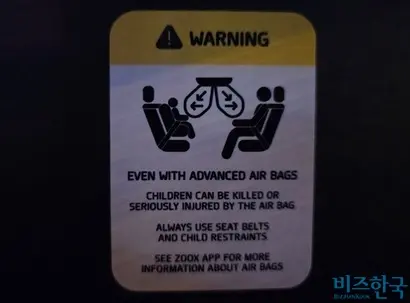
As an unmanned taxi with no driver, and even no driver's seat, pedals, or steering wheel, safety design is a point of note. Due to the square vehicle structure where both rows of seats face each other with no front/rear distinction, airbags deploy from the center between the seats. A warning label was attached in a hard-to-see spot behind the headrests stating, "Children can be seriously injured when the airbag deploys" and "Use seatbelts and child car seats." While the risk of injury from airbags in accidents exists in general vehicles as well, it seemed difficult for passengers to easily notice the airbag location unless they looked carefully.
An unexpected situation occurred during the drive. The seatbelt tightened so excessively that it was uncomfortable, forcing me to unbuckle and re-fasten it. Just as the vehicle was resuming movement after waiting at a signal, a warning sound for not wearing the seatbelt went off immediately. However, there was no guidance regarding such situations in the app or inside the vehicle. Zoox is designed to allow use of an 'Emergency pull over' function through the 'Help' window on the touchscreen if an unexpected situation arises. You are connected to a contact channel via a QR code displayed on the screen.
An Independent Path Amid Global Competition, Will It Cross the Threshold to Commercialization?
The Zoox robotaxi experience was encouraging in terms of technical completeness, but there were clear points for improvement in terms of service. During the long wait of over 45 minutes, it was difficult to know the specific status in the app. Once a vehicle was dispatched, I could check its movement, but overall, I got the impression that the guidance was vague. A middle-aged couple I met on-site even asked me, "It's not progressing, right?", highlighting a lack of intuitiveness regarding real-time progress such as dispatch wait times.
So far, the robotaxi market is being led by Waymo. According to foreign media, it is currently starting services or conducting vehicle tests in 26 markets in the US and abroad. Tesla has started its robotaxi brand service in Austin and the San Francisco Bay Area in the US, but as of mid-December last year, a human driver or safety supervisor was still on board. Baidu's 'Apollo Go' has been commercialized in the Chinese market.
Since being acquired by Amazon in 2020, Zoox has chosen an independent path of designing a 'new means of transportation' from scratch instead of modifying existing vehicles. In the same year, it was approved by the California state government to test drive on public roads without a safety driver. It currently operates as an independent subsidiary with 2,000 employees.
However, there is still a long way to go before unmanned transport becomes universal. Locally, there is constant dissatisfaction regarding the traffic congestion caused by robotaxis and their unpredictable driving behaviors.
IT-specialized media TechCrunch analyzed, "For Zoox to begin paid service, approval from the California Public Utilities Commission (CPUC) is essential, and it still faces the challenge of persuading the National Highway Traffic Safety Administration (NHTSA) to operate its own manufactured vehicles for commercial use."
![[CES 2026] "No Driver's Seat, No Front or Back": A Test Ride of Amazon's Robotaxi 'Zoox'](https://s.bizhankook.com/attachments_thumb/2026/05/96861_thumb.webp)
![[CES 2026] "The Rise of Physical AI": Inside the 'CES Unveiled' Event That Stunned Global Reporters](https://s.bizhankook.com/attachments_thumb/2026/05/96832_thumb.webp)
![[CES 2026] Home Appliances Meet AI to Become Your Companion: 'One Samsung' Vision Unveiled](https://s.bizhankook.com/attachments_thumb/2026/05/96892_thumb.webp)
![[CES 2026] "A Living Room of the Future, Crafted by AI": A Preview of Samsung Electronics' 1,400-pyeong Exclusive Exhibition Hall](https://s.bizhankook.com/attachments_thumb/2026/05/96886_thumb.webp)
![[CES 2026] LG Home Robot 'CLOiD', Powered by Affectionate Intelligence, Declares Freedom from Housework](https://s.bizhankook.com/attachments_thumb/2026/05/96898_thumb.webp)
![[CES 2026] NVIDIA CEO Jensen Huang: "We Are No Longer Just a Chip Company"](https://s.bizhankook.com/attachments_thumb/2026/05/96841_thumb.webp)