

[비즈한국] Once again, a worker who left for the construction site did not return home. The construction industry has the highest number of fatal accidents among all industries in Korea. Our society enacted the Serious Accidents Punishment Act (SAPA) and implemented it in earnest in January 2022 to prevent tragic accidents where workers lose their lives due to the failure to fulfill safety and health obligations. However, the number of workers losing their lives at construction sites annually remains in the triple digits. What efforts should our society make to reduce fatal accidents at construction sites?
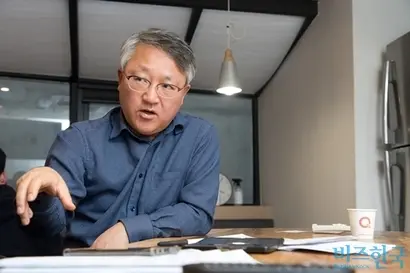
BizHankook met with Shin Young-chul, Head of the National Project Monitoring Center at the Citizens' Coalition for Economic Justice (CCEJ), to ask about ways to reduce industrial accidents at construction sites. Director Shin is a professional civil engineer and holds a PhD in architectural engineering, having worked for major construction companies' domestic and overseas sites, as well as law firms, local governments, and specialty construction firms. Currently, as the head of the Construction Economy Research Institute and head of the CCEJ's National Project Monitoring Center, he is devoted to finding solutions to problems at construction sites in Korea. Now that three years have passed since the implementation of the Serious Accidents Punishment Act, how does Director Shin view construction safety in our country?
“Since the implementation of the Serious Accidents Punishment Act, the number of deaths at construction sites has decreased, albeit slightly. While this is partly due to the market downturn reducing the number of active construction sites, the effect of the system is clear. As management executives of prime contractors who failed to take safety measures began to be punished, the construction industry started spending time and money on site safety management. Previously, safety supervision at construction sites was practically left to subcontractors, who lacked the money and time for safety management because they won projects through lowest-price bidding. That is why so many subcontractor workers have died at construction sites. However, it is questionable whether the disaster reduction effect expected at the time of the introduction of the SAPA has been properly realized.”
Director Shin Young-chul acknowledged that the Serious Accidents Punishment Act played a certain role in reducing deaths at construction sites. In fact, according to the Ministry of Employment and Labor’s data on fatal accidents subject to investigation, the number of deaths in the construction industry decreased slightly from 341 in 2022, the first year of the act's implementation, to 303 in 2023 and 276 in 2024. Director Shin pointed out that many disasters occurred because prime contractors effectively subcontracted construction at the lowest price, leaving subcontractors to handle site safety with meager funds. He assessed that the enactment of a law that punishes prime contractors, who have the capacity to manage safety, has helped reduce disasters at construction sites.
“To dramatically reduce major disasters at construction sites, we must change the production structure that relies on subcontracting. There is a need to increase the proportion of direct construction by the prime contractor that initially won the project. While it may be impossible to perform 100% of the construction directly, at least for major processes that significantly impact safety and quality, such as framing or civil engineering, prime contractors should be required to perform more than 50% of the contracted construction cost directly. Only when the prime contractor performs the work directly can they properly reflect safety management costs in the construction budget during bidding and effectively control safety at the actual site.”
Director Shin Young-chul argued that the first step to reducing major disasters at construction sites is to increase the proportion of direct construction by prime contractors. While he admitted that this cannot be forced in private projects where private autonomy is respected, he argues that for major public construction processes, the prime contractor's direct construction ratio should be increased to 50%, regardless of the project amount. Under the Framework Act on the Construction Industry, if a construction business receives a contract for a project worth 10 billion KRW or less, they must perform 10-50% of the labor cost worth of the work directly. However, the mandatory direct construction ratio is structured to decrease as the contract value increases—from 50% for projects under 300 million KRW to 10% for projects between 3 billion and 7 billion KRW.
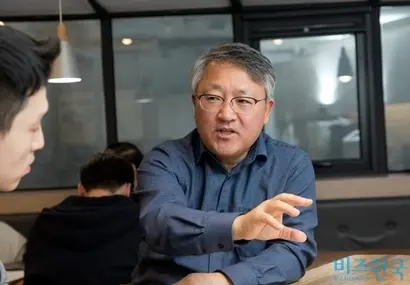
“Responsibility for supervising construction site safety must also be granted to the licensing authority. Local governments with the power to grant construction permits are relieved of their site management responsibilities the moment they issue a permit. In our country, the role of monitoring the construction quality and safety of construction sites is handled by construction supervisors, but the role of the ‘boss’ who hires the supervisor is played by the building owner. It is a structure where construction supervision is inevitably subordinate to the building owner. Local governments, which hold the most powerful licensing authority, only receive the interim and final supervision reports after the permit is issued and do not take responsibility for the safety of the sites they authorized. The only way to bring the licensing authority into the realm of safety responsibility is to force them to sign the construction supervision contracts directly.”
A construction supervisor refers to a person who confirms whether buildings, facilities, or structures are constructed according to design documents and provides guidance and supervision for quality management, construction management, and safety management. Under the Building Act, the authority to designate a construction supervisor for residential or small-scale buildings currently lies with the licensing authority, but in reality, all construction supervision contract authority lies with the building owner. Director Shin argued that to ensure the independence of construction supervisors who monitor safety and quality, the authority for supervision contracts must be transferred to the licensing authority, while maintaining the condition that the building owner pays for the supervision costs.
“We must strengthen local architectural safety centers so that licensing authorities can properly supervise construction site safety. A structure must be created where the licensing authority can inspect the activities and documents prepared by the construction supervisor at any time, and they must be able to technically guide and supervise the safety and supervision activities at the construction site. The government introduced local architectural safety centers so that experts such as architects, structural engineers, and construction engineers could assist with local site safety management, but currently, half of these centers in our country are nominal due to lack of personnel. If a local architectural safety center cannot be operated normally, the licensing authority should be stripped of its power.”
A local architectural safety center is a specialized agency under local government that checks regional architectural safety. Architectural experts perform technical reviews related to local licensing and construction site safety management. In 2017, the National Assembly amended the Building Act to introduce these centers to prevent safety management gaps caused by a lack of professional expertise in administrative agencies. Metropolitan local governments, local governments with a population of over 500,000, and those with a top 30% ratio of building permits or aging buildings are required to install a local architectural safety center. BizHankook's reporting revealed that 61 (48%) out of 127 local architectural safety centers in Korea failed to meet even the essential professional staffing requirements.
![[3 Years of the Serious Accidents Punishment Act] A Construction Worker Didn’t Come Home Again Today](https://s.bizhankook.com/attachments_thumb/2026/05/94135_thumb.webp)
![[3 Years of the Serious Accidents Punishment Act] We Asked the Two Major Construction Unions for Solutions to Prevent Serious Accidents](https://s.bizhankook.com/attachments_thumb/2026/05/94391_thumb.webp)
![[3 Years of the Serious Accidents Punishment Act] 'Strengthen vs. Relax': Where Do 21st Presidential Candidates Stand?](https://s.bizhankook.com/attachments_thumb/2026/05/94627_thumb.webp)
![[3 Years of the Serious Accidents Punishment Act] Shin Young-chul, Head of the CCEJ National Project Monitoring Center: "Prime Contractors Must Increase Direct Construction"](https://s.bizhankook.com/attachments_thumb/2026/05/94797_thumb.webp)
![[3 Years of the Serious Accidents Punishment Act] "Can It End the Outsourcing of Death?" The Construction Safety Special Act Unveiled](https://s.bizhankook.com/attachments_thumb/2026/05/95050_thumb.webp)
![[3 Years of the Serious Accidents Punishment Act] The 'Right to Stop Work' to Prevent Industrial Accidents: Status of Implementation Unknown](https://s.bizhankook.com/attachments_thumb/2026/05/95458_thumb.webp)