

[비즈한국] Today, a worker who headed out to a construction site did not return home. Construction is the industry with the highest number of fatal accidents in Korea. To prevent tragic deaths caused by a failure to fulfill safety and health obligations, our society enacted the Act on Punishment, etc. of Serious Accidents (Serious Accidents Punishment Act) and fully implemented it in January 2022. However, the number of workers who lose their lives at construction sites every year remains in the triple digits. What efforts must our society make to reduce fatal accidents at construction sites?
The Serious Accidents Punishment Act is a law that punishes business owners and management responsible for serious accidents. Enacted in January 2021, it was first implemented in January 2022 for workplaces with 50 or more employees (or construction sites with a contract amount of 5 billion won or more). Under this law, if a serious accident such as a worker's death occurs, the business owner or person in charge of management who failed to fulfill their duty to prevent accidents can be sentenced to at least one year in prison or fined up to 1 billion won. Workplaces with fewer than 50 employees were subject to the law starting last January after a grace period, while workplaces with fewer than 5 employees are excluded from the law's application.
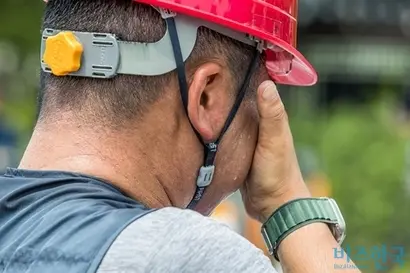
‘Even with a Recession-Driven Decrease,’ Construction Fatalities Remain in Triple Digits
Fatal accidents at construction sites have not ceased even after the implementation of the Serious Accidents Punishment Act. According to industrial accident data from the Ministry of Employment and Labor, the number of construction worker deaths has shown a declining trend from 341 in 2022, the first year of the law, to 303 in 2023 (-11%) and 276 in 2024 (-9%), but it still remains in the triple digits. The proportion of construction fatalities among all industrial accident deaths was 53% in 2022, 51% in 2023, and 47% in 2024, still the highest among all industrial sectors.
Falls are the leading cause of fatal accidents at construction sites. Last year, 159 people (58%) among construction fatalities died after falling from a higher place to a lower one. At a new apartment construction site in Yeosu, South Jeonnam, a worker doing roof panel work fell 20 meters to the ground and died, and at a new cultural center construction site in Icheon, Gyeonggi, a worker finishing window frames fell 7 meters and lost their life. Other causes of construction deaths include being struck by an object (15%), collisions (6%), being crushed/overturned (5%), and collapses (5%).
The prevailing analysis is that even the recent decrease in construction deaths has been influenced by the construction industry downturn. According to the Ministry of Land, Infrastructure and Transport's construction start statistics, the annual number of construction starts in Korea was 115,783 in 2023 and 109,155 in 2024, a decrease of approximately 24% and 6%, respectively, compared to the previous year. The number of construction employees also fell by 0.4% and 2.3% to 2,114,000 in 2023 and 2,065,000 in 2024. As work in the construction industry has shrunk due to the economic slump, the reduction in construction fatalities cannot be definitively attributed to the effects of the Serious Accidents Punishment Act.
Jung Jin-woo, a professor of Safety Engineering at Seoul National University of Science and Technology, pointed out, "Considering the plummeting number of construction workers and the volume of construction starts, the number of deaths in the industry hasn't really decreased to a meaningful level. It is problematic that the number of deaths has not dropped significantly even though government and corporate manpower and budgets have increased significantly following the introduction of the Act. There is a need to refine existing legal systems and increase the effectiveness of prevention and monitoring activities."
Corporate Safety Systems Built and Punishment of Owners Initiated, But...
Admittedly, the Serious Accidents Punishment Act has played a certain role in establishing safety systems for disaster prevention. Before and after the law's implementation, the construction industry appointed Chief Safety Officers (CSOs) and newly established or reorganized dedicated safety organizations. Subsequently, companies refined internal regulations and held meetings to identify site hazards, led by CSOs, working-level teams, and internal/external experts. An official from a large construction company stated, "Since the implementation of the Serious Accidents Punishment Act, an increasing number of construction firms are appointing new CSOs and newly establishing or expanding dedicated safety organizations."
In fact, the punishment of business owners who cause serious accidents has also begun. According to a report by the Korea Enterprises Federation, court rulings were delivered in 31 cases prosecuted by the prosecution for violations of the Serious Accidents Punishment Act by the end of last year. Of these, 29 cases resulted in guilty verdicts (4 prison sentences, 23 suspended prison sentences, and 2 fines), while 2 cases were acquitted. By industry, construction cases were the most frequent at 16, and except for one case where the construction value was under 5 billion won at the time of the accident—making it exempt from the law—all resulted in guilty verdicts.
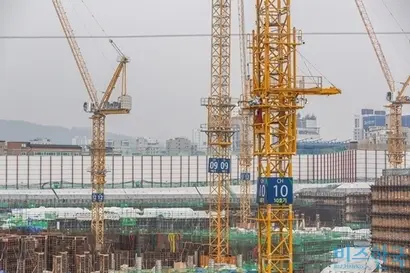
The violation clauses most frequently cited in guilty verdicts under the Serious Accidents Punishment Act were: establishing procedures for identifying and improving hazardous/risky factors (24 cases) and establishing performance evaluation standards for safety and health managers (22 cases). Other cited grounds included setting safety and health goals and management policies (8 cases), installing dedicated organizations (2 cases), preparing and executing necessary budgets (6 cases), and establishing evaluation criteria for disaster prevention capabilities when subcontracting (8 cases). On average, 3 violation clauses were cited per guilty verdict.
Choi Myeong-ki, a professor with the Korea Industrial Site Professors Group, pointed out, "Companies have equipped themselves with personnel and organizations on paper as required by the law, but they are not operating properly at actual construction sites. Relatively small-scale SMEs are even failing to meet these formal requirements due to cost burdens, making them targets for punishment. A change is needed for a practical safety system to take root at construction sites."
Business World Calls for "Easing," Labor World Demands "Strengthening" of the Act
The business and construction sectors are calling for the easing of the Serious Accidents Punishment Act. Previously, the Construction Association of Korea petitioned the National Assembly in November last year to rename the act the "Serious Accidents Prevention Act" and to ease the criteria and punishment for serious accidents. The Korea Enterprises Federation also stated in its report, "If similar rulings continue, only representatives of SMEs will continue to be punished due to a poorly crafted law, which will also have a negative impact on disaster prevention," adding, "Problems with confusion in application and excessive punishment will persist, so the government and the National Assembly need to reasonably push for amendments to the law and its enforcement decree."
On the other hand, the labor sector counters that the Serious Accidents Punishment Act should be strengthened. In a statement last January, the Korean Construction Workers Union (KCWU) under the KCTU said, "Not a single case of punishment has been issued against large construction companies that repeat serious accidents. It is only right to swiftly investigate, prosecute, and punish through the Serious Accidents Punishment Act. The obligations of business owners and management must be clarified further, and if a serious accident occurs, they must be punished more severely with prison sentences. To stop deaths at construction sites, strictly punish the business owners of primary contractor construction firms first."
There are also industrial accidents that even the current Serious Accidents Punishment Act does not cover. The late Moon Yu-sik (72 at the time of death), who worked as a plasterer at a neighborhood living facility construction site operated by Inwoo Construction in Mapo-gu, Seoul, died last January after falling 2 meters while plastering on scaffolding without a safety railing or a safety helmet. The day of the accident was five days before the Serious Accidents Punishment Act was set to expand to include construction sites with a contract amount of under 5 billion won. The CEO of the construction company escaped indictment, while the site manager, identified as Mr. Park, and the construction company were each sentenced to one year in prison and a fine of 20 million won in the first trial on charges including violation of the Occupational Safety and Health Act.
Hye-yeon (34), daughter of the late Moon Yu-sik, said, "Unless there is substantial punishment for the failure of business owners to fulfill their duties—those with the power to mandate safety measures at construction sites—accidents like my father's will continue to happen. Every year, countless workers are driven to dangerous sites without even being provided basic safety gear, and many of them lose their lives. Deaths occurring because the very basics, such as providing a helmet and installing a safety railing, are not followed are not 'personal misfortune,' but a disaster stemming from 'corporate structural responsibility.'"
![[3 Years of the Serious Accidents Punishment Act] A Construction Worker Didn’t Come Home Again Today](https://s.bizhankook.com/attachments_thumb/2026/05/94135_thumb.webp)
![[3 Years of the Serious Accidents Punishment Act] We Asked the Two Major Construction Unions for Solutions to Prevent Serious Accidents](https://s.bizhankook.com/attachments_thumb/2026/05/94391_thumb.webp)
![[3 Years of the Serious Accidents Punishment Act] 'Strengthen vs. Relax': Where Do 21st Presidential Candidates Stand?](https://s.bizhankook.com/attachments_thumb/2026/05/94627_thumb.webp)
![[3 Years of the Serious Accidents Punishment Act] Shin Young-chul, Head of the CCEJ National Project Monitoring Center: "Prime Contractors Must Increase Direct Construction"](https://s.bizhankook.com/attachments_thumb/2026/05/94797_thumb.webp)
![[3 Years of the Serious Accidents Punishment Act] "Can It End the Outsourcing of Death?" The Construction Safety Special Act Unveiled](https://s.bizhankook.com/attachments_thumb/2026/05/95050_thumb.webp)
![[3 Years of the Serious Accidents Punishment Act] The 'Right to Stop Work' to Prevent Industrial Accidents: Status of Implementation Unknown](https://s.bizhankook.com/attachments_thumb/2026/05/95458_thumb.webp)