

[비즈한국] AI is now a matter of survival, not choice. While U.S. Big Tech firms dominate the field, China is shaking up the landscape with vast support and human resources. South Korea, once a top-tier "IT powerhouse" with premier digital infrastructure, has long since been pushed into the "second tier" of AI technology. As global leaders equipped with massive capital and data battle for supremacy, domestic AI startups are targeting niche markets to secure global competitiveness. Key IT companies are busy searching for unique business models that leverage AI. Where does the path to survival lie for South Korea in the global AI war? We explore the potential of our companies standing at the forefront of innovation.
A Large Language Model (LLM) is an artificial intelligence (AI) that learns from massive datasets to understand and generate text like a human. Because they are designed to be good at the basics, they can provide immediate answers to almost any question. But what if the user is a corporation? For companies, a smart "brain" capable of interaction is not enough. It needs to be used in complex environments, tailored to their own documents, sensitive customer data, and internal workflows. A full-stack LLM refers to a solution that packages the entire system and process—from LLM model development to deployment, operation, and management—so that this "brain" can be used immediately in real-world business environments.
As most global Big Tech companies focus on developing LLMs like GPT (OpenAI), Claude (Anthropic), and Gemini (Google), the AI war has become an LLM-centered game. Full-stack LLMs represent an opportunity for domestic companies. While Big Tech provides high-level models, they do not configure the actual services to fit the specific needs of each company. For a company to undergo an AI transformation, it effectively means they have to handle the customization, logging, privacy, and security issues on their own.
The ‘End’ of Handmade Reports: Is an Era Where AI Handles Decision-Making Coming?
Upstage, an AI startup founded in 2020, is considered a pioneer of full-stack LLMs in Korea. The company gained attention after releasing its "Document AI" solution—which digitizes corporate documents and unstructured data—to the market in 2023, followed by the launch of its next-generation LLM, "Solar Pro," late last year, which proved its commercial viability. Through a 100 billion won investment round last April, the company has raised approximately 140 billion won in total funding and has grown to a corporate valuation of 400 billion won.
Upstage announced plans to expand its full-stack AI business this year beyond Southeast Asia and Japan, into the United States, the heart of the AI industry. Their vision is to lead global AI work standards through business-oriented AI.
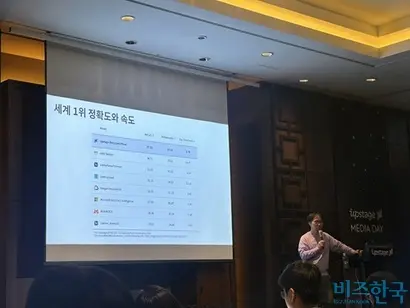
"This year could be the last year of working with 'handmade reports' created by people," said Kim Sung-hoon, CEO of Upstage, at a media day event on the 16th. "AI will take on the role of weaving extracted information together to write comprehensive reports and even making 'decisions.' This process is already being applied in insurance and financial companies that are currently using our solutions."
He explained that in insurance settlement tasks that require verifying dozens to hundreds of documents—such as patient medical certificates, insurance policy terms, and medical receipts—AI solutions are now taking over the entire process of checking surgery codes and determining whether to pay insurance claims, replacing human workers. Upstage currently supplies its services to KB Financial Group105560, Hancom, and Law & Company.
Upstage’s Optical Character Recognition (OCR) model, "Document Parse," converts images and text in various formats into machine-readable data. Solar is then responsible for compiling the collected data into documents like reports to suit specific purposes. Both technologies are being continuously upgraded. Upstage plans to unveil "Solar Pro 1.5" and its first inference model implementing "Chain of Thought (CoT)" this June. According to Upstage, the capabilities of this model are on par with GPT's "o-series" and DeepSeek's "R1." The launch of "Solar DocVLM," a Vision-Language Model (VLM) that combines Document Parse and Solar, has also been announced.
Big Tech Expanding Business Features, Making Global Scaling Difficult
Based on their experience as the first in Korea to build a "sovereign AI" overseas—such as supplying a Thai-language-specialized LLM to Thailand's state-run telecommunications company—they are also focusing on local LLM development and expanding partnerships. Their main bases are a local U.S. subsidiary and a Japanese subsidiary established last month. CTO Lee Hwalsuk stated, "The document-related market in Japan is over 10 times larger than in Korea. Capturing just 10% is equivalent to securing the entire Korean market. We are currently in follow-up meetings with several major Japanese corporations."
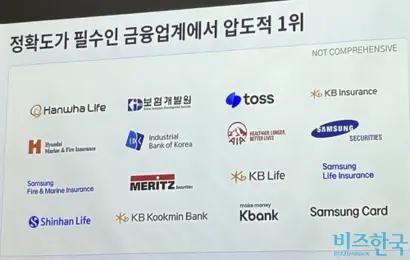
They are also focusing on regions where technical and consumer spending power may be relatively lower, but governments and state-owned enterprises possess strong financial resources. CEO Kim noted, "U.S. companies are responding positively because we met the stringent standards set by Korean financial and insurance firms."
While technological growth is underway, increasing revenue and achieving cost efficiency remain challenges. Upstage reported an operating loss of 40.2 billion won last year. The deficit more than doubled from the previous year (18.9 billion won). During the same period, revenue tripled from 4.6 billion won to 13.9 billion won, but there is still a long way to go before achieving profitability. This is due to the heavy costs associated with Graphic Processing Units (GPUs). The company explained that the deficit was caused by the massive input of GPUs in the development process of Solar Pro 1.5 and its multimodal models.

Competition, both domestic and international, is expected to intensify. According to Market Research Intellect, the full-stack AI market, valued at $4.5 billion in 2024, is projected to reach $9.6 billion by 2032, with an expected compound annual growth rate of 8.5% until 2032. The industry believes that unlike general-purpose models, B2B AI models have clear objectives and demand. The perspective is that connecting technology with real-world sites generates revenue. However, cases where a company has independently developed every step of a full-stack AI model—from OCR to LLM—are rare. Most companies build full-stack systems through multi-stage technological collaboration.
The domestic telecommunications industry, which has shifted its focus to AI, is also actively investing in the full-stack LLM sector. AI transformation and B2B full-stack strategy implementation are underway simultaneously. SKT, which is building its full-stack in a pyramid structure, plans to promote AI transformation based on its AI infrastructure and ultimately develop AI services targeting the global market. KT launched its own AI model, 'Mi:dm,' and is simultaneously pursuing a lightweight strategy to allow for customization for corporate clients.
As the number of competitors joining forces with global Big Tech increases, attention is focused on who will take the lead in this early market. Snowflake, the world's largest cloud-based data company, expanded its integration with NVIDIA’s NeMo last June and announced last month that it would provide a full-stack AI platform through an enhanced partnership with NVIDIA. NeMo Retriever is a generative AI service that allows companies to connect customized LLMs to their own data. Through its platform, Snowflake allows users to directly utilize NVIDIA's NeMo Retriever while maintaining data security and privacy.
The fact that Big Tech firms are one after another introducing improvements to AI agent functions and integration with business services is also a daunting condition. Microsoft has introduced AI agents to 'MS 365' for personal use, and Google has added generative AI features to its 'Workspace.'
![[Finding Survival Strategies for AI] The 'War of Money' for Korean AI Has Begun](https://s.bizhankook.com/attachments_thumb/2026/05/94071_thumb.webp)
![[Finding an AI Survival Strategy] Companies Have Already Started Hiring 'AI Employees'](https://s.bizhankook.com/attachments_thumb/2026/05/94111_thumb.webp)
![[Finding AI Survival Strategies] Aiming for Opportunities with Full-Stack LLMs Amidst 'General-Purpose' Big Tech](https://s.bizhankook.com/attachments_thumb/2026/05/94269_thumb.webp)
![[Finding an AI Survival Strategy] Can AI Become the Secret Weapon for 'K-Content'?](https://s.bizhankook.com/attachments_thumb/2026/05/94498_thumb.webp)
![[Finding a Survival Strategy for AI] The Lee Jae-myung Administration's Goal of Becoming a 'Top 3 AI Powerhouse': What Matters More Than '100 Trillion Won in Investment'](https://s.bizhankook.com/attachments_thumb/2026/05/94747_thumb.webp)