

[비즈한국] AI is no longer a choice; it is a matter of survival. While U.S. Big Tech companies dominate the field, China is shaking up the landscape with massive support and human resources. South Korea, an "IT powerhouse" with top-tier digital infrastructure, was relegated to the "second tier" in AI technology early on. Amid the fierce competition among leading nations armed with massive capital and data, domestic AI startups are targeting niche markets to secure global competitiveness. Meanwhile, major IT companies are busy seeking unique business models utilizing AI. Where does the path to survival lie for South Korea in the global AI war? We explore the potential of our companies standing at the forefront of innovation.
Financial power is a key factor determining success or failure in the AI technology race. With the emergence of ChatGPT last year acting as a signal, a "war of money" surrounding AI technology development has begun in earnest. China's Moonshot AI, the developer of the generative AI 'Kimi', succeeded in raising $1 billion (approx. 1.4 trillion KRW) a year ago. It is the largest single investment in the history of the country's AI industry. OpenAI, despite cost concerns following the "DeepSeek shock," is in the final stages of a $40 billion (approx. 5.8 trillion KRW) funding round led by SoftBank.
The "money" raised by domestic startups lags far behind the U.S. and China, which are attracting trillion-won investments one after another. However, they are evaluated as having "put up a good fight" even last year, when the economy was sluggish. We examine the startups that have made a mark in the global market and secured investment capacity. Companies focusing on specialized services—ranging from AI semiconductors to enterprise AI solutions, video, and healthcare—are attracting attention.
7 AI Startups Including FuriosaAI and Rebellions That Raised Over 50 Billion KRW
From January last year to March this year, six AI-related companies were found to have raised over 50 billion KRW in a single investment round. Including FuriosaAI, an AI semiconductor fabless company currently finalizing a new 70 billion KRW investment, the total reaches seven.
Most recently, HyperAccel, an LLM-specialized AI semiconductor startup, raised 55 billion KRW in Series A funding last December. Other notable funding includes 180 billion KRW for E-Tech Systems, an IT solution consulting firm providing AI infrastructure construction services; 165 billion KRW for AI semiconductor firm Rebellions; 100 billion KRW for Upstage, developer of the LLM 'Solar'; 90 billion KRW for on-device AI semiconductor firm DeepX; and 70 billion KRW for Twelve Labs, which specializes in AI for video understanding.
All three of the domestic AI startup "big three" succeeded in raising over 50 billion KRW last year. FuriosaAI, which began business in 2017, is developing NPUs (Neural Processing Units) that show higher performance in certain fields than Nvidia GPUs (Graphics Processing Units). It is a design-specialized company that does not manufacture semiconductors directly. FuriosaAI, which is expected to reach a corporate valuation of up to 4 trillion KRW, is evaluated as being ahead of its domestic competitors in terms of product development and commercialization of chips like 'Warboy' and 'Renegade'.
With its deficit structure prolonged, M&A discussions with Meta were held early this year, but negotiations recently fell through. There were concerns that the domestic industrial ecosystem would be hit if FuriosaAI, which had received hundreds of billions of won in government support, were sold to U.S. Big Tech, but the view is that it avoided the worst-case scenario as the acquisition was ultimately terminated.
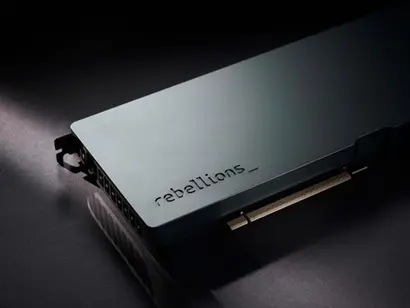
Another of the "big three," Rebellions, and SK Telecom's017670 AI semiconductor affiliate Sapeon, completed their merger last December, six months after pushing for it. The valuation of the merged entity is approximately 1.3 trillion KRW, making it a representative Korean unicorn in the AI semiconductor field. In recognition of its AI semiconductor technology and marketability, Rebellions became the first domestic startup to attract a strategic investment (20 billion KRW) from Aramco. The company plans to expand its business areas with strategic investors such as SK Telecom and SK Hynix000660, and increase its influence in overseas markets including the U.S., Saudi Arabia, and Japan.
Investments Also Pouring Into Enterprise Solutions and Medical AI
Based on total cumulative investment to date, the top 10 startups are: Rebellions (approx. 300 billion KRW), FuriosaAI (170 billion KRW), semiconductor design asset platform Openedges Technology394280 (138.8 billion KRW), DeepX (136.1 billion KRW), Upstage (131.6 billion KRW), HyperAccel (61 billion KRW), AI optimization technology firm Nota (57 billion KRW), AI-based intellectual property (IP) protection firm MarkVision (54 billion KRW), industrial AI solution firm MakinaRocks (52.9 billion KRW), and Neurobit (51.3 billion KRW), which operates AI-based software to assist in diagnosing brain diseases.
Following the AI semiconductor field, which has seen concentrated large-scale investments, capital has flocked to enterprise AI solutions. Upstage, MakinaRocks, and MarkVision have attracted investments from domestic conglomerates with AI solutions specialized for various industries.
Investor interest in AI linked to the medical field was also high. According to investment statistics from the venture investment platform The VC, 221.6 billion KRW was invested in AI technology linked to bio, medical, and healthcare last year. This is a 69% increase from the previous year. Following Promedius, a developer of AI osteoporosis diagnostic technology, raising 11.2 billion KRW last March, HoneyNaps, developer of the AI-based sleep disorder diagnostic solution 'Somnum', raised 15.8 billion KRW. Medical and healthcare AI is a field with growth potential, particularly in the U.S. medical market.

Companies in the field of generative AI-based services, such as Twelve Labs and the content creation platform Wrtn Technologies, are also making their mark in the global market. Wrtn, which provides AI search and character services, secured a cumulative investment of 48 billion KRW in less than two years after launching its service in early 2023. Video solution firm Twelve Labs also recorded a cumulative total of 1.5 trillion KRW, including investment from Nvidia.
However, it remains to be seen whether they will be able to attract large-scale investments this year. While there is a forecast that over 100 billion KRW will pour into the global AI market, some view that securing stable funding may not be easy considering the withdrawal of overseas VC in the first quarter and unstable internal and external conditions.
Amid expectations of polarization toward major startups, the government established a "Plan to Expand AI Utilization Through AI Startup Promotion" last month. The goal is to raise the proportion of SMEs utilizing AI to over 50% by 2027 and foster 5 global AI unicorn companies. This year, 5.7 trillion KRW is scheduled to be concentrated on supporting innovation growth fields such as AI and semiconductors.
![[Finding Survival Strategies for AI] The 'War of Money' for Korean AI Has Begun](https://s.bizhankook.com/attachments_thumb/2026/05/94071_thumb.webp)
![[Finding an AI Survival Strategy] Companies Have Already Started Hiring 'AI Employees'](https://s.bizhankook.com/attachments_thumb/2026/05/94111_thumb.webp)
![[Finding AI Survival Strategies] Aiming for Opportunities with Full-Stack LLMs Amidst 'General-Purpose' Big Tech](https://s.bizhankook.com/attachments_thumb/2026/05/94269_thumb.webp)
![[Finding an AI Survival Strategy] Can AI Become the Secret Weapon for 'K-Content'?](https://s.bizhankook.com/attachments_thumb/2026/05/94498_thumb.webp)
![[Finding a Survival Strategy for AI] The Lee Jae-myung Administration's Goal of Becoming a 'Top 3 AI Powerhouse': What Matters More Than '100 Trillion Won in Investment'](https://s.bizhankook.com/attachments_thumb/2026/05/94747_thumb.webp)