

[비즈한국] K-Pop has become South Korea's premier export. Yet, behind the glitz lies deep shadows. The idols who symbolize K-Pop are recruited at a young age and endure harsh training periods. In this process, labor rights and human rights are frequently ignored. What happens to the countless trainees who never even make it to debut? Through the ‘K-Pop: Idols in Wonderland’ series, BizHankook aims to highlight the issues overlooked during the growth of K-Pop and examine potential solutions from multiple angles. We believe that only when those who create K-Pop are healthy can those who enjoy K-Pop be truly happy.
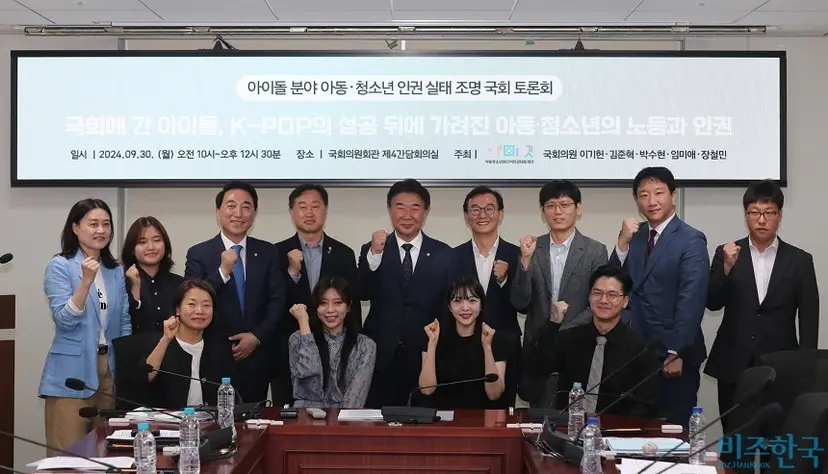
A National Assembly forum was held to address the state of human rights for child and adolescent cultural artists—so-called minor idols. The event was organized to allow K-Pop industry stakeholders to discuss issues such as trainee human rights and unfair treatment, and to seek ways to establish institutional safety nets.
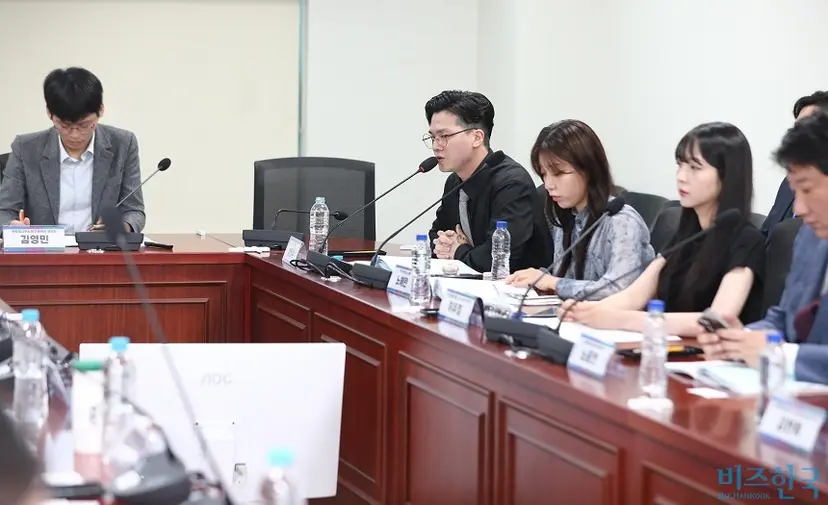
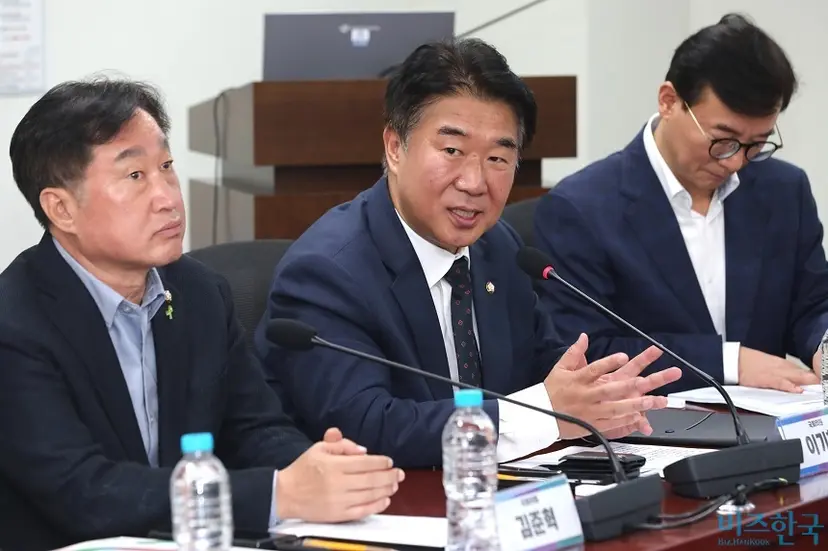
The forum, titled ‘Idols at the National Assembly: Child and Adolescent Labor and Human Rights Hidden Behind the Success of K-Pop,’ was held on the 30th at the National Assembly Members' Office Building in Yeouido, Seoul. It was hosted by Democratic Party lawmakers Lee Ki-heon, Kim Jun-hyuk, Park Soo-hyun, Lim Mi-ae, and Jang Cheol-min, organized by the ‘Child and Adolescent Media Human Rights Network,’ and sponsored by ‘BizHankook.’ Kim Young-min, head of the Hanbit Media Labor Human Rights Center, moderated the event, while former idols including Bang Min-soo (former Teen Top member), Noh Hye-ran (former Brave Girls member), and Heo Yu-jeong (former Danbalmori member, current K-Pop researcher) participated to share vivid testimonies about the situations and hardships they faced during their careers.
Bang Min-soo emphasized that idols must be provided with a minimum ‘salary.’ He explained, “Most idols have to cover their living expenses for 7 years on a 3 million won signing bonus after signing an exclusive contract. They cannot engage in any income-generating activities. Most are forced to borrow money from their parents.” He added, “After 7 years under an exclusive contract, idols need financial compensation that covers their basic living expenses if they want to try anything else.”
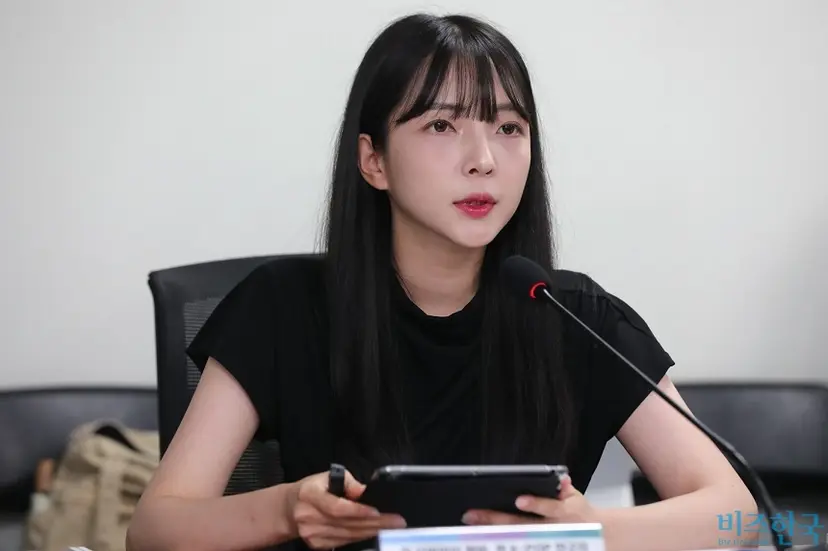
Noh Hye-ran recalled that as idols, they grew solely in the way their agency dictated from a position of inferiority, leaving them without self-sustainability. She shared her opinion, stating, “We couldn't voice personal opinions and had to follow the company’s decisions entirely. Living in dorms without cell phones and having zero economic power makes self-actualization extremely difficult—that’s a huge problem. It’s an environment where one’s own thoughts or ideas are easily dismissed.”
Heo Yu-jeong presented on the lack of education in the management of child and adolescent idol trainees. She specifically criticized the current idol training system, where staff members lacking professional qualifications perform diverse roles in education. She pleaded, “Due to the absence of professional educators, idol trainees experience unfair treatment and oppression. As a result, idols are suffering from damaged mental and physical health.” She argued for institutional improvements, including the protection and relief of minor trainees, the necessity of systematic education, and mandatory health check-ups for trainees.
The subsequent discussion panel included various professionals from the K-Pop industry: Jeon Da-hyun (BizHankook reporter), Lee Jong-im (executive committee member of Cultural Action), Noh Jong-eon (managing partner at Law Firm Jonjae), Jo Jung-hee (head of the Child and Adolescent Human Rights Division at the National Human Rights Commission), Kim Hyun-mok (director of the Pop Culture Industry Division at the Ministry of Culture, Sports and Tourism), and entertainment industry officials.
First, reporter Jeon Da-hyun explained her six-month investigative process and cases regarding idol human rights. Citing actual examples—such as sexual violence against minor trainees, unpaid labor, and physical neglect—she identified the inability to accurately assess the current status of trainees as the biggest problem. “The Ministry of Culture, Sports and Tourism currently doesn't know the exact number of trainees. Reports from the Ministry do not show accurate data, but only the responses from registered companies that answered the survey,” she pointed out. She also noted the Ministry of Education’s lax management of idol situations. She emphasized the need to improve perceptions of child labor in Korea by referencing laws currently implemented abroad, such as the California Child Labor Law.
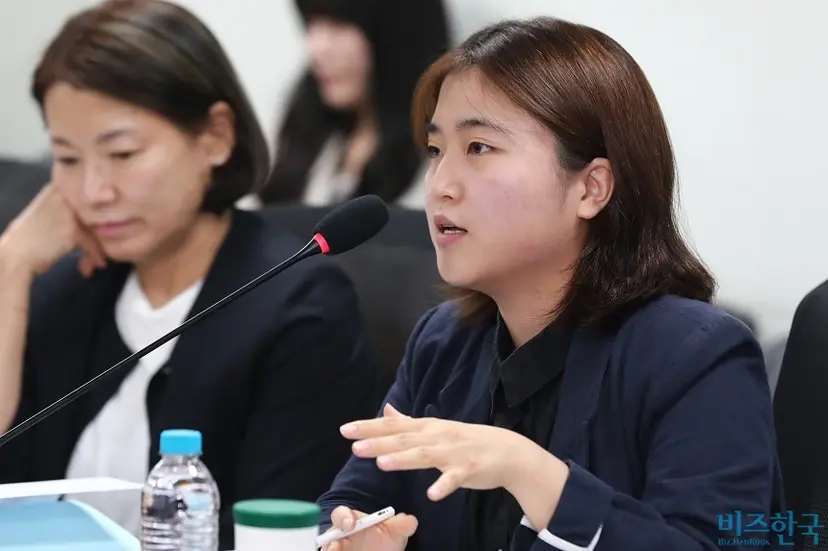
Lee Jong-im, an executive committee member of Cultural Action, expressed regret that there has been little difference in idol human rights between 2016 and 2024. She explained the need for regular field investigations and data collection by relevant ministries regarding the state of child and adolescent idols. She said, “We must gather various opinions from the entertainment industry, the Ministry of Education, and others. I strongly hope the government secures concrete field investigations and specific data.”
Lawyer Noh Jong-eon examined the legal status of idols. He compared idols to both artists and products that generate revenue for their agencies. He added that they are difficult to view as employees under exclusive contracts, and that their status takes the form of a special partnership agreement. He stated, “They are essentially in a hierarchical power relationship, and in the sense that they belong to and are controlled by their agency, they seem to possess some characteristics of employees.”
He emphasized that safety nets are necessary for such idols to maintain minimum dignity as human beings. “If unpaid settlements cannot be protected, the agency or the agency’s representative should repay or take responsibility. The structure should be one where an amount equivalent to at least the minimum wage is paid in advance,” Noh added.
Jo Jung-hee, head of the Child and Adolescent Human Rights Division at the National Human Rights Commission, lamented, “There have been many infringements on idol trainees’ rights to sleep, rest, and education. Although the commission has made recommendations to the Ministry of Education and the Ministry of Culture, Sports and Tourism several times, very few have been reflected.” She emphasized that legal amendments regarding children and adolescents are essential.
Kim Hyun-mok, a director at the Ministry of Culture, Sports and Tourism, explained, “The government is also making efforts to establish guidelines and legal systems as recommended, though it may feel insufficient in the field. Just as California’s labor laws developed over a long period since their enactment in 1932, the government will continue to make sustained efforts.” Regarding the lack of improvement in artists’ rights, he stated, “It is difficult to reconcile the differing positions of trainees, idols, and agencies. While agencies have grown significantly in size over the last 10 years, their perceptions still remain in the era of Seo Taiji and Boys or H.O.T. Agencies also need a change in perception.”
An entertainment industry official, who requested anonymity, also attended and presented a counterargument, drawing attention. The official claimed that agencies’ awareness regarding the human rights of child and adolescent cultural artists is also changing. He explained, “Since even first-graders in elementary school become trainees, agencies are outsourcing education to private academies until the first year of middle school. They take classes that teach them social skills alongside regular students. Also, to ensure they don’t give up on their studies, there is a minimum grade requirement. For example, middle school students are managed so they can achieve at least a certain grade level.”
Lawmaker Lee Ki-heon, who observed the discussion until the end, emphasized, “Survival must come first. Ensuring ‘the right to live’ is necessary so that minimum rights can be protected. The amendment to the Popular Culture and Arts Industry Development Act (Popular Culture Industry Act) was scrapped in the 21st National Assembly because it failed to pass the Legislation and Judiciary Committee, but I will ensure it passes in the 22nd, establishing a clear minimum baseline.”
[K-Pop: Idols in Wonderland] View the interactive article: kpop.bizhankook.com
※This project was supported by the Korea Press Foundation with funds raised from government advertising fees.
![[K-Pop: Idols in Wonderland] "Raising Idols Through Public Education": A Visit to a K-Pop High School](https://s.bizhankook.com/attachments_thumb/2026/05/92330_thumb.webp)
![[K-Pop: Idols in Wonderland] K-Pop Must Break Free from the Same ‘Success Formula’ to Survive](https://s.bizhankook.com/attachments_thumb/2026/05/92469_thumb.webp)
![[K-Pop: Idols in Wonderland] The Unfairness 'Ria' Experienced, and What 'Kim Jae-won' Intends to Change](https://s.bizhankook.com/attachments_thumb/2026/05/92437_thumb.webp)
![[K-Pop: Idols in Wonderland] Jang Jae-won, CEO of SM Universe: "Not an SM subcontractor, but a specialized K-Pop education institution"](https://s.bizhankook.com/attachments_thumb/2026/05/92559_thumb.webp)
![[K-Pop: Idols in Wonderland] Former Idols Visit the National Assembly: "Please Stop the Abnormal Growth of K-Pop"](https://s.bizhankook.com/attachments_thumb/2026/05/92509_thumb.webp)