

[비즈한국] K-Pop has become South Korea's premier export. However, deep shadows linger behind the glitz. Idols, the symbols of K-Pop, are scouted at a young age and endure grueling training periods. In this process, labor and human rights are often ignored. What becomes of the countless trainees who never even make their debut? Through the ‘K-Pop: Idols in Wonderland’ series, Bizhankook aims to highlight the problems that have been ignored while K-Pop has grown and explore alternatives from various angles. We believe that when those who create K-Pop are healthier, those who enjoy K-Pop can also be happier.
‘Self-governing idols,’ ‘participatory idols,’ ‘idol-turned-producers,’ and ‘idol bands.’ These are the new approaches to ‘idol development’ recently being attempted in the entertainment industry. Surprisingly, these fresh attempts are being made by small and medium-sized agencies. This is because they cannot compete with large corporations by simply following the existing success formulas.
Yoon Sun-mi, CEO of Vibe Lab—who previously handled planning, marketing, and production at JYP and FNC, and managed virtual idol marketing at AFUN—says that the market can only become healthy when various success models emerge. “Currently, it’s a miracle that successful models are even coming out of small and medium-sized agencies. I believe the market can only function healthily when diverse types of models emerge. We need idols who succeed through music, idols who are centered on fandoms, and many self-producing idol bands. Since K-Pop is not musically confined to a single genre, I believe there needs to be more diversity. Government support is also necessary.”
What strategies have small and medium-sized agencies established in a K-Pop market dominated by large agencies? Also, what are the current issues in the entertainment industry from their perspective?

Targeting ‘Northern Europe,’ Where Idols Are Rare
On June 9 (local time), a peculiar scene unfolded in Stockholm, Sweden. The interior and exterior of the Korean Cultural Center in Sweden were overflowing with Swedes who came to see K-Pop idols. K-Pop fans gathered after hearing news that the girl group Primrose was coming. On this day, the package album for Primrose’s mini-single ‘REVIVAL’ was pre-released, and a fan signing event was held.
While their names might be somewhat unfamiliar in Korea, it was different in Sweden. A point worth noting is that those who came were not just fans of Primrose. For all Swedish people who enjoy K-Pop in general, having Korean idols visit their local area was a rare opportunity.

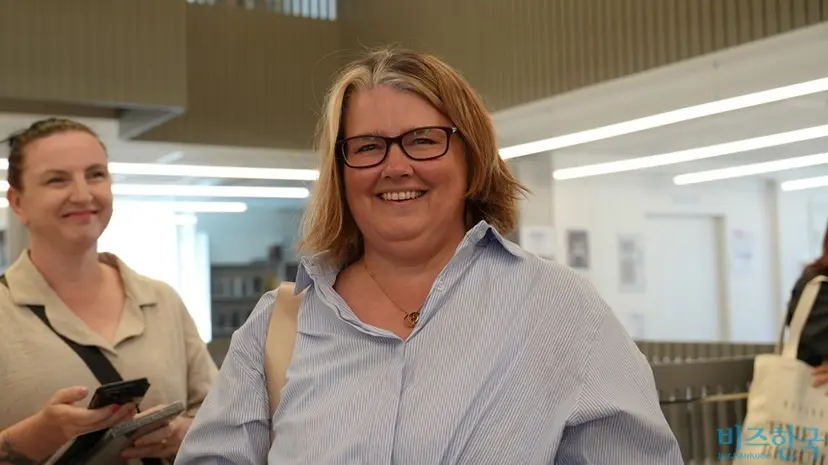
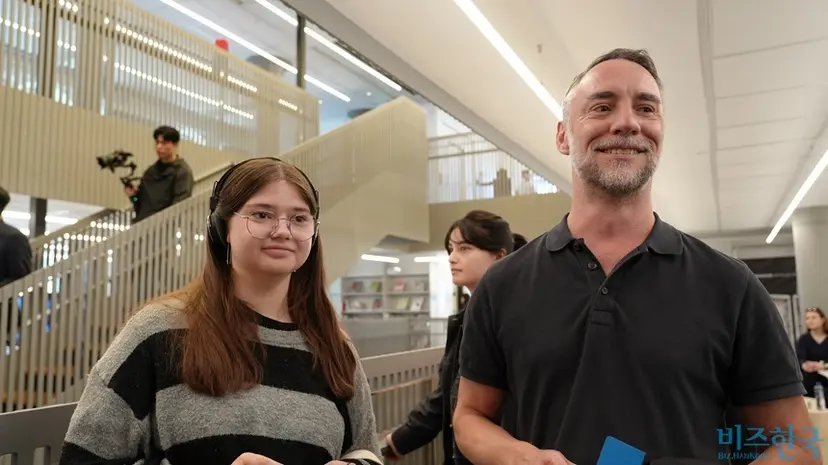
Apple (18) and Alice (18) came after hearing that a Primrose signing event would be held in Stockholm. “We like Primrose, but we also liked K-Pop before. We think K-Pop’s biggest strength is its performance. We are really excited to meet Primrose today.”
A father and daughter also visited together. “I started listening to the music because my daughter likes K-Pop. I thought it was very good when I first heard it. Opportunities like this aren’t common. I’ve even been to the UK to see (G)I-DLE.”
Ames (53), who is active in a local fan community because they love K-Pop, said, “I really love K-Pop. I visited today because I want K-Pop to do well in Sweden. It’s a shame that K-Pop idols rarely come to Sweden. There are quite a few people in Sweden who like K-Pop.”
Kia (17), who attended the fan signing event after the Nordic Festival held the previous day to see Primrose, said with an excited expression, “I came from Finland to see Primrose. I’ve been a fan since their debut. I became a fan after seeing their performance. I’m really happy that they are holding a fan signing event today, following the Nordic Festival where they performed as ambassadors.”

Primrose’s strategy is ‘Northern Europe.’ After reorganizing as a four-member group, they constructed their worldview with the Norse myth of Ragnarök as a motif. Primrose represents the four guardian deities chosen by the Norse goddess Freyja. Each member’s abilities were set according to this worldview, and they plan to create stories based on this.
In an interview with Bizhankook, Primrose member Ruby revealed, “We plan to continue showing our new colors based on Norse mythology in the albums we will release in the future.”
While it is common for every idol group to have a ‘worldview,’ it is unusual for it to be based on Northern Europe. An AO Entertainment marketing representative mentioned that they considered the fact that there are no local idol activities despite the popularity in Northern Europe. “There is almost no activity by complete K-Pop groups in Northern Europe. In contrast, Swedish people are really thirsty for K-Pop. In fact, most of the tracks on major K-Pop charts feature Swedish composers.”
Although AO Entertainment is a small/medium-sized agency, they have recruited several staff members from large agencies. Their marketing strategy was also different from the existing ones. Instead of idols who go abroad after succeeding in Korea, they decided to do the exact opposite. The strategy is to get recognized in the center of pop music first. The aforementioned marketing representative explained, “I thought that at a small or medium-sized agency, we could never compete by doing the same marketing and releasing the same songs as large corporations. We gained experience while releasing our 1st and 2nd albums, and set a new strategy. Although K-Pop is liked in Northern Europe, Latin pop and band music are the centers. We thought that showing Korean performances here would be refreshing. We were surprised ourselves, as we felt much more local interest in Sweden than expected.”
To Survive, Small and Medium Agencies Must…
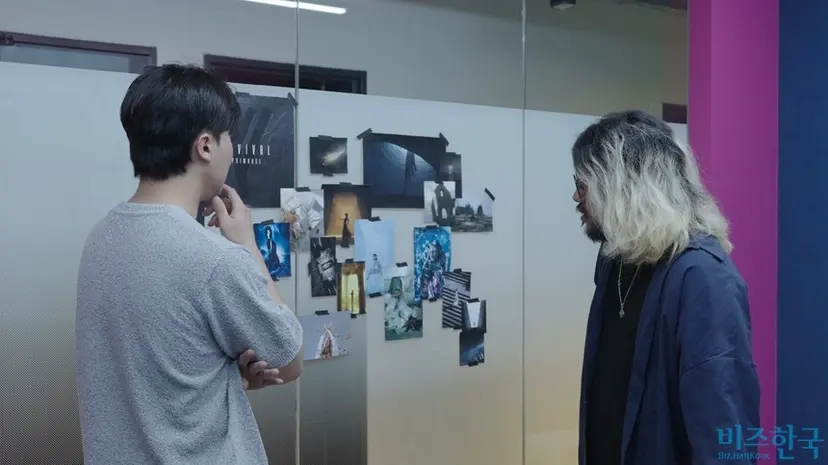
Heo Chan, CEO of AO Entertainment, who produced Primrose, says that for K-Pop to be reborn as a healthy market, there must be opportunities for small and medium-sized agencies as well. CEO Heo Chan, whom we met on June 24, confessed, “Currently, it is a market where small and medium-sized entertainment companies cannot survive. It is not an environment where a second BTS can emerge from a small or medium-sized agency. To give you an idea, when we try to issue a credit card in the company’s name, they tell us we have to pay a ‘credit card deposit.’ My personal credit or assets are not the problem. It’s a corporate card, but the limit is 5 million won. It’s essentially a debit card. This is the reality of the entertainment industry. There is zero infrastructure for corporate growth.”
CEO Heo said that the potential value of K-Pop is much greater. That is why he jumped into the entertainment industry. “Countries with a GDP per capita of over $40,000 are not manufacturing-based economies. While the current K-Pop market is very small in terms of money, its national brand value is tremendous. This ripple effect cannot be measured by money.”
He pointed out the need for national support for the music industry. “Recently, we decided to host a songwriting camp with Swedish composers. We didn’t have the money, but we were able to do it thanks to the Swedish government. They said the Swedish government fully covers the costs for their domestic composers to go to Korea. Sweden is one of the world’s largest exporters of music-related goods. They provide a lot of support from the state to promote this industry.”
CEO Heo Chan said that to improve the abuses of the idol industry, K-Pop needs to be viewed from an industrial perspective. “I am well aware of the idol human rights issues. That’s why I try to consider the members’ environment and collect their opinions. However, there are bound to be limits. First of all, since it costs so much money just to maintain this business, I am investing billions of won of my own money. I have never heard of R&D investment in the entertainment business. To expand intangible assets and IP, there must be infrastructure from a business perspective.”
※ The next installment will feature an article on how to solve on-site problems through legislation.
※ This project was supported by the Press Promotion Fund, which was funded by government advertising fees.
![[K-Pop: Idols in Wonderland] Asking 'What is Better K-Pop' at Sweden's 'Heavy Metal Mecca' Rock Festival](https://s.bizhankook.com/attachments_thumb/2026/05/92427_thumb.webp)
![[K-Pop: Idols in Wonderland] The Secret Behind Japan’s Endless Stream of Talented Bands Lies in Schools](https://s.bizhankook.com/attachments_thumb/2026/05/92450_thumb.webp)
![[K-Pop: Idols in Wonderland] "Raising Idols Through Public Education": A Visit to a K-Pop High School](https://s.bizhankook.com/attachments_thumb/2026/05/92330_thumb.webp)
![[K-Pop: Idols in Wonderland] K-Pop Must Break Free from the Same ‘Success Formula’ to Survive](https://s.bizhankook.com/attachments_thumb/2026/05/92469_thumb.webp)
![[K-Pop: Idols in Wonderland] The Unfairness 'Ria' Experienced, and What 'Kim Jae-won' Intends to Change](https://s.bizhankook.com/attachments_thumb/2026/05/92437_thumb.webp)