

[비즈한국] “Hey Meta, what’s the wind like today?”
When you speak while wearing these glasses, an Artificial Intelligence (AI) responds. Press a button, and you can take photos or videos, ask questions about what you are seeing, or request live translations. This is how the “Ray-Ban Meta,” the AI glasses launched in Korea last May, works. With Meta taking an early lead in the market by prioritizing a companion device that allows users to access AI without reaching for their smartphones, Samsung Electronics and Google are also set to join the chase with their first products in the second half of this year. The Big Tech battle for the post-smartphone form factor has moved to “glasses.”
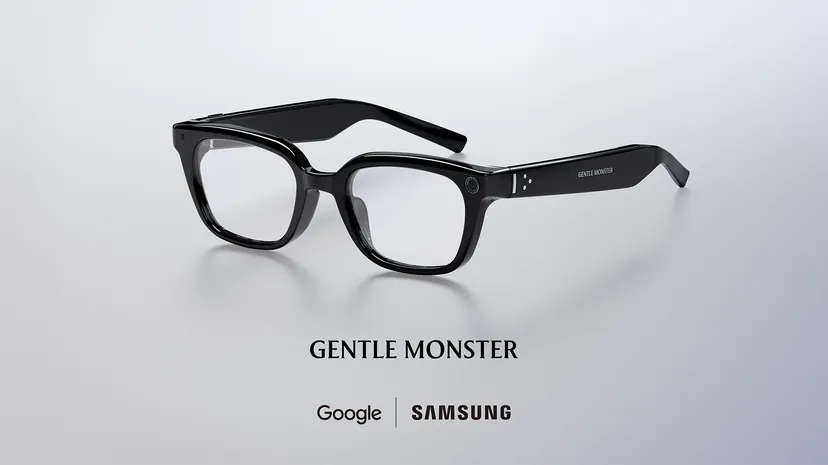
Samsung and Google prepare for launch… Starting with ‘Screenless AI Glasses’
After officially announcing their collaborations with Gentle Monster and Warby Parker last December, Samsung Electronics and Google first unveiled two prototype designs for Android XR-based AI glasses at Google I/O in May. During the Galaxy Unpacked event in July, two additional designs were revealed, bringing the total to four.
According to the specifications disclosed so far, the “Intelligent Eyewear” (tentative name) scheduled for release this year will feature a 12MP camera, micro-sensors, directional microphones, open-ear speakers, and an LED indicator for recording status. The goal is to keep the weight around 50g, comparable to standard glasses.
We are not yet at the stage where the “lens acts as a screen,” which is what people commonly imagine when they think of “AI smart glasses.” The initial models do not include a display. Instead, users call Gemini via voice to handle navigation, translation, message transmission, and photo taking. Rather than replacing the smartphone, they function more as a secondary device for moments when pulling out a phone is inconvenient.
For Samsung, this is also a new touchpoint to expand the reach of Galaxy AI. The company has set a goal to increase the number of devices equipped with Galaxy AI from 400 million last year to 800 million this year.
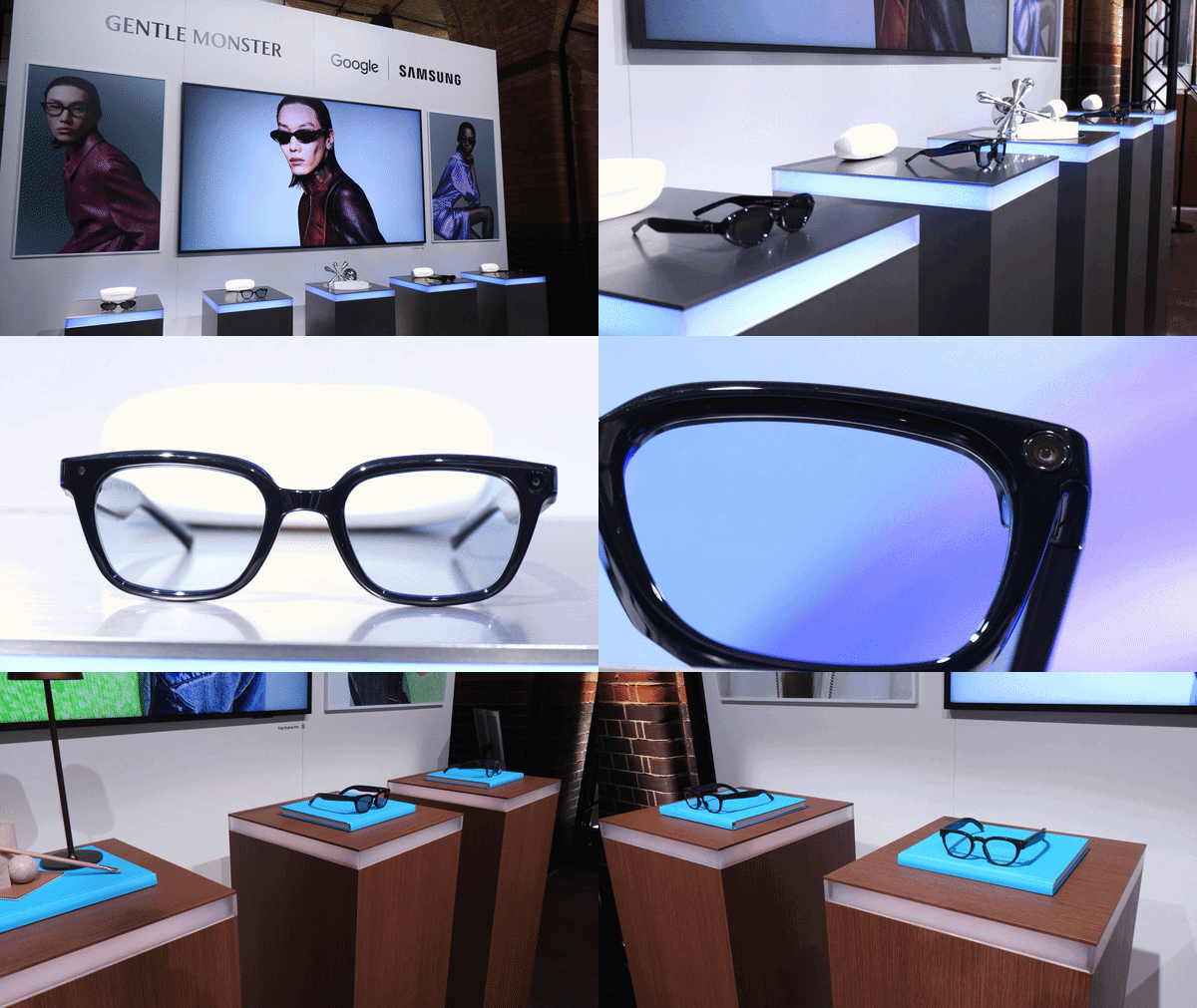
Samsung describes these products as “complementary devices that extend the mobile AI experience outside the screen, rather than standalone devices meant to replace smartphones.” Their strategy is to keep connectivity open not only to Galaxy devices but also to other Android phones and iPhones, while offering a differentiated experience when used in tandem with Galaxy Watches and Buds.
‘Ray-Ban Meta’ ramps up domestic sales
Meta is expanding its market reach. “Ray-Ban Meta” and “Oakley Meta,” created in collaboration with EssilorLuxottica (the owner of the Ray-Ban and Oakley brands), have been sold through the three major mobile carriers in Korea since last month, following their official launch in May. Separately, Shinsegae I&C, the official distributor for Meta’s device lineup in Korea, is handling sales across domestic online and offline channels, excluding the direct sales channels of Ray-Ban and Oakley. Prices start at 690,000 KRW for Ray-Ban Meta and around 900,000 KRW for Oakley Meta.
Meta captured approximately 69% of the global smart glasses market in the first quarter of this year. During the same period, the smart glasses market grew more than threefold compared to the previous year. While the market size itself is still in the nascent stages, Meta is credited with creating a consumer market that followers can enter by being the first to release products and expand distribution networks.
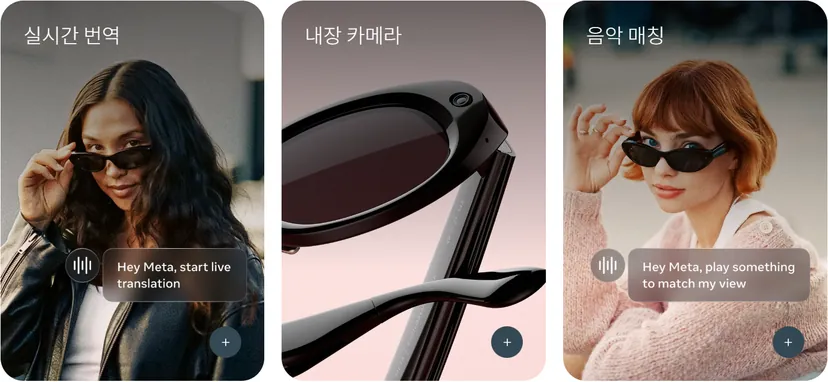
Meta’s strength lies in reducing the perceived gap between these and traditional glasses. Because users can choose from various frames and prescription lenses, it is considered the form factor closest to regular glasses among the AI glasses currently on the market. Since the products currently released in Korea do not feature displays, the prescription lenses are the same as those used in regular sunglasses or glasses, rather than being exclusive to smart glasses. If a user needs a prescription, they can simply visit a standard optician to have the lenses swapped.
However, the limitations as an electronic device are also apparent. A representative from an optician in Jongno-gu, Seoul, who sells Ray-Ban Meta, said, “Because the frames are filled with mechanical components, it’s difficult to heat and adjust the temples like you would with regular glasses,” adding, “The structure inevitably leads to fatigue if worn for long periods.” The representative further explained, “We inform customers before purchase that once opened, they are treated as electronic devices, meaning they cannot be returned or refunded.”
This suggests that while companies have succeeded in putting AI functions and cameras into glasses, they are still far from the stage where these devices can be freely adjusted to individual facial features and worn daily like normal glasses. In particular, because they are designed for Western facial structures, they are receiving somewhat lukewarm feedback regarding comfort from Korean consumers.

The essence is the race for the ‘AI touchpoint’
Market research firm Omdia forecasts that global sales of AI smart glasses will exceed 10 million units this year and expand to 35 million by 2030. The reason Meta, Samsung, and Google are investing heavily in AI glasses is not merely to create a new hardware market. It is more about who will secure the interface that users interact with most frequently and naturally alongside their smartphones.
The Samsung-Google alliance has opted for a strategy of dividing roles. Samsung handles the hardware and the connection experience between Galaxy devices; Google provides Android XR and Gemini; and Gentle Monster and Warby Parker manage the glass design and sales experience. The plan is to keep compatibility open while providing a seamless user experience between the smartphone, Watch, and Buds within the Galaxy ecosystem.
Conversely, Meta is building an integrated experience centered on its own AI and hardware. Industry analysts suggest that both camps are keeping in mind that the video data secured via the user’s gaze through smart glasses could be expanded into other businesses, such as robot learning, in the future.
In the U.S., high-end models equipped with displays have already been released. Last year, Meta unveiled and began selling the “Ray-Ban Meta Display,” an upper-tier model. It allows users to manipulate a screen within the lens using hand gestures to send messages, translate, and use various AI functions. However, as the functionality increased, the battery life became shorter than the standard model (maximum 6 hours), and the weight increased by about 35% to 69g. Following the unveiling, demand surged, delaying international launch schedules. It is expected that Samsung and Google will also sequentially release display-enabled models.

However, as more screen and processing functions are moved into the glasses, physical limitations—battery, weight, and heat—will only increase. Furthermore, issues regarding the social discomfort of having cameras worn on the face, privacy infringement controversies, and price resistance remain.
Unlike smartwatches, which succeeded in achieving mass adoption by attracting even those who previously didn't wear watches, this trend has yet to clearly manifest in the glasses sector. With the utility of AI voice assistants, real-time translation, and situational awareness now far broader than in the past, the outlook is that closing this gap will be the key to market expansion.
Choi Jae-in, Vice President of the XR Development Team at Samsung Electronics’ MX Business, said at a London briefing last month, “Our most important goal is not just packing in technology, but creating an experience where they feel like the glasses you were already wearing,” adding, “Many companies can build AI glasses, but creating a product that people want to wear and use every day in their lives is an entirely different challenge.”
![[AI in My Eyes] ② “Lightweight, Long-lasting, and Stylish”: Packing Cutting-edge Tech into Small Glasses](https://s.bizhankook.com/attachments_webp_no_wm/2026/08/135532_no_wm_343a6f3c.webp)
![[My View on AI] ③ “From Test Answers to Secret Filming…” AI Glasses Lack Safety Measures](https://s.bizhankook.com/attachments_webp_no_wm/2026/09/135685_no_wm_3093475b.webp)