

[비즈한국] Compared to smartphones, AI-based smart glasses have much narrower internal space, and given they are worn on the face for extended periods, weight and heat management are critical. Since large batteries cannot be used, the devices must simultaneously perform AI calculations alongside camera, microphone, and sensor operations, making miniaturization, weight reduction, and low power consumption the core challenges.
As the market begins to open in earnest, it may bring new demand and opportunities to reorganize supply chains for parts manufacturers. However, as the market is still in its infancy, it is difficult to guarantee that domestic parts companies will benefit. There are technical barriers to achieving high performance within a form factor much smaller than a smartphone and limited power, and Chinese companies have already secured a significant manufacturing supply chain. Analysts suggest that for AI glasses to become a viable new electronics component market, domestic firms must prove their competitiveness beyond existing smartphone-centric supply chains.
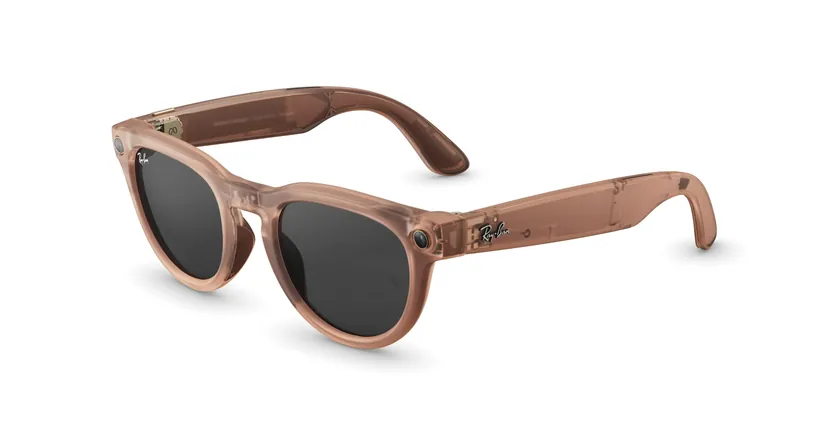
'Ultra-small, Low-power' New Demand
In the camera sector, camera modules and image sensors are emerging as new sources of demand. The camera serves as the 'eye' for AI, allowing it to see and understand the surrounding environment.
Rather than competing for high pixel counts like in smartphones, it is more important to implement performance suitable for real-time image recognition within limited space and power constraints. This means demand will increase for smaller camera modules and image sensors with lower power consumption.
Han Sang-yeol, a senior researcher at the Software Policy & Research Institute (SPRi)’s Virtual Convergence Research Lab, cited battery performance improvement, weight reduction, and advanced optical technology as the technical challenges for AI smart glasses. "Because cameras, batteries, and semiconductors must all be packed into the limited structure of glasses, physical weight reduction—approaching the 20–50g range of regular glasses—and aesthetic perfection must be secured simultaneously," he analyzed.
The business environment for the domestic electronic parts industry is shifting toward a direction where it must pay attention to this new demand from AI glasses. As investment in AI servers and semiconductors expands, demand for high-value substrates and packaging is rising, while the market for existing IT devices, including smartphones, has entered a mature phase.
In fact, LG Innotek saw its semiconductor package substrate line utilization rate reach 94% in the first half of this year, outpacing its camera module line (85.2%), indicating a disparity in demand across existing businesses. While growth in AI infrastructure and semiconductor-related business is prominent, traditional IT parts businesses are faced with the task of securing new sources of demand.
On the semiconductor side, low-power AI computation and packaging are key. As it is difficult to offload all tasks to the cloud, the role of on-device AI and low-power semiconductors is expected to expand.
Batteries also require ultra-small, high-density designs. Since weight and usage time are in a direct "trade-off" relationship, experts suggest this could be an opportunity for companies that already possess experience with wearable batteries.
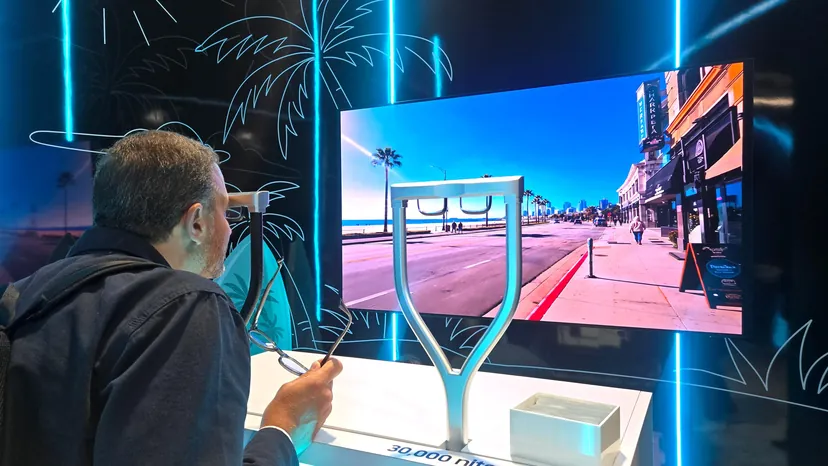
Senior researcher Han Sang-yeol pointed out, "As camera, video, real-time translation, and object recognition AI functions become more active, power consumption surges; however, due to the nature of a head-worn device, it is difficult to fit large-capacity batteries." He added, "To freely use wireless connections, high-resolution displays, and AI processing, securing battery life is a fundamental challenge."
The Next Stage is 'Display-type'… Displays and Optics as the Deciding Factor
Currently, the market is led by non-display AI glasses centered on voice AI and camera functions. However, the ultimate market the industry is eyeing is smart glasses equipped with displays that project information directly in front of the user's eyes. At this stage, the importance of ultra-small displays and optical components will increase even further, beyond just cameras and semiconductors.
According to market research firm Omdia, the global AI smart glasses market is expected to grow from 5.1 million units in 2025 to 10 million in 2026, and further to 35 million units by 2030. Market researcher Smart Analytics Global (SAG) predicts that display-equipped AI glasses will surpass voice-only products faster, starting from 2028.
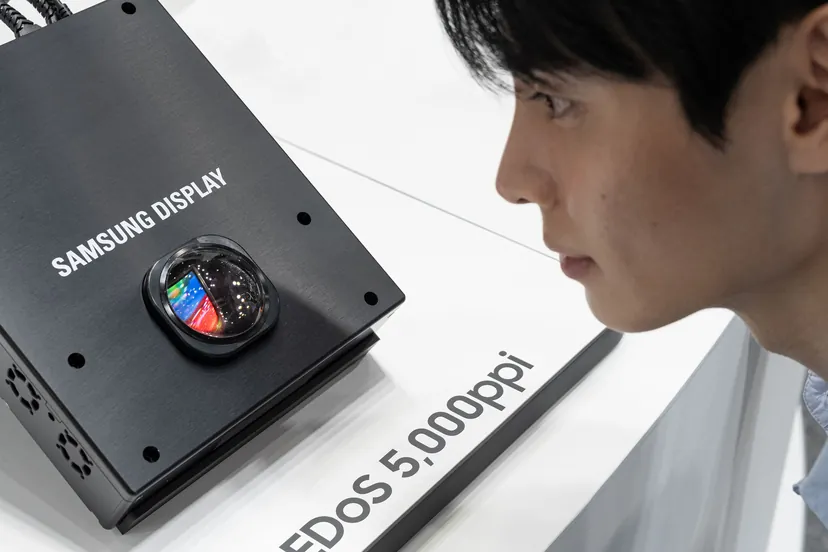
Key display technologies include OLEDoS (OLED on Silicon) and LEDoS (LED on Silicon). OLEDoS is an ultra-small display technology where OLED is deposited on a silicon substrate; it is considered suitable for XR devices as it can implement high resolution in a small area. Currently, 4K OLEDoS technology is applied to the Samsung Galaxy XR, while Apple's Vision Pro uses OLEDoS and OLED-on-Silicon technology.
Samsung Display acquired U.S.-based eMagin in 2023 to secure RGB OLEDoS technology. As this was Samsung Display's first acquisition of an overseas company, the industry interpreted it as a preemptive move to prepare for the future market by securing RGB OLEDoS technology for XR devices.
LG Display has also been expanding research into ultra-small displays for XR and has showcased OLEDoS technology at related exhibitions.
Moon Dae-kyu, a professor of Display and New Materials Engineering at Soonchunhyang University, said, "Although the market for display-type smart glasses hasn't opened yet, domestic companies have been interested in and developing smart glasses-related technology. In particular, OLEDoS has made significant technical progress, with current resolutions reaching over 5000 PPI."
On the other hand, LEDoS is identified as an area where domestic readiness is relatively lower. Professor Moon explained, "In the case of LEDoS, it is still weak due to the lack of a broad base of domestic LED-specialized companies, but the foundation is being built through the establishment of a Smart Modular Center and R&D support."
The real question is whether orders from major finished product companies will actually reach domestic parts suppliers. Attention is also focused on whether the supply chain based on existing smartphone partners will continue into the AI glasses market.
In particular, securing price competitiveness against Chinese OEM/ODM companies is considered crucial. It is assessed that China has already built a manufacturing ecosystem that can quickly procure parts and assemble them, not just for finished products but for components as well.
Xiaomi and Huawei have already introduced AI-based smart glasses to the global market, and TCL-affiliated startups are also expanding their presence. In the display sector, BOE, CSOT, and Tianma are supplying panels to major XR companies. Chinese companies, having achieved economies of scale through smartphone and wearable device manufacturing, are showing strength in the early market.
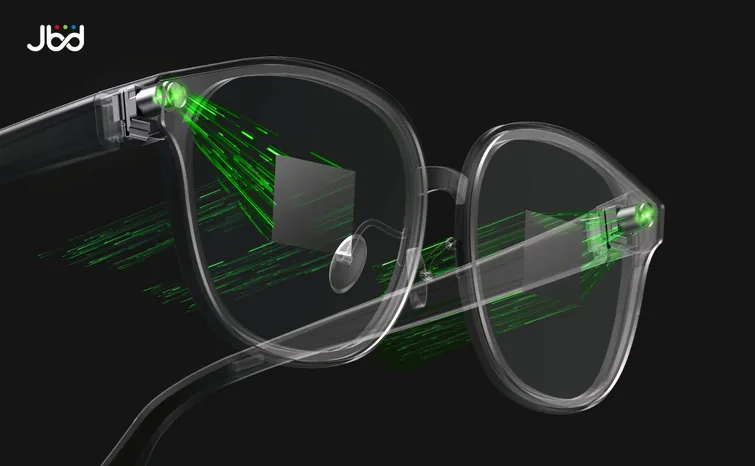
Analysts say that product competitiveness depends not only on the performance of individual parts but on how closely semiconductor, display, optical, and battery companies collaborate to integrate high-perfection, ultra-small components.
To create OLEDoS, a CMOS circuit that drives the OLED—a backplane—is first manufactured at a semiconductor plant on a silicon wafer; then, the display panel company forms OLED pixels and packages them on top. Because of this, collaboration with semiconductor companies is essential, which also results in a high-cost structure.
Professor Moon explained, "To lower costs, attempts are being made to manufacture TFT backplanes on glass substrates instead of silicon wafers. In this case, there is a possibility that display panel companies will produce them independently in the future, and cooperation with optical companies is also essential."
The industry believes that while it is difficult to predict the exact commercialization point for display-type smart glasses, it won't take too long, given that interest has grown significantly compared to the past. Choi Jae-in, Vice President of Samsung Electronics' MX Business, referred to the first AI glasses scheduled for release within this year at an 'AI Glass' briefing in London last July as a "starting point," hinting at the possibility of future next-generation models equipped with displays.
A source in the domestic display industry stated, "It's not yet at the full-scale product stage because the market hasn't materialized," but added, "We are continuously developing the technologies needed to respond once the market opens and demand becomes concrete."
![[AI in My Eyes] ① Why are Big Tech companies focusing on AI devices, and why specifically glasses?](https://s.bizhankook.com/attachments_webp_no_wm/2026/08/135409_no_wm_4541d3fc.webp)
![[My View on AI] ③ “From Test Answers to Secret Filming…” AI Glasses Lack Safety Measures](https://s.bizhankook.com/attachments_webp_no_wm/2026/09/135685_no_wm_3093475b.webp)