

[비즈한국] In the era of the AI (Artificial Intelligence) transition, domestic and international investment funds are gravitating toward high-tech sectors with high short-term profit visibility, such as AI infrastructure, semiconductors, and robotics. It is inevitable that investment sentiment toward the biotech sector—which requires a long-term approach and the endurance of high risks of clinical failure—has shrunk significantly compared to the past. However, just because the biotech investment market has cooled does not mean that all biotechs are facing a funding cliff.
As liquidity in the capital market decreases, attracting investment based solely on the growth potential of a pipeline is becoming increasingly difficult. Conversely, massive funds are flowing into companies that have demonstrated validated quantitative clinical data and clear commercialization potential in the global market.
Ultimately, the investment paradigm of the biotech market is shifting. We are moving away from the liquidity-driven market of the past, where "lump sums" of money flowed across the entire sector, and entering an era of "selective investment," where funds are concentrated on a small number of companies equipped with objectively verified results, such as technology exports and clinical achievements.
Even without the umbrella of large corporate capital or immediate profits, biotechs that have been chosen by global big pharma and have proven their technological edge continue to attract the attention of domestic and foreign institutional investors. In contrast, the funding gap between these firms and those that have yet to sufficiently prove their technology or business feasibility to the market is widening.

Technology Exports and Platform Competitiveness… Biotechs That Institutions Seek Out
Leading biotechs that have recently raised large amounts of capital easily despite the frozen market share a common trait: they do not rely on a single drug candidate but have secured "platform technologies" capable of expanding into multiple pipelines, and have connected these to concrete business outcomes such as technology exports or joint development with global pharmaceutical companies.
A prime example is Alteogen. Alteogen is sought after by global pharmaceutical companies due to its human hyaluronidase platform, 'ALT-B4,' which converts intravenous (IV) formulations into subcutaneous (SC) formulations that patients can self-administer.
In particular, as ALT-B4 is being utilized in the development of the SC formulation for 'Keytruda,' the world's top immune-oncology drug with annual sales exceeding 30 trillion won, the commercial value of the platform is rising. As ALT-B4 has become a key element in the commercialization and patent defense strategy for MSD (Merck)'s Keytruda SC (product name 'Keytruda CUREX'), Alteogen has signed successive technology export contracts with global big pharma players such as Sandoz, Intas, and AstraZeneca. Through this, it has leapt into becoming a key player leading the SC formulation transition platform market alongside Halozyme in the U.S.
OliX Pharmaceuticals is also garnering attention from the global market based on its proprietary cell-penetrating asymmetric RNAi (RNA interference) platform technology. It is expanding its pipelines into disease groups with high unmet medical needs, such as MASH (metabolic dysfunction-associated steatohepatitis), obesity, hair loss, and macular degeneration. Through this, it attracted strategic investment (SI) and joint research related to new materials for hair loss and skincare from global cosmetics firm L'Oréal, and is building a platform business model by successfully transferring platform technology to global pharmaceutical firms, including a Korea-China joint venture partner.
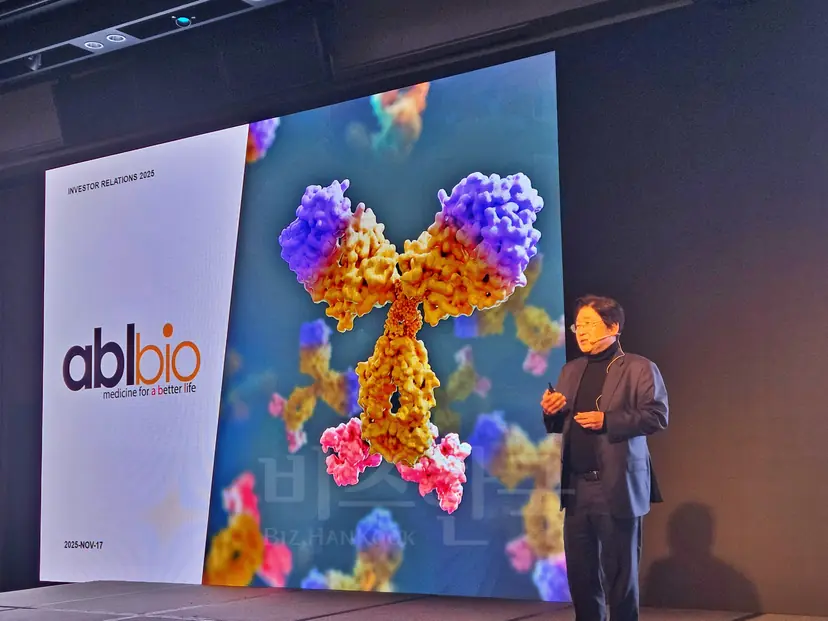
ABL Bio is expanding cooperation with global big pharma by leveraging 'Grabody-B,' which delivers drugs across the blood-brain barrier (BBB), and 'Grabody-T,' an immuno-oncology bispecific antibody platform.
Starting with the 1.3 trillion won technology export of its Parkinson's disease treatment 'ABL301' to Sanofi in 2022, the company proved the competitiveness of its platform technology by signing a 4.1104 trillion won deal for Grabody-B with GSK in April 2025, and a deal for the Grabody platform with Eli Lilly worth up to 3.7487 trillion won in November of the same year. In this process, it even attracted a strategic equity investment worth approximately 22 billion won from Eli Lilly, strengthening its business ties with global big pharma.
As the scalability of its platforms is recognized, fundraising is also becoming easier. ABL Bio successfully completed a 140 billion won third-party allocated capital increase targeting institutional investors such as KDB Bank, Atinum Investment, and Korea Investment Partners, securing the "ammunition" to independently complete follow-up clinical pipelines.
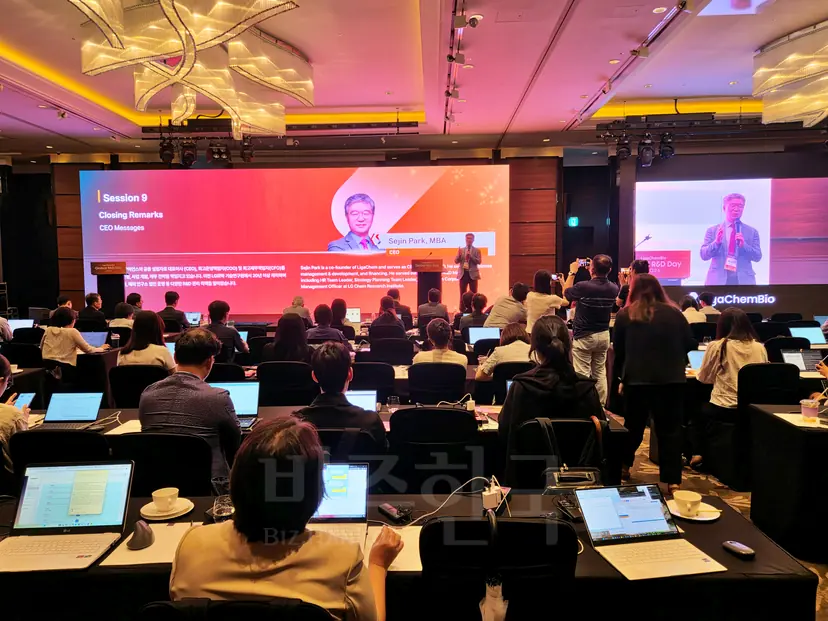
LigaChem Biosciences has also successfully closed successive large-scale technology transfer contracts with global big pharma such as Janssen and Takeda, based on 'ConjuALL,' its development platform for linkers and payloads—the core elements of ADC (antibody-drug conjugates), which are emerging as next-generation anti-cancer drugs.
This platform competitiveness served as the foundation for attracting a massive 550 billion won equity investment from the Orion Group (Fan Orion Corporation, a Hong Kong-based Orion affiliate) in January 2024. Furthermore, in June, the company secured an additional basis for large-scale funding after receiving approval for a 500 billion won direct equity investment from the National Growth Fund.
LigaChem Biosciences is using the secured capital not just for simple operating costs, but for follow-up clinical development and pipeline expansion, transitioning its business structure for the long term. Chae Je-wook, Senior Vice President of LigaChem Biosciences, stated at the Global R&D Day 2026 event last July, "We will increase the number of pipelines entering Phase 2 clinical trials or later stages while continuing to execute technology transfers," adding, "If we transfer technology at a late clinical stage, much larger-scale technology transfers in terms of value-add will be possible than today."
Companies That Need Money and Companies Investors Want Are Different
These companies were not chosen by investors from the start. They endured years of painstaking research, development, and clinical trials to prove their technology and create business results. Only after gaining market trust through significant milestones, such as technology exports to global pharmaceutical firms, did the capital begin to flow in.
Once the sluice gates of funding opened, it led to follow-up investments and research development. By verifying their technology in the global market and reinvesting the proceeds from technology exports into subsequent clinical trials and pipeline development, a virtuous cycle of "technological verification → capital inflow → follow-up development → additional value creation" has been established.
Ultimately, what matters to investors is not simply a company with good technology. How concretely a company has proven that its technology can actually work in the market has become the key criterion for investment decisions.
In particular, collaboration with global pharmaceutical companies is considered a representative means of external verification. The very fact that a global pharma company personally reviewed the competitiveness and business feasibility of the technology during the export process serves as a form of technological validation in the market. Additionally, securing upfront payments and milestones allows companies to procure funds needed for follow-up R&D, simultaneously achieving technological verification and capital procurement.
Such achievements also act as a primer for subsequent fundraising. Securing the capacity to reinvest in R&D and progressing clinical stages increases the possibility of further technology exports or attracting strategic investments. For investors, injecting additional capital into companies that have already confirmed a certain level of technology and business feasibility is a choice that can lower investment risk.
On the other hand, companies that have not yet secured sufficient externally verifiable results, such as clinical data or technology exports, find it difficult to persuade investors, no matter how promising their technology may be.
As the biotech investment market cools, this difference becomes even more pronounced. This is because investors are looking for companies that have already proven some potential for success in the market and can move to the next level when additional capital is injected, rather than companies that are simply in need of money.
The trend of selective investment is also evident in foreign investment. As of the 26th, the foreign ownership ratios of Alteogen (15.22%), ABL Bio (13.24%), LigaChem Biosciences (11.88%), and OliX (9.65%) have reached double digits. It is not just domestic funds; the interest of global investors is also following companies that have proven their business viability through technology exports to global big pharma and platform competitiveness.
In today's biotech investment market, the gap between companies that need money and companies investors want to invest in is widening. What the market demands is not vague growth potential, but objectively verifiable results such as technology exports, clinical data, and global partnerships. A virtuous cycle where money attracts more money operates for companies that pass this verification, while the "investment cold wave" inevitably hits those that do not even harder.
![[Bio Money Game] ① “Clinical trials take time, but funding runs dry”: The ‘Capital Polarization’ determining the success or failure of new drugs](https://s.bizhankook.com/attachments_webp_no_wm/2026/08/135437_no_wm_1fdc0506.webp)
![[Bio Money Game] ③ Asking shareholders to "save the company," yet major shareholders only subscribe to "half"](https://s.bizhankook.com/attachments_webp_no_wm/2026/09/135587_no_wm_01be4102.webp)