

[비즈한국] With the approval of the 'Daesan No. 1' project, full-scale restructuring of the domestic petrochemical industry has begun. The government and the industry aim to resolve the issue of oversupply through this restructuring and improve their competitiveness by shifting toward high-value-added and eco-friendly industries. However, critics argue that substantive industrial transition measures for carbon neutrality remain insufficient. We examine what is necessary for the restructuring to go beyond simple production cuts and lead to a true 'transformation'.
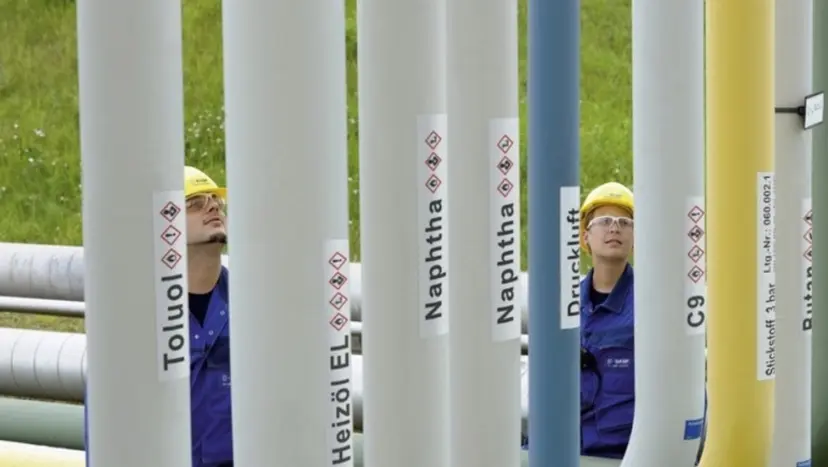
The petrochemical industry has served as a backbone of the national economy, but it is also one of the leading sectors in the domestic manufacturing industry in terms of greenhouse gas emissions. According to 2022 statistics, the industrial sector accounts for approximately 38% of total domestic greenhouse gas emissions, and combined with the oil refining sector, the petrochemical industry contributes about 10% of the national total. In particular, the Naphtha Cracking Center (NCC) process, which cracks naphtha to produce basic chemicals like ethylene and propylene, accounts for an overwhelming portion of the total emissions in the petrochemical process, emerging as a core target that will determine the success or failure of carbon neutrality.
The NCC process involves thermal cracking, where naphtha obtained from crude oil refining is heated to ultra-high temperatures of over 800°C to break chemical bonds. Maintaining these high temperatures requires the combustion of massive amounts of fossil fuels, which leads to large-scale greenhouse gas emissions. The NCC process currently accounts for approximately 70% of total carbon emissions in the petrochemical industry.
Without switching the fuel for the NCC process, achieving 2050 carbon neutrality for the petrochemical industry is virtually impossible. Currently, most NCC facilities operate heating furnaces using methane and LNG as primary fuels. A technological transition to replace these with renewable energy-based electricity or carbon-free fuels has become critical. If the process transition fails, major petrochemical clusters in Yeosu, Daesan, and Ulsan risk becoming 'stranded assets,' facing massive economic losses due to carbon regulations.
Electrification is More Efficient than Green Hydrogen
The core technological pathway for the decarbonization of NCC facilities is largely narrowed down to two methods. One is the 'hydrogenation' method, which replaces existing fossil fuels in heating furnaces with green hydrogen, and the other is the 'electrification' method, which converts the heating furnaces themselves to an electric heating system.
The electrification method uses electricity produced from renewable energy to convert directly into thermal energy through heating wires or plasma in the furnace to crack naphtha. In contrast, the hydrogenation method involves a multi-step process of producing hydrogen by splitting water with renewable energy (water electrolysis) and then burning that hydrogen to obtain heat. Due to the energy conversion losses in this process, the electrification method is analyzed to be approximately 2.3 times more energy-efficient than the hydrogenation method.
Economic analysis results further support the electrification method. It is estimated that the cumulative cost of converting the NCC process to hydrogenation using domestically produced green hydrogen will reach approximately $148.8 billion (approx. 219 trillion KRW) by 2050, whereas selecting the electrification method would cost only about half that amount, roughly $75.6 billion (approx. 112 trillion KRW).
The large difference in costs is due to the high production and transportation costs of green hydrogen. At the current technological level, green hydrogen is a more expensive energy source than electricity, and building infrastructure to store and transport it in bulk also incurs astronomical costs. Therefore, direct electrification is considered the most realistic and economical alternative among currently available decarbonization technologies.
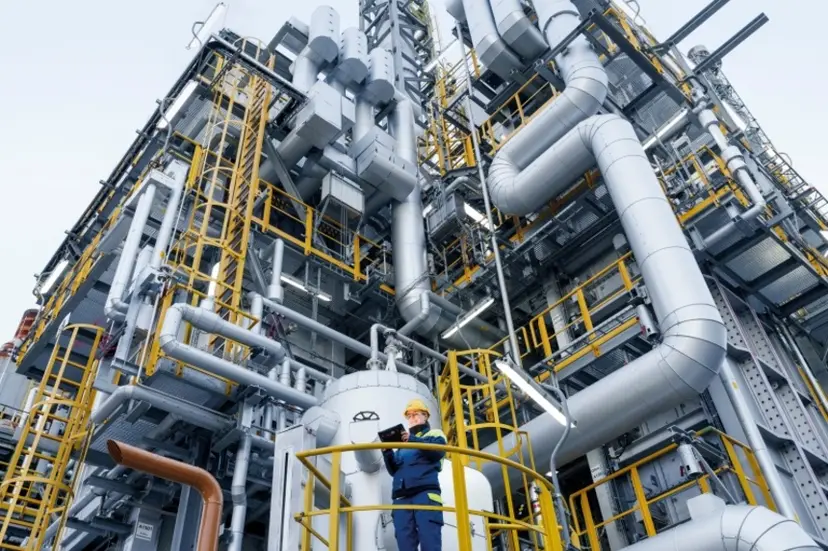
Leading overseas companies have already recognized the potential of NCC electrification technology and are moving ahead by operating large-scale commercial demonstration facilities. Germany's BASF, in cooperation with Saudi Arabia's SABIC and engineering partner Linde, has built the world's first large-scale electric-heated naphtha cracking demonstration facility.
Located in Ludwigshafen, Germany, this facility began full-scale operations in April 2024 and has completed technical validation of stably maintaining ultra-high temperature processes exceeding 850°C using renewable energy. This demonstration site consumes 6MW of renewable energy per hour to process approximately 4 tons of hydrocarbons.
The rapid movements of global leading companies are putting significant pressure on the Korean petrochemical industry. While South Korean firms like LG Chem051910 are pursuing technology development with the goal of commercial demonstration by 2030, they remain at a small-scale pilot stage, leaving a gap in technology compared to global peers.
The Hurdles to Realizing NCC Electrification: 'Methane and Costs'
Despite the innovative carbon reduction effects, there are many structural and economic obstacles to applying NCC electrification in the field. This is because it is a complex issue of redesigning the energy and raw materials for the entire petrochemical process, rather than simply replacing equipment.
One of the biggest technical hurdles is the handling of methane, a process byproduct. Existing NCC processes have built a perfect self-consumption system where the methane generated during naphtha cracking is reused directly as fuel for heating furnaces within the process without external sales. This has been a key mechanism for reducing fuel costs and efficiently handling byproducts.
However, once the process is electrified, this methane is no longer used as fuel and remains as a large quantity of surplus byproduct. Simply burning it for disposal or emitting it into the atmosphere is not only a significant economic loss but also diminishes the meaning of carbon reduction. Therefore, petrochemical companies are attempting to build additional processes to convert methane into high-value chemical raw materials or hydrogen. The 'hydrogen conversion of byproduct methane' project pursued by LG Chem aims to solve this problem, targeting a blue hydrogen system where methane is reacted with high-temperature steam to turn it into hydrogen for reuse.
Another variable is 'energy costs.' The petrochemical industry perceives electricity rates as a structural cost that is difficult to control. The sharp rise in industrial electricity rates in recent years has become a major factor stifling the will for carbon-neutral transition. From 2022 to this year, industrial electricity rates have risen by more than 80.0 KRW/kWh, and for large companies, the proportion of electricity costs to sales has surged by about 74.7%, intensifying cost burdens. Because the petrochemical process is a 24-hour continuous process that cannot be stopped, electricity rate hikes lead directly to rising manufacturing costs. If there is concern that electricity might become more expensive than fossil fuels like LNG or methane, the economic incentive for companies to invest massive capital for electrification disappears.
Jang Yong-hee, team leader of LG Chem's Low-Carbon Promotion Team, said, "Methane conversion is important," adding, "Energy is also required in the process of converting methane to hydrogen, so we must consider electricity rates there as well."
For electric NCC to take root, the supply of renewable energy and electricity rates must be stabilized. The NCC electrification process consumes a massive amount of power—approximately 5.0 MWh per ton of ethylene produced—making large-scale renewable energy supply and the construction of power infrastructure to support it essential. In particular, an environment must be created to procure electricity directly by securing supply chains physically close to renewable energy generation sources.
As for electricity rates, the 'Special Distributed Energy Zone' system, which includes major petrochemical clusters like South Jeolla, Ulsan, and Daesan, can be actively utilized to lower ancillary costs for power procurement. By entering into direct power purchase agreements with distributed energy providers within the special zones, companies are expected to benefit from reduced grid usage fees for short-distance supply and exemptions from climate and environmental surcharges.
NCC electrification requires massive initial investment, and since existing NCCs are high-efficiency facilities that utilize byproduct methane, the costs associated with the transition are high. This is why voices are calling for government support for NCC electrification demonstration through climate response funds.
Park Jin-soo, CEO of Planit, emphasized, "The beginning of the petrochemical industry was policy finance with low equity ratios where the government funneled money," adding, "From this perspective, the decarbonization transition of the petrochemical industry can also be seen as companies taking responsibility for society."
![[Petrochemical Transformation] ① Daesan Project 1: Just production cuts, but no 'climate' strategy](https://s.bizhankook.com/attachments_thumb/2026/05/97714_thumb.webp)
![[Petrochemical Transformation] ② "Protect the Earth, Protect the Region": What are the Decarbonization Solutions that will Determine Survival?](https://s.bizhankook.com/attachments_thumb/2026/05/97911_thumb.webp)
![[Petrochemical Transformation] ③ A Definite Alternative to Decarbonization: How Far Have We Come with 'NCC Electrification'?](https://s.bizhankook.com/attachments_thumb/2026/05/98098_thumb.webp)
![[Petrochemical Transformation] ④ The Limits of 'De-Naphtha' Pursued by the Government and Industry](https://s.bizhankook.com/attachments_thumb/2026/06/106592_thumb_bf493a20.webp)