

[비즈한국] This year, the management structures of the three major domestic telecommunications companies were reorganized in unison. This is because limitations in internal controls and decision-making structures were exposed following last year's massive customer data breaches and consecutive security controversies, coupled with stagnant growth in the telecommunications business, making adjustments inevitable. Each company is presenting its own solutions for crisis management and trust restoration. The future direction of the telecommunications industry will likely be determined by the priorities and execution strategies chosen by these leaders.
Amid the data breach crisis that rocked the telecom industry last year, LG Uplus032640 stands in a peculiar position. While the mobile number portability market fluctuated due to a series of penalty waiver measures, LG Uplus maintained a net growth in subscribers, and entering the second year of CEO Hong Bum-shik's leadership, the company is on the verge of reaching a 20% market share in mobile communications. On the other hand, uncertainties stemming from potential regulatory risks remain significant as questions regarding server disposal and other issues in the aftermath of the hacking incident remain unresolved.
Unlike its competitors who opted for personnel reshuffles, LG Uplus chose a 'head-on breakthrough' by maintaining CEO Hong's leadership. CEO Hong is now tasked with strategically protecting the reshaped subscriber landscape while simultaneously delivering results in artificial intelligence (AI) business, represented by 'ixi-O'.
The Only One Retained Among the Three, Opting for 'Innovation Within Stability'
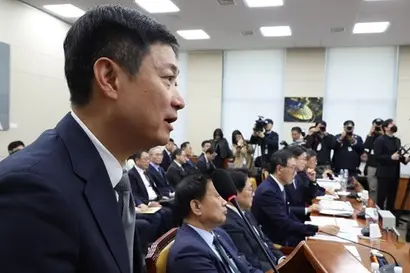
With security and 'AI Transformation (AX)' dominating the industry last year, CEO Hong Bum-shik is the only telecom chief to have retained his seat following the previous year. The decision to retain him rather than replace him reflects a will to maintain the existing strategy and execution foundation established under Hong's leadership.
CEO Hong is a strategy consulting expert who previously served as the head of the Information and Communications Technology division and head of the Korea office for Bain & Company Asia-Pacific. He joined LG Group in 2019, serving as the Head of Corporate Strategy at LG Corp., and after becoming CEO of LG Uplus, he made the expansion of AI and data-based new businesses a core pillar. His vision is to create revenue models by combining the group's AI and DX capabilities with telecommunications infrastructure. While he fostered AI services in his first year by strengthening corporate AI solutions and industry-tailored platforms, the market's demand for verification of his AX achievements has increased even more now that he has retained his position.
In the war of mobile number portability, LG Uplus was classified as the biggest beneficiary. While SK Telecom017670 implemented a 10-day penalty waiver as a follow-up to the hacking incident in July last year, and KT030200 also executed waiver measures from the end of the year, LG Uplus maintained a relatively stable flow. Over the approximately nine months since the hacking incident came to light in April last year, LG Uplus saw a net increase of 338,220 wireless subscribers. During the same period, SK Telecom saw a net decrease of about 520,000, and KT had a net increase of only about 60,000. This is the background behind the quiet rise in market share, now standing on the verge of breaking through 20%.
Suspicions of 'Evidence Destruction' Under Investigation
However, many view LG Uplus as bearing the greatest burden when considering future regulatory risks. While SK Telecom and KT were major accidents with clear damage scales, LG Uplus faces the possibility of additional sanctions depending on the results of police investigations and other factors.
The joint public-private investigation team of the Ministry of Science and ICT confirmed data leakage from LG Uplus's integrated server access control solution (APPM) server at the end of December last year, but judged that further investigation was difficult as the server had been reinstalled or discarded. The issue of intent has emerged as a key point, given that the suspected servers were handled after KISA provided information on the situation. LG Uplus is currently under investigation for alleged obstruction of justice by fraudulent means under the Criminal Act.
If the investigation reveals circumstances of intentional destruction of evidence, it will be difficult for CEO Hong to avoid responsibility. LG Uplus previously had a record of being fined 6.8 billion won for personal information leaks in 2023. At the time, it was the highest amount for a domestic company, and until a fine of 134.8 billion won was applied to SK Telecom later, it was the largest scale in the industry.
In particular, the fact that the 'ixi-O' brand, an AI call assistant service representing its AI business, is entangled in a data leak controversy is a burden. At the end of last year, an accident occurred where the call information of 36 customers of ixi-O was exposed to 101 other users. It was identified as an issue stemming from a mistake by internal developers rather than hacking. Although it did not lead to an investigation as the cause and scope were identified, a sanctions announcement from the Personal Information Protection Commission is pending.
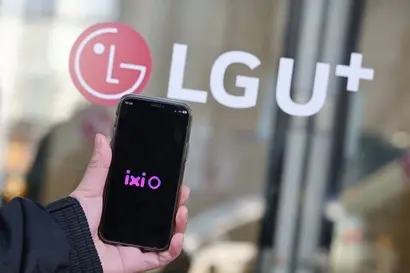
Although ixi-O was introduced as a service with on-device AI at the forefront, it was pointed out that some data is actually stored on servers for a certain period. LG Uplus explained it as "storage based on customer consent for service continuity during reinstallation" and emphasized its plan to handle call summaries within the device by installing on-device sLM based on Exaone 3.5 in the first half of this year.
Reflecting this uncertainty, LG Uplus stated in a securities registration statement on the 16th that personal information leakage accidents are a major investment risk factor, adding that strengthening security and ensuring network stability are essential, and that they could have a negative impact on reputation and brand image.
The Second Year, Now Is the Time to Show Something…
Assessments suggest that CEO Hong's capabilities are being tested again as he enters his second year in office. Since taking office, CEO Hong has pushed for organizational reform by introducing the 'LG Uplus 2.0' vision, reorganizing AI and data organizations directly under the CEO, and hiring outside experts.
The key is how much LG Uplus can increase its role and share within the group's overall AI strategy. In collaboration with LG AI Research, LG Uplus applied the super-giant AI model 'Exaone' to communication data, resulting in the launch of the communication-specialized lightweight model 'iXi-GEN'.
Strengthening security governance is also underway. LG Uplus published its second information protection white paper, operates an information security center directly under the CEO, and announced that it would invest 700 billion won in the information protection sector over the next five years. Based on KISA's information protection disclosure, the information protection investment for 2024 was about 82.8 billion won, an increase of 31.1% compared to the previous year, and the company has pledged to increase investment by more than 30% in 2025.
An LG Uplus official said, "We plan to proceed with the expansion of our B2B AI business along with the advancement of ixi-O," adding, "We will introduce differentiated services that only telecom operators can handle, such as AI call centers and smishing blocking systems."
This year, LG Uplus is within reach of recovering an operating profit of 1 trillion won for the first time in four years. Last year's consolidated operating profit was 892.1 billion won, a 3.4% increase from the previous year, and revenue was 15.4517 trillion won, up 5.7%. Net profit also rose significantly to 509.2 billion won, but this is a result reflecting the base effect of the impairment loss of subsidiaries in 2024. However, the possibility of fines from the Personal Information Protection Commission and additional sanctions remain variables. The possibility of government authorities demanding penalty waiver measures depending on the investigation results is also being discussed. In this case, profits could decrease significantly during the process of preparing follow-up compensation plans along with subscriber attrition.
![[Telecom Leadership Upheaval] ① SKT CEO Jung Jae-heon's First Task: 'AI Monetization' Amid Crisis Management](https://s.bizhankook.com/attachments_thumb/2026/05/97181_thumb.webp)
![[Telecom Leadership Upheaval] ② Has the 'KT Man' Park Yoon-young Returned to Win Back Departed Customers?](https://s.bizhankook.com/attachments_thumb/2026/05/97113_thumb.webp)
![[Telecom Leadership Upheaval] ③ 'Beneficiary of Market Share' LG Uplus, What Are the Tasks for the Second Year of the Hong Bum-shik Era?](https://s.bizhankook.com/attachments_thumb/2026/05/97141_thumb.webp)