

[비즈한국] This year, South Korea's three major telecommunications companies have simultaneously reorganized their management systems. This was inevitable as the limitations in internal controls and decision-making structures—exposed by last year's large-scale customer data breaches and consecutive security controversies—coincided with stagnant growth in the telecommunications sector. Each company is presenting its own solutions for crisis management and restoring trust. The future direction of the telecommunications industry will likely hinge on the priorities and implementation strategies chosen by these new leaders.
Last year was exceptionally difficult for KT030200. The year ended on an uneasy note as the government demanded that all users be exempt from penalty fees. A massive customer exodus was expected, alongside fallout including a 450 billion won compensation program and government fines. In particular, allegations of cover-ups and false reporting that surfaced during the investigation led to doubts about KT's internal control system. At this critical juncture, the shoulders of the newly appointed CEO, Park Yoon-young, are heavy. He must rebuild the collapsed security system, stabilize the organization, and prove tangible results in the Artificial Intelligence (AI) business.
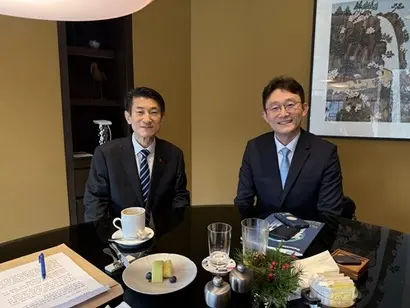
An Expert Who Guarded KT for Over 30 Years... Priority is Handling Security Incidents
Park Yoon-young was selected as the next CEO after passing interviews with the CEO Recommendation Committee on December 16th last year. Having joined through open recruitment in 1992 and served as Head of the Convergence Research Institute, Head of Future Business Development, and Head of the Enterprise Business Division, he has earned the title of a 'genuine KT man' who has remained on the front lines for over 30 years. Having been a finalist in the CEO selection processes in 2019 and 2023, he is considered exceptionally knowledgeable about internal affairs with verified practical capabilities. Although he briefly worked at SK Group, he has finally taken the helm of his home company on his 'third attempt.'
The core reason the KT board chose Park is his expertise in Research & Development (R&D) and the Business-to-Business (B2B) sector. The board noted, "He is a figure capable of achieving clear results in Digital Transformation (DX) and B2B, based on his deep understanding of KT's overall business and his technology-based management skills." Given the phase where the company must generate visible profits following massive investments, expectations for Park's practical leadership are inevitably high.
However, the reality Park faces is a mountain of obstacles. Above all, resolving the critical security incidents is an urgent task. Last year, KT experienced an unprecedented situation where actual financial damage occurred due to negligence in managing illegal femtocells (ultra-small base stations). It was also revealed that some information was left in plain text without encryption. As a result, 368 customers suffered unauthorized micro-payments totaling 243 million won.
According to the final investigation results from the government's public-private joint task force, 94 KT servers were found to have been infected with 103 types of malware, including 'BPFDoor,' starting in April 2022. BPFDoor is a sophisticated attack primarily used by North Korean or Chinese hacking groups, which secretly installs a 'backdoor' in the system to steal information over a long period. Compared to its competitor SK Telecom017670, which was infected with 33 types of malware, the scope of damage at KT is much broader.
In particular, the fact that the company, even after becoming aware of the infection in March last year, did not immediately notify the government and instead attempted to cover it up by deleting code on 41 servers has been criticized for shaking the foundations of 'brand trust.' The government cited the overall failure of security measures as the reason for the decision to waive penalty fees.
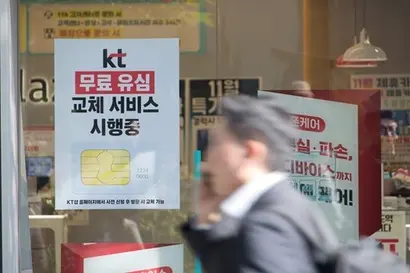
310,000 Customers Left After Hacking Incident... Must Recover Subscribers
The 'two-week penalty waiver' measure implemented immediately after the government's announcement resulted in painful consequences. During this period, approximately 313,000 customers left KT through mobile number portability. With a net loss of about 238,000 subscribers, Park is tasked with restoring the subscriber base lost in a short period and defending against declining revenue.
On the surface, KT's annual performance outlook for last year seems decent. Securities analysts forecast revenue of approximately 28.2442 trillion won and an operating profit of 2.4247 trillion won. These figures represent an increase of 6.86% and 199.53%, respectively, compared to the previous year. As of the second quarter of last year, KT's quarterly revenue exceeded 1 trillion won for the first time, marking a record high since its listing. However, the aftermath of the hacking incident is expected to be fully reflected in the first-half performance of this year. The fourth-quarter results will retroactively include the costs of USIM replacements (amounting to 100 billion won) and penalty waiver costs resulting from the hacking incident.
With the distinctiveness of services like communication quality or bundling discounts fading and a series of hacking incidents, security has emerged as a key criterion for choosing a carrier. In fact, as KT's security controversies intensified, SK Telecom, which had previously experienced similar incidents, gained a competitive advantage and absorbed some of the subscribers.
Park plans to significantly strengthen the responsibility system centered on the Chief Information Security Officer (CISO) through an 'Information Security Innovation TF.' He is expected to accelerate the reform of the management system by investing 1 trillion won in information security over the next five years and making mock hacking by external specialized agencies a regular practice.
The main battleground after resolving security issues is undoubtedly the revenue model. KT is pushing to expand its AI business through large-scale collaboration with Microsoft (MS), but concerns are rising that the momentum has weakened due to recent security issues. Having been the only one of the three major carriers to drop out of the government's 'Independent AI Foundation Model' project, proving the results of the AI business is another major task assigned to Park.
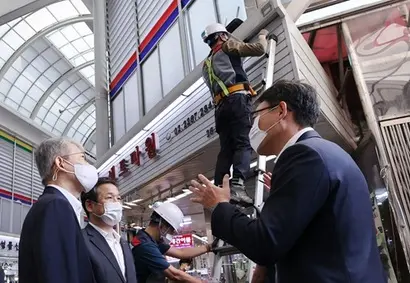
Park's experience in restructuring past B2B revenue structures into 'Digital Transformation (DX)' focused on cloud and smart factories is considered a major asset. Instead of outward expansion, he is expected to focus fire on areas where immediate revenue generation is possible, such as AI Data Centers (AIDC) and enterprise-tailored solutions.
Before launching a full-scale business drive, stable succession for internal solidarity is also crucial. Initially, Park had planned to form a transition TF this month and conduct an organizational reshuffle through consultation with current CEO Kim Young-sub, but reports indicate that discussions between the two sides have collapsed. With CEO Kim maintaining his position to exercise full management authority until the end of his term, the prevailing view is that early organizational restructuring and personnel appointments are effectively off the table.
The official inauguration is expected to take place only after the regular shareholders' meeting in late March. Compared to competitors who have already completed organizational restructuring and are speeding up the commercialization of AX (AI Transformation), the schedule is delayed by up to two months. There are concerns that internal cohesion could weaken as the direction of personnel and organizational operations remains in a fog.
![[Telecom Leadership Upheaval] ① SKT CEO Jung Jae-heon's First Task: 'AI Monetization' Amid Crisis Management](https://s.bizhankook.com/attachments_thumb/2026/05/97181_thumb.webp)
![[Telecom Leadership Upheaval] ② Has the 'KT Man' Park Yoon-young Returned to Win Back Departed Customers?](https://s.bizhankook.com/attachments_thumb/2026/05/97113_thumb.webp)
![[Telecom Leadership Upheaval] ③ 'Beneficiary of Market Share' LG Uplus, What Are the Tasks for the Second Year of the Hong Bum-shik Era?](https://s.bizhankook.com/attachments_thumb/2026/05/97141_thumb.webp)