

[비즈한국] This year, the management structures of Korea's three major telecom companies have undergone simultaneous reshuffling. Changes became inevitable as the stagnation in the telecommunications business coincided with the exposure of limitations in internal controls and decision-making structures, following large-scale customer data breaches and a series of security controversies last year. Each company is putting forward its own solutions for crisis management and restoring trust. The future direction of the telecommunications industry will likely depend on the priorities and execution strategies chosen by these new leaders.
SK Telecom017670 has been reeling from the aftermath of security incidents for nearly a year following the massive subscriber USIM information leak that occurred in April last year. As the company focused on post-incident remediation and restoring trust, both its performance and organizational morale suffered significant blows. The appointment of CEO Jung Jae-heon, the first lawyer-turned-CEO in the company's history, is seen as a move to address legal and financial challenges. CEO Jung faces the dual tasks of cleaning up the ongoing hacking aftermath while driving AI monetization.
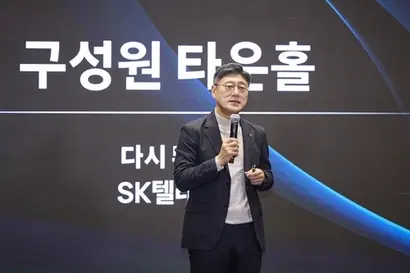
Journey toward Litigation Management and Earnings Normalization Begins
CEO Jung Jae-heon served as a presiding judge at the Seoul Central District Court for nearly 20 years. When he was recruited by SK Group in 2020 to expand its 'New ICT' business, he became the first head of the newly established Legal Group 2, created to strengthen legal and risk review. Later, during the establishment of SK Square402340 in 2021, he served as the head of the Investment Support Center, making him a founding member with expertise in strategy, law, and finance. Before his appointment as CEO, he reportedly gained recognition for his role as Head of External Relations at SKT, where he managed the response to the hacking incident.
The first test for the Jung era is the still-ongoing cleanup of the hacking incident. SK Telecom has been struggling since the second quarter of last year due to a data breach affecting approximately 23 million subscribers. While the company launched a 'Customer Appreciation Package' to restore trust, discussions regarding compensation and legal responses remain ongoing.
In particular, legal battles have intensified after SK Telecom filed an administrative lawsuit against the 134.791 billion won fine imposed by the Personal Information Protection Commission on the 19th. The sanctions against SK Telecom are the largest in history, exceeding cases involving global big tech firms like Google and Meta. The company is expected to legally challenge the fairness and appropriateness of the fine calculation and whether there was direct harm to users. With a series of litigation responses, including collective dispute mediation, looming, CEO Jung's approach to risk management will soon be tested.
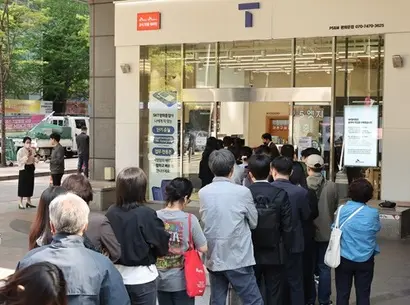
Performance management is also a major task for CEO Jung. The impact of the security incident was clearly reflected in the financial statements. Securities firms estimate that SKT's consolidated revenue for the fourth quarter of last year was 4.353 trillion won, with an operating profit of around 84.4 billion won. These figures represent a 3.5% decrease in revenue and a 66.8% drop in operating profit compared to the same period the previous year.
Costs from the 'Customer Appreciation Package,' including USIM replacements, and one-time labor expenses from SK Broadband's voluntary retirement program weighed on earnings. Consequently, operating profit for the third quarter of last year dropped by about 90% year-on-year to 48.4 billion won, and a net loss of 166.7 billion won was recorded, marking the first break in a streak of quarterly profits maintained since 2000.
However, recent signs of a rebound in subscriber share have emerged as the company absorbed demand for number portability during KT's waiver of penalty fees. Whether this short-term gain can lead to long-term customer trust will depend on future service quality and enhanced security.
Will 'A.' Monetization Showcase AI Profitability?
The AI business, which had slowed down due to crisis management, is another area in need of a boost. With growth in the core telecom business clearly stagnant, the industry sees this year as the time to prove the feasibility of AI monetization. Having declared last year as the first year of the AI business, the consensus is that a concrete vision for monetization beyond just technical competitiveness is necessary.
For SK Telecom, the core priority in the first half of the year is the monetization of its AI agent, 'A. (Adot).' The company plans to develop it into a tangible revenue source by offering it as a subscription service or bundled with telecom products, with attention focused on whether it can become a pillar of growth for both B2C and B2B sectors. As of September last year, A. surpassed 10 million monthly active users (MAU), securing the largest user base among domestic B2C AI services. Recently, the company has been advancing the service through the launch of 'A. Note' and the B2B-focused 'A. Biz.'
Confidence in the technology is also strong. In the 'Proprietary AI Foundation Model' development project, the elite SKT team introduced 'A.X K1,' Korea's first massive model with over 500 billion parameters. With multimodal enhancements slated for the second half of the year, the company plans to combine this with its own infrastructure, such as the 'Haein' GPU cluster and the Ulsan AI data center, to complete an AI value chain of 'model-infrastructure-service.'
Shifting to 'Qualitative Growth' via CIC Restructuring and ROIC Adoption
CEO Jung Jae-heon has also expressed a clear will to improve management fundamentals. SK Telecom recently switched its key management indicator from EBITDA to Return on Invested Capital (ROIC). In an AI industry environment where large-scale preemptive investment is inevitable, this signifies a priority on capital efficiency and internal stability over quantitative growth.
If EBITDA is an indicator of cash-generating ability, ROIC is a gauge of actual performance relative to invested capital. A corporate accounting expert explained, "EBITDA focuses on cash generation. In equipment-intensive industries where large investments are required, the number can appear as a profit. This move reflects an intent to maximize long-term competitiveness and capital efficiency in a situation where the scalability of the telecom business is limited." They added, "However, since ROIC calculations are more complex and the definition of 'operating' varies, direct comparisons with other companies may be difficult."
Additionally, the organizational structure has been revamped. In the year-end personnel reshuffle, the company divided its units into two major Company-in-Company (CIC) systems to increase expertise in telecom and AI. The AI CIC has been reorganized into B2C AI (Adot), B2B AI (industry/cloud), digital platforms, and AI data centers (DC) to enhance specialization. The calculation is to secure substantial business drive by concentrating capabilities in platforms and AI models.
During his first town hall meeting with employees last month, CEO Jung defined himself as a 'Change Executive Officer.' He urged company-wide challenges and change, stating, "AI transformation is not the task of a specific department, but a survival imperative that all employees must participate in.”
This year will be a turning point that determines whether SK Telecom can escape the swamp of security incidents and leap forward as an 'AI Company.' Attention is on whether CEO Jung's risk response and governance management capabilities can turn crisis into opportunity. An SK Telecom official stated, "Under the Jung CEO regime, we will operate telecom and AI businesses according to the characteristics of each area through the two CIC organizations," adding, "We will use this to increase the speed of decision-making and business execution.”
![[Telecom Leadership Upheaval] ① SKT CEO Jung Jae-heon's First Task: 'AI Monetization' Amid Crisis Management](https://s.bizhankook.com/attachments_thumb/2026/05/97181_thumb.webp)
![[Telecom Leadership Upheaval] ② Has the 'KT Man' Park Yoon-young Returned to Win Back Departed Customers?](https://s.bizhankook.com/attachments_thumb/2026/05/97113_thumb.webp)
![[Telecom Leadership Upheaval] ③ 'Beneficiary of Market Share' LG Uplus, What Are the Tasks for the Second Year of the Hong Bum-shik Era?](https://s.bizhankook.com/attachments_thumb/2026/05/97141_thumb.webp)