

[비즈한국] The wave of AI (Artificial Intelligence) is sweeping across all industries. In both daily life and nearly every aspect of corporate management, the integration of AI has become a necessity, not an option. The pharmaceutical and biotech industry is no exception. With the government announcing plans to foster the "ABCD (AI, Bio, Culture, Defence)" industry as a next-generation national growth pillar, the convergence of AI and biotechnology is no longer a distant future. We examine the changes AI is bringing to the pharmaceutical and biotech industry—from research and development to clinical trials and production—and the tasks required to support this institutionally.
In the convergence of AI and biotechnology, the role of associations that encompass both the state and individual companies is becoming increasingly important. This is because structural and regulatory support is essential for a single company to fully respond to such changes. The "Framework Act on the Advancement of Artificial Intelligence and Creation of a Foundation for Trust (Basic AI Act)," set to take effect on January 22 next year, is raising expectations that it will act as a regulation and commercialization guideline for all industries, including pharmaceuticals and biotech. The Basic AI Act is the world's second comprehensive AI-related bill, following the EU's AI Act which was implemented in May last year.
Unlike the EU's AI Act, which focuses on AI regulation to protect fundamental rights, the domestic Basic AI Act focuses on fostering AI-related industries by minimizing regulations. While it does not cover the pharmaceutical sector, it classifies medical devices as "high-impact artificial intelligence" that could significantly affect or pose risks to the safety and fundamental rights of life and body. AI medical device operators have a duty to implement measures to secure their own safety and reliability and must notify patients or medical staff in advance that they are utilizing AI. However, unlike in Europe, there are no penalty clauses for violating regulations, leading to assessments that it avoids stifling the industry and prioritizes advancement.
Government-led AI capability cultivation policies are expected to gain further momentum following the 2025 APEC (Asia-Pacific Economic Cooperation) Summit in Gyeongju. There is anticipation that this will be a golden time to accelerate the introduction and utilization of AI in the pharmaceutical and biotech industry as well. This is because Jensen Huang, CEO of NVIDIA, who visited Korea for the APEC CEO Summit, promised to supply 260,000 units of the advanced Blackwell GB200 GPU. GPUs are essential chipsets for AI models, and the Blackwell, in particular, is considered a next-generation superchip that is in short supply globally and difficult to secure. In this situation, Samsung Electronics005930, SK035420, and Hyundai Motor005380 agreed to receive 50,000 units each, while Naver035420 Cloud agreed to receive 60,000 units from NVIDIA, and the government secured 50,000 units. The government has set out to boost AI competitiveness in the pharmaceutical, biotech, and healthcare sectors by supporting two consortia developing specialized AI models for medical science and bio with 512 Blackwell units worth 27.6 billion won. On the 31st of last month, the Ministry of Science and ICT selected a consortium led by Lunit328130 and another centered around KAIST as the project teams for the "AI-Specialized Foundation Model."
The Lunit consortium aims to develop a "multi-scale medical science-specialized foundation model for full-cycle medical science innovation from molecules to populations." Seven companies including Kakao Healthcare, SK Biopharmaceuticals, AigenSciences, Trillion Labs, D-Circle, Rebellions, and Standigm; 6 university laboratories including KAIST and Seoul National University; and 9 medical institutions including the National Health Insurance Service Ilsan Hospital are participating. The KAIST consortium aims to develop "K-Fold," a next-generation bio foundation model that precisely predicts core molecular structures of life phenomena such as proteins, nucleic acids, and ligands using AI. Three companies—Merck, HITS, and AtoLab—along with 5 organizations including the Korea Pharmaceutical and Bio-Pharma Manufacturers Association and the Korea Biotechnology Industry Organization, have formed the consortium.
The Korea Pharmaceutical and Bio-Pharma Manufacturers Association, a private organization representing pharmaceutical and biotech companies, is determined to realize the vision of becoming one of the world's top 5 pharmaceutical and biotech powerhouses by putting its full efforts into enhancing the AI new drug development competitiveness of its members, in addition to participating in consortia. On the 5th, the association was finally selected as the general agency and primary lead agency for the "K-AI New Drug Development Preclinical/Clinical Model Development Project" promoted by the Ministry of Health and Welfare, and will receive approximately 37.1 billion won over the next 4 years and 3 months. The goal of this project is to build and develop an AI-based new drug development clinical trial design and support platform, and to link preclinical and clinical stages to create a full-cycle AI new drug development ecosystem.
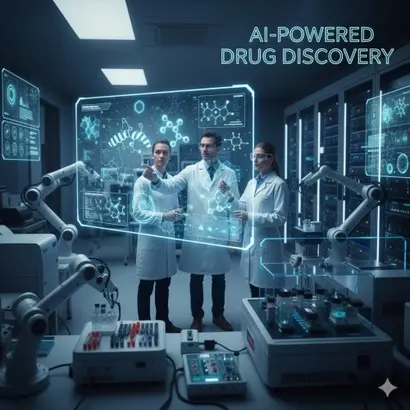
In the Future Hall, built to mark the 80th anniversary of the association this year, facilities are currently being set up to operate an "AI Drug Discovery SDL (Self-Driving Lab)" starting next month. The AI Drug Discovery SDL functions where AI acts as the "brain" and robotics as the "hands and feet," allowing for 24-hour self-directed research, experimentation, and verification of new drug candidates without human intervention. The AI New Drug Research Institute under the association acts as the control tower for the AI Drug Discovery SDL. On the 7th, they will invite Professor Jason Hein from the University of British Columbia (UBC) in Canada to provide training on global-level AI experiment automation trends, including challenges in pharmaceutical R&D, the necessity of SDLs, and the latest application cases.
The AI New Drug Research Institute uses AI to discover new drug targets or design candidates and also trains specialized talent in AI-based drug development. Pyo Joon-hee, Director of the AI New Drug Research Institute, said, "We plan to preemptively introduce technologies with high future demand in the AI field, invite global scholars to study and utilize technologies together, and continuously create opportunities to form networks," adding, "We also intend to communicate the AI policy needs from the field to the government."
![[Adding AI to K-Bio] Government Supports GPUs, Association Builds Ecosystem for New Drug Development](https://s.bizhankook.com/attachments_thumb/2026/05/96137_thumb.webp)
![[Adding AI to K-Bio] Park Young-min, Head of Korea Drug Development Fund: "Intensive Support to Cross the Valley of Death"](https://s.bizhankook.com/attachments_thumb/2026/05/96354_thumb.webp)
![[Adding AI to K-Bio] The 'AI Laboratory' Where Robot Researchers Work 24 Hours a Day](https://s.bizhankook.com/attachments_thumb/2026/05/96787_thumb.webp)
![[Adding AI to K-Bio] Changing the Grammar of Marketing with 'AI Personas'](https://s.bizhankook.com/attachments_thumb/2026/05/97343_thumb.webp)