

[비즈한국] Behind the South Korean shipbuilding industry, which boasts world-class competitiveness in the liquefied natural gas (LNG) carrier order market, stands the French engineering firm GTT (Gaztransport & Technigaz). In the construction of LNG carriers, the area requiring the most critical cost ratio and high-level technical expertise is the LNG cargo tank. In this field, GTT virtually monopolizes the global market.
Even when Korean shipbuilders construct and sell massive LNG vessels worth hundreds of billions of won per ship, they must pay GTT a significant technology fee (royalty) amounting to approximately 5% of the vessel's price. The failure of the state-sponsored KC-1 project, which was launched to escape chronic technological dependence, the subsequent large-scale legal disputes, and the attempts to commercialize the second-generation Korean cargo tank (KC-2) to overcome these issues clearly demonstrate how rigorous the verification process is for the goal of technological independence.
GTT was formed in 1994 through the merger of Technigaz, established in 1963, and Gaztransport, established in 1965. By integrating the two membrane technologies that were once competitors, GTT gained a monopoly on global source patents for membrane cargo tanks. GTT does not build ships itself; instead, it operates a “fabless intellectual property” business model that provides only licensing and engineering technical services. Currently, over 80–90% of global LNG carrier orders adopt GTT's technology.
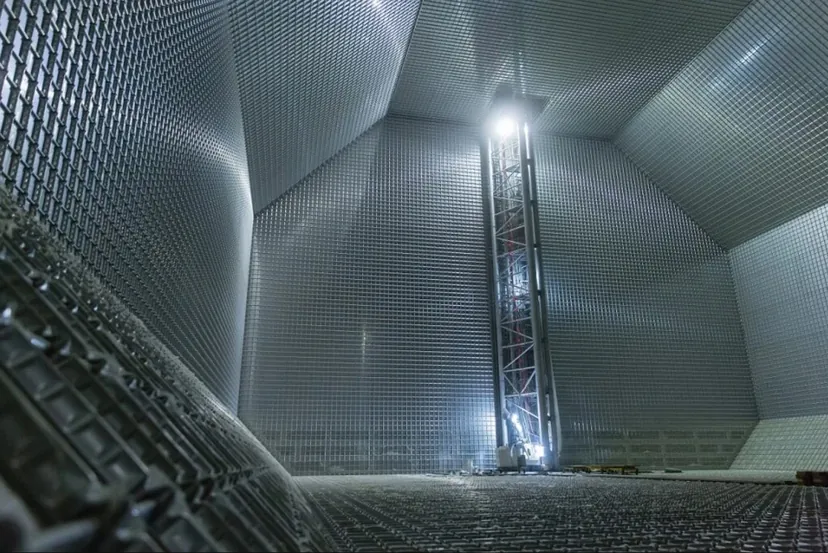
A Fortress of Monopoly Built on Overwhelming Technical Prowess
An LNG cargo tank is a cryogenic tank used to store liquefied natural gas inside an LNG carrier. Natural gas becomes a liquid when cooled to minus 162 degrees Celsius, significantly reducing its volume. Because it is so cold, storing it in a standard steel tank could damage the hull. Therefore, the cargo tank consists of a thin metal membrane that prevents LNG leakage, insulation to block external heat, and a secondary barrier for leak protection. The better the performance of the cargo tank, the less heat enters during transport, which in turn reduces the amount of LNG that evaporates into gas—known as BOG (Boil-off Gas).
The structural efficiency and robust market trust are the foundations behind GTT's overwhelming dominance in the global LNG cargo tank market. In the past, the mainstream in the LNG carrier market was the “Moss type,” where spherical independent tanks protruded above the deck. However, GTT perfected the “membrane type,” where insulation and membranes are attached to perfectly fit the interior space of the hull. The membrane type gained an advantage in terms of space and operational efficiency, as it allows more LNG to be loaded onto a vessel of the same size.
GTT’s core technologies are broadly divided into the Mark III series and the NO96 series. The Mark III system uses a 1.2mm thick corrugated stainless steel sheet as the primary barrier and utilizes reinforced polyurethane foam (RPUF) insulation to absorb thermal contraction. Conversely, the NO96 system uses 0.7mm thick Invar (a 36% nickel alloy) plates—which have a coefficient of thermal expansion only one-tenth that of room temperature—as both the primary and secondary barriers, a structure that controls thermal deformation at the source. Both technologies have reduced the daily boil-off rate (BOR) to around 0.07%/day, maximizing the vessel's operational economy.
GTT’s strongest entry barrier is the reliability built from over 50 years of accumulated operational records. Given the nature of LNG carriers, which cost hundreds of billions of won, shipowners and major energy companies insist on GTT technology because applying an unverified cargo tank could lead to the refusal of approval by major classification societies and a surge in marine insurance premiums. Furthermore, since the three major Korean shipbuilders have optimized their automated welding equipment and construction procedures based on GTT licenses, there is a strong tendency to avoid the process risks associated with introducing alternative technologies.
Designing and building LNG cargo tanks is the crystallization of cryogenic engineering, integrating thermodynamics, solid mechanics, and fluid mechanics. The first technical hurdle is “cryogenic thermal contraction control.” When LNG at minus 162 degrees Celsius is injected, extreme temperature changes cause severe thermal contraction of the materials. If the thermal stress caused by the difference in the coefficient of thermal expansion between the hull’s carbon steel plate and the internal membrane is not uniformly distributed horizontally, it can lead to barrier cracks or weld fractures, causing major leakage accidents.
The second challenge is “sloshing loads.” When a ship sails through rough seas, the liquid LNG inside the cargo tank fluctuates, exerting an impact on the tank walls. Especially when the cargo tank is half-full, the kinetic energy of the fluid is maximized, causing damage to insulation and membrane deformation. Therefore, the membrane and insulation structure must be precisely designed to withstand repeated fluid impact loads weighing tens of tons.
The Royalties Paid by Korean Shipbuilders: 13 Billion Won per Ship
The scale of royalties paid by Korean shipbuilders to GTT is immense. According to data submitted to the Ministry of Trade, Industry and Energy, Korea Gas Corporation, and the Korea Offshore & Shipbuilding Association by Representative Kim Jung-ho of the Democratic Party of Korea during last year’s national audit, the cumulative royalties paid by domestic shipyards over the past 30 years—since 1995—for using GTT technology (membrane type) amounted to a total of 7.4097 trillion won. This is a massive sum, averaging 13 billion won per vessel.
Looking at the cumulative royalties paid by shipbuilder, HD Korea Shipbuilding & Offshore Engineering paid 2.4847 trillion won for 178 ships (average 14 billion won per ship), Samsung Heavy Industries paid 2.3993 trillion won for 188 ships (average 12.8 billion won per ship), and Hanwha Ocean paid 2.4050 trillion won for 202 ships (average 11.9 billion won per ship).
The bigger problem is that the scale of future royalty payments is also astronomical. Domestic shipbuilders will have to pay an additional 2.9332 trillion won in royalties to GTT for the 162 LNG carriers they have already won orders for and are scheduled to build by 2029.
GTT’s monopoly not only placed a massive financial burden on the domestic shipbuilding industry but also led to unfair trade practices. GTT maintained a “tying” practice where it forced shipbuilders to purchase its “engineering technical support service” along with cargo tank patent rights in technology licensing contracts. Although domestic shipbuilders requested multiple times to separate the patent rights from the engineering service starting in 2015 after acquiring their own engineering capabilities, GTT refused.
In November 2020, the Korea Fair Trade Commission (KFTC) issued a corrective order and imposed a fine of 12.528 billion won on GTT for this abuse of market-dominant status. GTT filed a lawsuit to cancel the corrective order, but the Supreme Court ultimately sided with the KFTC in April 2023, dismissing the appeal. With this final ruling, domestic shipbuilders secured a legal basis to purchase only the patent rights separately and utilize their own engineering technology, thereby saving a significant amount of engineering costs per ship.
The Cruel History of KC-1, the Challenge of KC-2C
To break the technological dependence on GTT, the government, Korea Gas Corporation, and the three domestic shipbuilders invested approximately 19.7 billion won in R&D over 10 years starting in 2004 to develop the first-generation Korean LNG cargo tank, “KC-1.” KC-1 was designed based on the Korea Gas Corporation’s land-based storage tank technology and applied a 1.5mm thick corrugated membrane. Samsung Heavy Industries took charge of the construction, and it was installed on two national LNG carriers (SK Serenity and SK Spica) of the 174,000-cubic-meter class, which entered commercial operation in early 2018.
However, immediately after operation, a “cold spot” phenomenon was observed where the temperature of parts of the cargo tank's outer wall dropped below the acceptable threshold. Investigation revealed that due to poor design in the corners and joints of the cargo tank insulation, a “heat bridge” phenomenon occurred where cold air at minus 162 degrees Celsius was transmitted directly to the hull’s outer plate. When structural carbon steel for ships is exposed to cryogenic temperatures, its impact toughness drops sharply, facing the risk of brittle fracture, where it shatters like glass.
The vessels were eventually sidelined and could not operate because the defects could not be resolved despite several repair attempts. This situation escalated into large-scale legal disputes, resulting in rulings for massive compensation and indemnity payments. The failure of KC-1 has become a representative example of how difficult LNG cargo tank development is.
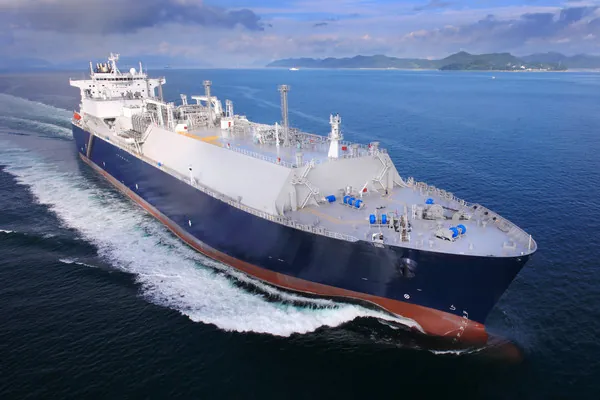
Currently, based on the trial and error of KC-1, the development and commercialization of the second-generation Korean cargo tank “KC-2C,” which significantly improved structural stability and insulation performance, are being pursued.
Although it has been verified in small vessels, the barriers to applying KC-2 to the large LNG carriers that dominate the market remain high. This is due to the sharp increase in fluid sloshing loads in large cargo tanks and the conservative attitude of foreign shipowners, who are wary of new cargo tanks without operational track records.
To resolve these issues of order cliffs and risk-sharing, the government has launched an “LNG Cargo Tank Localization Working Group,” with participation from the Ministry of Trade, Industry and Energy, the Ministry of Economy and Finance, the Ministry of Oceans and Fisheries, the Korea Gas Corporation, and the three shipbuilders. The government is seeking institutional support measures to use Korea Gas Corporation’s new national carrier orders to provide opportunities for demonstrating KC-2 on large vessels and to guarantee or share the risks that may arise during operation.
Attention is focused on whether the success of the Korean LNG cargo tank development can create cracks in the monopoly structure of the LNG cargo tank market that GTT has dominated.
![[The Quiet Rulers of the Shipbuilding Industry] ① The Wall of the 'Maker’s List' That Shipbuilding Powerhouse Korea Cannot Overcome](https://s.bizhankook.com/attachments_webp_no_wm/2026/07/134736_no_wm_0b59e9dd.webp)