

[비즈한국] While the world is enthusiastic about the achievements of K-pop, the reality faced by the fans, who are the biggest driving force supporting this massive industry, is not so bright. The K-pop industry is so absolutely dependent on the purchasing power of fans that it is impossible to explain without the fandom economy. However, the basic rights of fans, who are the consumers, are often pushed to the back under the guise of affection. We examine the practices and problems of the performance industry that do not match the global status of K-pop from the perspective of user rights.
Hwang Ha-rin, who has been a 'fan' of BTS for nearly two and a half years, has been knocking on the doors of government agencies and the National Assembly for the past several months. Starting with 'Nol Ticket,' the domestic ticketing site for the BTS global tour 'Arirang,' Hwang has filed a series of civil complaints regarding the operating structure of canceled ticket resale with the Korea Consumer Agency, the Korea Fair Trade Commission, and the National Assembly's Culture, Sports and Tourism Committee. She is asking why fans who support the industry must be trapped in a prison of 'infinite refreshing' while the global status of K-pop is skyrocketing.
Non-stop 'Ticket Hunting'... 'Grapes' Have Swallowed Daily Life
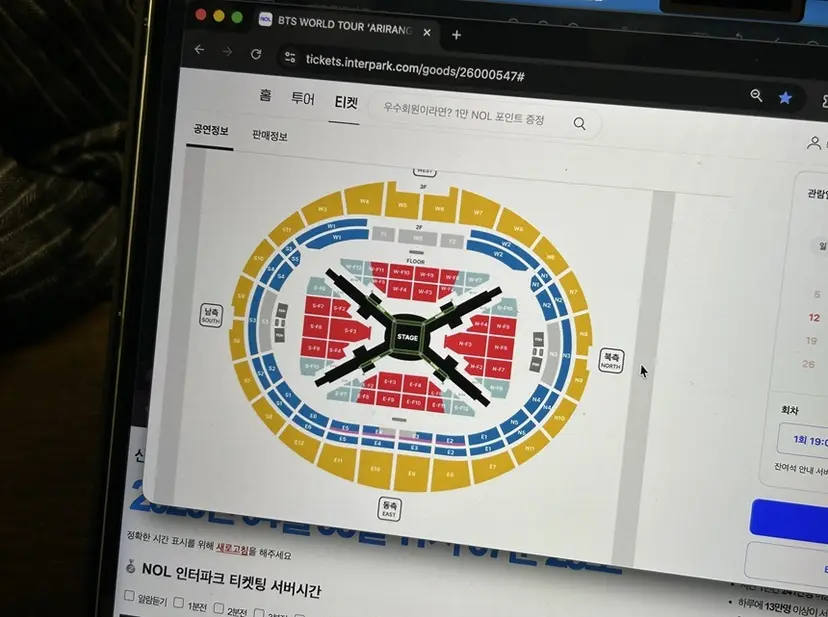
Hwang has kept her eyes on her laptop screen every single day since January 22nd. This is to catch canceled tickets for the BTS Arirang World Tour Goyang concert (April 9, 11, 12). She spent an average of 3–4 hours, and more than 10 hours on weekends or days without schedule, in front of the screen. She skipped meals, postponed sleep and appointments, and endured, but she has not succeeded for over 70 days. Meeting the reporter on the 6th, Hwang said, "I try not to affect my work, family, and daily life as much as possible, so I'm always exhausted and tired."
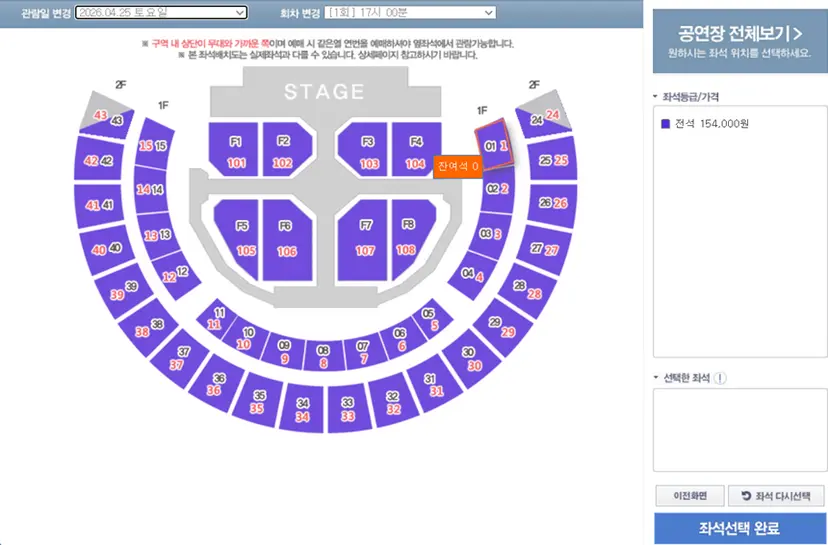
For K-pop fans approaching a concert date, so-called 'ticket hunting' (ticket + ticketing) is an unavoidable daily routine. Even if a concert is already sold out, someone inevitably cancels their reservation, and fans wait for those seats to reappear on the reservation screen to claim them. It is a success if you quickly click and move to the payment window when an available seat, known as a 'grape' among users, is activated. To catch these 'grapes,' hopefuls engage in a war without a promise of success.
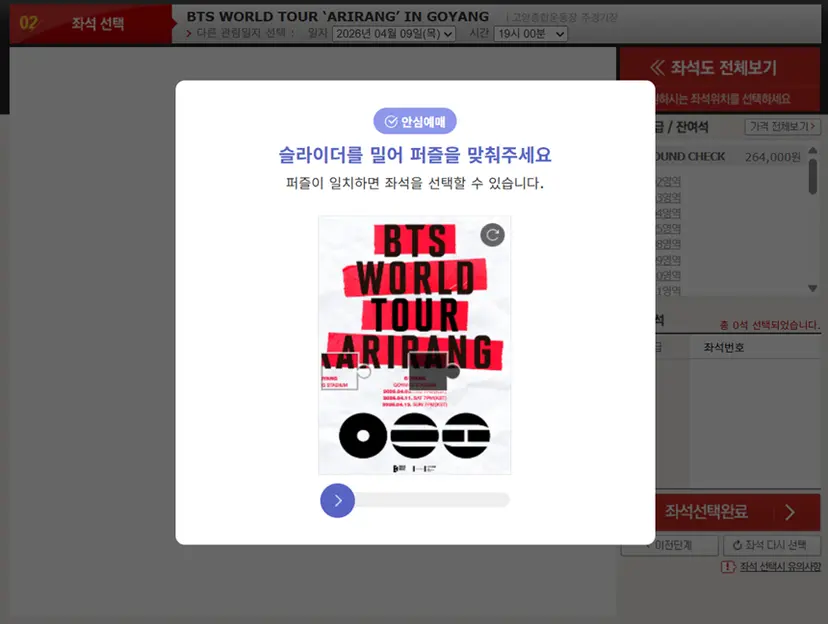
This reporter attempted 'ticket hunting' on April 7–8. In the case of the BTS World Tour 'Arirang' concert held on the 9th, upon accessing the reservation window, a wait queue in the 10,000s and a 99% reservation rate were displayed. After entering the security characters to prevent fraudulent bookings and entering the seat map window, one must repeatedly check for seat updates by switching sections.
This method operates across overall booking platforms such as NOL Ticket (InterparkTriple), Melon Ticket, and Yes24. The structure was not much different for the NCT Wish concert on Melon Ticket and The Boyz concert on Yes24, which were approaching their concert dates. However, Nol Ticket also requires a pop-up window verification procedure where you drag and drop puzzle pieces with your mouse.
Hwang raised issues regarding the operational method of canceled ticket resale. The core issue is the lack of transparency. During the 70 days she spent hunting for tickets, she concluded that it wasn't just that she was unlucky. She pointed out, "The times when canceled tickets are released vary by platform and concert, and there are no officially announced standards. So, one has no choice but to check every time there is a gap. This is a structure that fundamentally excludes people who lead normal social lives, such as office workers or students, from the ticket market."
Within the K-pop fandom, ticket hunting functions as a 'second round' of the ticketing process rather than a remedial measure attempted by a few dropouts who failed to secure tickets. In the case of popular group concerts, the supply of seats is absolutely insufficient compared to the demand, and initial quantities are quickly depleted by macros and resellers. In a fandom culture with high enthusiasm for 'all-con' (attending all rounds of a concert), ticket hunting is essentially a practice shared by the entire fandom.
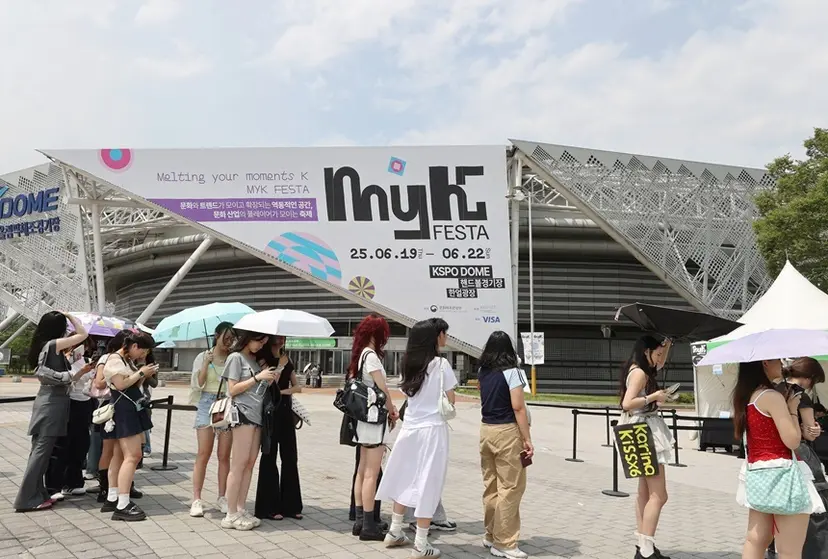
In fact, stories about the difficulty of ticket hunting are frequently shared among K-pop fans. There are reports of physical problems such as "my wrist is gone from endless waiting," or "my shoulders, neck, and fingers are stiff and numb," as well as concerns about the negative impact on sleep and daily life. While there is almost no official information provided by platforms regarding canceled ticket sales, it is common to see consumers tracking patterns themselves and sharing 'unofficial tips.'
"'Random Release' Creates an Environment Favorable to 'Bots'"
Since February, Hwang has sequentially submitted civil complaints and citizen opinion letters to the NOL Ticket (Nol Universe) customer center, the Korea Consumer Agency, the Fair Trade Commission, and the National Assembly's Culture, Sports and Tourism Committee. The purpose is to improve the lack of transparency, such as the disclosure of information related to canceled ticket sales. She inquired about the canceled ticket resale policy to the Nol Ticket customer center, but received a reply 4 days later stating, "Detailed guidance is difficult due to internal operating policies." She received the same reply from her inquiry through the Korea Consumer Agency.
Subsequently, she filed a report with the Fair Trade Commission on the 13th of last month and submitted citizen opinion letters to lawmakers of the National Assembly's Culture, Sports and Tourism Committee on the same day. The FTC's stance is, "The Electronic Commerce Act protects consumer rights through product information provision, withdrawal of subscription, and refund of payments," adding, "It is difficult to regulate the operator's operating policies, such as the date of sale, under the Electronic Commerce Act in this case."
The requests Hwang makes to the National Assembly are: △mandatory disclosure of information so that consumers know when and based on what criteria canceled tickets are resold; △recommendations for the introduction of industry standards for fair distribution methods; and △preparation of separate access methods for the digitally vulnerable.
'Can't' or 'Won't'... Is There No Alternative?
The operational methods for canceled tickets among major domestic booking platforms vary. Unlike Nol Ticket, which applies a random re-exposure method, Yes24 and Melon Ticket use a form that reflects in real-time. There is no separate 'canceled ticket resale' stage; tickets are canceled in the reservation system and can be purchased by other users.
A Nol Universe official explained, "When a canceled ticket is generated, it is sold after an arbitrary amount of time. This is a policy to prevent illegal ticket transfers between individuals through cancellations." They added, "We are introducing and continuously upgrading policies and technical devices to prevent fraudulent ticketing and scalping related to Nol Ticket."
A Yes24 official stated, "Seats canceled due to non-payment via bank transfer are converted to bulk sales seats according to automatic system logic after the payment deadline," adding, "Except for special requests from the agency, all canceled seats are sold and operated in real-time according to the system without artificial intervention."
Melon Ticket also explained that the policy regarding canceled ticket processing is chosen by the agency. A Melon Ticket official said, "It is difficult to disclose details due to concerns about bypassing abnormal booking attempts and technical measures," adding, "We are reviewing alternatives throughout the booking process that can improve customer convenience, not just for canceled tickets."
Among fans, there is suspicion that the random release method actually creates an environment favorable to macros. Automated programs can react in milliseconds and operate 24 hours a day, but humans cannot. The logic is that the more unpredictable the timing of canceled ticket re-exposure, the lower the success rate for humans.
Overseas scalping sites in China and elsewhere even post large lists of high-value seats, such as VIP seats, shortly after the reservation window opens. The BTS concert was no exception; in fact, on the 8th, the day before the first concert, more than an hour before the 5 p.m. ticket cancellation deadline, high-priced VIP canceled tickets appeared in bulk. Many interpret this volume as the result of 'loss-cutting' by resellers who failed to find buyers on scalper sites.
Some in the industry argue that the influence of macros is somewhat exaggerated. An industry official stated, "Among the posts made by scalpers, there are also 'bluffs' (fake tickets) where they don't actually have the tickets. There is a perception that 'Chinese hackers sweep them all up,' but when you actually check, while it varies by concert, Chinese people among foreign ticket buyers account for less than a quarter of the total." They also emphasize that they are actively responding to macros, although there are limits because the technology of illegal bookers using macros is also becoming sophisticated. The explanation is that "since the traffic generated by macros is so large, it is more cost-effective to catch them than to accept it and expand the server."
Spending time while calculating opportunity costs can be a consumer's choice. It is a reality that competition is inevitable in popular concerts where demand overwhelmingly exceeds supply, but it is not that there are no alternatives to improve user convenience.
North American platforms like Ticketmaster operate virtual queues or official resale markets, and lottery systems are common in the Japanese performance market. However, Ticketmaster is constantly plagued by monopoly and pricing controversies, and the Japanese lottery system is considered to have pros and cons among local fans as there is no right to choose a seat. Furthermore, some say it is difficult to apply overseas cases directly because domestic refund regulations have special legal characteristics that are favorable to consumers. However, in terms of reducing the burden of constant waiting for consumers and distributing booking opportunities more fairly, they do have implications.
There was a noteworthy case recently. On Friday the 3rd, Nol Ticket temporarily suspended sales for about 6 hours from 2 p.m. and then released all canceled tickets at 8 p.m. Thanks to the advance notice, fans were able to log in at the promised time instead of waiting without a promise of success. Hwang also succeeded in booking a restricted-view seat that day. This is considered an exceptional case even in the industry.
Hwang argues that this method can actually be advantageous for the platform as well. Instead of concentrating traffic that is dispersed 24 hours a day at a specific time, if resources are concentrated at that time, macro detection efficiency also increases.
For platform operators, it is also a part to consider whether a bulk release method that informs the time of ticket cancellation in advance will have the counterproductive effect of clarifying attack points for macro operators. An industry official said, "I think we need to think more about the way of collecting and releasing canceled tickets," but added, "If the release method is suddenly changed while tickets are being sold, we must carefully review issues such as system stability."
![[Fandom, Blood, Sweat, and Tears] ① 70 Days of 'Refreshing'... The Paradox of Endless Waiting for 'Ticket Cancellations'](https://s.bizhankook.com/attachments_thumb/2026/05/98143_thumb.webp)
![[Fandom, Blood, Sweat, and Tears] ② K-Pop concerts mint 'golden eggs', but fans face 'poor treatment'](https://s.bizhankook.com/attachments_thumb/2026/06/98699_thumb_d3da1fe5.webp)
![[Fandom, Blood, Sweat, and Tears] ③ 1 entry for every 10 drinks purchased; spending millions is still like 'plucking stars from the sky'](https://s.bizhankook.com/attachments_thumb/2026/06/98733_thumb_235b0bc2.webp)