

[비즈한국] While the world is enthusiastic about the achievements of K-pop, the reality faced by fans—the biggest driving force supporting this massive industry—is not so bright. The K-pop industry is absolutely dependent on the purchasing power of fans to an extent that it is impossible to explain without the fandom economy. However, the basic rights of fans, who are the consumers, are often pushed to the sidelines under the name of affection. We examine the practices and problems of the performance industry, which do not befit the global status of K-pop, from the perspective of user rights.
Buying 10 drinks grants one entry for a concert ticket. There is also a separate 'Entry King Event' where VVIP tickets are provided to the top 150 people who entered the most. The system works by increasing the chances of winning each time a 'frequency' set is completed by purchasing 3 mission menus and 7 regular menus. The more you drink and the more often you enter, the higher your chances of winning.

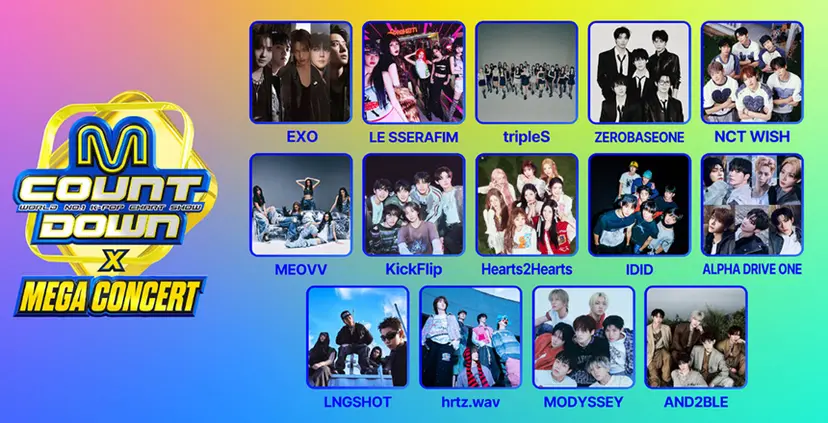
Mega MGC Coffee is currently holding an entry event for the '2026 Mega Concert' to be held at the Inspire Arena in Yeongjongdo, Incheon, on the 30th. The concert will feature popular K-pop groups including their own model NCT WISH, as well as EXO, LE SSERAFIM, ZEROBASEONE, tripleS, ME:I, HeartsToHearts, AlphaDrive1, and others. If you are a K-pop fan whose favorite artist is on the lineup, you might already be checking your entry count on the Mega Coffee app.
This event, which began in March, has finished its 3rd round of entries and is currently in its 4th and final round. According to the revealed results of previous events, the cutoff for the 1st Entry King was 87 entries; calculating based on the lowest unit price for each item, the amount required to reach the cutoff reaches approximately 2 million won (87 entries × 23,000 won). The 1st place entrant, who recorded 114 entries, spent at least 2.62 million won. The ranking status, which updates every 10 minutes, can be checked in the app. As of 4 PM on the 22nd, with 3 days left until the end of the 4th round, the cutoff was calculated at 70 entries.
'Entry Ticket Marketing' Becomes the K-pop Collaboration Formula
Events like this are not unique cases. Recently, brands collaborating with the K-pop industry have been actively utilizing so-called 'entry ticket marketing,' where fan signing events or private functions are linked to purchase conditions. The ranking system aimed at fandoms, which previously operated centered on music sales, is now spreading across the general consumer goods market, including food and beverages, cosmetics, and fashion.
While there are cases like the cosmetics brand UIQ's RIIZE fan signing event or the After Blow event featuring DAY6's Wonpil, which limit entries to once per person regardless of the purchase channel, many brands that employ idols as models operate events where the quantity purchased directly translates into the number of entries.
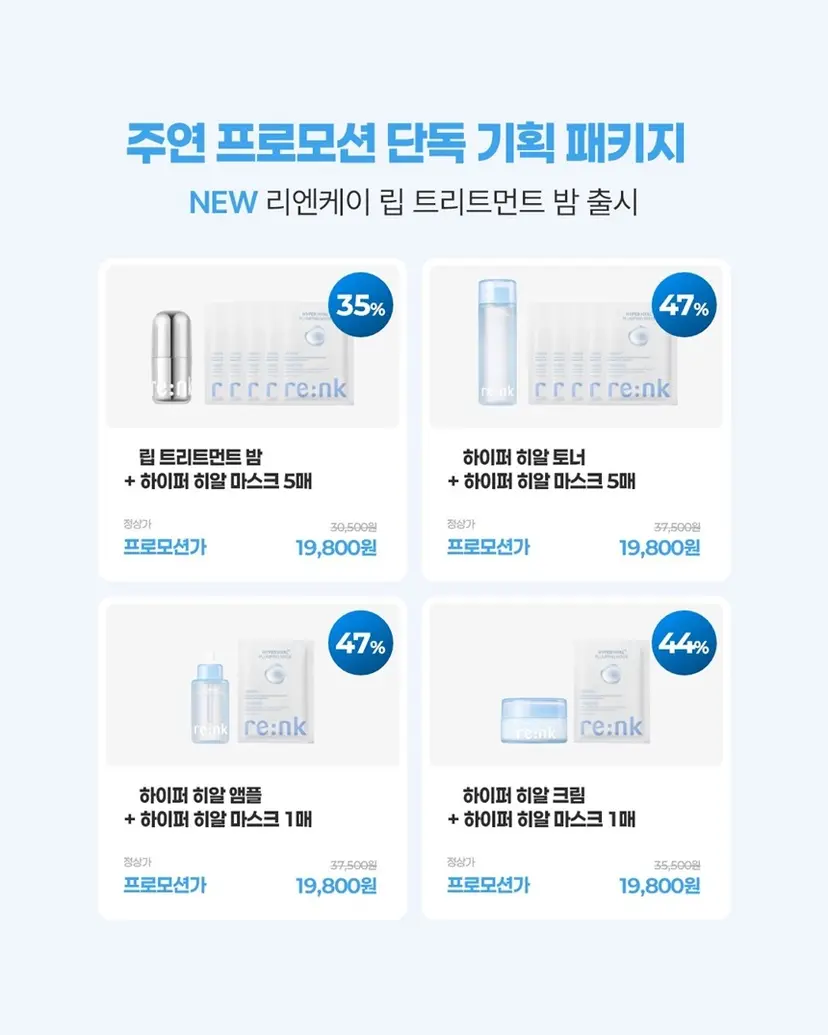
Last month, the cosmetics brand Re:NK held a fan signing event for THE BOYZ member Juyeon and provided entry opportunities upon verifying the purchase of a specific promotional package. Dr.G also allowed multiple entries in last year's in-person fan signing event for BOYNEXTDOOR, giving 1 entry ticket for every 30,000 won spent. It is a structure where the chances of winning increase the more you purchase.
In the past, when companies employed top stars in advertisements, the goal was to improve brand image by utilizing public recognition. The 'idol marketing' of today works differently. The background that makes this structure possible lies in the fandom economy unique to the K-pop industry. It is evaluated that there is nothing like an idol fandom as a means to elicit definite purchasing behavior.
A clothing brand official stated, "The effect of employing a trending idol to transplant a trendy image into a brand is significant," but added, "Beyond image enhancement, the sales-driving effect from fans participating to get a chance to meet their artists in person is also hard to ignore."
Fandom 'Ranking' by Purchase Quantity
There are also voices of self-reflection within the fandom. A person surnamed Jeong in their 30s said, "I don't spend large amounts of money, but for brand events that have a limit on the number of entries, I buy cosmetics or clothes to meet the criteria and apply. It makes me wonder if this is a normal consumption structure. I think I end up accepting too many things as a matter of course just because I am a fan."
This strategy is a familiar means of maximizing profits for entertainment companies and distributors. In the K-pop industry, fan signing events were originally a representative marketing tool to induce mass purchases by the fandom. It is a structure where music sales rise as fans purchase multiple physical albums to increase their chances of winning. Analysts say that this method has recently expanded to brand collaboration events, further stimulating fandom consumption.
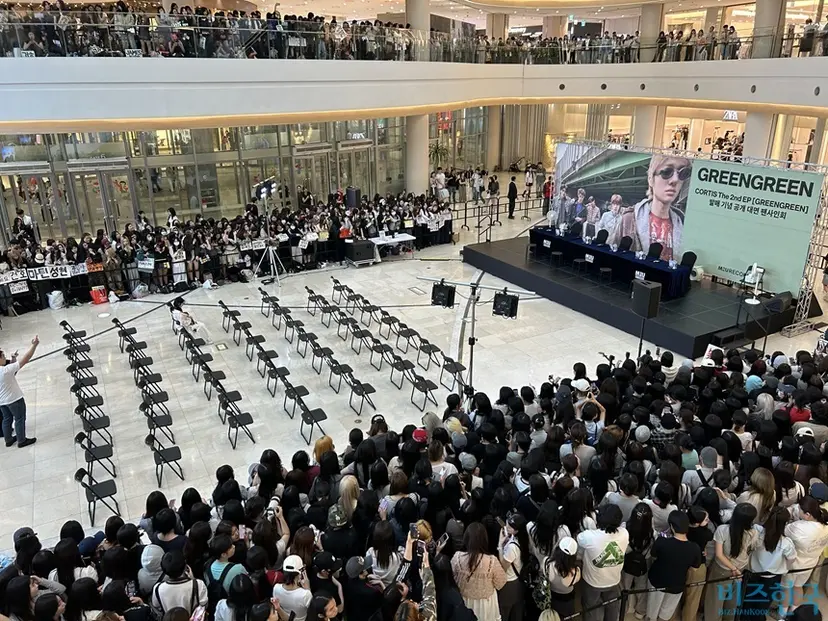
On the 16th, a fan signing event commemorating the release of the Cortis album, hosted by music distributor M2U Record, was held at Times Square in Yeongdeungpo. The on-site atmosphere was overheated, with fans appearing as early as two days before the event to reserve spots on the floor near the building entrance. The criteria for selecting the 50 participants for the fan signing was the number of albums purchased from the M2U Record online mall over five days starting May 1st. It is a ranking system that selects winners in order of purchase quantity.
As large distribution platforms like Olive Young have entered music distribution, competition between channels is intensifying as they sell albums with their own 'exclusive benefits' and 'dedicated fan signing events.' In January, Olive Young held an album sales event for AlphaDrive1, providing both fan signing entry tickets and random photo card benefits. The method was to grant entry eligibility in the order of consumer purchase amounts for albums bought through the Olive Young channel over a designated four-day period.
For entertainment companies as well, fandom-based events are a core profit model. In-person events such as fan signings drive music sales and platform usage simultaneously. Brand collaborations also connect to licensing revenue for entertainment companies, going beyond simple advertising income.
The problem is that consumer rights protection measures are relatively insufficient in this structure. Many events restrict refunds after entry. For popular idols, it is not uncommon for fans to spend hundreds of thousands to millions of won to increase their chances of winning, but if they fail, the cost remains entirely the consumer's burden. A structure where returning or canceling a purchase for an entry-qualified order is virtually impossible has solidified into a custom.
It is also pointed out that where there is no upper limit on the number of entries, a structure where 'those who buy more have an advantage' has become entrenched. Due to the nature of the K-pop industry, artist health issues or schedule changes are frequent, but protection measures for changes in event details are also lacking. It is not uncommon for the absence of some members to be announced just before the event. A survey on the actual conditions of fandom marketing consumer issues by the Korea Consumer Agency also showed that many cases of refusal to refund albums purchased for entries that did not result in a win were reported.
While this is a method for companies to achieve guaranteed marketing results, guidelines from the perspective of consumer rights are still absent. Although the current Electronic Commerce Act specifies criteria for withdrawing a subscription for mail-order contracts, the scope of application can vary depending on the interpretation in the case of purchasing products combined with entry tickets. In 2024, the Korea Fair Trade Commission ordered a specific agency's shopping mall to correct its practice of uniformly notifying that withdrawal of subscription was impossible even when it was legally possible. An official at a large domestic entertainment company said, "The current fan signing entry method is a custom that has been around for so long and is so widespread that it is difficult for any one entity to change it first."
As the K-pop industry expands into the global market, it is time to also inspect the fandom consumption structure. The global K-pop market is estimated at approximately 12.7 trillion won (9.2 billion dollars) annually. As fans' spending serves as the actual foundation for that growth, voices are growing that their rights as consumers need to be guaranteed at a level befitting the industry's growth.
![[Fandom, Blood, Sweat, and Tears] ① 70 Days of 'Refreshing'... The Paradox of Endless Waiting for 'Ticket Cancellations'](https://s.bizhankook.com/attachments_thumb/2026/05/98143_thumb.webp)
![[Fandom, Blood, Sweat, and Tears] ② K-Pop concerts mint 'golden eggs', but fans face 'poor treatment'](https://s.bizhankook.com/attachments_thumb/2026/06/98699_thumb_d3da1fe5.webp)
![[Fandom, Blood, Sweat, and Tears] ③ 1 entry for every 10 drinks purchased; spending millions is still like 'plucking stars from the sky'](https://s.bizhankook.com/attachments_thumb/2026/06/98733_thumb_235b0bc2.webp)