

[비즈한국] As holidays or family month approaches, home shopping channels become a 'battlefield without gunfire' for health functional foods promising energy recovery. However, many premium health products sold for hundreds of thousands of won, backed by the signage of major pharmaceutical companies and flashy marketing, are actually just common processed foods made from cheap ingredients. Starting with the controversy over the medical efficacy of 'edible albumin,' Bizhankook examined the reality of the pharmaceutical industry's deceptive practices and the distribution structure that has created abnormal price bubbles.
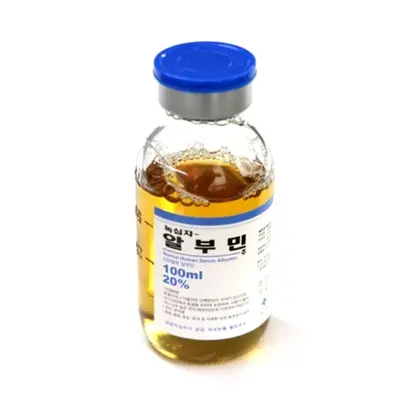
Recently, 'edible albumin' has become the most popular item in home shopping and pharmacy promotions. The high expectations surrounding the yellow albumin intravenous (IV) injections, which were historically administered to patients with severe illnesses like liver cirrhosis in hospital ICUs and emergency rooms, are being repurposed into tablet and liquid stick forms to target consumers seeking energy recovery or relief from chronic fatigue.
The prices of premium albumin products launched by domestic pharmaceutical companies range from as low as 100,000 won to well over 300,000 won for a 1-2 month supply. Moved by show hosts shouting, 'Fill your parents' weary daily lives with vitality,' children open their wallets willingly to avoid feeling like unfilial sons or daughters. A pharmacist operating a pharmacy in Yongsan-gu, Seoul, described the edible albumin products, saying, "Albumin plays a role in helping blood circulation and excreting waste, acting as a carrier to ensure that other nutrients or prescription medicines reach their proper locations in the body. While the level of effectiveness may vary from person to person, it is effective for the elderly population whose albumin levels are dropping.”
However, the medical community views these expensive supplements with cold skepticism. They pour out harsh criticism, calling the practice of selling protein-processed products with zero medical efficacy at high prices a form of 'deceiving the public.'

Once It Passes the Digestive Tract, It's 'Protein Candy'… "Like Eating Seasoning with a Spoon"
The core basis for the medical community's criticism of edible albumin products is human physiological digestive mechanisms. Albumin is a plasma protein naturally synthesized in the liver at a rate of 10-15g per day. It plays an essential role in maintaining life by managing water balance inside and outside blood vessels and transporting hormones, vitamins, and drugs to necessary tissues.
The medical community points out that there is a problem with the method of consuming albumin. They argue that when albumin, a massive polymer protein composed of numerous amino acids, is ingested orally, it is completely broken down into its smallest units—amino acids or short peptides—by gastric acid, pepsin, and various proteolytic enzymes secreted by the pancreas and small intestine. This means it is physiologically impossible for it to pass through the intestinal mucosa and be absorbed into the blood while maintaining its unique shape and structure as albumin.
Lee Seung-hoon, a neurology professor at Seoul National University Hospital, criticized the protein-based supplement craze in a video released on the YouTube channel 'Jisik Inside' on the 9th of last month. Prof. Lee explained, "If you ask me to name ineffective supplements, protein supplements are the most absurd. Even if you eat protein-series supplements like albumin, glutathione, or collagen, they ultimately break down into amino acids." He continued, "Glutamic acid, a representative amino acid produced through this breakdown, is the same ingredient as MSG. If you eat a lot of albumin, it has the same effect as eating seasoning with a spoon," he dismissed.
Joo Seung-ho, former president of the Korean Medical Association, also joined the chorus of criticism. Through social media, he stated, "It is established medical consensus worldwide that albumin is only medically beneficial when administered as an IV injection to a small number of patients with extremely poor nutritional status. Injecting it into a person with normal nutritional status provides no benefits, and the claim that oral consumption helps health is a scam that uses medical authority to deceive the public." This means one can sufficiently obtain the amino acids needed for internal albumin synthesis just by consuming protein through regular meals such as meat, fish, or tofu.

Global Medical Papers Also Support 'Uselessness Theory' of Edible Albumin
Global clinical data also supports the theory that edible albumin is useless. In the international medical community, it is difficult to find clinical trials comparing the efficacy of oral versus intravenous (IV) administration. Oral intake of albumin is not considered a therapeutic approach in itself; to raise albumin levels, IV injections or branched-chain amino acids (BCAAs), which help the patient synthesize it themselves, are prescribed.
The limitations of edible albumin supplements can be confirmed in various papers. A notable example is the clinical result by Uma Fatmawati's research team published in the international journal 'Journal of Pharmaceutical and Scientific Innovation (JPSI)' in 2024. As a result of administering oral albumin to 87 patients with respiratory diseases at an Indonesian regional hospital, the changes in patients' blood albumin concentrations before and after administration were not statistically significant.
The international medical community brakes on the very concept of 'increasing albumin levels in the short term through oral nutritional supplementation.' Professor Philipp Schuetz's team in Switzerland published a paper in the 'European Journal of Clinical Nutrition (EJCN)' in 2023 containing research results showing that there was absolutely no change in serum albumin concentration at day 7 between patients who received nutritional support and a control group. In 2022, Professor Schuetz's team also published in 'eClinicalMedicine', an online journal of the prestigious medical journal The Lancet, stating that 'clinicians should not use albumin as an indicator for nutritional intervention.'
Even in studies targeting dialysis patients with severe nutritional deficiencies, the effects of albumin consumption are difficult to find. Liu's research team published a paper in the international journal 'PLOS ONE' in 2018, stating that the level of evidence for studies claiming that oral nutritional supplements slightly increase serum albumin is very low in a meta-analysis of 15 clinical trials involving 589 people.

Main Ingredients Are Egg Whites or Whey Protein
Currently, among all the edible albumin products released at high prices by pharmaceutical companies, there is not a single health functional food product that uses functional ingredients officially recognized by the Ministry of Food and Drug Safety. This means that no functional ingredients that have gone through strict clinical trials and scientific verification to help prevent specific diseases or promote health have been used.
The food types of these products are labeled as 'mixed beverages,' 'other processed products,' or 'candies' instead of 'health functional foods.' The only individually recognized ingredient approved, PMO Wheat Albumin, was registered by Pulmuone Health & Living in December 2007 as a protein ingredient extracted from wheat, and it is used in health functional food products that help suppress rapid post-meal blood sugar spikes. Although it has 'albumin' in its name, it is unrelated to edible albumin products.
The ingredient lists of edible albumin products are also underwhelming. Most of the main ingredients are egg white powder or whey protein. They are merely egg-white albumin extracted from eggs mixed with various vitamins, taurine, and other ingredients.
Pharmaceutical Companies' 'Medical Halo Effect' Marketing... Corporate Ethics Under Fire
The reason health foods based on egg white powder, which has a remarkably low cost, are sold as premium products approaching 300,000 won can be attributed to the 'medical halo effect' marketing. Even without the Ministry of Food and Drug Safety's health functional food certification mark, consumers tend to believe products are drugs or health functional foods if they feature a pharmaceutical company's logo and include the word 'albumin' in the product name. Pharmaceutical companies exploit this blind trust, adding huge home shopping broadcast fees, show-doctor appearance fees, and flashy marketing costs to cheap protein-processed goods and handing the bill to the consumers.
In the case of GC Pharma, the sense of betrayal among consumers is even greater. GC Wellbeing is selling an edible albumin product under the name 'Eosam Sheep Placenta Premium.' As its affiliate, GC Pharma, holds four types of prescription albumin injection products extracted from plasma, the expectations for the medical effectiveness of 'Eosam Sheep Placenta Premium' are bound to be higher. However, the sales page for Eosam Sheep Placenta Premium on GC Wellbeing's Naver Store includes advertisements claiming it contains 13,000mg of silk albumin complex. Regarding this, a GC Pharma official stated, "GC Wellbeing's edible albumin product is sold by a company to which we only lent the license; we do not produce it," adding, "GC Wellbeing was not involved in its development.”
As controversies over exaggerated advertising and consumer deception surrounding edible albumin have grown, the Ministry of Food and Drug Safety (MFDS) stepped in last February, requesting cooperation from the industry to prevent unfair advertising. They judged that there was a high risk of general food advertisements being mistaken for health functional foods or drugs, and issued instructions to strictly prohibit the use of names or phrases that could confuse consumers. An industry insider said, "So-called edible albumin products are food, not drugs, and since there are various opinions about their effectiveness, it is important to provide accurate information in accordance with relevant regulations," adding, "The market also needs to clearly communicate the nature and limitations of the products.”
However, deceptive marketing remains rampant. Instead of highlighting direct disease treatment efficacy, which is prohibited by law, they entice consumers by using ambiguous phrases like 'a fresh start to a vibrant day' or 'energy replenishment.' This is a point where it is difficult to avoid criticism that pharmaceutical companies, which should be responsible for national health by developing new drugs, are obsessed with making easy money by targeting the pockets of the elderly who are deeply concerned about their health.
![[Supplements in Name Only] ① Why 'Edible Albumin' is Just a '300,000 Won Seasoning'](https://s.bizhankook.com/attachments_thumb/2026/05/98166_thumb.webp)
![[Supplements in Name Only] ② Health food is not 'Health Functional Food'](https://s.bizhankook.com/attachments_thumb/2026/05/98159_thumb.webp)
![[Supplements in Name Only] ③ Health Foods 'Mimic' Health Functional Foods Thanks to MFDS 'Twin Marks'](https://s.bizhankook.com/attachments_thumb/2026/05/98202_thumb.webp)