

[비즈한국] Technology quietly crosses borders inside someone's bag on their way home from work. Research achievements built over decades and national strategic technologies vanish, contained within a few printouts or a USB memory stick. While dozens of technology leakage cases are uncovered each year, the full picture is often revealed only in fragments. Through its four-part series 'Tech Espionage,' Bizhankook reconstructs the moments of leakage based on actual cases.
1.
August 2019, Songjiang District, Shanghai, China.
It was a secret project to move an entire factory, technology, and personnel. Team Leader Na Seong-do and Employee Lee Han-gyeol, who diligently boarded a plane during the busy vacation season, stood side-by-side on a vast factory site, cutting through the humid air. This was the site where the Chinese semiconductor materials company, Shin-Gwang Materials (pseudonym), planned to install new production lines. It was a place to transplant the CMP slurry technology that had been verified in Korea. Now, they needed people.
Team Leader Na and Employee Lee toured the factory site with Shin-Gwang officials. They scrutinized the locations for polishing equipment, cleanroom partitioning, wastewater treatment flow, and production line layout one by one. Though they only presented a blueprint for 'completing multi-item production in 5 years,' both the factory and the technology were essentially blank slates. The business plan, hand-written by the two, would serve as the starting point for the newly established corporation.
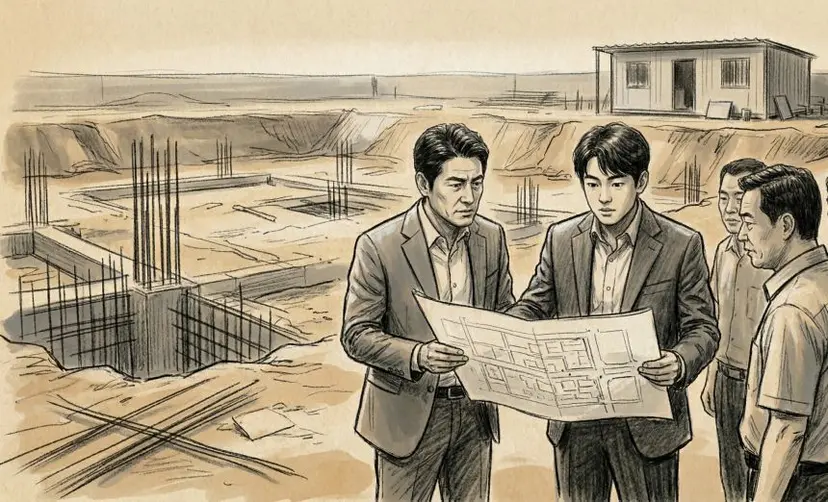
The reason Shin-Gwang welcomed the two was clear. Team Leader Na was a key member who led the CMP materials development team at a mid-sized Korean materials company, Company A. Employee Lee was also an experienced hand. At that time, Shin-Gwang had no CMP material technology. If you don't have the technology, you can buy it; if you can't buy it, you can just take the people who have it.
After returning to Korea, the two left their company a week apart. Their reasons for resignation were mundane. One cited personal business, and the other cited family matters.
*CMP (Chemical Mechanical Polishing) Slurry: An abrasive used to smooth the rough surface of semiconductor wafers at the nanometer level. This process, which involves pressing a wafer against a polishing pad and flowing slurry to achieve planarization, is the core of semiconductor miniaturization. Without this technology, which combines process, material, and equipment, it is impossible to precisely implement semiconductor circuits stacked in dozens of layers.
2.
The game was already underway elsewhere. It was the so-called 'CMP Slurry Project.'
The plan was to set up a CMP slurry manufacturing subsidiary under Shin-Gwang and take the technology and experience accumulated in Korea, break them down, and reassemble them at the local Chinese factory. The roadmap was ambitious: complete the manufacturing line by 2020 and reach mass production of multiple items by 2024. Even the names of prospective client companies were mentioned. This was not a project to simply hire a few talented individuals. It was closer to an attempt to replicate a cross-section of Korea's semiconductor materials industry in its entirety.
And at the center of it all was Ahn Seong-jun. He was a department head at Company B, a major materials conglomerate, leading the CMP project promotion team.
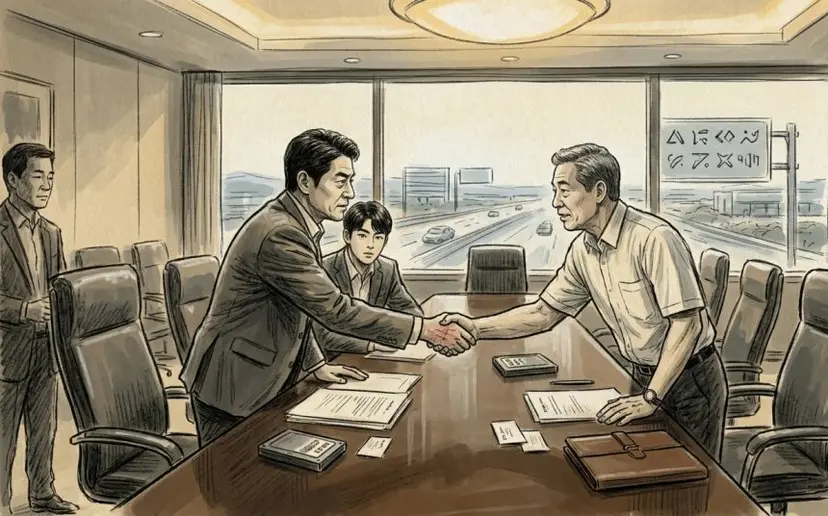
One month later, Suwon, Gyeonggi Province.
This time, the president of Shin-Gwang visited Korea personally. Across from the Shin-Gwang president and Wang, the head of sales, sat Team Leader Na, Employee Lee, and Department Head Ahn Seong-jun. The revised business plan presentation lay on the table. The Shin-Gwang president shook hands with Department Head Ahn first. It was clear he already knew who was at the heart of this operation.
Department Head Ahn was more than just the working-level manager; he was the architect who had designed the entire setup. This was not Wang’s first proposal. Conversations about running a CMP slurry manufacturing business in China had taken place when he was previously stationed in China, but at the time, neither the speed nor the conditions were right. It was just a card kept in reserve. However, after being passed over for a promotion, the situation changed. Wang reached out again, and this time, he offered a more concrete position: a proposal to establish a local subsidiary and take on the role of general manager.
Ahn Seong-jun did not go alone. He knew better than anyone that he could not do this alone.
3.
To create CMP slurry from scratch, three types of people were needed: someone who knew the formulation technology, someone who could design the manufacturing equipment and factory construction, and someone who knew how this slurry was evaluated on actual semiconductor mass production lines. Ahn Seong-jun knew which company, which department, and which person's hands held those pieces. And he began to gather them one by one.
The first person he approached was his junior at Company B, Jeong Do-hyeon. Although Mr. Jeong refused to join, Department Head Ahn could not stop there. Instead, he was introduced to experts from other companies. That was how Team Leader Na Seong-do and Employee Lee Han-gyeol from Company A were connected. Resumes were passed through Mr. Jeong to Ahn Seong-jun, and then to Wang. The business plan presentation followed the same path. When Team Leader Na sent materials, Mr. Jeong and Ahn Seong-jun would review and touch them up, and the revised version would head back to China. People, documents, and plans—everything flowed around Ahn Seong-jun.
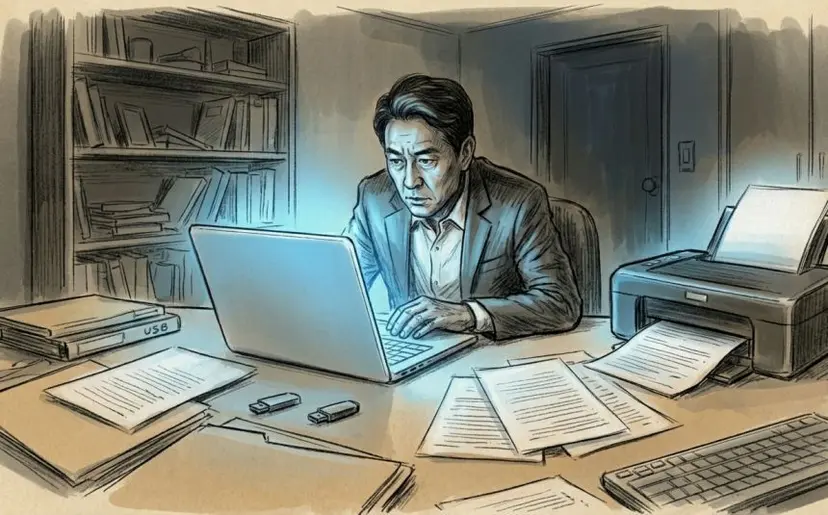
Around the same time, Mr. Jeong also gathered internal company materials. They were files containing site layouts for the new CMP slurry factory, floor plans, production line configurations, and reviews of hazardous material usage. This was information that saved them from having to design the factory from scratch. It wasn't just people that Ahn Seong-jun gathered. He needed the blueprints, experience, and even the trials and errors scattered across each company.
4.
One final piece of the puzzle was missing. Business could not be completed with material development and factory design alone.
They needed a true professional who could apply this technology to actual client processes. The final piece was General Manager Bang Jun-hyeok, with whom he had considered going into business together five years ago. A member of the CMP process development team at client Company C, he was someone who knew the evaluation data of semiconductor mass production lines inside and out. Department Head Ahn repeatedly encouraged him to change jobs. We are short-staffed, he said; your arrival is what will complete the picture.
One evening in April 2020, General Manager Bang took out his work phone, which was connected to the company server, at his home. He photographed the slurry technology data displayed on the screen with a personal phone in his other hand. It was comparison data regarding polishing speed, selectivity, and hydrogen peroxide concentration. It was the data Department Head Ahn had requested. This method of leakage was repeated until just before his resignation. The process evaluation data was delivered to the Shin-Gwang president and Department Head Ahn via WeChat, and he passed some of it back to Team Leader Na.
By then, the outline of the project was almost complete. One person knew the materials, one knew the factory, and one knew the client's processes. And Ahn Seong-jun was the real architect who tied those three into a single line.
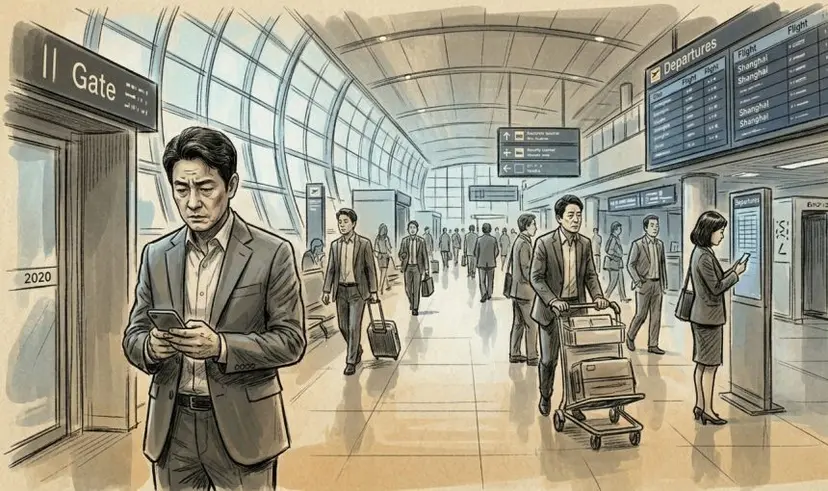
In May 2020, Ahn Seong-jun took office as the general manager of Shin-Gwang's CMP slurry manufacturing subsidiary. His title was President. It was three months after he left Company B. His salary was 2 million yuan before tax, with 10% equity. A year later, Bang Jun-hyeok also joined as a vice president-level executive. His take-home pay was over 250 million won with 5% equity.
This project was close to an incident where technology and personnel scattered within Korean companies were rearranged under one person's command. Pieces of material development were taken from materials company A, pieces of factory design from conglomerate B, and pieces of process evaluation from client Company C. The fragments of technology flowing out of different companies were pieced together in Shanghai, China, as if the core technology of semiconductor processes was being emptily drained from Korea to China.
The Full Story of the 'CMP Slurry' Technology Leakage Case
This factional account reconstructs the case between 2019 and 2021 where six former employees of Solvay357780, SKC011790, and SK Hynix000660 conspired to leak national core technologies and trade secrets related to semiconductor planarization (CMP) to China. They established a manufacturing subsidiary for a Chinese semiconductor materials company and pushed for a 'CMP Slurry Project' that would transplant Korea's technology and personnel in their entirety. This case had not been previously known to the public, including through media reports.
The lead defendant, Department Head Ahn Seong-jun (pseudonym), orchestrated the crime after being passed over for a promotion, having been promised a salary of 2 million yuan (approximately 380 million won), 10% equity, and the position of president of the local corporation by the Chinese side. Other accomplices were also guaranteed high salaries and vice-president-level positions, and it was revealed that they photographed national core technology documents with their mobile phones to illegally take them out just before resigning, or used internal confidential reports to create business plans for the Chinese subsidiary.
The reality of the case was uncovered through years of investigation based on tips obtained by investigative authorities. The victimized companies, which are also holders of national core technologies, have been operating multi-faceted security systems, such as requiring internal confidentiality agreements, prohibiting the use of personal external storage media, card-recognition access control systems, and security checks upon resignation. However, the perpetrators carried the data like ghosts through paths that could bypass security monitoring, such as personal email, web hard drives, and WeChat.
Following this incident, the victimized companies significantly strengthened their security systems. In the case of Solvay, they improved their security levels to align with international security standards and advanced their human security management and resignation security systems. They have strengthened actual defensive capabilities through regular security audits and monitoring, as well as mock drills for responding to technology leaks.
During the investigation, it was even captured that the ringleader, Mr. Ahn, instructed accomplices to hide hard drives and printouts containing confidential materials at their residences to avoid the investigative net, suggesting evidence concealment.
The Daejeon District Court, 12th Criminal Division (Presiding Judge Na Sang-hoon), judged that the leakage of national core technologies and industrial technologies is a felony that nullifies the immense time and cost invested by companies and has a serious negative impact on national industrial competitiveness. The court sentenced defendant Mr. Ahn to two years and six months in prison, deeming him the architect of the entire crime who functionally dominated his accomplices.
However, the fact that the business in China did not reach final success was taken into account in the sentencing. Defendant General Manager Bang Jun-hyeok (pseudonym), who rose to the position of vice president, was sentenced to two years in prison, suspended for three years, and defendant Team Leader Na Seong-do (pseudonym), who wrote the business plan, was sentenced to one year and six months in prison, suspended for two years. The remaining accomplices were also given suspended prison sentences and fines depending on their level of participation.
An industry insider emphasized, "Technology leakage is a serious crime that threatens not just the survival of individual companies, but the entire ecosystem of the materials industry. It is most important that the perception that technology leakage will definitely be caught and strictly punished is formed across the entire industry."
![[Tech Spy] ① "114 Files Printed After Promotion Was Denied": The Full Story of the LG Display Tech Leak Case](https://s.bizhankook.com/attachments_thumb/2026/05/97960_thumb.webp)
![[Tech Espionage] ② Solvay, SKC, SK Hynix: 'CMP Slurry' Technology Stolen Whole... The Audacious Conspirators](https://s.bizhankook.com/attachments_thumb/2026/05/98043_thumb.webp)
![[Tech Espionage] ③ “Lured by a Sweet Job Offer…” How Internal Audits Saved HKMG and CIS Blueprints](https://s.bizhankook.com/attachments_thumb/2026/05/98253_thumb.webp)
![[Tech Espionage] ⑤ State secrets stacked away on a server bound for China... The downfall of a 'Samsung Man' who sold semiconductor technology](https://s.bizhankook.com/attachments_thumb/2026/05/98489_thumb.webp)
![[Tech Spy] ⑤ Even if the '23 Trillion Won' Cow Is Lost, We Must Keep Repairing the Barn...](https://s.bizhankook.com/attachments_thumb/2026/05/98605_thumb.webp)