

[비즈한국] The retail industry underwent drastic changes while navigating the COVID-19 pandemic. Recently, the retail market's sense of crisis has intensified as the consumer market shrinks due to high inflation and a stagnant domestic economy. Companies are busy looking for future growth engines while agonizing over their survival strategies. We examine the new business cards held by major domestic retail companies and analyze their future growth prospects.
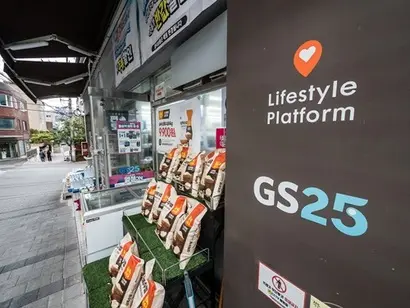
GS Retail rushed to find new businesses before the convenience store growth trend stalled, but
The growth momentum of the once-thriving convenience store industry seems to be cooling off. Last year, the number of domestic convenience store branches was counted at 54,856, a decrease from the previous year (54,875). This marks the first time since the inception of the convenience store business in Korea in 1988 that the number of branches has turned to a downward trend.
As the convenience store market reaches a saturation point and consumer purchasing power declines due to the economic downturn, earnings are also experiencing a downward spiral. According to the Ministry of Trade, Industry and Energy, sales at the three major convenience store chains (GS25, CU, 7-Eleven) in February this year fell by 4.6% compared to the same period last year, marking negative growth for the first time in five years.
A sense of crisis is also deepening for GS Retail, which has a high dependency on its convenience store business. Securities firms predicted that GS Retail's first-quarter earnings for this year would fall short of market expectations. Nam Sung-hyun, a researcher at IBK Securities, diagnosed, "The most negatively interpreted part of the Q1 results is the sluggish performance of the convenience store division," adding, "It is necessary to present mid-to-long-term growth strategies while simultaneously improving business efficiency."
A GS Retail official stated, "We plan to continue with management focused on fundamentals this year. We will steadily continue the business direction of increasing sales per convenience store branch."

GS Retail had begun preparations for business diversification quite early. Former Vice Chairman Huh Yeon-soo aggressively pursued new business opportunities after taking office as the head of GS Retail in 2015. After he took the helm, GS Retail’s earnings plummeted, earning him the label of having a "hand of minus," and he put effort into nurturing new businesses to make up for this.
It started with the pet business. In 2018, GS Retail acquired the pet supply mall 'About Pet,' and to strengthen competitiveness, it absorbed and merged with pet supply manufacturing and wholesale companies Yeowool and Homme in 2020. In 2021, it jointly acquired the specialized pet mall 'Pet Friends' with a private equity fund to strengthen its pet category. It also invested 2.5 billion won in IMDT, a veterinary hospital management support company, and continued investments in pet startups.
In 2021, it invested approximately 300 billion won to acquire a 30% stake in 'WediangSangsang,' the operator of Yogiyo. The investment was aimed at shifting toward integrated online/offline commerce as demand for quick commerce increased due to COVID-19. In 2022, it invested 55 billion won to acquire the food startup 'Cookat.' From 2021 to 2022, the number of companies newly invested in or acquired by GS Retail reached around 10.

Full-scale Huh Seo-hong regime: Will it lead to a reorganization of the new business portfolio?
The problem is that the results of the new business sectors have yet to materialize. Since being acquired by GS Retail in 2018, About Pet has never turned a profit. Last year, About Pet's sales were around 28.4 billion won, with a net loss of 10.9 billion won. Its total capital is negative 15.4 billion won, putting it in a state of complete capital impairment. GS Retail provided 1.5 billion won to About Pet in January of this year. GS Retail has entered into a money loan agreement with About Pet with a limit of 20 billion won, and the amount loaned so far has reached 18.5 billion won.
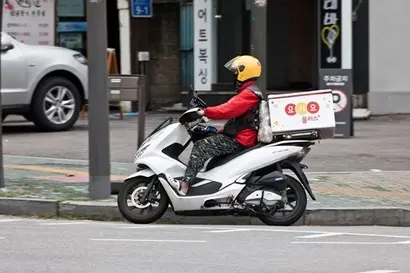
With the growth of the delivery market slowing down alongside the transition to the endemic phase, Yogiyo has also been unable to escape from sluggish performance. Yogiyo recorded operating losses of 111.6 billion won in 2022, 65.5 billion won in 2023, and 43.1 billion won in 2024. As of the end of last year, the book value (corporate value) of GS Retail's 30% stake in WediangSangsang was 43.5 billion won, down about 68% from the previous year (134.1 billion won). Cookat has also not been able to escape a deficit; last year, Cookat's sales were 37.2 billion won, with an operating loss of 4.6 billion won.
There is speculation in the industry that GS Retail's new businesses, which have been sluggish for years without yielding results, may undergo extensive reorganization starting this year. This is because with the increasing uncertainty in its core convenience store business, the company faces a situation where it must reduce investments in new businesses and improve profitability.
Last year, GS Retail's convenience store division saw sales rise 5.1% year-on-year to 8.6661 trillion won, but operating profit fell 10.9% to 194.6 billion won. Since 74.5% of GS Retail's total revenue is generated by the convenience store division, the deterioration in the profitability of this business is directly linked to the company's performance. Last year, GS Retail's consolidated operating profit was 239.1 billion won, an 18.1% decrease from the previous year.
In particular, with CEO Huh Seo-hong, a fourth-generation member of the group, taking on the role of the new head of GS Retail last November, there is a prospect that the reorganization of the new businesses launched thus far will accelerate. Given that CEO Huh is reportedly emphasizing strengthening internal stability to employees and major management, there is a high possibility that businesses with low profitability will be liquidated quickly.
The fact that CEO Huh resigned from his positions as a registered director at Cookat and WediangSangsang also lends weight to the possibility of a portfolio reorganization of invested companies. CEO Huh joined as a registered director of Cookat and WediangSangsang in February and April of last year, respectively, but resigned from both at the end of the year. In March of this year, he also stepped down as a non-executive director of Hugel145020, an aesthetic company acquired by GS Retail in 2022.
A GS Retail official explained, "It was operated in a way that the head in charge of new businesses served as a registered director, and it was changed because a new person in charge of new businesses arrived." Regarding the possibility of selling or reducing stakes in invested companies, the official stated, "Nothing is currently under review."
![[Future 10-Year Growth Engines] Even Lotte Mart’s Ambitious 'Zetta' Faces Harsh Criticism; Can E-commerce Turnaround Be Possible?](https://s.bizhankook.com/attachments_thumb/2026/05/94197_thumb.webp)
![[Future 10-Year Growth] 'Expand or Reduce?' GS Retail Faces Growing Dilemma Over New Businesses](https://s.bizhankook.com/attachments_thumb/2026/05/94311_thumb.webp)
![[Future Growth Engines] Shinsegae Embarks on Independent Management: Moving Beyond Retail to Real Estate... 'A Long Way to Go'](https://s.bizhankook.com/attachments_thumb/2026/05/94565_thumb.webp)