

[비즈한국] The retail industry has undergone drastic changes while navigating the COVID-19 pandemic. Recently, as the consumer market has shrunk due to high inflation and domestic economic stagnation, a sense of crisis in the retail sector is intensifying. Companies are busy looking for future growth engines while struggling with survival strategies. We examine the new business cards unveiled by major domestic retail companies and analyze their future growth prospects.
Lotte Shopping023530 Faces Crisis; Chairman Shin Dong-bin Returns to Management
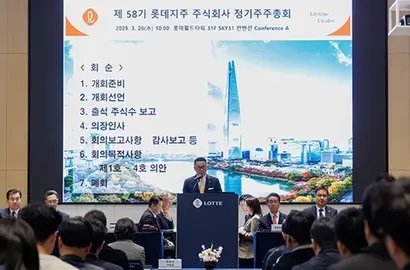
At the Lotte Group's regular general shareholders' meeting held on March 24, a motion was proposed to appoint Lotte Group Chairman Shin Dong-bin as an internal director of Lotte Shopping. This marks Chairman Shin's return to an internal director role at Lotte Shopping after five years. Industry observers speculate that Chairman Shin has returned to the forefront of management due to the deepening sense of crisis at Lotte Shopping.
Lotte Shopping seems unable to regain its pride as a "retail powerhouse." Lotte Shopping’s revenue has been on a continuous downward trend since 2015. Revenue, which stood at 29.1276 trillion KRW in 2015, has decreased every year, dropping to 13.9866 trillion KRW last year. Operating profit also fell from 853.7 billion KRW to 473.1 billion KRW last year. Lotte Shopping's net loss for last year was recorded at 984.3 billion KRW. Chairman Shin even remarked at the VCM (Value Creation Meeting) held earlier this year that "last year was the most difficult year in the group's history."

The industry points to Lotte Shopping's failure to respond quickly to the shifting landscape of retail as its major strategic error. Lotte Shopping established an e-commerce division in 2018 to pursue online business. It set a goal to achieve 20 trillion KRW in online sales by 2022 by investing 3 trillion KRW over five years.
When the consumer market shifted rapidly from offline to online due to the outbreak of COVID-19 in 2019, competitors were quick to push for a transition to e-commerce businesses. It wasn't until 2020 that Lotte Shopping unveiled "Lotte ON," an online mall that integrated Lotte's retail affiliates. However, Lotte ON suffered from server instability from its inception, making it difficult to acquire new customers, and critics also pointed out its lack of distinct competitiveness compared to other rival platforms.
Lotte ON has never turned a profit since its launch. Far from the goal of reaching 20 trillion KRW in sales by 2022, Lotte Shopping's e-commerce division revenue was only 113 billion KRW that year. Last year, revenue was recorded at 119.8 billion KRW, with an operating loss of 68.5 billion KRW. The e-commerce division accounts for only 1% of Lotte Shopping's total business portfolio, and its contribution to profit is a negative 14%.
Despite Lotte ON's Losses, Another E-commerce Attempt, This Time Focused on Grocery
Despite Lotte ON's lackluster performance, Lotte Shopping seems unable to let go of its hopes for the e-commerce business. Believing that the online fresh food grocery market has high growth potential, it has begun to expand investment in its e-grocery business.
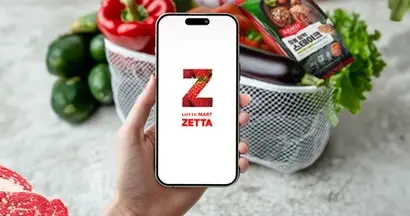
Lotte Shopping recently launched the "Lotte Mart Zetta" app. It separated the grocery segment from Lotte ON into the Lotte Mart Zetta app. Last year, Lotte Shopping transferred the e-grocery business of its e-commerce division to Lotte Mart.
Seo Yong-gu, a professor of business administration at Sookmyung Women's University, analyzed, "Because Lotte has built various offline channels, it has put effort into implementing an omnichannel strategy that creates synergy with online. It appears they created this grocery-related app as a defensive measure to retain existing customers, having judged that becoming a powerhouse in the current e-commerce market is difficult."
The Lotte Mart Zetta app received significant attention even before its launch. This was because it was the first result of a collaboration with British retail tech company Ocado. In 2022, Lotte Shopping signed a partnership agreement with Ocado to build six logistics centers applying the AI-based automated retail system, "Ocado Smart Platform (OSP)." The capital to be invested in this project by 2030 amounts to 1 trillion KRW. Lotte Shopping stated that the collaboration with Ocado would improve the inconveniences consumers have faced in online grocery shopping.
Lotte Mart explained, "We introduced the Zetta app with the concept of AI grocery shopping. Through AI analysis tools, it helps customers make rational consumption decisions by analyzing consumer purchasing habits, cycles, and high-demand items among discounted products. As it is built on the foundation of the Ocado Smart Platform, this Zetta app could be the starting point for our collaboration with Ocado."
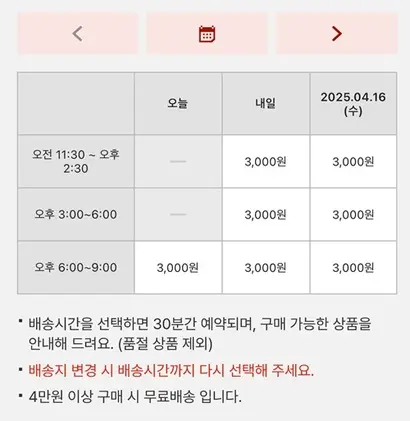
However, the reaction from consumers who have experienced Zetta, which Lotte introduced as a "future-oriented app," is cold. Complaints are pouring in that the app's UI is inconvenient from a user's perspective. The dominant reaction is that because the system was imported from the British retail firm Ocado, it does not align with the sentiments of domestic consumers. Lotte's ambitiously prepared collaboration with Ocado seems to be hitting a snag right from the start.
One customer criticized, "I usually put several items in my cart, compare prices, and remove unnecessary ones before checkout, but the Zetta app doesn't even have a delete function for items in the cart. Is it reasonable to lack even such basic functions?" adding, "There is nothing better about it compared to the app I was using before. It’s so inconvenient that I don't think I will use it in the future."
Another user also expressed frustration, saying, "The design and usability feel like they’ve regressed by 10 years. I even doubt if this is really a large supermarket app," and added, "I can't understand the intention behind Lotte Mart's redesign of the app."
A Lotte Mart official explained, "Lotte Mart Zetta is an app launched to maximize convenience, and since it is the early stage of the launch, there are still many people who find it awkward to use. We are internally reviewing feedback coming in through the customer center, and we will improve these parts in the future."
![[Future 10-Year Growth Engines] Even Lotte Mart’s Ambitious 'Zetta' Faces Harsh Criticism; Can E-commerce Turnaround Be Possible?](https://s.bizhankook.com/attachments_thumb/2026/05/94197_thumb.webp)
![[Future 10-Year Growth] 'Expand or Reduce?' GS Retail Faces Growing Dilemma Over New Businesses](https://s.bizhankook.com/attachments_thumb/2026/05/94311_thumb.webp)
![[Future Growth Engines] Shinsegae Embarks on Independent Management: Moving Beyond Retail to Real Estate... 'A Long Way to Go'](https://s.bizhankook.com/attachments_thumb/2026/05/94565_thumb.webp)