

[비즈한국] Private medical insurance, often called the “Second National Health Insurance,” has a subscription rate of approximately 70% of the entire population. However, it suffers from a structural anomaly where the top 9% of policyholders receive about 80% of total insurance payouts. Medical abuse driven by private insurance has already disrupted the market and left irreparable scars on the medical system, including the avoidance of essential medical fields. We examine the history of private insurance, its impact when combined with non-reimbursable services in non-critical sectors, and the direction that the upcoming 5th generation should take.

Private medical insurance, commonly known as “Silbi,” is a product that compensates policyholders for medical expenses they have actually incurred when hospitalized or visiting a clinic for treatment or prescription drugs due to illness or injury. It covers the total amount of medical expenses—consisting of the National Health Insurance co-payment and non-reimbursable costs—minus the policyholder's deductible. Since it is sold by private insurance companies, not the National Health Insurance Service, it is widely referred to as the “Second National Health Insurance” due to its high subscription rate. According to the Korea Insurance Development Institute's basic statistics, the subscription rate was 66.5% in 2020, 65.7% in 2021, 66.4% in 2022, and 69% in 2023.
Private insurance products have evolved through successive generations as insurance companies attempt to reduce losses and financial authorities seek to improve equity by ensuring insurance premiums align with medical usage. Recently, discussions are underway for the “5th generation private insurance,” which focuses on increasing the co-payment rate for non-critical treatments and lowering coverage limits. The 5th generation is scheduled to be released in the second half of next year. The government is also considering a buyback program to induce 1st and 2nd generation policyholders to switch to the 5th generation by offering them compensation. The target for this buyback includes contracts signed before 2013: 6.54 million for the 1st generation and 9.28 million for the 2nd generation, totaling 15.82 million policies. This accounts for about 44% of the 35.78 million total private insurance subscribers. However, it currently faces criticism from consumers who argue that it only reflects the stance of insurance companies.
Private insurance is categorized into generations based on the time of enrollment. The 1st generation covers those who joined until September 2009; the 2nd, from October 2009 to March 2017; the 3rd, from April 2017 to June 2021; and the 4th, from July 2021 onwards. According to the Financial Supervisory Service's business performance report on private insurance, as of 2023, the distribution by generation is 19.1% for the 1st, 45.3% for the 2nd, 23.1% for the 3rd, 10.5% for the 4th, and 2.0% for others, making the 2nd generation the largest group. Generally, higher generations offer lower coverage but at cheaper premiums. For the 4th generation, premiums are discounted or surcharged based on the number of times the policyholder claims non-reimbursable medical expenses. Consequently, it is more advantageous for high-frequency users to retain their 1st or 2nd generation plans, which offer relatively broader coverage. The insurance industry points out that since loss ratios are increasing across all generations, it is urgent to regulate “excessive non-reimbursable medical treatment.”
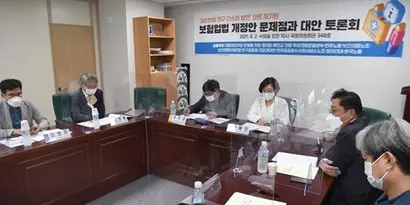
How did private medical insurance come to be? According to a research report by the Korea Insurance Research Institute, products covering private medical expenses date back to 1963. At the time, “indemnity-based injury insurance” was first introduced to cover medical expenses resulting from injuries. This was followed by group health insurance and special rider-type disease insurance in the 1970s. In 1999, a product similar to today’s private medical insurance, which covers the patient’s out-of-pocket expenses for medical treatment due to injury or illness, emerged. With the amendment of the Insurance Business Act in August 2003, “private medical insurance” was defined within the scope of “third-party insurance,” allowing both non-life and life insurance companies to handle it. In September 2009, the “2nd generation private insurance” was created, standardizing coverage details that had previously varied by company.
Looking at the features of each generation, the 1st generation (old private insurance) covers those who joined until September 2009. It has higher premiums and broader coverage, but relatively lower deductibles. The out-of-pocket rate for outpatient treatment is 0%, meaning the insurance company pays the entire medical bill. According to the General Insurance Association of Korea and the Korea Life Insurance Association, the average premium for 1st-generation insurance this year is 54,278 won (a 2% increase from the previous year). The premium renewal period is 3 to 5 years, with coverage lasting until age 80 or 100. Notably, treatments such as physical therapy, manual therapy, MRI, extracorporeal shockwave therapy, Chuna manual medicine, oriental acupuncture, and herbal injections can be received without limits. Even medical expenses incurred at foreign hospitals are 40% reimbursable.
The 2nd generation, known as “standardized private insurance,” covers those who joined between October 2009 and March 2017. The out-of-pocket rate for outpatient treatment increased to 10%. The renewal period was also shortened to 1 to 3 years compared to the 1st generation. The insurance term is 15 years, and the scope of coverage is the same as the 1st generation, although foreign hospital expenses are excluded. The average premium for 2nd-generation insurance this year is 33,671 won (a 6% increase from the previous year).
The 3rd generation, nicknamed “new private insurance” or “kind private insurance,” covers those who joined between April 2017 and June 2021. The out-of-pocket rate for outpatient treatment rose further to 20–30%, and the renewal period was reduced to one year. The insurance term remains 15 years, the same as the 2nd generation. “Herbal injections” were removed from the scope of coverage. A key distinction of the 3rd generation is that items with high loss ratios, such as manual therapy, non-reimbursable injections, and MRIs, were separated into special riders to lower premiums. At the time, it was launched at a premium level about 35% lower than previous products. As of this year, the average premium is 23,012 won (a 20% increase from the previous year).
For the 4th generation private insurance sold since July 2021, the out-of-pocket rate for outpatient treatment is 30%. The renewal period is the same as the 3rd generation at one year, but the insurance term has been reduced to 5 years. The scope of coverage is identical to the 3rd generation, but the most significant feature is that coverage for essential medical benefits has been expanded, while premiums for non-reimbursable items, which are patient choices, are discounted or surcharged based on medical usage. The average premium for 4th-generation insurance this year is 14,573 won, an increase of 13% from the previous year. The 4th generation also provides a reduced premium burden compared to existing private insurance; according to Financial Services Commission data, it is about 70% cheaper than 1st-generation, 50% cheaper than 2nd-generation, and 10% cheaper than 3rd-generation insurance.
![[Emergency Diagnosis: Private Health Insurance] ① The ‘Second National Health Insurance’ with 70% Coverage: 9% of Policyholders Take the Lion’s Share of Benefits](https://s.bizhankook.com/attachments_thumb/2026/05/93877_thumb.webp)
![[Emergency Diagnosis of Private Medical Insurance] ② Why the cost remains unchanged after the 'cataract surgery' transition to national health insurance coverage](https://s.bizhankook.com/attachments_thumb/2026/05/93928_thumb.webp)
![[Emergency Diagnosis of Private Medical Insurance] ③ Why is the 2nd Phase of Medical Reform 'Weak'?](https://s.bizhankook.com/attachments_thumb/2026/05/93998_thumb.webp)
![[Emergency Diagnosis of Private Health Insurance] ④ How has the '5th Generation Private Health Insurance' changed from the government's promises?](https://s.bizhankook.com/attachments_thumb/2026/05/94057_thumb.webp)