

[비즈한국] The V10, the first product in the V series, was quietly released in the autumn of 2015, just before the launch of the G5. It was a time when the G4, with its leather cover, was the flagship model. I still don't know what the "V" stands for, and while the first product was a bit quirky, my immediate thought upon using it was, "Ah, this is so typical of LG Electronics066570."
The Most "LG-like" Smartphone, V10
LG was making products that met standard requirements with its G series, but it was evident that there was a thirst for various small, novel technical attempts. And that desire was infused into the V10. The biggest feature of this product was that it had two displays. There is a "Second Screen" at the top. It displays notification messages and shows widgets. Even when the main screen is off, the second display remains on, allowing you to check simple information.
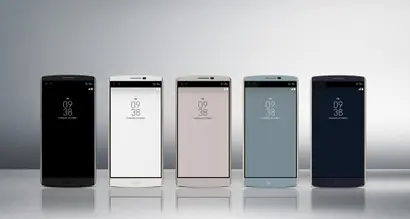
Audio also features a 24-bit Quad DAC. Instead of relying on the CPU, a semiconductor specialized in processing sound was added. The brand image of LG Electronics as an "audio smartphone" truly began with this V10. While it was applied to all subsequent LG Electronics smartphones including the G5, the image of an audio smartphone started right with the V10.
And in the autumn of 2016, that was properly branded with the V20. I was very impressed by the V20's recording function. It captures sound as clearly as if you were using an external microphone. The impression of "LG for audio!" took root in the market.
Anyway, the V series gives the impression that it is not an upper or lower tier of the G, but a separate brand containing LG's novel attempts. And unexpectedly, the response was good. In some ways, I suspect that the V20 might have been a product pulled forward from what was intended for the G6 to make up for the sluggishness of the G5. The following year, the G6 completely changed the flow of smartphone design with an 18:9 ratio and a display with curved corners, showing the potential of the G series.
It’s still a shame, but the G6 just passed by without much success despite its completeness. Looking back, the G6 changed the design trend with its 18:9 screen, and it was the G6 that started the trend of rounded corners. Doesn't every brand follow this now? Was LG Electronics behind Samsung? Did McKinsey cause the G6 to fail? Absolutely not. LG Electronics is a company that makes good products and has underlying potential. It is a company with people who brainstorm such ideas and turn them into products. The G6 makes me think about how it would have been if they had viewed the technology more cautiously and pushed forward with confidence, strength, and proactivity to inspire trust. The G6 wasn't a bad product; I believe the failure of the G5 simply overshadowed it.
I am still using the V20, which I started using around that time, and it is still great for listening to audio. Of course, the OS completeness, battery life, and other fundamental roles as a smartphone are quite disappointing. But the audio is great, and the recording quality is still excellent. This was just buried. My heart leaned towards the V series when looking at LG Electronics smartphones at the time, and it seems LG Electronics felt the same way.
Indeed, by 2017, the center of LG's smartphones shifted significantly to the V series. The V30 was the first LG smartphone to come with an OLED display. LG made it with its best efforts.
Instead, LG's bold attempts through the V series paused for a moment. First, the Second Screen disappeared. Later, with the G7 and V40, they called the notch display a "New Second Screen," but this was not easily accepted. It simply meant the Second Screen that people expected from this series was gone. The Second Screen was a differentiator for the V series and a point that could have acted as a platform for LG hardware. They threw it away just like a module. People who used the V series felt betrayed once again.
On the other hand, the V30 can be seen as the completed version of the G6 if interpreted conservatively. It truly became a "Super Normal." I wonder if the two brands should have followed entirely different paths instead of complementing each other as successors. It's a very regrettable part of brand management. And this didn't just end there.
Where did G go? Is V the new flagship?
In 2018, the difference between the G7 and V40 seemed to narrow slightly. Although there were differences in display, it was not easy to distinguish between the two products overall, starting from the design. Of course, on one hand, it gave the feeling that LG Electronics' design color had finally settled in.
What’s regrettable is that the unique features disappeared. Do you need to have unique features to be good? That’s not necessarily the case. It is right for a flagship product to be easy to use and accessible to existing users. However, LG Electronics kept pushing provocative points. Even if everything wasn't satisfactory, those attempts were applied quite stably to the V series, but that suddenly vanished. Stability is better suited for the G series.
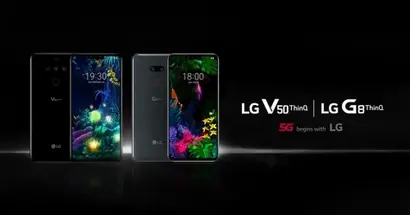
Now, in 2019, the brand's unfortunate situation finally unfolds. They announced the G8 and V50 together at the MWC in February. What is the difference between the two? The dual display. While the basic configuration is similar, an auxiliary screen can be attached to the V50. There was a lot of interest in foldable smartphones at the time, and they solved this in a very realistic way. I thought the attempt to interpret the display was very good. It felt like the "brand of challenge," V, had returned.
Furthermore, compared to foldable displays that had many issues in terms of durability and completeness, this was realistic, safe, and stable, yet could still provide a sufficient user experience. I see foldables as products that came out because the display was developed rather than because of demand. As demand grows, the technology will eventually be perfected, but for now, consumers need to experience why they need to fold and how to use two screens, and the ecosystem needs to be observed. And LG Electronics had built a foundation to secure data on that experience the fastest, most actively, and in the greatest quantity. They also gained the "wow" factor.
But what about G? As all the attention was poured into V, G became neglected overnight. In other words, V became the flagship, and G received so little attention that even its release was barely noticed. I imagine what it would have been like if they had focused on the G and made the V a product that helped it from the side, or if they had allowed the auxiliary display as an option for the G8 to keep the G series alive.
Above all, it is not easy to operate two brands at the same time in the same period. Imagine IU and BTS making a comeback on the same day under the same company. Would the company have any sanity left? Could they focus on both equally?
Ultimately, with this announcement, the presence of the G8 rapidly faded. And the V50 seems to be a flash in the pan. But as everyone knows, few people bought the V50 with their own money. Due to the introduction of 5G mobile communication, subsidies poured in beyond imagination, and it became an almost free phone. The second display was a pre-order gift, and they practically included it as a giveaway until the product was discontinued.
And that autumn, they released the V50s. They thought the auxiliary display had become properly recognized. The fact that they quickly fixed the shortcomings of the V50 in terms of hardware is excellent. The value of data from real products mentioned earlier is used in such ways. But fundamentally, how much value could the V50 and V50s provide in the general consumer market? The regret remains that the G8 should have been the product that actually sold well.
The final attempt, niche market and innovation
I think 2020 was perhaps the most painful year for LG Electronics. I don't know anything about how the decisions were made last year or what their intentions were. But looking at the results, there is a deep sense of regret left behind. Was it an intention to "burn bright one last time..."?
In 2020, which started with COVID-19, LG Electronics released a smartphone named "Velvet" in May, not at MWC in early spring. It wasn't G, it wasn't V, but suddenly "Velvet" was launched as a real product name. It is said that design became the focus. Stories like the "glory of the Chocolate phone" stand out. Excuse me? The Chocolate phone? That Chocolate phone from 2005? The New Chocolate phone from 2009 where Girls' Generation was standing in a line?
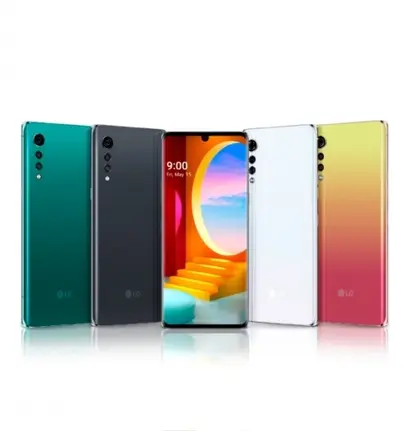
Articles about the Velvet poured out as if it had been announced even before the product was released. Most of the design was also leaked. It seems they were worried until the end. But one knockout blow came. It was the processor. The news was that the Snapdragon 765 would be installed.
In fact, Qualcomm's Snapdragon 700 series, especially the 765, is a chip used in higher-end models. Although it lacks compared to the 800 series, it has almost all the same features and performance is good. But that was absolutely not accepted in Korea. It gives the impression that something is greatly lacking and that it would be burdensome to use for 2 to 3 years. That's the environment of the domestic market. Above all, it becomes a factor that makes it feel like using a slightly inferior budget product.
Crucially, LG Electronics' trademark, the Quad DAC, was also missing. Even if the trend of smartphone music listening is moving to wireless, this is a regrettable point.
In fact, the picture many experts hoped for from LG Electronics was to bring premium features to the low-to-mid-range market. I think LG Electronics listened to that advice. But this Velvet was priced at 899,000 won. It was too high a price to be called a mid-range device. While it could be said to be cheaper than the 1.25 million won Galaxy S20, the feeling of 900,000 won is not easy either.
On top of this, Apple's unexpected iPhone SE was announced with the same processor as the flagship iPhone 11 at a groundbreaking price of 550,000 won. It was revealed at this moment that luck is also a factor that cannot be ignored.
Eventually, the Velvet left an impression of "Do I have to pay 900,000 won for a mid-range phone?" There were articles saying it sold out quickly after they lowered the factory price, but in the end, the key to this product was the price. There might have been circumstances where they couldn't lower the price, but it can be seen that everything from product planning, pricing, marketing, and crucially, the match-up luck, did not follow.
The meaning of using an LG Electronics smartphone
Above all, the disappearance of G and V led to confusion among consumers, and existing users who used Snapdragon 845 or 855 had no reason to switch to the Snapdragon 765. Without capturing new demand or replacement demand, they just erased the brand that they had built with consumers for 8 years.
LG Electronics aimed for a turnaround. With innovation. They rotate the screen. It's the "Wing." Where have you seen this? Tech enthusiasts will know. It's the "horizontal instinct." You rotate the screen to use two. Wait, is there no successor to the V50? Did they fold that too? Why did the idea of rotating come up? It only left a lot of questions.
I won't talk long about this. I think it was a product that people looked at because it was novel, but felt burdensome to buy. I am still very curious as to why the memories of more than a decade ago haunted LG Electronics in 2020, not the advice about feature phones from McKinsey mentioned earlier. It worries me that "innovation for innovation's sake" might have driven LG last year—rather than starting from demand or the idea that this could change people's lives—just wanting to make something curious, something others aren't doing.
It is a pity that we won't be able to see the rollable phone that was last mentioned, but this wouldn't have changed the atmosphere of LG Electronics' smartphones anyway. It would have made headlines for being a novel product. However, not only was it unclear why one should use a rollable phone and whether that hardware was stable, it would have been released at a much higher price than any other smartphone. LG Electronics simply didn't have enough time for consumers to empathize with the answer to "Why should the screen rotate?"
Shall we take the story back to the beginning? The "McKinsey curse," which still comes up, did not have a huge impact on the footsteps of LG Electronics' smartphones over the past 12 years. On the contrary, LG Electronics' smartphones were ahead of everyone else. They could have pushed their technologies more confidently and made displays or audio systems into platforms with the pride of creating world-class hardware.
Looking back, there was "normal" at the decisive moments for LG Electronics. LG Electronics had the spirit of challenge, technical skills, and an excellent corporate culture to embrace it. But on the other hand, it seems they failed to properly support the demand for "Super Normal" that the market wanted, and left a regret that they might have listened more to media evaluations than the voices of consumers.
It's not that they lacked technology, nor were their products bad, but I cautiously look back and wonder if technology for the sake of technology, the importance of software, and the confusion of brand identity were what constantly plagued LG. And the irony is that the commonality of all these things is what "consumers were always talking about."
Therefore, expectations are high for future changes. For now, attention will be focused on LG Electronics' home appliances and automotive electronics. But LG Electronics' smartphones have not completely closed their doors yet. Technologies, patents, and foundation systems that can be restarted at any time remain. This is the possibility left by the aborted sale. It might not necessarily be a smartphone. We never know when or how communication tools will change again. At that time, I believe we will meet again with a completely different form of device, embedded with the DNA of LG Electronics, Cyon, and the G and V series.
A mobile phone is not just a simple device; it is a product that leaves records and memories. That's why even when its usefulness disappears, it is not easily thrown away. While LG Electronics itself must be the most pained, I hope the hearts of the countless consumers who look back on this brand leaving the market with regret will also heal with good memories.
![[The Cruel History of LG Smartphones] ① "It’s Probably Not McKinsey’s Fault"](https://s.bizhankook.com/attachments_thumb/2026/05/78590_thumb.webp)
![[The Cruel History of LG Smartphones] ④ "I intend to rewrite the end of this innovation"](https://s.bizhankook.com/attachments_thumb/2026/05/78659_thumb.webp)