

[비즈한국] On April 5, LG Electronics066570 finally delivered the unfortunate news. It has been officially announced that the company is exiting the smartphone business. The decision was made by the board of directors, and all smartphone-related operations will terminate as of July 31.
Initially, there were many reports speculating that the company might sell off its business in parts, such as patents or core technologies, but it was decided to shut down the business rather than pursue a sale. Selling related technologies to foreign firms raises concerns about technology leaks, and within Korea, Samsung Electronics005930 is the only company capable of acquiring such a business. While these practical reasons are the most significant, I also believe it leaves room for a potential return at any time.
The perspective on LG Electronics’ smartphone business entering its shutdown phase seems to be universally marked by a sense of "regret." LG Electronics possesses a vast array of patents and related technologies, and the ideas behind their product launches were youthful and challenging. Furthermore, the smartphone was a quite decent product that could encapsulate the combined capabilities of a group operating in various business sectors.
Technically, it is true that they were not lacking compared to their competitors. Apple still uses many parts from the LG Group to build its products, and LG's technology was not inferior to Samsung Electronics'. The issue was more about the process of reading the market, deciding which products were necessary, and bringing them to market, as well as the crucial strategic moves at each juncture, which were often regrettable. This is to say that the common jokes about LG smartphone "marketing" or the legendary "McKinsey consulting" are not the whole story.
Although it is a hindsight-based argument, this is also why there remains so much regret, thinking, "What if they had done that back then..." It is a past story, and I am cautious about criticizing a departing company, but I would like to look back on the last decade by reflecting on the situation.
McKinsey and the ‘Feature Phone’
A representative starting point cited for the sluggishness of LG Electronics' smartphones is that "they failed to enter the market at the right time." The story that this was because McKinsey, which was in charge of business consulting, submitted a report recommending a focus on feature phones rather than smartphones, is already well-known.
However, in truth, LG Electronics did not enter the smartphone market that late. Even before the advent of the iPhone, LG Electronics had been making related products since the days of Windows, or the Pocket PC era. They weren't flagship products, and at the time, they were just a "let's try it" endeavor, but even that was not a bad attempt. It was experience. Such challenges are also part of LG Electronics' charm.
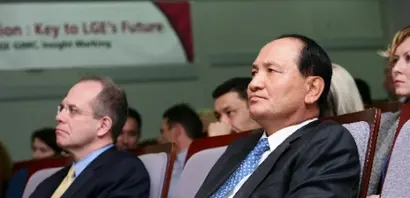
LG Electronics listened to many outside voices to transform its management in the 2000s. Consulting firms were teachers who provided quite good answers. The iPhone was announced in 2007, and the market began to stir from the second half of 2008. It was a time when people in Korea were clamoring to know when the iPhone would be released. At that time, McKinsey advised LG Electronics to focus on feature phones rather than smartphones.
Following that advice has become a subject of ridicule for failing to read the era. However, I believe that was a perfectly reasonable consultation for a firm to provide at the time. For immediate revenue, that was the right call. Rather than pouring core competencies into a field where you don't know what you're doing, it might have been the correct business decision to refine the feature phones you were already good at. Android was incomplete, slow, and difficult at the time.
Could a company the size of LG Electronics really tell consumers, "Please use this unfinished product with us for our future"? It was more realistic to look at what the essence of a smartphone was and why people were waiting for it. And it was necessary to make it quickly and surely. The answer from short-term consulting inevitably comes out this way. Perhaps LG Electronics wanted to hear that exact story.
So, what did LG Electronics release? They brought out high-performance feature phones that resembled smartphones. While not quite on par with the iPhone, they used relatively large screens and high-resolution displays and included communication functions. This was the beginning of what was called "full browsing" on mobile phones. The representative product I remember is the "Touch Web Phone." It had decent performance and a display resolution of 800x480, which was quite good. At the time, the iPhone resolution was 480x320. LG Electronics held the powerful weapon of the world's best display technology.
LG's Mobile Weapon ‘Web’ and the Smartphone’s Differentiator ‘App Store’
Why did LG Electronics prepare the ‘web’ as a weapon against smartphones? Because of the iPhone. The early iPhone released by Apple was not the form we see today. There was no App Store, and fundamentally, as Steve Jobs presented it, it was a device that combined an iPod with a phone and allowed for web surfing. Well, LG Electronics was already good at making phones, and playing MP3 music was already done quite well on mobile phones. The only thing left was the internet. They filled that gap.
However, this product did not do very well compared to the curiosity surrounding it. Setting aside issues like expensive data plans, the web at the time was filled with Flash and ActiveX. This meant that many things simply didn't work. This was not a problem with LG Electronics, but due to the web environment centered around Internet Explorer and ActiveX.
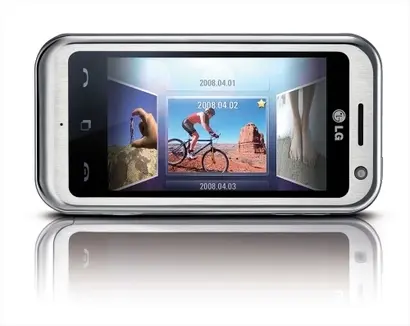
Yet, LG Electronics kept making these. In the case of the 'Arena Phone' released later in 2009, when the iPhone was just being launched in Korea, it gave the impression of being the best-made device among the mobile phones available at the time. The resolution was high, and the touch UI was good. They made it well. But by this time, smartphones had already taken a step forward. This was due to the App Store, which operated on a global scale.
There was nothing that couldn't be found inside the App Store. But who made those apps? Apple? No, developers made and sold them. Hundreds of thousands of apps poured out. On the other hand, who made the apps for LG's feature phones? LG Electronics had to make them. Even if third-party app developers participated, they basically had to work with LG Electronics. They could never follow the smartphone ecosystem. This is the "true power of a smartphone."
So, LG Electronics also developed Android phones. They thought, "Ah, I need to make a smartphone." The first product came out around March 2010, so they must have started preparations in 2009. Was this late? No, it might have been a little late in the short term, but in terms of long-term competition, I don't think it was late at all. Neither McKinsey nor LG Electronics did anything wrong. They chose options that were perfectly reasonable at the time. If McKinsey had told them to quickly drop feature phones and focus on smartphones back then, would things be different now? Not necessarily. LG Electronics was not a company lacking in technology or creativity.
A Development Environment Completely Different from Feature Phones, a Period of Android Chaos
LG Electronics also launched smartphones after the iPhone arrived in 2009. They cautiously released a few products in 2010. So, how about Samsung, which was considered to be ahead? The situation was not much different.
Samsung Electronics could not let go of its attachment to Windows Mobile—the Omnia—until the iPhone came out. It was only after the shock of the iPhone that they managed to shed that attachment. And they released the Galaxy A in a real hurry. Yes, that Galaxy A series today was actually the start of Samsung's Android. And following its first Android phone, 'Andro-1', LG released the smartphone 'Optimus Q' under the Optimus brand.
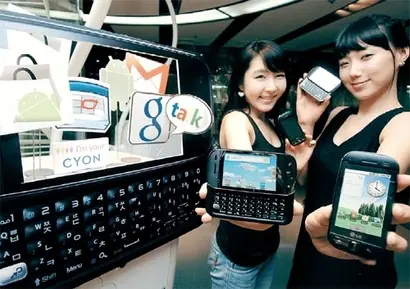
The situation regarding the initial products, whether it was the Galaxy A or LG's Optimus Q, was not very different. At that time, apart from HTC, no manufacturer around the world could properly make Android smartphones. Everyone was experiencing common problems such as optimization, stability, and app compatibility, and accepting them as a matter of course. It was a time when Motorola, which was the best at making mobile phones back then, was releasing plausible products and receiving attention.
LG Electronics' early smartphones, the Andro-1 and Optimus Q, seem to have been influenced by Motorola's MotoQ. The QWERTY keyboard was the core. But the lack of experience in how to use Android shows right here. This was the same for everyone. LG Electronics used Android 1.6, which was Donut. There were optimization issues, but by then, Android was already moving on to 2.0 (Eclair) and 2.1 (Froyo). At this time, Android had major updates every six months and was extremely unstable. 1.6 and 2.0 could be considered completely different operating systems. 2.1 and 2.2 were also entirely different. Smartphones were completely different from existing mobile phones, from the perspective of viewing software to the development process. It was a time of unimaginable chaos for manufacturers.
Upgrading the operating system was not easy either. First of all, there was a lack of experience in handling the OS, and the hardware could not properly support Android 2.0. In those days, it was common for the processor's role to be handling the modem and communications, and using the remaining power for other things. Specs had to be set quite tightly. And the common strategy was to sell by frequently releasing new products rather than upgrading. Continuously overhauling the OS was something unimaginable before.
How Far Ahead Was Samsung?
So what did Samsung do? Samsung launched the Galaxy A first, but after realizing various problems, they immediately developed the Galaxy S. The biggest reason was performance. Samsung was quite shocked when they saw the iPhone at the time. And they developed the product by thinking deeply about many aspects of the iPhone. They intuitively decided, "Let's use the iPhone as a benchmark!" So Samsung made a smartphone similar to the iPhone using Android. That was the Galaxy S.
Especially at the time, the screen scrolling on the iPhone was very smooth. Android gave a somewhat stiff feeling when scrolling. With just this one thing, the smartphone looked much faster and smoother. Realizing this on Android was one of the things Samsung Electronics worked on incessantly.
And they achieved something similar in the Galaxy S. It was the semiconductor. Samsung Electronics printed high-performance chips. I'm talking about a processor operating at 1 GHz. The iPhone 3GS at the time used a 600 MHz processor, but Android had a hard time producing smooth results with similar performance. Samsung Electronics realized that it wouldn't work in the same environment and introduced a faster processor. Although I'm not sure if Samsung knew it then, it was the moment when semiconductors became Samsung's core competitiveness.
I believe it took LG Electronics a bit more time to realize the importance of a performance-centered approach and software optimization. Things improved a bit with the Optimus LTE. In a way, a clear goal for Android that LG had to follow—the direction set by the Galaxy S, which was evaluated as the "world's fastest Android phone"—had emerged.
From around this time, LG Electronics began to be mocked in earnest for following McKinsey's consulting. Was it too late? No. I don't think they were late at all even then. Samsung didn't find the answer instantly and get ahead quickly either. Continuous effort, investment, and the experience gained through those sacrifices were growing the Android ecosystem.
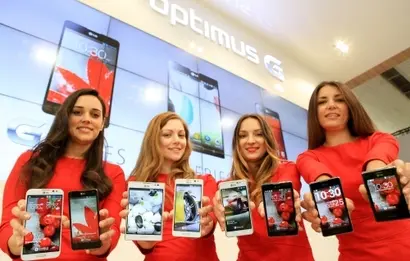
LG's finest moment and its greatest opportunity was 2012. It was the time they released the Optimus G, which I personally consider the best product among LG Electronics' smartphones. I went to the launch event, and in a way, although it was a Korean sentiment, the message that the group had combined its strength to do its best was quite moving, and the results were actually visible in many parts of the product. There was a rumor, or non-rumor, that the "G" was named after Chairman Koo Bon-moo's "G," and it made sense because the entire LG Group sat down together for this one product. Electronics prepared the best design and software, Display brought the highest quality IPS screen of the time, Innotek brought the camera sensor, and Chem brought the battery.
In fact, the perfection of the product was good. They made what the market wanted. And this product was a so-called "hit." While they couldn't surpass Samsung globally, sales were good domestically. It was enough to give me the impression that, "Ah, finally, a balance between Samsung and LG has been struck..."
The timing of market entry wasn't the issue; it was a matter of who could find the answers quickly through more experience in the chaotic Android smartphone market. And it didn't take LG Electronics that long to find the answers.
※ Continued in Part 2.
![[The Cruel History of LG Smartphones] ① "It’s Probably Not McKinsey’s Fault"](https://s.bizhankook.com/attachments_thumb/2026/05/78590_thumb.webp)
![[The Cruel History of LG Smartphones] ④ "I intend to rewrite the end of this innovation"](https://s.bizhankook.com/attachments_thumb/2026/05/78659_thumb.webp)