

[비즈한국] Season 12 of the ‘Korea Art Promotion Project,’ a support program for artists dedicated to cultivating the fertile soil of Korean art, has begun. This initiative is now recognized within the art world as a significant event for discovering and fostering artists. It has earned a reputation among creators as a project they aspire to participate in. The fundamental keyword that the ‘Korea Art Promotion Project’ has pursued from the start is ‘the acceptance of diverse trends in Korean art and the pursuit of developmental change.’ As a fruit of these principles, the project is evaluated as having established a unique perspective on contemporary Korean art.
Since Impressionism, Western art has realized that painting is no longer merely a replication of reality. Artists had to discover new methods of painting to replace the representation of reality. From the turn of the 20th century, this search for a new path emerged as a burning topic for painters.
One such development was the painting style created by Italian artist Giorgio de Chirico (1888-1978). His work is referred to in Western art history as ‘Metaphysical Painting.’ These paintings evoked an atmosphere similar to the feelings one experiences while reading philosophy books. While not explicitly understandable, it was clear that they contained images of profound contemplation. This is because they depicted the world of thought. In the sense that he painted thoughts, which are invisible, he garnered enough attention to secure his name in art history.
However, the act of expressing the spirit—where thoughts are born, grow, and create new worlds—has actually occupied a central place in art for a very long time. This is because artistic creation is the culmination born at the zenith of mental activity.
15 Solo exhibitions (2026 The Soop Art Gallery, 2025 Portrait of Dreams Exhibition-Seoul Insa 1010, Busan International Art Fair Invitation, etc.), numerous group exhibitions (Portrait Exhibition-Seoul Sejong Center for the Performing Arts, Young Artists Invitational-Seoul Hosoo Gallery, Teacher-Student Exhibition-Insa Art Center, Russian Artists Association Exhibition-St. Petersburg, Russia, etc.)
Awards
2019 Appreciation Plaque from the Governor of South Chungcheong Province
Collections
WHO Headquarters in Switzerland, Sangmyung University Museum, Consulate General of Canada in Toronto, etc.
Education and Career
B.A. (Painting) and M.A. (Stained Glass Mosaic Mural Design) from the Russian State Art School. Lecturer at Sangmyung University, Chosun University, and Sejong University graduate schools. Currently a member of the Contemporary Portrait Artists Association and KAMA, lecturer at Kyungnam University, and instructor of 3D drawing at Pangyo Hyundai Culture Center.
Although it varies slightly by era, attempts to express the spiritual world in painting have continued steadily. Renaissance painting, which captured the world of the divine in concrete forms, is a prime example. Baroque painters also expressed the spirit in persuasive ways. Rembrandt, esteemed as a master of portraiture, captured the spiritual world of his subjects through the subtle interplay of light and shadow in the background. Symbolist painters also expressed the spiritual world through analogy and symbolism.
At the turn of the century, artists held a high interest in these human mental activities themselves. This was because academic research into the spiritual world was yielding results. Surrealist painters created new works with the mind itself as the subject. Among them, they visualized the subconscious, which resides at the deepest part of the mind, through painting.
The subconscious is a part we are not aware of. How could it be expressed? Surrealist painters achieved this by creating paintings featuring illogical situations that defy common sense, scenes impossible in reality, or landscapes that seem as if from a dream.
Post-war Abstract Expressionist painters also took on the challenge of expressing the spiritual world and achieved effective results by expressing various emotions that constitute a pillar of the spiritual world—for example, love, anxiety, fear, majesty, purity, piety, joy, and sadness.
Artists believed that an abstract approach was more effective in expressing these. A representative case is the abstract painting of Mark Rothko. He vividly displayed the inner state of the spirit before our eyes.
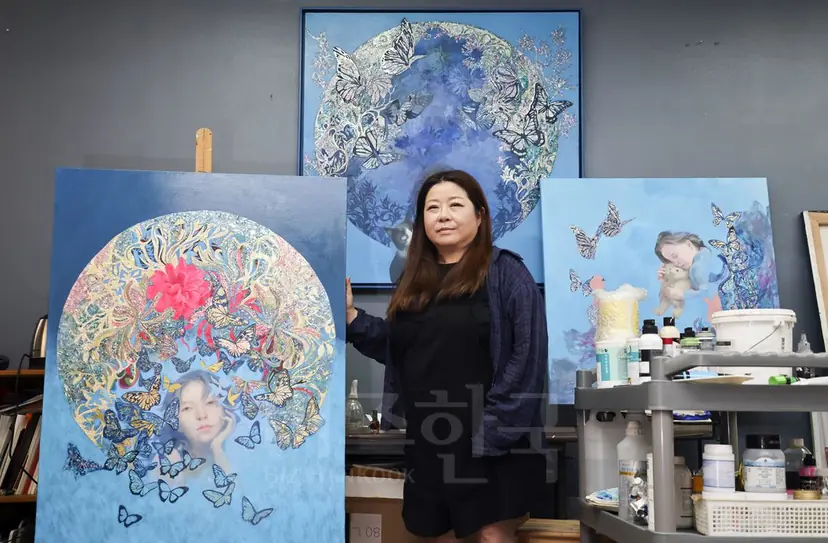
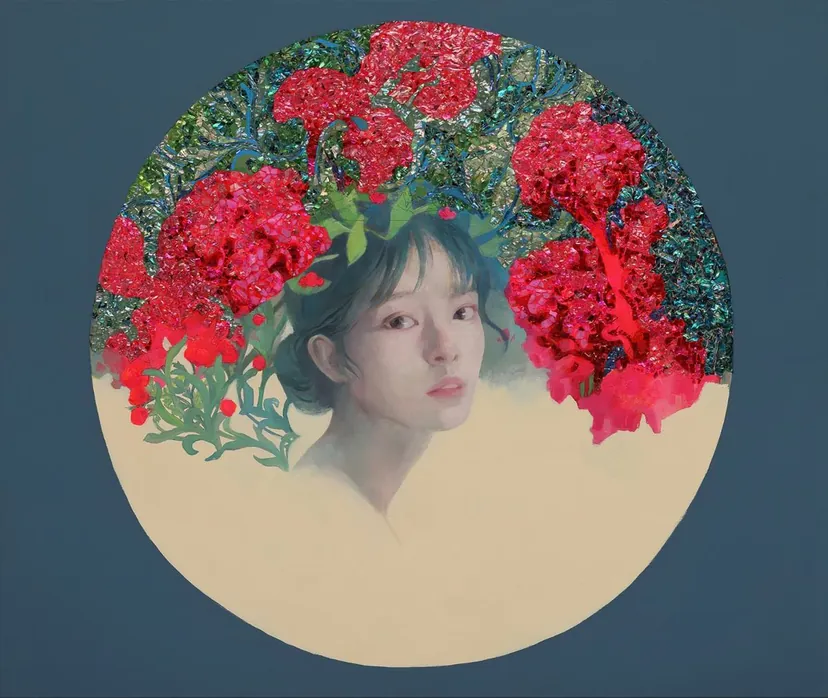
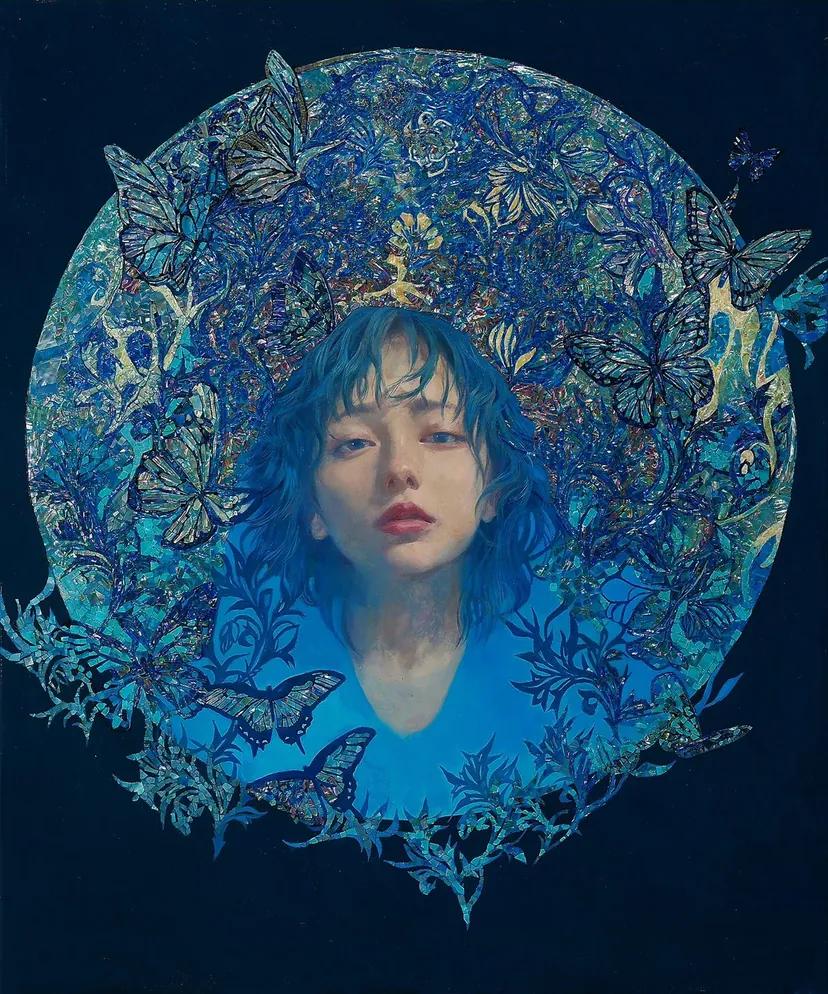
The pursuit of Yoo Yeon-sun, who is noted for her academic style, is also the expression of the spiritual world. She unfolds a space of the spirit before our eyes through images of women with ambiguous expressions and unclear identities, alongside butterflies, flowers, and plants. She crafts space within the frame through a composition where butterflies and plants surround the figure in a circular structure.
Through this, she aims to show the depth of memory, which occupies a part of the spirit.